Plastic Articles (HS 3926909400)
CN → US| HS编码 | 关税税率 | 原产国 | 目的国 | 文档 |
|---|---|---|---|---|
| 3926909925 | 22.8% | CN | US | 官方文档 |
| 3926909989 | 22.8% | CN | US | 官方文档 |
| 3923900012 | 38.0% | CN | US | 官方文档 |
| 3924905610 | 20.9% | CN | US | 官方文档 |
| 3923900080 | 38.0% | CN | US | 官方文档 |
| 3924905650 | 20.9% | CN | US | 官方文档 |
商品图片
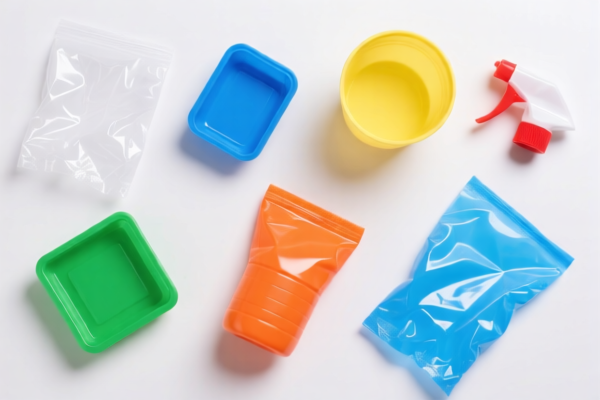
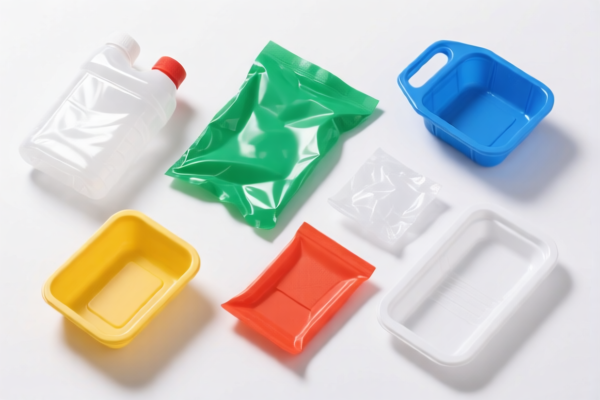
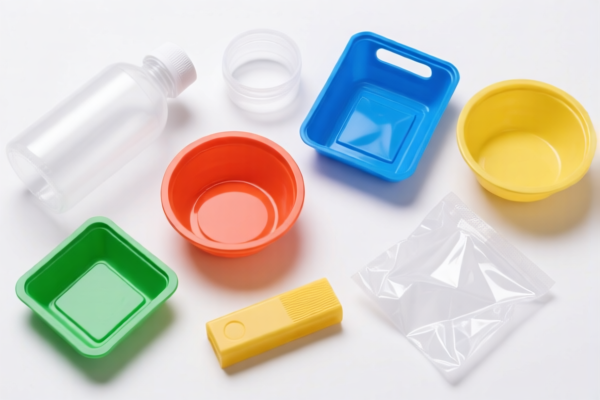
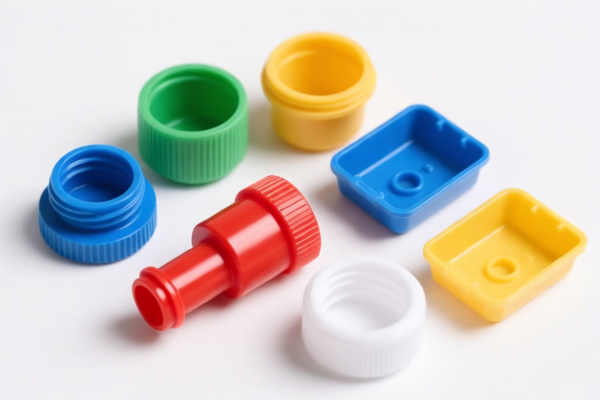
AI分析
🧪 Plastic Articles (Plastic Goods Classification Guide)
🌐 HS Code Reference & Customs Clearance Guide | 2026 Latest Tariff Analysis | Professional Clearance Strategy
📌 I. Product Definition & Classification: What Are "Plastic Articles"?
Plastic articles refer to finished products made primarily of plastics (polyethylene, polypropylene, PVC, ABS, etc.), excluding those specifically classified elsewhere (e.g., packaging containers under Chapter 3903–3924, if applicable, or machinery parts under Chapter 84/85). In international trade, "Plastic Articles" typically fall under Heading 3926 ("Other articles of plastics and articles of other materials of headings 3901 to 3914"), which serves as a residual category for plastic goods that do not fit more specific headings like tableware (3924), packaging (3923), or household articles (3924/3925).
⚠️ Key Distinction:
- If the plastic item is a packaging container (boxes, bags, bottles), it may fall under 3923 or 3924.
- If it is a household article (bins, organizers), it may fall under 3924 or 3925.
- If it is an industrial, decorative, or miscellaneous plastic part with no specific heading, it falls under 3926 ("Other articles of plastics").🔍 Critical Note for This Data Set:
The provided DATA contains HS codes primarily from 3926 and 3923/3924. This indicates the specific plastic articles in question are likely miscellaneous plastic parts (3926) or packaging/household plastic items (3923/3924). Misclassification between "packaging" (3923/24) and "other articles" (3926) significantly impacts tariff rates due to Section 301 and IEEPA penalties.
📦 II. HS Code Classification Details (Based on Provided Data)
| HS Code | Product Description | Applicable Scenario | Key Material Match |
|---|---|---|---|
3926.90.99.25 |
Other articles of plastics: Other | General plastic parts, industrial components, plastic fixtures | ✅ Plastic |
3926.90.99.89 |
Other articles of plastics: Other | Miscellaneous plastic goods not specified elsewhere | ✅ Plastic |
3923.90.00.12 |
Articles for the transport or packaging of materials: Other | Plastic packaging, plastic boxes, pallets, wraps | ✅ Plastic |
3924.90.56.10 |
Tableware, kitchenware, other household articles: Other | Plastic trays, organizers, household containers | ✅ Plastic |
3923.90.00.80 |
Articles for transport/packaging: Other | Industrial plastic packaging, bulk plastic containers | ✅ Plastic |
3924.90.56.50 |
Tableware/kitchenware/household articles: Other | Plastic household items, decorative plastic goods | ✅ Plastic |
🔍 Classification Logic:
- 3926 Codes: Used for plastic items that are not primarily for packaging (3923) or tableware/household use (3924). These are often industrial parts, fittings, or general-purpose plastic articles.
- 3923 Codes: Specifically for transport and packaging. If the plastic article is a box, bag, or container for shipping, it belongs here.
- 3924 Codes: Specifically for tableware, kitchenware, and household articles. If the item is used in a home for food service or general household organization, it belongs here.
💰 III. 2026 Latest Tariff Rate Breakdown (Including Supplementary Duties)
✅ Applicable Country: United States (US)
✅ Origin: China (CN)
✅ Effective Time: Post-2025 (Current Trade Policy)
🎯 1. 3926.90.99.25 & 3926.90.99.89 —— Other Articles of Plastics (3926)
| Item | Detail |
|---|---|
| Base Tariff | 5.3% |
| Section 301 Tariff (Add-on) | 7.5% |
| Section 122 Tariff (Add-on) | 10.0% |
| Total Tariff Rate | 22.8% |
| Tax Calculation | CIF Value × 22.8% |
| De Minimis Exemption? | ❌ No (Deny de minimis) |
| Legal Basis Path | HTSUS:3926.90.99 → Section 301: Footnote 9903.03.03 → Section 122: IEEPA Proclamation |
📌 Explanation:
- Base Rate (5.3%): Standard MFN tariff for "Other articles of plastics."
- Section 301 (7.5%): Additional tariff imposed on Chinese goods under the USTR’s Section 301 investigation.
- Section 122 (10%): Recent additional tariff under Section 122 of the Trade Expansion Act (often applied to specific strategic or high-volume categories).
- Total 22.8%: High cost. Ensure product is correctly classified as 3926 (not 3923/24) to avoid double penalties.
🎯 2. 3923.90.00.12 & 3923.90.00.80 —— Articles for Transport/Packaging (3923)
| Item | Detail |
|---|---|
| Base Tariff | 3.0% |
| Section 301 Tariff (Add-on) | 25.0% |
| Section 122 Tariff (Add-on) | 10.0% |
| Total Tariff Rate | 38.0% |
| Tax Calculation | CIF Value × 38.0% |
| De Minimis Exemption? | ❌ No (Deny de minimis) |
| Legal Basis Path | HTSUS:3923.90.00 → Section 301: Footnote 9903.03.03 → Section 122 |
📌 Critical Warning:
- This is the HIGHEST rate in the dataset (38.0%).
- If your item is a plastic box, bag, or pallet, it falls under 3923.
- Misclassification Risk: If you classify a plastic packaging item as3926(22.8%), you may be investigated for undervaluing duties. Conversely, classifying a general plastic part as3923will result in overpayment.
- Why so high? Packaging materials from China face aggressive trade remedies due to volume and potential dumping concerns.
🎯 3. 3924.90.56.10 & 3924.90.56.50 —— Tableware/Household Articles (3924)
| Item | Detail |
|---|---|
| Base Tariff | 3.4% |
| Section 301 Tariff (Add-on) | 7.5% |
| Section 122 Tariff (Add-on) | 10.0% |
| Total Tariff Rate | 20.9% |
| Tax Calculation | CIF Value × 20.9% |
| De Minimis Exemption? | ❌ No (Deny de minimis) |
| Legal Basis Path | HTSUS:3924.90.56 → Section 301 → Section 122 |
📌 Explanation:
- Lowest total rate (20.9%) among the options.
- Applies to plastic trays, organizers, food containers, and household items.
- Note: Base tariff is higher than 3923 (3.4% vs 3.0%), but Section 301 is lower (7.5% vs 25%), leading to a significantly lower total duty.
- Strategy: If your product can be argued as a "household article" (e.g., a plastic storage bin for home use) rather than "packaging" (industrial shipping container), classify under 3924 to save 17.1% in duties.
🛠️ IV. Customs Clearance Practical Advice (Real-World Pitfall Avoidance)
✅ 1. Document Checklist (Non-Negotiable)
| Document | Required? | Explanation |
|---|---|---|
| ✅ Product Specification Sheet | ✔️ | Must detail material (e.g., "100% Polypropylene"), dimensions, and intended use. |
| ✅ Commercial Invoice | ✔️ | Must clearly state "Plastic Articles" and specify if for "Household Use," "Packaging," or "Industrial Parts." |
| ✅ Photos of Product | ✔️ | Show the item in context. Is it a food container (3924)? A shipping box (3923)? A machine part (3926)? |
| ✅ HS Code Ruling (if available) | ✔️ | Previous CBP ruling or advance ruling strengthens your case. |
| ✅ Certificate of Origin | ✔️ | Proves Chinese origin, triggering Section 301/122 duties. |
✅ 2. Classification Strategy (Key Mnemonic)
🔥 "Use Determines Code: Home = 3924, Box = 3923, Part = 3926!"
| Scenario | Correct HS Code | Total Rate | Why? |
|---|---|---|---|
| Plastic food container, organizer, tray | 3924.90.56.10/50 |
20.9% | Intended for household/table use. |
| Plastic shipping box, pallet, wrap | 3923.90.00.12/80 |
38.0% | Intended for transport/packaging. High penalty. |
| Plastic gear, fixture, non-packaging part | 3926.90.99.25/89 |
22.8% | General plastic article. Mid-range penalty. |
⚠️ Avoid This Mistake:
- Classifying a plastic storage bin (for home use) as3923(packaging) → Overpaying $17.1% per unit.
- Classifying a plastic shipping crate as3926(other articles) → Underpayment risk + potential fines.
✅ 3. Special Cases
| Case | Handling Advice |
|---|---|
| Mixed Materials | If >50% plastic by weight/value, classify as plastic. If mixed with wood/metal, check primary function. |
| OEM Custom Parts | Provide design specs. If it’s a specific machine part, ensure it doesn’t fit Chapter 84/85. If not, use 3926. |
| Plastic with Coating/Fitments | If coated with metal/paint, still classified as plastic if plastic constitutes essential character. |
| De Minimis Loophole? | ❌ Not Available. Section 301 and IEEPA duties apply regardless of value under $800. |
🌍 V. Global Market Comparison (2026)
| Country/Region | Recommended HS Code | Tariff (China Origin) | Notes |
|---|---|---|---|
| 🇺🇸 USA | 3924.90.56.10 |
20.9% (Lowest) | Prefer 3924 for household items to minimize duty. |
| 🇺🇸 USA | 3923.90.00.12 |
38.0% (Highest) | Avoid if possible; high trade barrier. |
| 🇨🇳 China | 3926 / 3924 |
0–5% | Low import duty, but focus on export costs. |
| 🇪🇺 EU | 3926 / 3924 |
0–6.5% | No Section 301/122 equivalents. Generally lower duty. |
| 🇲🇽 Mexico | 3926 / 3924 |
0% (under USMCA if compliant) | Check rules of origin for free trade. |
📌 Conclusion:
- The US market is the most costly due to Section 301 and IEEPA.
- Optimization Strategy: If your plastic article can be legitimately described as a "household item" (e.g., a bathroom organizer, kitchen caddy), classify under 3924 to save 17.1% compared to packaging (3923).
- If it’s an industrial part, accept 22.8% under 3926.
- Never misclassify a packaging item as a household item to save tax; CBP audits are frequent, and penalties are severe.
📌 VI. Common Errors & Pitfalls (Lessons Learned)
❌ Error 1: Calling a plastic shipping box a "plastic article" to get 22.8% instead of 38.0%
👉 Consequence: CBP reclassifies as 3923, demands back taxes + interest.
❌ Error 2: Classifying a plastic food container as "packaging" (3923)
👉 Consequence: Overpaying 17.1% unnecessarily.
❌ Error 3: Ignoring Section 122 (10%) in cost calculations
👉 Consequence: Profit margin erosion due to unanticipated tariffs.
❌ Error 4: Assuming "plastic" automatically means low duty
👉 Consequence: China-origin plastic faces high added tariffs. Total cost can exceed 38%.
✅ Correct Approach:
"Plastic Household Organizer, Polypropylene, Color: White, Model: XYZ, For Home Use" →
3924.90.56.10
"Plastic Industrial Mounting Bracket, ABS, No Packaging Function" →3926.90.99.25
"Plastic Shipping Pallet, HDPE, For Export" →3923.90.00.80
🎯 VII. Conclusion: Smart Classification, Cost Control!
🎯 Remember the Rules:
🔹 "Household = 3924 (20.9%), Packaging = 3923 (38.0%), Other = 3926 (22.8%)"
🔹 "Use Dictates Code, Not Just Material"
🔹 "No De Minimis for China Plastic Goods"
📌 Pro Tip:
If your product is a plastic container, carefully document its intended use. If it can be marketed for home organization, use 3924. If it’s strictly for shipping goods, you must use 3923.
Consider applying for a CBP Advance Ruling if the use case is ambiguous. This provides legal protection and cost certainty.
📣 Action Item:
📞 Consult a licensed customs broker
📄 Prepare detailed product descriptions
🚀 Accurate classification today saves thousands tomorrow!
✨ Professional Clearance Starts with Precise Classification!
💼 Every Percent of Duty Saved is Pure Profit!
用户评价
关于 HS 编码归类
协调制度(HS)是由世界海关组织(WCO)制定的国际贸易商品分类标准。全球 200 多个国家采用 HS 系统作为海关关税、贸易统计和进出口监管的基础。
每个 HS 编码遵循以下层级结构:
- 章(2 位)——商品大类(例如:第 84 章:机器和机械设备)
- 品目(4 位)——章内的更具体分类
- 子目(6 位)——国际通用细分,所有 WCO 成员国统一使用
- 本国细分(8-10 位)——各国自行扩展的细分编码,如美国 HTSUS 10 位编码
正确的 HS 编码归类对于顺利通关、准确缴纳关税和遵守贸易法规至关重要。错误归类可能导致海关延误、多缴关税或罚款。
从CN进口到US时,适用的关税税率可能包括:
- 最惠国(MFN)税率——适用于 WTO 成员国的标准关税税率
- 普通税率——适用于无贸易协定国家
- 贸易救济关税——附加关税,如 301 条款(反倾销)、232 条款(国家安全)或反补贴税
本页内容仅供参考。如需正式归类,请咨询当地海关或持牌报关代理。