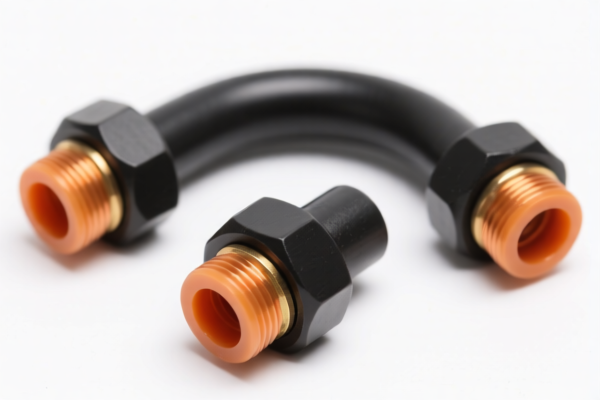
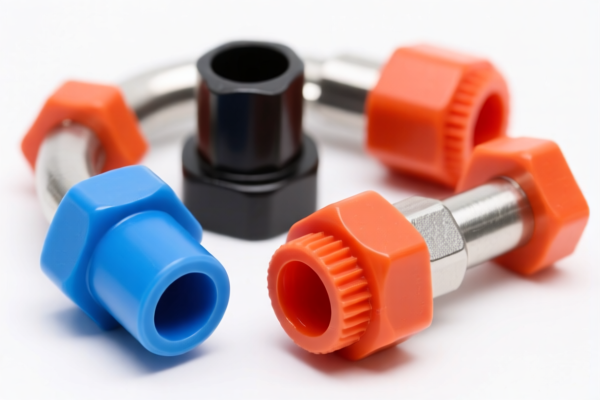
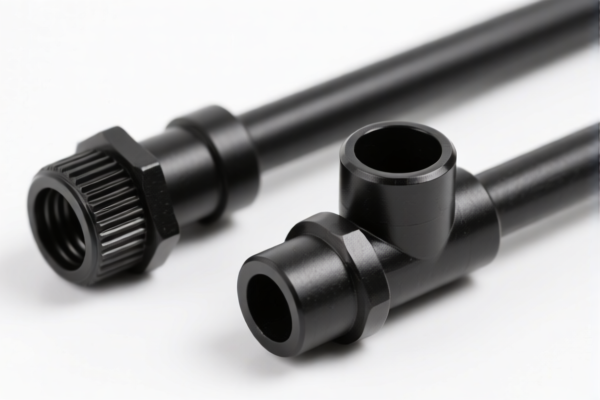
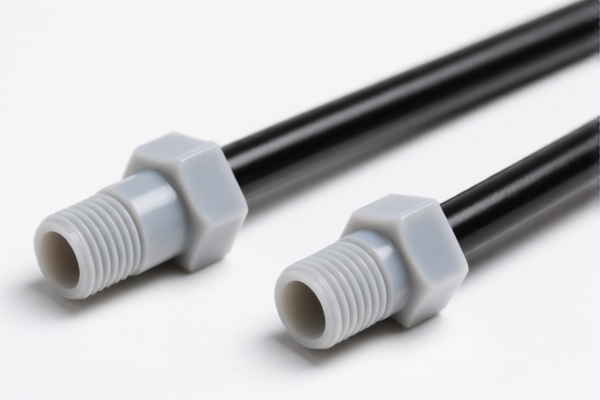
Plastic Brake Pipe Fitting
CN → US| HS编码 | 关税税率 | 原产国 | 目的国 | 文档 |
|---|---|---|---|---|
| 7307290090 | 90.0% | CN | US | 官方文档 |
| 7307995045 | 89.3% | CN | US | 官方文档 |
| 7412200015 | 88.0% | CN | US | 官方文档 |
| 7412200085 | 88.0% | CN | US | 官方文档 |
| 8708998180 | 37.5% | CN | US | 官方文档 |
商品图片
AI分析
🚗 Brake Pipe Fittings for Automotive Systems
🌐 HS Code Reference & Customs Clearance Guide | 2026 Latest Tariff Analysis | Professional Clearance Strategy
📌 Part I: Product Definition & Classification: What Are "Plastic Brake Pipe Fittings"?
Automotive brake pipe fittings are critical components in a vehicle's hydraulic braking system, connecting brake lines to ensure fluid transfers safely under pressure. In international trade, these fittings are not treated as a single homogeneous group. Their classification depends heavily on their material composition (Metal vs. Plastic/Other) and their function (General Part vs. Specific Component).
⚠️ Key Distinction for Customs:
- Metal Fittings (Steel, Copper, Aluminum): Often classified under Chapter 73 or 74, subject to significant "122 Clause" tariffs on steel/aluminum.
- Plastic/Non-Metal Fittings: Classified under Chapter 87 (Vehicle Parts), generally benefiting from lower base tariffs and avoiding specific metal surcharges.
- Specificity Rule: If a fitting is specifically designed for brake systems, it may be classified as a generic "Vehicle Part" (Ch. 87) to save on duties, provided it is not more specifically described in Chapter 73/74.
📦 Part II: HS Code Classification Matrix (2026 Latest Data)
Based on the provided data, here is the breakdown of potential HS Codes. Note that "Plastic" fittings typically fall under HS 8708.99.81.80 to avoid high metal-related surcharges. However, if customs argues the fitting is primarily metallic or the description is ambiguous, they may reclassify it to Chapter 73/74.
| HS Code | Product Description (Summary) | Material/Type | Total Tax Rate | Key Tariff Components |
|---|---|---|---|---|
8708.99.81.80 |
Auto Parts, Brake Pipe Fittings, No Specific Material Limit | Plastic / Mixed | 37.5% | Base: 2.5% + Sec 301: 25% + Section 122: 10% |
7307.29.00.90 |
Metal Pipe Fittings, for Auto Brake Systems | Steel/Iron | 90.0% | Base: 5% + Sec 301: 25% + Sec 122: 10% + Steel/Al/Cu Surcharge: 50% |
7307.99.50.45 |
Iron/Non-Alloy Steel Pipe Fittings, for Auto Brake Systems | Steel | 89.3% | Base: 4.3% + Sec 301: 25% + Sec 122: 10% + Steel/Al/Cu Surcharge: 50% |
7412.20.00.15 |
Copper Alloy Pipe Fittings, for Auto Brake Systems | Copper | 88.0% | Base: 3% + Sec 301: 25% + Sec 122: 10% + Steel/Al/Cu Surcharge: 50% |
7412.20.00.85 |
Other Copper Alloy Pipe Fittings, for Auto Brake Systems | Copper | 88.0% | Base: 3% + Sec 301: 25% + Sec 122: 10% + Steel/Al/Cu Surcharge: 50% |
🔍 Critical Insight:
- Plastic fittings should explicitly be declared under8708.99.81.80.
- Why? The tax rate is 37.5%, whereas metal fittings (even if used for brakes) trigger the "122 Clause" Steel/Al/Copper Surcharge of 50%, pushing total rates to 88-90%.
- Risk: If you declare a plastic fitting as "Metal" or fail to specify "Plastic," customs may reclassify it based on visual inspection, leading to massive duty spikes.
💰 Part III: Detailed Tariff Breakdown (2026 Analysis)
🎯 1. 8708.99.81.80 — The "Golden Path" for Plastic Fittings
This is the most favorable code for plastic brake fittings. It treats the item as a general vehicle part rather than a raw material component.
| Item | Details |
|---|---|
| Base Tariff | 2.5% (Standard MFN rate for vehicle parts) |
| Section 301 Tariff | +25.0% (US-China Trade War Surcharge) |
| Section 122 Tariff | +10.0% (Specific to automotive components/parts) |
| Steel/Al/Cu Surcharge | 0% (Exempt because it is Plastic) |
| Total Effective Rate | 37.5% |
| Calculation Basis | CIF Value × 37.5% |
| De Minimis Exemption | ❌ Not Applicable (High duty rate usually excludes de minimis, check current $800 rule nuances) |
📌 Explanation:
- This code avoids the punitive 50% surcharge applied to steel and copper products under the "122 Clause" (related to Section 232/122 actions).
- The 10% Section 122 duty is specific to automotive parts, but the absence of the metal surcharge makes it significantly cheaper than Chapter 73/74 alternatives.
⚠️ 2. Why Not 7307 or 7412? (The "Metal Trap")
If your plastic fittings are mistakenly classified as metal (e.g., due to poor labeling or if they contain metal inserts without declaration), the costs skyrocket.
| HS Code | Base | Sec 301 | Sec 122 | Steel/Al/Cu Surcharge | Total |
|---|---|---|---|---|---|
7307.29.00.90 |
5.0% | 25.0% | 10.0% | 50% | 90.0% |
7412.20.00.15 |
3.0% | 25.0% | 10.0% | 50% | 88.0% |
📌 Explanation:
- The 50% surcharge is the killer here. It applies to steel, aluminum, and copper products.
- Even if the fitting is used for brakes, if it is made of steel (Ch 73) or copper (Ch 74), it is subject to this surcharge.
- Plastic fittings do NOT incur this 50% surcharge.
🛠️ Part IV: Customs Clearance Best Practices (Avoiding Pitfalls)
✅ 1. Documentation Checklist (Mandatory)
| Document | Requirement | Purpose |
|---|---|---|
| Commercial Invoice | Must explicitly state: "Plastic Brake Pipe Fitting" | Prevents reclassification to metal HS codes. |
| Product Specification Sheet | Material composition: 100% Plastic / Polymer / Nylon | Proof against "Steel" classification. |
| Material Safety Data Sheet (MSDS) | Optional but helpful for chemical composition | Supports plastic material claim. |
| Labeling | Part number, material code (e.g., "PA66-GF"), country of origin | Clear identification reduces inspection time. |
| Photos | Close-up of material texture, cross-section if possible | Visual proof of plastic nature. |
✅ 2. Declaration Strategy
🔥 Golden Rule:
"Declare Material First, Function Second."
| Scenario | Recommended Declaration | HS Code | Risk |
|---|---|---|---|
| Plastic Fitting | "Brake Pipe Fitting, Plastic, for Automotive Use" | 8708.99.81.80 |
✅ Low (Correct) |
| Metal Fitting | "Steel Brake Fitting, Automotive" | 7307.29.00.90 |
✅ Low (Correct, but high tax) |
| Ambiguous Item | "Automotive Fitting" (No material specified) | ⚠️ Customs Discretion | ❌ High (May reclassify to 90%+) |
| Mixed Material | "Plastic body with Steel Core" | ❌ Complex | ⚠️ Medium (May trigger 50% surcharge if steel is primary) |
✅ 3. Special Cases & Advice
| Situation | Advice |
|---|---|
| Fittings with Metal Inserts | If the plastic fitting has a metal insert (e.g., brass nut), declare as "Plastic Brake Fitting with Metal Insert" and provide a material weight breakdown. Customs may still accept 8708 if plastic is the primary material, but be prepared for argument. |
| OEM vs. Aftermarket | Both can use 8708.99.81.80. However, OEM parts may require additional certification (e.g., ISO/TS 16949) for smoother clearance in some channels. |
| Avoid "Generic" Descriptions | Never use "Auto Part" alone. Always include "Brake Fitting, Plastic." |
🌍 Part V: Global Market Comparison (2026)
| Market | HS Code (Plastic Fitting) | Estimated Duty | Notes |
|---|---|---|---|
| 🇺🇸 USA | 8708.99.81.80 |
37.5% | High Sec 301/122 taxes. Plastic avoids 50% metal surcharge. |
| 🇨🇳 China | 8708.99.81.80 |
~2.5% - 5% | Lower base duties. No Sec 301. |
| 🇪🇺 EU | 8708.99.80 |
~4.5% + VAT | No Section 122 equivalent, but anti-dumping may apply to auto parts. |
| 🇬🇧 UK | 8708.99.80 |
~4.5% + VAT | Post-Brexit tariffs. |
📌 Conclusion:
- USA: The 37.5% rate is the best achievable for plastic brake fittings. Avoid metal classification to save ~50%.
- Other Markets: Generally lower duties, but plastic classification remains consistent for vehicle parts.
📌 Part VI: Common Errors & Blood-Worthy Lessons
❌ Error 1: Declaring plastic fittings as "Steel Fitting" due to habit.
👉 Consequence: Duty jumps from 37.5% to 90%. Loss: 52.5% extra cost!
❌ Error 2: Using "Brake Hose" as the description for a rigid fitting.
👉 Consequence: Customs may classify as "Hose" (Ch 39/40) or reclassify to metal if unclear. Delays + penalties.
❌ Error 3: Omitting material composition in the invoice.
👉 Consequence: Customs assumes the worst (metal) or asks for extensive clarification, causing port storage fees.
✅ Correct Practice:
"Brake Pipe Fitting, Plastic, Polyamide, for Automotive Hydraulic Systems, Model: ABC-123"
🎯 Part VII: Conclusion: Professional Clearance Saves Millions
🎯 Remember the Mantra:
🔹 "Plastic Fitting, Code 8708.80"
🔹 "Metal Fitting, Code 7307.90"
🔹 "50% Surcharge is the Enemy of Plastic"
🔹 "Declare Material, Save Money, Avoid Trouble!"
📌 Pro Tip:
If your supply chain is complex (e.g., plastic body + metal insert), consider pre-classification rulings from customs authorities. For the US, this is the USITC Ruling Process. A written ruling can protect you from unexpected duty spikes during audits.
📣 Immediate Action:
📞 Contact your freight forwarder with the exact material composition.
📄 Ensure the Commercial Invoice explicitly states "Plastic".
🚀 Save 50% in duties by choosing the right HS Code!
✨ Professional Clearance Starts with Precise Classification!
💼 Every percentage point counts in global trade!
用户评价
关于 HS 编码归类
协调制度(HS)是由世界海关组织(WCO)制定的国际贸易商品分类标准。全球 200 多个国家采用 HS 系统作为海关关税、贸易统计和进出口监管的基础。
每个 HS 编码遵循以下层级结构:
- 章(2 位)——商品大类(例如:第 84 章:机器和机械设备)
- 品目(4 位)——章内的更具体分类
- 子目(6 位)——国际通用细分,所有 WCO 成员国统一使用
- 本国细分(8-10 位)——各国自行扩展的细分编码,如美国 HTSUS 10 位编码
正确的 HS 编码归类对于顺利通关、准确缴纳关税和遵守贸易法规至关重要。错误归类可能导致海关延误、多缴关税或罚款。
从CN进口到US时,适用的关税税率可能包括:
- 最惠国(MFN)税率——适用于 WTO 成员国的标准关税税率
- 普通税率——适用于无贸易协定国家
- 贸易救济关税——附加关税,如 301 条款(反倾销)、232 条款(国家安全)或反补贴税
本页内容仅供参考。如需正式归类,请咨询当地海关或持牌报关代理。