Plastic Ceiling Roll with Artificial Fiber Backing
CN → US| HS编码 | 关税税率 | 原产国 | 目的国 | 文档 |
|---|---|---|---|---|
| 5903102010 | 35.0% | CN | US | 官方文档 |
| 3926909989 | 22.8% | CN | US | 官方文档 |
| 5903102090 | 35.0% | CN | US | 官方文档 |
| 3926905700 | 41.5% | CN | US | 官方文档 |
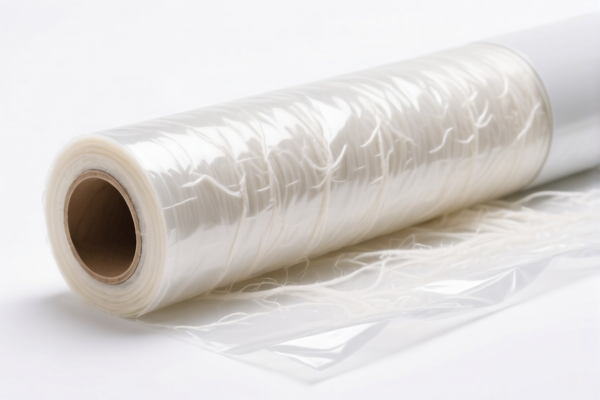
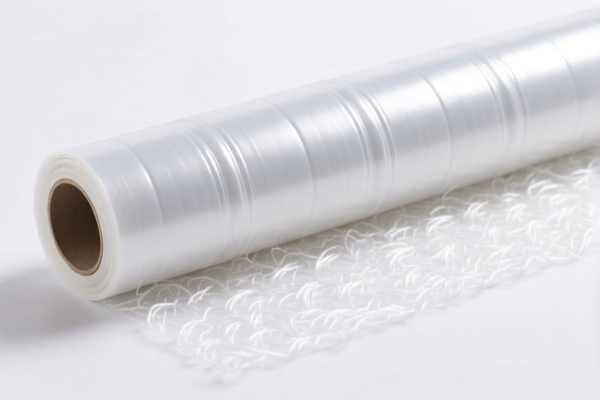
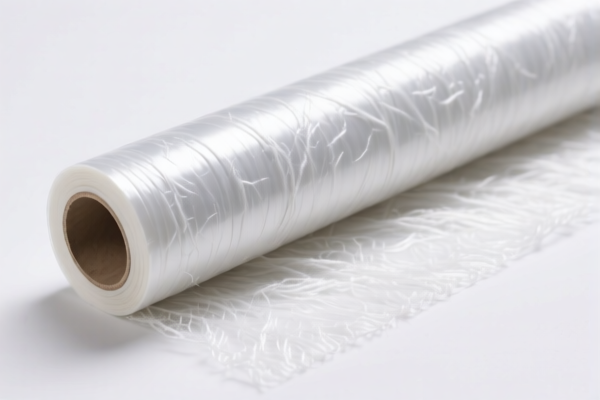
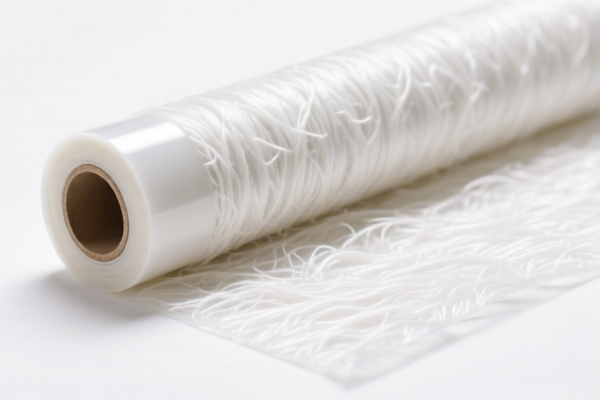
商品图片
AI分析
🏗️ Plastic Ceiling Roll with Artificial Fiber Backing: HS Code Classification & Customs Clearance Strategy
🌐 HS Code Reference & Customs Guide | 2026 Latest Tariff Analysis | Professional Clearance Strategy
📌 I. Product Definition & Classification: What Exactly Is This "Plastic Ceiling Roll"?
Plastic Ceiling Roll with Artificial Fiber Backing is a composite building material consisting of a plastic surface layer (typically PVC or similar polymer) laminated or bonded to an artificial fiber textile backing. In international trade, it sits at the intersection of Plastics and Textiles, leading to potential classification disputes.
The key to correct classification lies in determining the essential character of the product: * Is it primarily a textile product impregnated with plastic? (Goes to Chapter 59) * Is it primarily a plastic article, where the fiber backing is merely a minor reinforcing layer? (Goes to Chapter 39)
⚠️ Key Distinction Point: - If the product is a sheet/roll where the plastic coating/impregnation is dominant in function and value → Often 5903. - If the product is considered a generic plastic construction article with textile reinforcement → Often 3926. - Note: The provided data indicates four specific classifications based on nuanced interpretations of "plastic material," "textile nature," and "兜底 (catch-all)" rules.
📦 II. HS Code Classification Details (2026 Latest Tariff Authority Comparison)
| HS Code | Product Description (Based on Data) | Key Matching Criteria | Classification Logic |
|---|---|---|---|
| 5903.10.20.10 | Plastic ceiling roll with artificial fiber backing | Matches plastic material + roll form; Fits impregnated plastic textile fabric characteristics. | Primary Logic: Textile Focus. The product is viewed as a textile fabric impregnated/coated with plastic. |
| 3926.90.99.89 | Plastic ceiling roll with artificial fiber backing | Matches plastic material + roll form; Belongs to the catch-all category for other plastic articles. | Primary Logic: Plastic Focus (Generic). Treated as a miscellaneous plastic article because it doesn't fit specific plastic headnotes better. |
| 5903.10.20.90 | Plastic ceiling roll with artificial fiber backing | Matches plastic/artificial fiber materials + roll form; Belongs to plastic-containing textile coverings. | Primary Logic: Textile Covering. Similar to .10 but categorized under a different sub-heading for textile coverings/sheets. |
| 3926.90.57.00 | Plastic ceiling roll with artificial fiber backing | Matches plastic material + roll form; Fits classification logic for plastic articles containing textile fibers. | Primary Logic: Specific Plastic Article. A more specific plastic category for items containing textile fibers, often carrying higher duties. |
🔍 Critical Reminder: - 5903 Codes generally treat the item as a textile product modified by plastic. - 3926 Codes treat the item as a plastic product with textile reinforcement. - The choice significantly impacts the Total Tax Rate (ranging from 22.8% to 41.5%).
💰 III. 2026 Latest Tariff Rate Details (Including Surtaxes & Policy Add-ons)
✅ Applicable Country: United States (US)
✅ Origin: China (CN)
✅ Effective Time: Post-November 2025 (Including subsequent imports)
🎯 1. 5903.10.20.10 & 5903.10.20.90 —— Impregnated Plastic Textiles
Both codes fall under the "Impregnated Plastic Textiles" category, attracting the highest surtaxes due to their textile/plastic hybrid nature and current trade policies.
| Item | Content |
|---|---|
| Base Duty Rate | 0.0% (Ad Valorem) |
| USITC Section 301 Surcharge | +25.0% (From USITC Footnote regarding Section 301) |
| IEEPA 122 Clause Surcharge | +10.0% (Specific China-targeted tariff under Section 122 of the 122 Clause regulation) |
| Total Tax Rate | 35.0% |
| Tax Calculation | CIF Value × 35% |
| De Minimis Eligibility | ❌ Not Eligible (High tariff item usually excluded from $800 de minimis exemption if flagged) |
| Legal Path | HTSUS:5903.10.20 → USITC:301 Section → IEEPA:122 Clause |
📌 Explanation: - Although the base duty is 0%, the 25% Section 301 tariff and 10% IEEPA 122 surcharge are applied. - These codes are subject to the same high effective rate despite minor structural differences in the HS sub-codes. - Risk: High scrutiny on "essential character" to prevent misclassification to lower-taxed plastic codes.
🎯 2. 3926.90.99.89 —— Other Plastic Articles (Catch-All)
This code is classified under "Other Plastic Articles," serving as a residual category. It attracts a moderate base rate but lower surcharges.
| Item | Content |
|---|---|
| Base Duty Rate | 5.3% (Ad Valorem) |
| USITC Section 301 Surcharge | +7.5% (Note: Not all 3926 subheads attract the full 25%; some specific lists apply lower rates) |
| IEEPA 122 Clause Surcharge | +10.0% |
| Total Tax Rate | 22.8% |
| Tax Calculation | CIF Value × 22.8% |
| De Minimis Eligibility | ❌ Not Eligible (Generally, plastic articles from China are subject to these surcharges) |
| Legal Path | HTSUS:3926.90.99 → USITC:301 Section (Specific List) → IEEPA:122 Clause |
📌 Note: - This is the most cost-effective option among the four, with a total rate of 22.8%. - Classification here argues that the plastic composition is dominant, and the textile backing is secondary.
🎯 3. 3926.90.57.00 —— Plastic Articles with Textile Fibers
This code is more specific than the catch-all 3926.90.99.89, targeting plastic articles containing textile fibers. It carries the highest total burden due to a higher base rate and maximum surcharges.
| Item | Content |
|---|---|
| Base Duty Rate | 6.5% (Ad Valorem) |
| USITC Section 301 Surcharge | +25.0% (Full Section 301 rate applies) |
| IEEPA 122 Clause Surcharge | +10.0% |
| Total Tax Rate | 41.5% |
| Tax Calculation | CIF Value × 41.5% |
| De Minimis Eligibility | ❌ Not Eligible |
| Legal Path | HTSUS:3926.90.57 → USITC:301 Section → IEEPA:122 Clause |
📌 Warning: - This is the most expensive classification at 41.5%. - It is only recommended if the product cannot be justified as a "textile fabric" (5903) or a generic "plastic article" (3926.99). - The combination of a higher base rate (6.5%) and the full 25% surcharge makes it the worst-case scenario.
🛠️ IV. Customs Clearance Practical Advice (Battle-Proven Pitfall Guide)
✅ 1. Preparation Checklist (Non-Negotiable)
| Document | Must Provide | Explanation |
|---|---|---|
| ✅ Product Specification Sheet | ✔️ | Detail layers: Plastic type (PVC/PE/etc.), thickness, backing fiber type (Polyester/Nylon/etc.), and bonding method. |
| ✅ Bill of Materials (BOM) | ✔️ | Show weight/percentage of plastic vs. textile. Essential for arguing "Essential Character." |
| ✅ Product Photos (Cross-Section) | ✔️ | Show the lamination/bonding interface to prove it's a single composite article, not separate goods. |
| ✅ Commercial Invoice | ✔️ | Must clearly state: "Plastic Ceiling Roll with Artificial Fiber Backing" and HS Code. |
| ✅ Packing List | ✔️ | Consistent with invoice. Include net/gross weight accurately. |
| ✅ Proof of Origin (CO) | ✔️ | If transshipped, ensure no tariff evasion is suspected. |
✅ 2. Declaration Tips (Key Mnemonic)
🔥 "Define the Character, Don't Guess the Code!"
| Scenario | Correct Declaration | Wrong Action | Consequence |
|---|---|---|---|
| Plastic is Primary | 3926.90.99.89 (22.8%) |
Declare as Textile (5903) → 35% | Overpaid 12.2% |
| Textile is Primary | 5903.10.20.10 (35.0%) |
Declare as Plastic (3926) → 22.8% | Undeclared Tax → Penalty/Seizure |
| High-Value Composite | 3926.90.57.00 (41.5%) |
Any other code | Highest Tax Burden |
| Mix of Goods | Separate Line Items | Combine into one | Customs Audit Risk |
📌 Strategic Recommendation: - If your product is a simple lamination where the plastic layer is thick and structural, argue for 3926.90.99.89 (22.8%). This saves significant cost compared to 35% or 41.5%. - If the product is essentially a plastic-coated fabric used for ceiling tiling/acoustics, customs may insist on 5903 (35.0%). - Avoid
3926.90.57.00unless explicitly required by product structure, as it has the highest tax.
✅ 3. Special Case Handling
| Scenario | Handling Advice |
|---|---|
| OEM Custom Colors/Prints | Ensure invoice lists "Blank Roll" if unprinted, or "Printed Roll" if printed. Printing doesn't change HS code but affects value declaration. |
| Re-Export/Transshipment | If shipped via Vietnam/Mexico, ensure Substantial Transformation occurs. Otherwise, US Customs will apply China-origin surcharges (25% + 10%). |
| Dispute with CBP | If classified as 5903 but you claim 3926, submit Explanatory Notes and Technical Specs proving plastic is the essential character. |
🌍 V. Global Market Comparison (2026 Update)
| Country/Region | Recommended HS Code | Est. Duty (China Origin) | Notes |
|---|---|---|---|
| 🇺🇸 USA | 3926.90.99.89 |
22.8% (Best Case) | Subject to 301 + IEEPA 122. High risk of audit. |
| 🇪🇺 EU | 5903.10.20 |
~6.5% | No 301-style surcharges. Lower base duty. |
| 🇨🇳 China | 3926.90.99 |
5.3% | Import duty only. No surtaxes. |
| 🇨🇦 Canada | 3926.90.99 |
~5-10% | MFN rates apply. No major surcharges. |
📌 Conclusion: - The US market is the most challenging due to the叠加 (stacking) of Section 301 (25%) and IEEPA 122 (10%). - Optimization Strategy: Aim for 3926.90.99.89 (22.8%) by proving plastic dominance. Avoid 3926.90.57.00 (41.5%) and 5903 (35%) if possible.
📌 VI. Common Errors & Pitfall Guide (Lessons Learned)
❌ Error 1: Declaring as "Plastic Ceiling Tiles" instead of "Rolls"
👉 Consequence: If the product is in roll form, it may not fit the "tile" description. Misleading description → Delay.
❌ Error 2: Ignoring the "Artificial Fiber Backing" in description
👉 Consequence: Customs may classify as pure plastic (3926) or pure textile (5903) incorrectly. Always mention both layers.
❌ Error 3: Assuming 0% Base Duty = 0% Total Tax
👉 Consequence: For 5903 codes, base is 0%, but 35% total tax applies. Many importers get shocked by the final cost.
❌ Error 4: Using the same HS Code for different products
👉 Consequence: If one product is plastic-dominated and another is textile-dominated, using the same code for both increases audit risk. Customize description per product.
✅ Correct Declaration Example:
"Plastic Ceiling Roll, PVC Surface with Artificial Fiber Backing, 1.2mm Thick, Roll Form, for Commercial Ceiling Installation. HS Code: 3926.90.99.89"
🎯 VII. Conclusion: Precision Classification for Cost Savings
🎯 Remember the Golden Rule:
🔹 "Plastic Dominant = 3926 (Lower Tax if possible)"; "Textile Dominant = 5903 (Higher Tax)"; "Specific Composite = 3926.57 (Highest Tax)"
🔹 "22.8% vs 35% vs 41.5% — A 12-18% Difference is Huge!"
🔹 "Don't Guess: Provide Specs to CBP for Pre-Ruling!"
📌 Pro Tip:
If your product can be reasonably argued as a generic plastic article (3926.90.99.89), leverage technical specs (plastic thickness, weight ratio) to justify this. This saves you 12.2% compared to the textile classification and 18.7% compared to the specific composite classification.
📣 Immediate Action:
📞 Consult a Customs Broker with your BOM and Cross-Section Photos.
🚀 Request a Binding Ruling from US CBP if the value is high.
💼 Optimize Your Supply Chain to avoid the 35-41% tax trap.
✨ Professional Clearance Starts with Accurate Classification!
💼 Every Percentage Point Saved is Pure Profit!
用户评价
关于 HS 编码归类
协调制度(HS)是由世界海关组织(WCO)制定的国际贸易商品分类标准。全球 200 多个国家采用 HS 系统作为海关关税、贸易统计和进出口监管的基础。
每个 HS 编码遵循以下层级结构:
- 章(2 位)——商品大类(例如:第 84 章:机器和机械设备)
- 品目(4 位)——章内的更具体分类
- 子目(6 位)——国际通用细分,所有 WCO 成员国统一使用
- 本国细分(8-10 位)——各国自行扩展的细分编码,如美国 HTSUS 10 位编码
正确的 HS 编码归类对于顺利通关、准确缴纳关税和遵守贸易法规至关重要。错误归类可能导致海关延误、多缴关税或罚款。
从CN进口到US时,适用的关税税率可能包括:
- 最惠国(MFN)税率——适用于 WTO 成员国的标准关税税率
- 普通税率——适用于无贸易协定国家
- 贸易救济关税——附加关税,如 301 条款(反倾销)、232 条款(国家安全)或反补贴税
本页内容仅供参考。如需正式归类,请咨询当地海关或持牌报关代理。