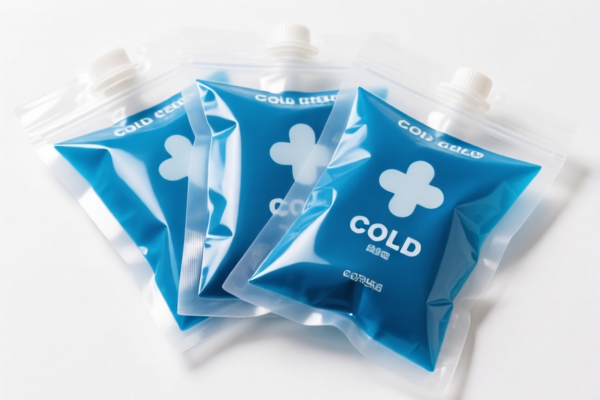
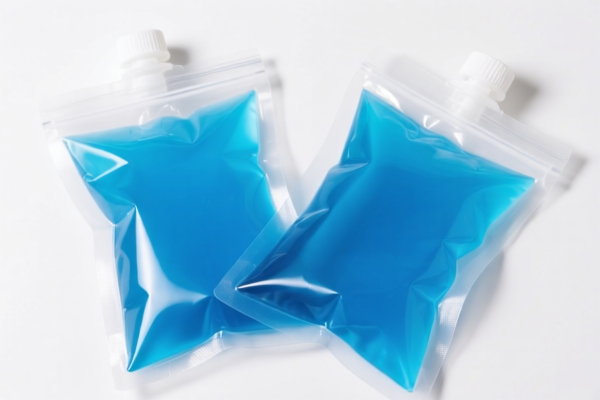
Plastic Cold Compress Bag
CN → US| HS编码 | 关税税率 | 原产国 | 目的国 | 文档 |
|---|---|---|---|---|
| 3923290000 | 38.0% | CN | US | 官方文档 |
| 6307909891 | 24.5% | CN | US | 官方文档 |
| 4202920809 | 42.0% | CN | US | 官方文档 |
| 4202920807 | 42.0% | CN | US | 官方文档 |
| 6307909884 | 24.5% | CN | US | 官方文档 |
| 3923210095 | 38.0% | CN | US | 官方文档 |
商品图片


AI分析
🧊 Plastic Cold Compress Bag (Thermal Insulated Bag)
🌐 HS Code Reference & Customs Clearance Guide | 2026 Latest Tariff Full Analysis | Professional Clearance Strategy
📌 I. Product Definition & Classification: What Exactly is a "Plastic Cold Compress Bag"?
A Plastic Cold Compress Bag is a flexible container used for transporting or storing temperature-sensitive goods (food, pharmaceuticals) or for therapeutic use. In international trade, classification depends heavily on the outer surface material and the primary function (packaging vs. insulated article).
⚠️ Key Classification Logic:
- If the bag is primarily a plastic pouch/sack for transport/packaging → Classify under Chapter 39 (Plastics).
- If the bag is a finished article made of plastic/fibers with insulation properties → Classify under Chapter 63 (Other Made-up Articles).
- If the bag’s outer surface is textile-based (even if lined with plastic/insulation) → Classify under Chapter 42 (Leather goods/Travel goods).
📦 II. HS Code Classification Details (2026 Latest Tariff Authority Comparison)
| HS Code | Product Description | Application Scenario | Outer Material | Insulation Type |
|---|---|---|---|---|
3923.29.00.00 |
Plastic Sacks & Bags (Other) | General plastic transport bags, bulk food packaging | Plastic (Non-PE Film) | Often includes foam/aluminum foil lining |
3923.21.00.95 |
Plastic Sacks & Bags (PE) | Polyethylene film bags, standard cold chain packaging | Polyethylene (PE) | Basic thermal retention |
6307.90.98.91 |
Other Made-up Articles | Finished insulated bags, composite material bags | Plastic or Composite | Dedicated insulation layer |
6307.90.98.84 |
Other Made-up Articles | Bags made of plastic or artificial fibers | Plastic/Artificial Fiber | Commercial food delivery bags |
4202.92.08.09 |
Articles of Travel, Sanitary or Similar Totes | Luxury/Professional insulated coolers | Textile Material | High-end insulation |
4202.92.08.07 |
Insulated Food Bags | Food-grade insulated totes with textile exterior | Artificial Fibers/Textile | Medical/Food preservation |
🔍 Critical Reminder:
- "Plastic" in HS Chapter 39 usually refers to the material of the bag itself (sacks/pouches).
- "Insulated/Food Bag" in HS Chapter 42/63 refers to finished articles where the outer material defines the chapter.
- If the bag has a textile exterior (even with plastic lining), do NOT classify under Chapter 39; it must be Chapter 42 or 63.
💰 III. 2026 Latest Tariff Rate Details (Including Additional Taxes & Policy Surcharges)
✅ Applicable Country: United States (US)
✅ Origin: China (CN)
✅ Effective Date: From November 10, 2025 (Including subsequent imports)
🎯 1. 3923.29.00.00 & 3923.21.00.95 —— Plastic Sacks & Bags (Chapter 39)
| Item | Content |
|---|---|
| Base Tariff | 3.0% (ad valorem) |
| Section 301 Additional Tariff | +25.0% (For China Origin) |
| Section 122 Tariff (IEEPA) | +10.0% (For China Origin) |
| Total Tax Rate | 38.0% |
| Tax Calculation | CIF Value × 38.0% |
| De Minimis Exemption | ❌ Not Eligible (deny_de_minimis) |
| Legal Basis Path | USITC:3923.29.00.00 → 301_FOOTNOTE:3923 → IEEPA:122_China |
📌 Explanation:
- These codes cover plastic packaging bags. Even if they are "cold" bags, if they are classified as plastic sacks, they attract the 3.0% base + 25% Section 301 + 10% Section 122.
- Total 38% is significantly higher than standard non-China imports.
🎯 2. 6307.90.98.91 & 6307.90.98.84 —— Other Made-up Articles (Chapter 63)
| Item | Content |
|---|---|
| Base Tariff | 7.0% (ad valorem) |
| Section 301 Additional Tariff | +7.5% (Partial/Reduced 301 Rate) |
| Section 122 Tariff (IEEPA) | +10.0% (For China Origin) |
| Total Tax Rate | 24.5% |
| Tax Calculation | CIF Value × 24.5% |
| De Minimis Exemption | ❌ Not Eligible |
| Legal Basis Path | USITC:6307.90.98.91 → 301_FOOTNOTE:6307 → IEEPA:122_China |
📌 Note:
- Chapter 63 "Other Made-up Articles" often enjoy lower Section 301 surcharges (7.5%) compared to Chapter 39 (25%).
- This is a strategic classification advantage if the product fits the definition of "Other Made-up Articles" (e.g., complex composite materials, finished insulated structures).
🎯 3. 4202.92.08.09 & 4202.92.08.07 —— Travel/Textile Insulated Bags (Chapter 42)
| Item | Content |
|---|---|
| Base Tariff | 7.0% (ad valorem) |
| Section 301 Additional Tariff | +25.0% (Full 301 Rate) |
| Section 122 Tariff (IEEPA) | +10.0% (For China Origin) |
| Total Tax Rate | 42.0% |
| Tax Calculation | CIF Value × 42.0% |
| De Minimis Exemption | ❌ Not Eligible |
| Legal Basis Path | USITC:4202.92.08.09 → 301_FOOTNOTE:4202 → IEEPA:122_China |
📌 Warning:
- Although Chapter 42 has a low base rate (7%), the Section 301 surcharge is high (25%).
- This applies if the bag’s outer surface is textile (e.g., Oxford cloth, Nylon with fabric coating).
- Total 42% is the highest among all listed codes. Avoid this classification if possible unless the product is clearly a "travel/toilet bag" rather than a "packaging bag".
🛠️ IV. Customs Clearance Practical Advice (Battle-Tested Pitfall Guide)
✅ 1. Required Documentation Checklist (Must-Haves)
| Document | Required | Description |
|---|---|---|
| ✅ Product Specification Sheet | ✔️ | Must state: Outer material, inner lining (foil/foam), capacity, usage |
| ✅ Material Composition | ✔️ | % of Plastic vs. Textile vs. Insulation. Critical for Chapter 39 vs. 63/42 |
| ✅ Product Photos (Clear) | ✔️ | Show logo, zippers, handles, and material texture |
| ✅ Commercial Invoice | ✔️ | Describe as "Insulated Plastic Bag" or "Textile Insulated Tote", NOT just "Bag" |
| ✅ Packing List | ✔️ | Indicate if sold as single unit or bulk rolls |
| ✅ Third-Party Test Report | ✔️ | Food contact safety (FDA/LFGB) if used for food; ASTM for insulation performance |
✅ 2. Declaration Tips (Key Mantras)
🔥 “Material Dictates Chapter, Finish Dictates Code, Name Must Match!”
| Scenario | Correct Declaration | Wrong Practice |
|---|---|---|
| Pure Plastic Bag (No fabric) | 3923.29.00.00 or 3923.21.00.95 |
Calling it "Insulated Cooler Bag" → Risk of Chapter 42 (42%) |
| Composite Bag (Plastic + Foam + Zipper) | 6307.90.98.91 |
Calling it "Plastic Sack" → Could be challenged as "Finished Article" |
| Textile Exterior Bag (Fabric outer, plastic inner) | 4202.92.08.09 or 6307.90.98.84 |
Calling it "Plastic Bag" → Misclassification (Should be Chapter 42/63) |
| Food-Grade Insulated Bag | 6307.90.98.91 |
Using 3923 → May miss "Made-up Article" criteria |
💡 Pro Tip:
If the bag is primarily for packaging (e.g., bulk ice cream transport), lean towards Chapter 39.
If the bag is for retail/individual use (e.g., lunch bag, medical cold pack carrier), lean towards Chapter 63 to avoid the 25% Section 301 on plastics.
✅ 3. Special Handling for "Cold Compress"
| Scenario | Handling Suggestion |
|---|---|
| With Gel Pouches Inside | Declare Bag Only as main item. Gel pouches are accessories. Ensure invoice separates them if tariffs differ. |
| Refrigerated Transport | If used for cold chain logistics, emphasize "Packaging Material" to support Chapter 39/63. |
| Medical Use | If marketed as "Medical Cold Compress", provide CE/FDA certificates. May still fall under Chapter 63/42 if textile-based. |
🌍 V. Global Market Clearance Comparison (2026 Latest)
| Country/Region | Recommended HS Code | Tariff (China Origin) | Certification | Notes |
|---|---|---|---|---|
| 🇺🇸 USA | 6307.90.98.91 |
24.5% | FDA/LFGB (if food) | Best Balance: Lower Section 301 than Ch.39 |
| 🇺🇸 USA | 3923.29.00.00 |
38.0% | FDA/LFGB | High cost due to 25% Section 301 on plastics |
| 🇨🇳 China | 6307.90.98.91 |
~8-10% | CCC (if electrical, but bags don't need) | Low tariff, easy entry |
| 🇪🇺 EU | 6307.90.98.91 |
0-4.7% | CE (if applicable) | Generally low tariffs for made-up articles |
| 🇬🇧 UK | 6307.90.98.91 |
0-4.7% | UKCA | Similar to EU post-Brexit |
📌 Conclusion:
- USA is the most critical market due to Section 301 and Section 122 tariffs.
- Strategy: Try to classify under Chapter 63 (6307.90.98.91) to reduce the Section 301 surcharge from 25% to 7.5%, saving 17.5% in total tax.
- Avoid Chapter 42 unless the product is explicitly a "travel/toiletry bag" to prevent the 42% total rate.
📌 VI. Common Errors & Pitfalls (Blood-Teaching Lessons)
❌ Error 1: Calling a Textile Exterior Bag a "Plastic Bag"
👉 Consequence: Customs reclassifies to 4202.92.08.09 → 42% Tax instead of potential 24.5%.
❌ Error 2: Classifying a Finished Lunch Bag under 3923 (Plastic Sacks)
👉 Consequence: Customs may argue it’s a "Made-up Article" → Change to 6307 (24.5%) which is actually better, BUT if documentation is weak, it causes delays/seizures.
❌ Error 3: Omitting "Insulated" or "Cold" in Description
👉 Consequence: Customs may classify as general plastic bag → Potential duty misalignment if origin rules differ.
❌ Error 4: Using "De Minimis" for Shipments < $800
👉 Consequence: ❌ Not Eligible for China-origin cold bags under Section 122/301. All imports taxed.
✅ Correct Declaration Example:
"Insulated Plastic Bag, Made-up Article, Outer Material: Composite Plastic, Inner Lining: Aluminum Foam, For Food Transport, Model XYZ, FDA Compliant"
→ Recommended HS:6307.90.98.91
🎯 VII. Conclusion: Professional Declaration, Save Money, Ensure Clearance!
🎯 Remember the Mantra:
🔹 "Textile Out = Ch.42 (42%)! Plastic Sack = Ch.39 (38%)! Composite Made-up = Ch.63 (24.5%)!"
🔹 "Choose Chapter 63 to save 17.5% tariff on US Imports!"
🔹 "HS Code Determines Survival, Tariff Difference is Profit!"
📌 Pro Tip:
If your cold bags are manufactured in Vietnam, Mexico, or Malaysia, you may qualify for Section 122/301 exemptions, reducing rates to 0-7%.
Recommend applying for a Customs Ruling (Pre-classification) before bulk shipment to lock in the6307.90.98.91rate.
📣 Immediate Action:
📞 Contact your Freight Forwarder + Provide Material Breakdown + Apply for HS Code Ruling
🚀 Let your Cold Compress Bags Clear Smoothly, Reduce Costs, and Boost Margins!
✨ Professional Clearance Starts with Accurate Classification!
💼 Every Cent of Cost Deserves Precise Calculation!
用户评价
关于 HS 编码归类
协调制度(HS)是由世界海关组织(WCO)制定的国际贸易商品分类标准。全球 200 多个国家采用 HS 系统作为海关关税、贸易统计和进出口监管的基础。
每个 HS 编码遵循以下层级结构:
- 章(2 位)——商品大类(例如:第 84 章:机器和机械设备)
- 品目(4 位)——章内的更具体分类
- 子目(6 位)——国际通用细分,所有 WCO 成员国统一使用
- 本国细分(8-10 位)——各国自行扩展的细分编码,如美国 HTSUS 10 位编码
正确的 HS 编码归类对于顺利通关、准确缴纳关税和遵守贸易法规至关重要。错误归类可能导致海关延误、多缴关税或罚款。
从CN进口到US时,适用的关税税率可能包括:
- 最惠国(MFN)税率——适用于 WTO 成员国的标准关税税率
- 普通税率——适用于无贸易协定国家
- 贸易救济关税——附加关税,如 301 条款(反倾销)、232 条款(国家安全)或反补贴税
本页内容仅供参考。如需正式归类,请咨询当地海关或持牌报关代理。