Plastic Commercial Plate
CN → US| HS编码 | 关税税率 | 原产国 | 目的国 | 文档 |
|---|---|---|---|---|
| 3924102000 | 24.0% | CN | US | 官方文档 |
| 3924104000 | 13.4% | CN | US | 官方文档 |
商品图片
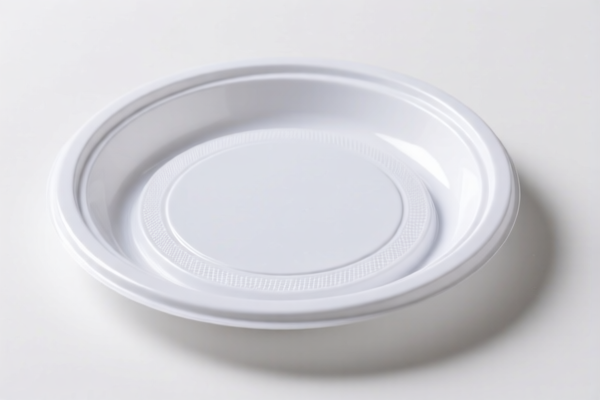
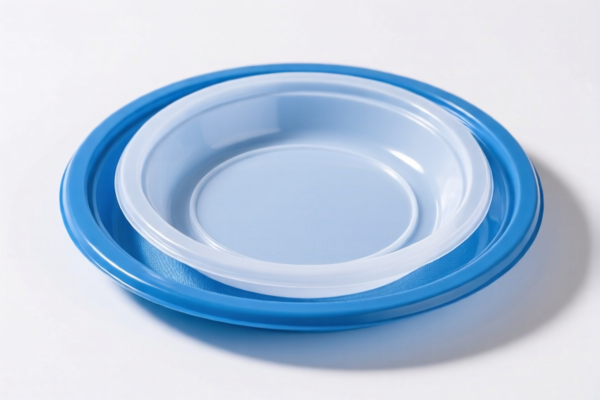
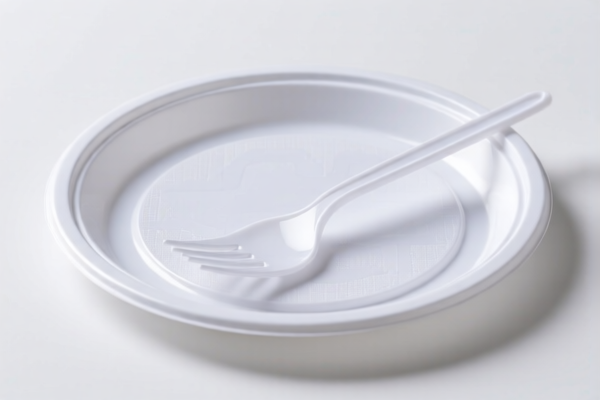
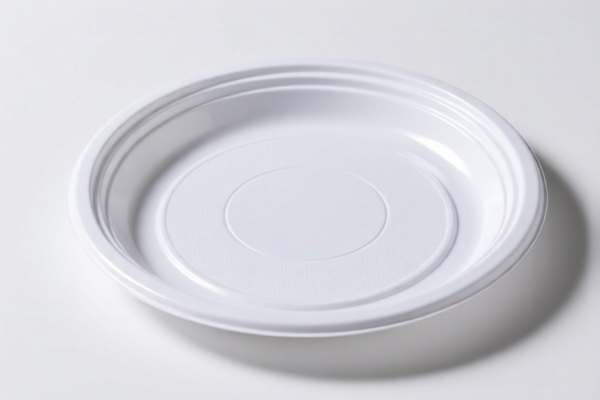
AI分析
🍽️ Plastic Commercial Plates (Tableware of Plastics)
🌐 HS Code Reference & Customs Clearance Guide | 2026 Latest Tariff Analysis | Professional通关 Strategy
📌 I. Product Definition & Classification: What Exactly Are "Plastic Commercial Plates"?
Plastic commercial plates are everyday items made entirely or principally of plastic, used for serving, eating, or holding food in both household and commercial settings (restaurants, hotels, catering). Under international trade norms (HS System), they fall under Chapter 39 (Plastics and Articles Thereof), specifically Heading 39.24.
⚠️ Critical Distinction:
The classification depends entirely on the specific shape and intended use of the item.
- If the item is a flat plate, shallow dish, or shallow bowl designed for serving meals (main course, salad, dessert) → It is classified as "Plates, cups, saucers..."
- If the item is a deep bowl, ladle, spoon, or non-specified kitchen utensil (e.g., a deep mixing bowl or a specialized serving ladle not listed as a "plate") → It is classified as "Other".
📦 II. HS Code Classification Details (2026 Latest Tariff Authority对照)
Based on the provided <DATA>, there are two possible HS Codes. The correct one depends on the physical form of the "plate."
| HS Code | Product Description | Applicable Scenario | Key Feature |
|---|---|---|---|
3924.10.20.00 |
Plates, cups, saucers, soup bowls, cereal bowls, sugar bowls, creamers, gravy boats, serving dishes and platters | Standard dinner plates, salad plates, soup bowls, platters, saucers | ✅ Specific List: Includes "Plates" and "Platters" |
3924.10.40.00 |
Other | Deep mixing bowls, specialized serving ladles, non-listed kitchenware items not fitting the "plate/bowl" definition above | ❌ Not in Specific List: General category for unlisted tableware |
🔍 Key Reminder:
- "Plates" (盘子) and "Platters" (大盘/托盘) explicitly fall under3924.10.20.00.
- If the item is a deep bowl (e.g., for soup or cereal) or a non-specified utensil, it may fall under3924.10.40.00.
- Misclassification Risk: Declaring a "Plate" as "Other" to save tax is illegal and will lead to penalties. Customs looks at the function and form, not just the material.
💰 III. 2026 Latest Tariff Rate Details (Including Additional Duties)
✅ Applicable Country: United States (US)
✅ Origin: China (CN)
✅ Effective Date: Current rates apply (based on provided data)
🎯 1. 3924.10.20.00 —— Plates, Cups, Saucers, Soup Bowls, etc. (Most Common for "Plates")
| Item | Content |
|---|---|
| Base Tariff | 6.5% (ad valorem) |
| Additional Tariff (Section 301) | 7.5% |
| Total Tariff | 14.0% |
| Tax Calculation | CIF Value × 14.0% |
| De Minimis Exemption | ❌ Not Applicable (De minimis is generally for low-value parcels; commercial shipments are subject to full duty) |
| Legal Basis Path | HTSUS: 3924.10.20.00 → Section 301 Footnote: 9903.88.01 |
📌 Explanation:
- Base Duty (6.5%): Standard MFN (Most Favored Nation) rate for plastic tableware plates.
- Additional Duty (7.5%): This is a Section 301 tariff imposed on Chinese goods.
- Total Impact: A 14% total tax burden. For a $10,000 shipment, you pay $1,400 in duties.
- Why is it higher? "Plates" are considered standard consumer goods with higher scrutiny, hence the specific listing and associated tariffs.
🎯 2. 3924.10.40.00 —— Other Tableware & Kitchenware
| Item | Content |
|---|---|
| Base Tariff | 3.4% (ad valorem) |
| Additional Tariff | 0.0% |
| Total Tariff | 3.4% |
| Tax Calculation | CIF Value × 3.4% |
| De Minimis Exemption | ❌ Not Applicable |
| Legal Basis Path | HTSUS: 3924.10.40.00 |
📌 Note:
- Base Duty (3.4%): Lower than plates because this is a general category for unlisted plastic kitchenware.
- Additional Tariff (0.0%): No Section 301 tariff applies to this specific subheading.
- Total Impact: A mere 3.4% total tax burden. For a $10,000 shipment, you pay only $340 in duties.
- Strategy: If your product is not a standard plate/bowl (e.g., a deep mixing bowl, a specialized serving utensil), this code offers significant savings.
🛠️ IV. Customs Clearance Practical Advice (Avoid Pitfalls)
✅ 1. Preparation Checklist (All Required)
| Document | Must Provide | Notes |
|---|---|---|
| ✅ Product Specification Sheet | ✔️ | Detail dimensions, material (PP, PS, Melamine, etc.), stackability, heat resistance. |
| ✅ Clear Product Photos | ✔️ | Front, side, bottom (with mold marks), and packaging views. Must clearly show it is a "Plate" or "Bowl". |
| ✅ Commercial Invoice | ✔️ | Must state "Plastic Plates" or "Plastic Kitchenware" accurately. Avoid vague terms like "Plastic Goods." |
| ✅ Packing List | ✔️ | Weight, dimensions, number of pieces per carton. |
| ✅ Material Declaration | ✔️ | Confirm if it is Food-Grade Plastic (e.g., FDA compliant). This affects safety compliance but not HS code. |
✅ 2. Classification Strategy (The "Plate" Test)
🔥 "Shape Determines Duty: Plate = 14%, Other = 3.4%!"
| Scenario | Correct HS Code | Duty Rate | Risk |
|---|---|---|---|
| Standard flat plate, dinner plate, salad plate | 3924.10.20.00 |
14.0% | ✅ Correct |
| Deep soup bowl, cereal bowl, saucer | 3924.10.20.00 |
14.0% | ✅ Correct |
| Large serving platter | 3924.10.20.00 |
14.0% | ✅ Correct |
| Deep mixing bowl (not for serving individual portions) | 3924.10.40.00 |
3.4% | ⚠️ Verify with Customs |
| Plastic ladle, spoon, fork set | 3924.10.40.00 |
3.4% | ⚠️ Verify with Customs |
📌 Critical Tip:
- Do NOT misdeclare a "Plate" as "Other" to save 10.6%. Customs officers will inspect the goods. If they find plates, they will reclassify, assess the 14% duty, plus penalties and interest.
- "Other" is for items NOT listed in the first part of the description. If it’s a plate, it’s20.00. If it’s a ladle or a deep unlisted bowl, it’s40.00.
✅ 3. Special Cases & Compliance
| Situation | Handling Advice |
|---|---|
| Melamine Tableware | Still falls under HS 3924.10. Ensure it is Formaldehyde-free and meets FDA standards. Some countries require specific labeling. |
| Disposable vs. Reusable | HS Code is the same. However, "Disposable" may have different recycling/import regulations. |
| Sets (Plate + Bowl + Spoon) | If sold as a set, classify based on the essential character. If plates are dominant, use 3924.10.20.00. If mixed, consult a broker. |
| Customs Audit | Be prepared to show 3D models or prototypes if the product shape is unusual (e.g., a plate with high edges). |
🌍 V. Global Market Comparison (2026 Latest)
| Country/Region | Recommended HS Code | Tariff Rate (China Origin) | Notes |
|---|---|---|---|
| 🇺🇸 USA | 3924.10.20.00 |
14.0% | Includes 7.5% Section 301 duty. |
| 🇺🇸 USA | 3924.10.40.00 |
3.4% | No additional duty if correctly classified as "Other." |
| 🇨🇳 China | 3924.10.20.00 |
0% (Export) / Import ~6.5% | Export is duty-free. |
| 🇪🇺 EU | 3924.10.20.00 |
~6.5% | No Section 301. Standard MFN rate. |
| 🇬🇧 UK | 3924.10.20.00 |
~6.5% | Post-Brexit tariff structure similar to EU. |
| 🇨🇦 Canada | 3924.10.20.00 |
0% (if CUSMA compliant) | Free trade under CUSMA. |
📌 Conclusion:
- USA is the most expensive market due to the 7.5% additional tariff on3924.10.20.00.
- If you are exporting to the US, accurate classification is critical. If your product can legitimately be classified as "Other" (3924.10.40.00), you save 10.6% in taxes.
- For Europe/Canada, the difference is less critical (no Section 301), but accurate declaration is still required for compliance.
📌 VI. Common Mistakes & Pitfalls (Blood Tears Lessons)
❌ Mistake 1: Calling all plastic dishes "Plates" and using 3924.10.20.00 for deep mixing bowls.
👉 Consequence: Overpaying tax by 10.6%.
👉 Fix: Verify if the item is a "serving plate/bowl" or a "kitchen utensil." Deep mixing bowls may qualify for 3924.10.40.00.
❌ Mistake 2: Declaring "Plates" as "Kitchen Accessories" to avoid the 7.5% tariff.
👉 Consequence: Customs rejection, reclassification, fines, and delay.
👉 Fix: Be honest. If it’s a plate, declare it as a plate. Consider if your design fits the "Other" category.
❌ Mistake 3: Ignoring the "Section 301" impact.
👉 Consequence: Budgeting for 6.5% but paying 14%.
👉 Fix: Always calculate Total Tax = Base + Additional.
✅ Correct Practice:
"Plastic Dinner Plate, 10-inch, White, Melamine, Food-Grade, for Restaurant Use" →
3924.10.20.00
"Plastic Mixing Bowl, 5-Quart, Deep, for Kitchen Use" →3924.10.40.00(Consult expert)
🎯 VII. Conclusion: Professional Declaration, Cost Optimization!
🎯 Remember the Mantra:
🔹 "Plates & Platters = 14% (3924.10.20.00)"
🔹 "Other Kitchenware = 3.4% (3924.10.40.00)"
🔹 "Shape is King, Don’t Lie, Or You’ll Cry!"
📌 Pro Tip:
If you have deep bowls or specialized serving utensils, do not automatically assume they are "plates." Work with your customs broker to see if they qualify as "Other" (3924.10.40.00) to save on the 7.5% additional tariff. For standard plates, budget for the 14% total duty.
📣 Action Required:
📞 Confirm product shape with manufacturer
📸 Send clear photos to customs broker
🧮 Calculate total landed cost including 14% (or 3.4%) duty
🚀 Clear customs smoothly, maximize profit!
✨ Professional Classification Starts Here!
💼 Every percentage point matters in global trade!
用户评价
关于 HS 编码归类
协调制度(HS)是由世界海关组织(WCO)制定的国际贸易商品分类标准。全球 200 多个国家采用 HS 系统作为海关关税、贸易统计和进出口监管的基础。
每个 HS 编码遵循以下层级结构:
- 章(2 位)——商品大类(例如:第 84 章:机器和机械设备)
- 品目(4 位)——章内的更具体分类
- 子目(6 位)——国际通用细分,所有 WCO 成员国统一使用
- 本国细分(8-10 位)——各国自行扩展的细分编码,如美国 HTSUS 10 位编码
正确的 HS 编码归类对于顺利通关、准确缴纳关税和遵守贸易法规至关重要。错误归类可能导致海关延误、多缴关税或罚款。
从CN进口到US时,适用的关税税率可能包括:
- 最惠国(MFN)税率——适用于 WTO 成员国的标准关税税率
- 普通税率——适用于无贸易协定国家
- 贸易救济关税——附加关税,如 301 条款(反倾销)、232 条款(国家安全)或反补贴税
本页内容仅供参考。如需正式归类,请咨询当地海关或持牌报关代理。