Plastic Crosslinking Agent
CN → US| HS编码 | 关税税率 | 原产国 | 目的国 | 文档 |
|---|---|---|---|---|
| 2942003500 | 41.5% | CN | US | 官方文档 |
| 3824994900 | 41.5% | CN | US | 官方文档 |
| 3907290000 | 41.5% | CN | US | 官方文档 |
| 2942005000 | 38.7% | CN | US | 官方文档 |
| 3824992900 | 41.5% | CN | US | 官方文档 |
商品图片
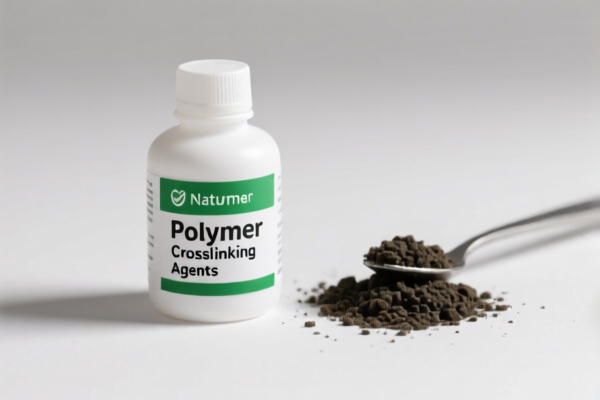
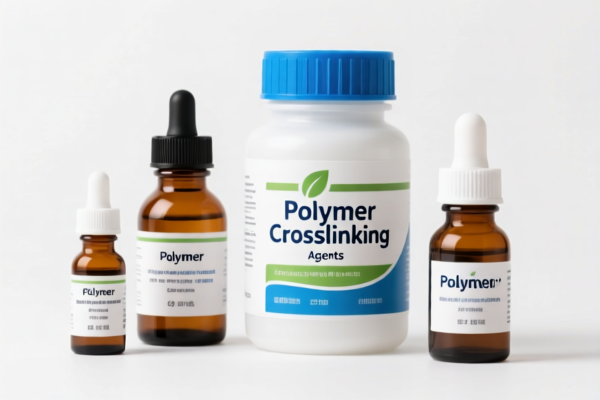
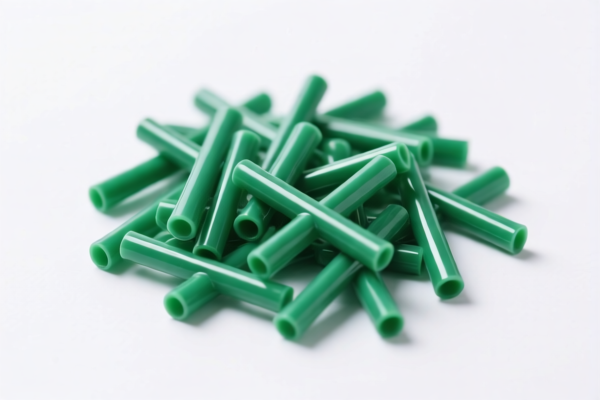

AI分析
🧪 Plastic Crosslinking Agent (Plastic Crosslinker)
🌐 HS Code Reference & Customs Clearance Guide | 2026 Latest Tariff Analysis | Professional-Level Strategy
📌 1. Product Definition & Classification: Do You Really Understand "Plastic Crosslinking Agents"?
A Plastic Crosslinking Agent is a chemical additive used in the polymer industry to create covalent bonds between polymer chains. This process, known as crosslinking or vulcanization, transforms thermoplastics into more durable, heat-resistant, and chemically stable thermosets or improves the properties of existing plastics (e.g., PE-RT pipes, cross-linked polyethylene).
In international trade, these agents are classified based on their chemical nature (organic compounds) vs. their function (chemical preparations/modified products). There is no single "crosslinking" code; you must choose the best fit based on the specific chemical composition.
⚠️ Key Classification Point:
- If the agent is a pure organic chemical (e.g., a specific ester, ether, or small molecule) → Use Chapter 29 (2942.00).
- If the agent is a prepared mixture, formulation, or modified chemical product → Use Chapter 38 (3824.99).
- If it is chemically similar to resins or polyethers but used as an additive → Use Chapter 39 (3907.29).
📦 2. HS Code Classification Details (2026 Latest Tariff Authority Comparison)
| HS Code | Product Description | Application Scenario | Basis for Classification |
|---|---|---|---|
2942.00.35.00 |
Other Organic Compounds | Pure organic crosslinkers (e.g., silanes, organic peroxides not in mixture) | Inferred from "organic compound" nature; no material conflict. |
3824.99.49.00 |
Other Prepared Chemicals & Preparations | Formulated crosslinking agents, mixtures, or industrial chemical preparations | Fits "chemical industry related products"; inferred hydrocarbon/organic origin. |
3907.29.00.00 |
Other Polyethers & Epoxy Resins | Crosslinkers with polymer/resin-like properties or ether structures | Inferred from "polymer/resin" category; fits organic polymer attributes. |
2942.00.50.00 |
Other Organic Compounds (Ethers/Esters) | Specific organic compounds like esters or ethers used as crosslinkers | Confirmed "organic compound" nature (ester/ether); no morphological conflict. |
3824.99.29.00 |
Other Prepared Chemicals (Non-Aromatic) | Modified chemical mixtures, non-aromatic crosslinking preparations | Fits "chemical preparations"; plastic material does not conflict with chemical mixture attributes. |
🔍 Critical Reminder:
- Pure Chemicals go to Chapter 29 (2942.00).
- Mixtures/Formulations go to Chapter 38 (3824.99).
- Resin-like Additives may fall under Chapter 39 (3907.29).
- Misclassification between "pure chemical" and "prepared mixture" is the #1 cause of customs delays.
💰 3. 2026 Latest Tariff Rate Breakdown (Including Surcharges & Policy Add-ons)
✅ Applicable Country: United States (US)
✅ Country of Origin: China (CN)
✅ Effective Date: From November 10, 2025 (and subsequent imports)
🎯 1. 2942.00.35.00 — Other Organic Compounds
| Item | Details |
|---|---|
| Base Tariff | 6.5% |
| USITC Add-on Tariff | +25.0% (Section 301) |
| IEEPA Add-on Tariff | +10.0% (China-specific, effective Nov 10, 2025) |
| Total Tax Rate | 41.5% |
| Tax Calculation | CIF Value × 41.5% |
| De Minimis Exemption | ❌ Not Allowed (deny_de_minimis) |
| Legal Basis Path | Base: 6.5% → USITC: 25% → IEEPA: 10% |
📌 Explanation:
- This code treats the agent as a pure organic compound.
- The total burden is high (41.5%) due to combined Section 301 and IEEPA tariffs.
- No de minimis (de minimis is denied for this category).
🎯 2. 3824.99.49.00 — Other Prepared Chemicals
| Item | Details |
|---|---|
| Base Tariff | 6.5% |
| USITC Add-on Tariff | +25.0% |
| IEEPA Add-on Tariff | +10.0% |
| Total Tax Rate | 41.5% |
| Tax Calculation | CIF Value × 41.5% |
| De Minimis Exemption | ❌ Not Allowed |
| Legal Basis Path | Base: 6.5% → USITC: 25% → IEEPA: 10% |
📌 Explanation:
- This code treats the agent as a prepared chemical mixture.
- Same high tariff burden as pure chemicals.
- Suitable if the product is a formulated blend rather than a single pure substance.
🎯 3. 3907.29.00.00 — Other Polyethers / Epoxy Resins
| Item | Details |
|---|---|
| Base Tariff | 6.5% |
| USITC Add-on Tariff | +25.0% |
| IEEPA Add-on Tariff | +10.0% |
| Total Tax Rate | 41.5% |
| Tax Calculation | CIF Value × 41.5% |
| De Minimis Exemption | ❌ Not Allowed |
| Legal Basis Path | Base: 6.5% → USITC: 25% → IEEPA: 10% |
📌 Explanation:
- This code is used if the crosslinker has polymer/resin-like characteristics (e.g., polyethers).
- Despite being in Chapter 39 (Plastics), it still attracts full USITC and IEEPA surcharges.
🎯 4. 2942.00.50.00 — Other Organic Compounds (Ethers/Esters)
| Item | Details |
|---|---|
| Base Tariff | 3.7% |
| USITC Add-on Tariff | +25.0% |
| IEEPA Add-on Tariff | +10.0% |
| Total Tax Rate | 38.7% |
| Tax Calculation | CIF Value × 38.7% |
| De Minimis Exemption | ❌ Not Allowed |
| Legal Basis Path | Base: 3.7% → USITC: 25% → IEEPA: 10% |
📌 Explanation:
- Cost-Saving Opportunity: If your crosslinker is chemically an ester or ether, this code offers a lower base rate (3.7% vs 6.5%).
- Total rate is 38.7%, saving 2.8% compared to other codes.
- Only applicable if the chemical structure clearly fits "esters/ethers."
🎯 5. 3824.99.29.00 — Other Prepared Chemicals (Non-Aromatic)
| Item | Details |
|---|---|
| Base Tariff | 6.5% |
| USITC Add-on Tariff | +25.0% |
| IEEPA Add-on Tariff | +10.0% |
| Total Tax Rate | 41.5% |
| Tax Calculation | CIF Value × 41.5% |
| De Minimis Exemption | ❌ Not Allowed |
| Legal Basis Path | Base: 6.5% → USITC: 25% → IEEPA: 10% |
📌 Explanation:
- Suitable for non-aromatic chemical mixtures.
- No tax advantage over other Chapter 38 codes.
🛠️ 4. Customs Clearance Practical Advice (Real-World Pitfall Guide)
✅ 1. Documentation Checklist (Essential)
| Document | Required? | Notes |
|---|---|---|
| ✅ MSDS (Material Safety Data Sheet) | ✔️ Mandatory | Must clearly list chemical composition and CAS numbers. |
| ✅ Technical Data Sheet (TDS) | ✔️ Recommended | Explains function (crosslinking agent) and chemical class. |
| ✅ Certificate of Composition | ✔️ Highly Recommended | Proves whether it is a pure chemical (Ch 29) or mixture (Ch 38). |
| ✅ Commercial Invoice | ✔️ Mandatory | Accurately describe as "Plastic Crosslinking Agent" + Chemical Class (e.g., "Silane Crosslinker"). |
| ✅ Packaging List | ✔️ Mandatory | Show net weight and gross weight for duty calculation. |
| ✅ Origin Certificate | ✔️ If applicable | To confirm CN origin and apply correct surcharges. |
✅ 2. Declaration Strategy (Key Mantra)
🔥 "Know Your Chemistry, Pick the Right Chapter! Pure=29, Mixture=38, Resin=39."
| Scenario | Correct HS Code | Risk of Wrong Classification |
|---|---|---|
| Pure Silane Crosslinker | 2942.00.35.00 |
Misdeclaring as mixture → Potential penalty for undervaluation/duty evasion. |
| Formulated Crosslinker Blend | 3824.99.49.00 |
Misdeclaring as pure chemical → Customs may demand more proof. |
| Ester-Based Crosslinker | 2942.00.50.00 |
Best for Cost Saving (38.7%) if chemically accurate. |
| Epoxy/Resin-like Additive | 3907.29.00.00 |
Misdeclaring → Chapter conflict, possible rejection. |
✅ 3. Special Situations
| Situation | Handling Advice |
|---|---|
| OEM/Private Label | Provide supplier’s technical specs to prove chemical nature. |
| Multi-Component Packaging | If crosslinker is sold with hardener (two-component system), declare as a set or separate components. Do not split arbitrarily. |
| Uncertain Chemical Nature | Apply for Advance Ruling (Pre-Ruling) from CBP before shipment. |
| High-Value Shipment | Consider Bonded Warehouse entry if delay is possible, to defer duty payment. |
🌍 5. Global Market Comparison (2026 Latest)
| Country/Region | Recommended HS Code | Tariff (China Origin) | Certification | Notes |
|---|---|---|---|---|
| 🇺🇸 USA | 2942.00.35.00 / 3824.99.49.00 |
41.5% (or 38.7%) | None specific | High duty burden; de minimis denied. |
| 🇨🇳 China | 2942.00.35.00 |
~5-6% | REACH-like compliance | Low import duty. |
| 🇪🇺 EU | 2942.00.00 / 3824.99 |
0-6.5% | REACH Registration | High regulatory compliance cost (REACH). |
| 🇬🇧 UK | 2942.00.00 |
0-6.5% | UK REACH | Post-Brexit regulations apply. |
| 🇯🇵 Japan | 2942.00.00 |
0-5% | PRTR Law | No US-style surcharges. |
📌 Conclusion:
- The USA is the most expensive market due to Section 301 + IEEPA surcharges.
- Japan/EU have lower tariffs but stricter chemical registration (REACH/PRTR).
- No market allows de minimis exemption for these chemical goods from China.
📌 6. Common Mistakes & Pitfalls (Lessons Learned)
❌ Mistake 1: Declaring a mixture as a pure chemical (2942.00)
👉 Consequence: Customs may reject the declaration if MSDS shows multiple ingredients, leading to delays.
❌ Mistake 2: Using vague descriptions like "Plastic Additive"
👉 Consequence: Customs may assign a generic code with higher duty or require further investigation.
❌ Mistake 3: Ignoring the IEEPA 10% Surcharge (effective Nov 2025)
👉 Consequence: Underestimating landed cost by 10%, eroding profit margins.
❌ Mistake 4: Not distinguishing between Esters/Ethers (2942.00.50) vs Other Organics (2942.00.35)
👉 Consequence: Missing out on 2.8% savings if the product is chemically an ester/ether.
✅ Correct Practice:
"Plastic Crosslinking Agent, Silane-Based, Pure Organic Compound, CAS No. XXXXX-XX-X, for PE Pipe Manufacturing"
🎯 7. Conclusion: Professional Declaration, Cost Efficiency
🎯 Remember the Mantra:
🔹 "Pure Organic = Ch 29 (38.7%-41.5%)"
🔹 "Prepared Mix = Ch 38 (41.5%)"
🔹 "Resin-like = Ch 39 (41.5%)"
🔹 "All from China = 25% + 10% Surcharge!"
📌 Pro Tip:
If your crosslinker is chemically an ester or ether, use 2942.00.50.00 to achieve the lowest rate of 38.7%.
For all other organic chemicals or preparations, the rate is 41.5%.
Always provide the MSDS and Certificate of Composition to justify your HS Code choice.
📣 Immediate Action:
📞 Consult a customs broker with your MSDS
📄 Apply for CBP Pre-Ruling if unsure
🚀 Accurate declaration avoids delays, fines, and unexpected 41.5% tariffs!
✨ Professional clearance starts with precise classification!
💼 Every dollar of duty saved is profit gained!
用户评价
关于 HS 编码归类
协调制度(HS)是由世界海关组织(WCO)制定的国际贸易商品分类标准。全球 200 多个国家采用 HS 系统作为海关关税、贸易统计和进出口监管的基础。
每个 HS 编码遵循以下层级结构:
- 章(2 位)——商品大类(例如:第 84 章:机器和机械设备)
- 品目(4 位)——章内的更具体分类
- 子目(6 位)——国际通用细分,所有 WCO 成员国统一使用
- 本国细分(8-10 位)——各国自行扩展的细分编码,如美国 HTSUS 10 位编码
正确的 HS 编码归类对于顺利通关、准确缴纳关税和遵守贸易法规至关重要。错误归类可能导致海关延误、多缴关税或罚款。
从CN进口到US时,适用的关税税率可能包括:
- 最惠国(MFN)税率——适用于 WTO 成员国的标准关税税率
- 普通税率——适用于无贸易协定国家
- 贸易救济关税——附加关税,如 301 条款(反倾销)、232 条款(国家安全)或反补贴税
本页内容仅供参考。如需正式归类,请咨询当地海关或持牌报关代理。