Plastic Doors and Windows
CN → US| HS编码 | 关税税率 | 原产国 | 目的国 | 文档 |
|---|---|---|---|---|
| 3925200010 | 22.8% | CN | US | 官方文档 |
| 3925200020 | 22.8% | CN | US | 官方文档 |
商品图片
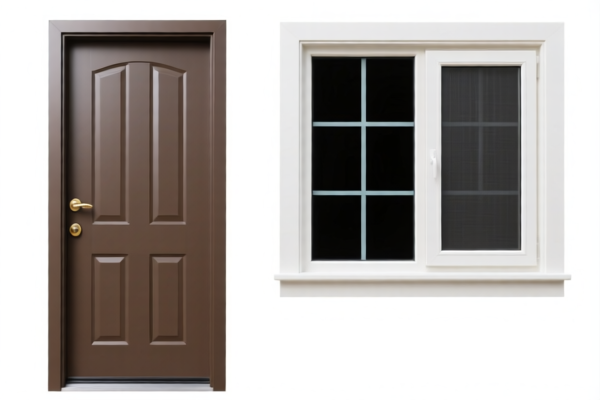
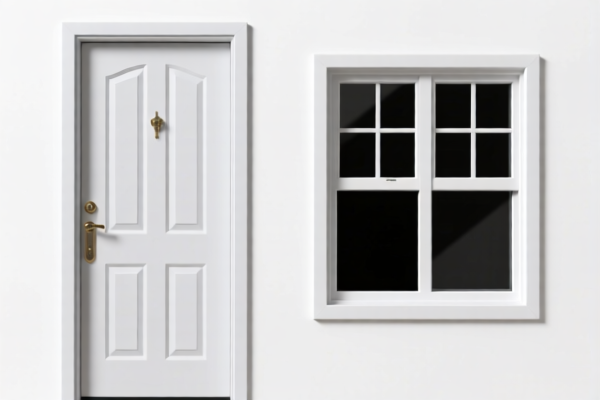
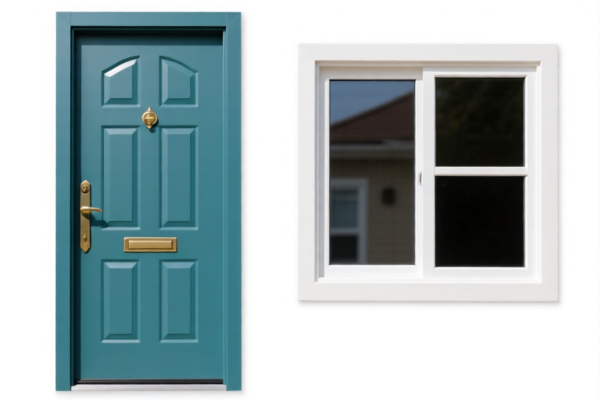
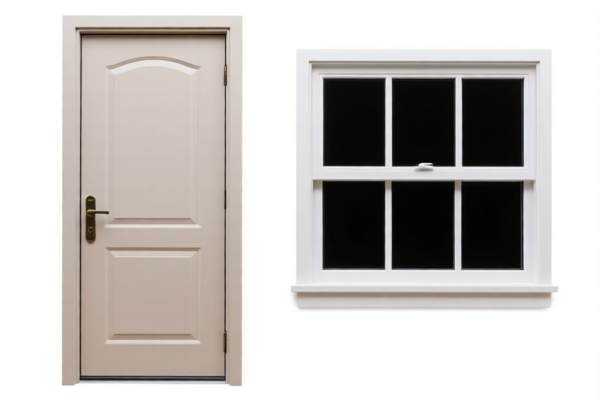
AI分析
🏠 Plastic Doors & Windows (Builders' Ware of Plastics)
🌐 HS Code Reference & Customs Clearance Guide | 2026 Latest Tariff Analysis | Professional Clearance Strategy
📌 Part 1: Product Definition & Classification: Do You Really Understand "Plastic Doors and Windows"?
In international trade, Plastic Doors and Windows fall under the category of "Builders' ware of plastics, not elsewhere specified or included." They are critical building materials used for ventilation, lighting, and security in residential and commercial constructions.
These products are strictly divided into two sub-categories based on their structure and function:
Doors and Door Frames: Rigid or semi-rigid structures designed for access control, typically including the panel, frame, and threshold. Windows and Window Frames: Structures designed primarily for light transmission and ventilation, including sash, frame, and glass (if integrated).
⚠️ Key Distinction Point:
- If the product is primarily for access (opening/closing for entry), it is classified as a Door → HS Code3925.20.00.10
- If the product is primarily for light/ventilation, it is classified as a Window → HS Code3925.20.00.20
- Crucial Note: The classification depends on the primary function, not just the material. Even if made of plastic, if it's a door, it goes to .10; if it's a window, it goes to .20.
📦 Part 2: HS Code Classification Details (2026 Latest Tariff Authority Comparison)
| HS Code | Product Description | Application Scenario | Key Identification Feature |
|---|---|---|---|
3925.20.00.10 |
Doors and Door Frames | Main entrance doors, internal room doors, sliding doors, door frames, thresholds | Primarily for access/entry; includes frames and thresholds |
3925.20.00.20 |
Windows and Window Frames | Casement windows, sliding windows, fixed windows, window frames, sills | Primarily for light/ventilation; includes frames and sashes |
🔍 Important Reminder:
- Both codes fall under Chapter 39 (Plastics and Articles Thereof), specifically Heading 3925 (Builders' ware of plastics). - Do not confuse these with wooden or metal doors/windows (which would fall under Chapter 44 or 73/76). - Thresholds are explicitly included in the Door category (3925.20.00.10). - Frames are included in both, but linked to their respective primary product (Door Frame → .10, Window Frame → .20).
💰 Part 3: 2026 Latest Tariff Rate Breakdown (Including Additional Taxes)
✅ Applicable Country: United States (US)
✅ Country of Origin: China (CN)
✅ Effective Time: Current rates apply (subject to trade policy updates)
🎯 1. 3925.20.00.10 —— Doors and Door Frames (Plastic)
| Item | Detail |
|---|---|
| Base Tariff Rate | 5.3% (Most Favored Nation) |
| Additional Tariff (Section 301) | +7.5% (Specific to Chinese origin plastics/builders' ware) |
| Total Tariff Rate | 12.8% |
| Tax Calculation | CIF Value × 12.8% |
| De Minimis Exemption | ❌ Not Applicable (Section 321 de minimis does not apply to these HS codes under current 301 rules) |
| Legal Basis | HTSUS: 3925.20.00.10 + USITC Section 301 Footnote |
📌 Explanation:
- The 5.3% is the standard MFN (Most Favored Nation) duty for plastic builders' ware. - The 7.5% is an additional duty imposed under U.S. Trade Law Section 301 on specific Chinese imports. - Total: 12.8%. This is a moderate-to-high tariff for builders' materials. Cost planning must include this 12.8% on top of the product cost.
🎯 2. 3925.20.00.20 —— Windows and Window Frames (Plastic)
| Item | Detail |
|---|---|
| Base Tariff Rate | 5.3% (Most Favored Nation) |
| Additional Tariff (Section 301) | +7.5% (Specific to Chinese origin plastics/builders' ware) |
| Total Tariff Rate | 12.8% |
| Tax Calculation | CIF Value × 12.8% |
| De Minimis Exemption | ❌ Not Applicable |
| Legal Basis | HTSUS: 3925.20.00.20 + USITC Section 301 Footnote |
📌 Note:
- The tariff rate is identical to Doors (3925.20.00.10). - Both Doors and Windows made of plastic are subject to the same 12.8% total tariff burden when imported from China to the US. - Ensure your commercial invoice clearly distinguishes between "Door" and "Window" to avoid misclassification, as incorrect classification can lead to penalties or audit risks.
🛠️ Part 4: Customs Clearance Practical Advice (Battle-Tested Pitfall Guide)
✅ 1. Preparation Checklist (Mandatory Items)
| Document | Required | Notes |
|---|---|---|
| ✅ Product Specification Sheet | ✔️ | Must specify material (e.g., PVC, U-PVC, PVC-U), dimensions, color, and usage (door/window) |
| ✅ Technical Drawing | ✔️ | Show frame structure, threshold inclusion (for doors), and glass integration (if any) |
| ✅ Product Photos | ✔️ | Clear images of the product, including labels/model numbers |
| ✅ Commercial Invoice | ✔️ | Must clearly state: "Plastic Door Frame" or "Plastic Window Frame" – Do not use generic terms like "Plastic Parts" |
| ✅ Packing List | ✔️ | Detail net/gross weight, number of pieces per carton |
| ✅ Certificate of Origin (CO) | ✔️ | Required to prove Chinese origin for tariff calculation |
✅ 2. Declaration Tips (Key Mnemonics)
🔥 "Material First, Function Clear, Frame Included, Tax at 12.8%!"
| Scenario | Correct Declaration | Wrong Practice |
|---|---|---|
| Plastic Door + Frame + Threshold | HS 3925.20.00.10 |
Misdeclare as "Plastic Parts" → Higher risk of audit |
| Plastic Window + Frame | HS 3925.20.00.20 |
Misdeclare as "Glass Products" → Wrong chapter (Ch. 70) |
| Aluminum Door with Plastic Frames | Depends on essential character | If plastic is essential → 3925.20.00.10; If aluminum is essential → Ch. 76 |
| Window Screens (Plastic Mesh) | Not 3925.20.00.20 |
Screens may fall under 3926.90 (Other plastic articles) → Check separately |
⚠️ Critical Warning:
- Thresholds are explicitly part of the Door classification. Do not declare thresholds separately unless they are sold as standalone accessories (which might fall under3926.90). - Frames are included in the main product classification. Do not split "Window" and "Window Frame" into two line items if they are sold as a set.
✅ 3. Special Cases & Handling
| Situation | Handling Advice |
|---|---|
| Mixed Plastic Materials | If the product is made of multiple plastics (e.g., PVC frame + Rubber seal), classify based on the essential character (usually the main structural material, i.e., PVC). |
| Integrated Glass | If plastic frames are sold with pre-installed glass, they are still classified as Plastic Builders' Ware (3925), not Glass (70). |
| Custom/Non-Standard Sizes | Standard classification applies. No special HS code for custom sizes. |
| Pre-Assembled vs. Knock-Down (KD) | Both are classified under the same HS code. Ensure documentation reflects the state of assembly for accurate duty valuation. |
🌍 Part 5: Global Market Comparison (2026 Latest)
| Country/Region | Recommended HS Code | Tariff Rate | Certification Requirements | Notes |
|---|---|---|---|---|
| 🇺🇸 USA | 3925.20.00.10 / .20 |
12.8% | None (General) | Highest tariff due to Section 301. |
| 🇨🇳 China | 3925.20.00.10 / .20 |
5-10% (Import) | None (Domestic) | Low import tariff; high export from China. |
| 🇪🇺 EU | 3925.20.00 |
0% - 6.5% | CE Marking (if applicable) | Often 0% under GSP or standard MFN. |
| 🇯🇵 Japan | 3925.20.00 |
6% - 8% | PSE (if electrical components) | Moderate tariff. |
| 🇦🇺 Australia | 3925.20.00 |
5% | None | Standard MFN rate. |
📌 Conclusion:
- The USA is the most expensive market for plastic doors/windows due to the 12.8% total tariff. - EU and Japan offer more competitive tariff rates (0-8%), making them potentially more attractive for export if supply chain allows.
📌 Part 6: Common Mistakes & Pitfalls (Lessons Learned)
❌ Mistake 1: Declaring "Plastic Door" as "Plastic Door Handles"
👉 Consequence: Wrong HS code (8302.41), leads to underpayment of duty (handles may have lower duty) → Penalties & Back Taxes!
❌ Mistake 2: Declaring "Window" as "Glass Panel"
👉 Consequence: Wrong HS code (7005 or 7007), leads to overpayment of duty or misclassification → Customs Audit Risk!
❌ Mistake 3: Ignoring the "Frame"
👉 Consequence: If frames are declared separately, they may be taxed at a different rate (3926.90) → Inconsistent Declaration!
❌ Mistake 4: Using Vague Terms Like "Plastic Building Materials"
👉 Consequence: Customs may request additional information → Delay in Clearance!
✅ Correct Declaration Example:
"PVC-U Plastic Window Frame with Integral Glass, Model XYZ, for Residential Use"
HS Code:3925.20.00.20
🎯 Part 7: Conclusion: Precision in Classification, Profit in Profitability
🎯 Remember the Golden Rule:
🔹 "Plastic Doors = .10, Plastic Windows = .20, Both Taxed at 12.8% in USA."
🔹 "Include Frames & Thresholds in Main Code, Don't Split!"
🔹 "Accurate Description Saves Money, Vague Description Costs Time!"
📌 Pro Tip:
- If you are importing large quantities, consider pre-arrival classification rulings from U.S. Customs and Border Protection (CBP) to ensure your HS code is correct and avoid post-import audits.
- For Section 301 exclusions, check if your specific product type has been excluded (though rare for builders' ware). If excluded, you may save the 7.5% additional tariff.
📣 Immediate Action Required:
📞 Contact your freight forwarder with Product Specs
📋 Prepare Commercial Invoice with clear "Door" or "Window" designation
📊 Calculate Landed Cost including 12.8% tariff for accurate pricing
✨ Professional Customs Clearance Starts with Accurate Classification!
💼 Your Margin Depends on the Right HS Code!
用户评价
关于 HS 编码归类
协调制度(HS)是由世界海关组织(WCO)制定的国际贸易商品分类标准。全球 200 多个国家采用 HS 系统作为海关关税、贸易统计和进出口监管的基础。
每个 HS 编码遵循以下层级结构:
- 章(2 位)——商品大类(例如:第 84 章:机器和机械设备)
- 品目(4 位)——章内的更具体分类
- 子目(6 位)——国际通用细分,所有 WCO 成员国统一使用
- 本国细分(8-10 位)——各国自行扩展的细分编码,如美国 HTSUS 10 位编码
正确的 HS 编码归类对于顺利通关、准确缴纳关税和遵守贸易法规至关重要。错误归类可能导致海关延误、多缴关税或罚款。
从CN进口到US时,适用的关税税率可能包括:
- 最惠国(MFN)税率——适用于 WTO 成员国的标准关税税率
- 普通税率——适用于无贸易协定国家
- 贸易救济关税——附加关税,如 301 条款(反倾销)、232 条款(国家安全)或反补贴税
本页内容仅供参考。如需正式归类,请咨询当地海关或持牌报关代理。