Plastic Film Laminated Folder
CN → US| HS编码 | 关税税率 | 原产国 | 目的国 | 文档 |
|---|---|---|---|---|
| 3923109000 | 38.0% | CN | US | 官方文档 |
| 3923900080 | 38.0% | CN | US | 官方文档 |
| 3926909989 | 22.8% | CN | US | 官方文档 |
| 4820300040 | 35.0% | CN | US | 官方文档 |
| 3926908700 | 40.3% | CN | US | 官方文档 |
商品图片
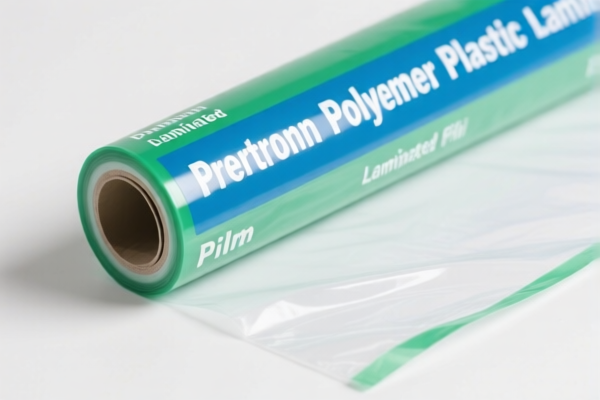
AI分析
📂 Plastic Film Laminated Folder (塑料覆膜文件夹)
🌐 HS Code Reference & Clearance Guide | 2026 Latest Tariff Analysis | Strategic Classification for Office Supplies
📌 Part I: Product Definition & Classification Strategy
A Plastic Film Laminated Folder is a common office supply used for organizing documents. In international trade, its classification depends heavily on its primary function and material composition. While it is made of plastic, it is not simply a "plastic sheet" (Chapter 39) or a generic "article of plastic" (Chapter 3926). Its specific utility determines whether it falls under office equipment accessories or general plastic articles.
⚠️ Key Classification Logic:
- If the folder is specifically designed for filing/organizing documents and made of paper/cardboard with a plastic laminate, it may fall under Chapter 48 (Paper products).
- If the folder is purely plastic and does not fit specific paper-based categories, it falls under Chapter 39 (Plastics), further细分 by specific subheading (packaging vs. other articles).
- Crucial Distinction: Is it a "folder" (for storage/organization) or a "sleeve/envelope" (for protection/packaging)?
📦 Part II: HS Code Classification Matrix (2026 Tariff Schedule)
Based on the provided data, here are the applicable HS Codes for Plastic Film Laminated Folders, categorized by their functional classification in customs records.
| HS Code | Product Description (Summary) | Primary Material | Classification Logic |
|---|---|---|---|
| 4820.30.00.40 | Other files/folders (excluding ring binders) | Paper/Board with Plastic Laminate | Best Fit for Standard Folders. Classified under paper-based office supplies because the core function is document filing, even if laminated. |
| 3923.90.00.80 | Plastic packaging/containing articles | Pure Plastic | Used if the item is considered a "plastic sleeve" or packaging for documents rather than a rigid folder. Falls under "Plastic articles for conveyance or packing of goods." |
| 3926.90.99.89 | Other plastic articles (NES) | Pure Plastic | For generic plastic folders that do not fit into packaging (3923) or specific paper categories. "Not specifically included elsewhere." |
| 3923.10.90.00 | Clips, clips, and similar items | Pure Plastic | If the "folder" is primarily a clip mechanism holding papers, rather than a folder structure. |
| 3926.90.87.00 | Flexible plastic articles | Pure Plastic | Specific to flexible plastic products that don't fit other 3926 subheadings. |
🔍 Key Takeaway:
- 4820.30.00.40 is often the most accurate for traditional laminated folders because they are viewed as "paper products with plastic coating" for organizational use.
- 3923.90.00.80 or 3926.90.99.89 are used for purely plastic sleeves or generic plastic folders where the paper component is negligible or absent.
💰 Part III: 2026 Tariff Rate Detailed Breakdown (US Imports from China)
✅ Applicable Country: United States (US)
✅ Origin: China (CN)
✅ Effective Date: Tariffs apply to imports from China as per current Section 301 and IEEPA rules.
🎯 1. 4820.30.00.40 — Other Files/Folders (Paper-Based)
| Item | Details |
|---|---|
| Base Duty Rate | 0.0% (Most paper products have 0% base duty) |
| Section 301 Duty | 25.0% (Additional tariff on Chinese goods) |
| IEEPA 122 Clause | 10.0% (Additional tariff under Executive Order) |
| Total Duty Rate | 35.0% |
| Tax Calculation | CIF Value × 35.0% |
| De Minimis Exemption | ❌ Not Eligible |
| Legal Path | Base: 0% → 301: 25% → IEEPA: 10% |
📌 Explanation:
- This is the lowest tariff rate among the plastic/paper folder options.
- Because the base duty is 0%, the additional tariffs (25% + 10%) apply to the full value.
- Why it’s cheaper: Customs views this as a paper product accessory, not a heavy industrial plastic good.
🎯 2. 3923.90.00.80 — Plastic Packaging/Containing Articles
| Item | Details |
|---|---|
| Base Duty Rate | 3.0% |
| Section 301 Duty | 25.0% |
| IEEPA 122 Clause | 10.0% |
| Total Duty Rate | 38.0% |
| Tax Calculation | CIF Value × 38.0% |
| De Minimis Exemption | ❌ Not Eligible |
| Legal Path | Base: 3% → 301: 25% → IEEPA: 10% |
📌 Explanation:
- If classified as "plastic packaging" (e.g., plastic document sleeves), the base duty is 3%.
- Total rate is 38%, which is 3% higher than the paper-based folder classification.
🎯 3. 3926.90.99.89 — Other Plastic Articles (NES)
| Item | Details |
|---|---|
| Base Duty Rate | 5.3% |
| Section 301 Duty | 7.5% (Reduced Section 301 rate for some 3926 items) |
| IEEPA 122 Clause | 10.0% |
| Total Duty Rate | 22.8% |
| Tax Calculation | CIF Value × 22.8% |
| De Minimis Exemption | ❌ Not Eligible |
| Legal Path | Base: 5.3% → 301: 7.5% → IEEPA: 10% |
📌 Explanation:
- Surprise Low Rate! Some "Other Plastic Articles" under 3926.90 have a lower Section 301 rate (7.5% vs 25%).
- Total 22.8% is the lowest total tariff if the item is strictly classified as a general plastic article (not packaging or paper-based).
- Risk: Customs may challenge this classification if the item is clearly a "folder" (4820) or "packaging" (3923).
🎯 4. 3923.10.90.00 — Clips/Clamping Items
| Item | Details |
|---|---|
| Base Duty Rate | 3.0% |
| Section 301 Duty | 25.0% |
| IEEPA 122 Clause | 10.0% |
| Total Duty Rate | 38.0% |
| Tax Calculation | CIF Value × 38.0% |
| De Minimis Exemption | ❌ Not Eligible |
📌 Explanation:
- Only applicable if the product is primarily a clip, not a folder. High risk of misclassification.
🎯 5. 3926.90.87.00 — Flexible Plastic Articles
| Item | Details |
|---|---|
| Base Duty Rate | 5.3% |
| Section 301 Duty | 25.0% |
| IEEPA 122 Clause | 10.0% |
| Total Duty Rate | 40.3% |
| Tax Calculation | CIF Value × 40.3% |
| De Minimis Exemption | ❌ Not Eligible |
| Legal Path | Base: 5.3% → 301: 25% → IEEPA: 10% |
📌 Explanation:
- Highest total tariff among valid options. Avoid this classification if possible.
🛠️ Part IV: Clearance Operational Advice (Best Practices)
✅ 1. Documentation Checklist (Critical for Folders)
| Document | Required? | Notes |
|---|---|---|
| ✅ Product Photographs | ✔️ | Must show the folder structure: Is it paper with plastic laminate? Or all plastic? |
| ✅ Bill of Materials (BOM) | ✔️ | Specify % of paper vs. plastic. Crucial for 4820 vs. 392x classification. |
| ✅ Commercial Invoice | ✔️ | Use precise description: "Laminated Paper Folder" vs. "Plastic Document Sleeve." |
| ✅ Packing List | ✔️ | Ensure quantities match invoice. |
| ✅ Customs Ruling (if available) | ✔️ | If you have a prior CBP ruling for this SKU, reference it. |
✅ 2. Classification Strategy & Risk Mitigation
| Strategy | Recommendation | Reason |
|---|---|---|
| Priority 1 | Try 4820.30.00.40 |
35% Total Duty. Best balance of accuracy and cost if the folder is paper-based with plastic coating. |
| Priority 2 | Try 3926.90.99.89 |
22.8% Total Duty. Lowest Cost! But high audit risk. Only use if the product is 100% plastic (no paper) and not used for "packaging" (3923). |
| Avoid | 3923.90.00.80 |
38% Total Duty. Higher cost than 4820. Only use if it's a clear plastic sleeve for packaging documents. |
| Avoid | 3926.90.87.00 |
40.3% Total Duty. Highest cost. Do not classify flexible folders here unless necessary. |
⚠️ Warning on
3926.90.99.89(22.8%):
- Customs may reclassify a "folder" from 3926 to 4820 if they see paper content.
- Mitigation: If you declare 3926, ensure the product is pure plastic (e.g., polypropylene sleeves) with no paper backing. If it has paper, stick to 4820.
✅ 3. Pro Tips for Cost Saving
-
Material Composition Matters:
- If your folder is paper with a plastic film overlay, use 4820.30.00.40. It’s legally accurate and has a manageable 35% rate.
- If your folder is all plastic (e.g., PP/PE sleeves), consider 3926.90.99.89 (22.8%) IF you can defend it as "other plastic articles" and not "packaging."
- Check CBP Rulings: Look for prior rulings on "plastic document sleeves" to see if they were classified under 3926 or 3923.
-
De Minimis Exemption (Section 321):
- ❌ Not Available: All these HS codes are subject to additional tariffs (Section 301/IEEPA) and are not eligible for the $800 de minimis exemption for US imports from China.
- Note: This means every single unit is taxed. Plan for cash flow accordingly.
-
Pre-Order Customs Ruling:
- If importing large volumes, apply for a Binding Tariff Information (BTI) or CBP Ruling to lock in the classification. This prevents surprise reclassification and penalties.
🌍 Part V: Global Market Comparison (2026)
| Market | Recommended HS Code | Total Duty (China Origin) | Notes |
|---|---|---|---|
| 🇺🇸 USA | 4820.30.00.40 |
35.0% | Best for laminated paper folders. |
| 🇺🇸 USA | 3926.90.99.89 |
22.8% | Lowest cost for pure plastic, but high audit risk. |
| 🇨🇳 China | 4820.30.00.40 |
~5-10% | Import duty for China is much lower. |
| 🇪🇺 EU | 4820.10.00 |
~4-6% | EU does not have Section 301/IEEPA equivalents. |
| 🇬🇧 UK | 4820.10.00 |
~4-6% | Post-Brexit tariff structure similar to EU. |
📌 Conclusion for US Importers:
- The US market is the most expensive due to additional tariffs.
-3926.90.99.89(22.8%) offers the lowest duty but requires strict product definition (pure plastic).
-4820.30.00.40(35.0%) is the safest and most common classification for standard laminated folders.
📌 Part VI: Common Mistakes & Pitfalls
❌ Mistake 1: Classifying all plastic folders as 3926.90.87.00 (40.3%).
👉 Result: Overpaying by up to 17.5% compared to other options.
❌ Mistake 2: Using 4820 for all-plastic sleeves.
👉 Result: Customs may reject it because there’s no paper content. Must use 392x codes.
❌ Mistake 3: Assuming de minimis applies.
👉 Result: Goods held at border, taxes due, and potential penalties.
✅ Correct Action:
- Paper + Plastic Laminate →
4820.30.00.40(35%)- 100% Plastic, Not Packaging →
3926.90.99.89(22.8%)- 100% Plastic, Packaging/Sleeve →
3923.90.00.80(38%)
🎯 Part VII: Final Recommendation
🎯 For "Plastic Film Laminated Folder":
1. If it contains paper: Declare as 4820.30.00.40. It’s the most defensible and has a standard 35% duty.
2. If it is 100% plastic: Try 3926.90.99.89 (22.8%) for maximum savings, but be prepared to provide material certificates proving no paper content.
3. Always include detailed product descriptions and photos in your customs entry.
📞 Next Steps:
- Contact your freight forwarder with the exact material composition (paper% vs plastic%).
- Request a pre-classification review if shipping large volumes.
- Budget for 35% duty (safe estimate) or 22.8% (aggressive estimate).
✨ Professional Clearance, Precise Classification!
💼 Every Percentage Point of Duty Impacts Your Bottom Line!
用户评价
关于 HS 编码归类
协调制度(HS)是由世界海关组织(WCO)制定的国际贸易商品分类标准。全球 200 多个国家采用 HS 系统作为海关关税、贸易统计和进出口监管的基础。
每个 HS 编码遵循以下层级结构:
- 章(2 位)——商品大类(例如:第 84 章:机器和机械设备)
- 品目(4 位)——章内的更具体分类
- 子目(6 位)——国际通用细分,所有 WCO 成员国统一使用
- 本国细分(8-10 位)——各国自行扩展的细分编码,如美国 HTSUS 10 位编码
正确的 HS 编码归类对于顺利通关、准确缴纳关税和遵守贸易法规至关重要。错误归类可能导致海关延误、多缴关税或罚款。
从CN进口到US时,适用的关税税率可能包括:
- 最惠国(MFN)税率——适用于 WTO 成员国的标准关税税率
- 普通税率——适用于无贸易协定国家
- 贸易救济关税——附加关税,如 301 条款(反倾销)、232 条款(国家安全)或反补贴税
本页内容仅供参考。如需正式归类,请咨询当地海关或持牌报关代理。