Plastic Laboratory Bottle
CN → US| HS编码 | 关税税率 | 原产国 | 目的国 | 文档 |
|---|---|---|---|---|
| 3923300090 | 38.0% | CN | US | 官方文档 |
| 3926909989 | 22.8% | CN | US | 官方文档 |
| 3926909910 | 22.8% | CN | US | 官方文档 |
| 3923300010 | 38.0% | CN | US | 官方文档 |
| 3926204050 | 16.5% | CN | US | 官方文档 |
商品图片
AI分析
🧪 Plastic Laboratory Bottle (Small Vials/Flasks)
🌐 HS Code Reference & Customs Clearance Guide | 2024-2026 Latest Tariff Analysis | Professional Customs Strategy
📌 I. Product Definition & Classification: Do You Really Understand "Plastic Lab Bottles"?
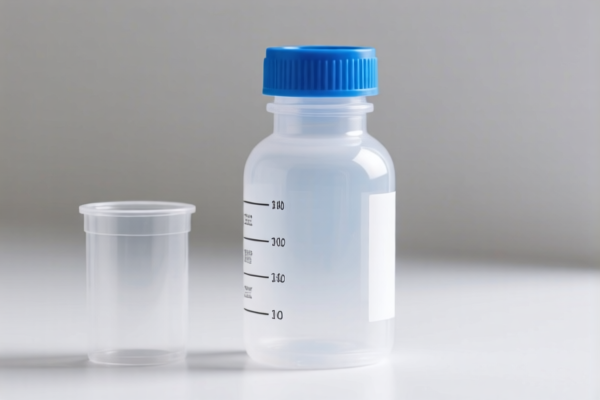
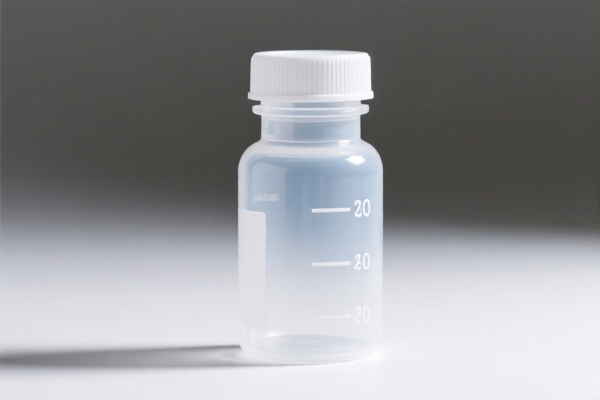
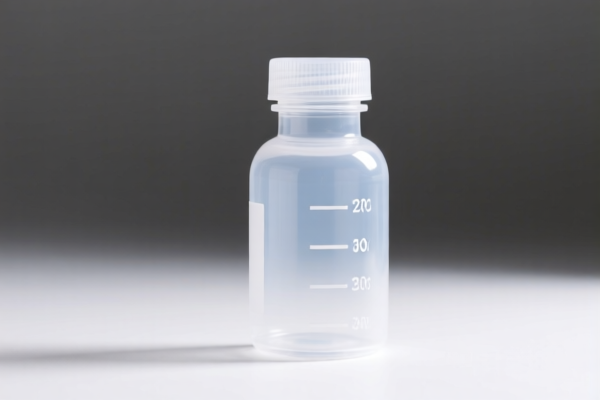
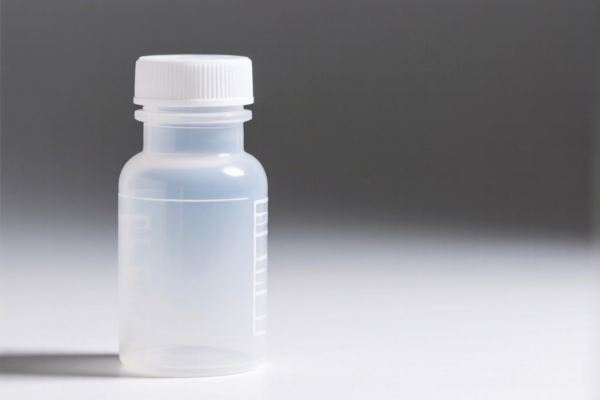
Plastic laboratory bottles (small vials, flasks, culture dishes) are essential containers in chemical analysis, biological testing, and medical research. In international trade, their classification depends heavily on form factor, specific use, and whether they are considered "containers for packaging" vs. "laboratory apparatus."
⚠️ Key Distinction Logic:
- If the item is primarily a container for holding liquids/samples (similar to packaging), it may fall under Chapter 39.23 (Plastic Articles for the Packing of Goods).
- If the item is primarily a laboratory apparatus or article of plastic not elsewhere specified, it may fall under Chapter 39.26 (Other Plastic Articles).
- Capacity & Shape: Small vials (<50ml) often trigger specific subheadings under 3923.30.
📦 II. HS Code Classification Details (2024-2026 Latest Tariff Authority对照)
| HS Code | Product Description | Application Scenario | Classification Logic |
|---|---|---|---|
3923.30.00.90 |
Plastic laboratory small bottles, plastic material, bottle-shaped | General plastic vials, sample containers, <50ml capacity | ✅ Plastic Packaging Article (Bottle type) |
3926.90.99.89 |
Plastic laboratory small bottles, plastic material, unspecified other plastic articles | Vials not fitting specific subheadings; general lab plastic ware | ✅ Other Plastic Articles (General residual class) |
3926.90.99.10 |
Plastic laboratory small bottles or culture dishes, plastic material, lab use | Specifically designated for lab use (culture dishes, specific vials) | ✅ Lab Article (Specific residual class) |
3923.30.00.10 |
Plastic laboratory small bottles, plastic material, bottle-shaped, typically <50ml | Small capacity vials (<50ml), specific packing article classification | ✅ Plastic Packaging Article (Small capacity specific) |
3926.20.40.50 |
Plastic laboratory culture dishes, plastic material, article form | Specifically culture dishes (Petri dishes), not vials | ✅ Lab Article (Culture dish specific) |
🔍 Critical Reminder:
- Vials vs. Culture Dishes: Do not mix "vials" (3923.30 or 3926.90.99) with "culture dishes" (3926.20.40). Misclassification leads to significant duty differences.
- Packaging vs. Apparatus: If the vial is used for shipping/storage (packaging logic), 3923.30 is more likely. If it is a testing tool (apparatus logic), 3926.90 may apply. Customs may scrutinize the "primary use."
💰 III. 2026 Latest Tariff Rate Breakdown (Including Additional Taxes & Policy Surcharges)
✅ Applicable Country: United States (US)
✅ Origin: China (CN)
✅ Effective Time: Post-2024 (Current Trade Environment)
🎯 1. 3923.30.00.90 & 3923.30.00.10 —— Plastic Bottle-Shaped Packaging Articles
| Item | Content |
|---|---|
| Base Tariff | 3.0% (Ad Valorem) |
| Additional Tariff (Section 301) | +25.0% (China-origin specific) |
| Section 122 Tariff | +10.0% (Specific trade remedy surcharge) |
| Total Tariff Rate | 38.0% |
| Tax Calculation | CIF Value × 38.0% |
| De Minimis Exemption | ❌ Not Eligible (High tariff items often excluded from 80.01.22 de minimis thresholds depending on specific enforcement) |
| Legal Basis Path | HTSUS:3923.30.00 → Section 301 Footnote → Section 122 Surcharge |
📌 Explanation:
- These codes fall under "Plastic Articles for the Packing of Goods."
- The 38% total rate is very high, driven by the 25% Section 301 tariff and 10% Section 122 tariff.
- Risk: High duty impact. If possible, re-evaluate if the product can be classified under 3926 (lower base + lower additional) to save ~15-21%.
🎯 2. 3926.90.99.89 & 3926.90.99.10 —— Other Plastic Articles (Lab Use)
| Item | Content |
|---|---|
| Base Tariff | 5.3% (Ad Valorem) |
| Additional Tariff (Section 301) | +7.5% (China-origin specific for some subheadings, check latest list) |
| Section 122 Tariff | +10.0% |
| Total Tariff Rate | 22.8% |
| Tax Calculation | CIF Value × 22.8% |
| De Minimis Exemption | ❌ Not Eligible |
| Legal Basis Path | HTSUS:3926.90.99 → Section 301 Footnote → Section 122 Surcharge |
📌 Explanation:
- These codes fall under "Other Plastic Articles."
- The 22.8% total rate is significantly lower than the 38% for bottle-packaging types.
- Strategy: If the bottle is clearly for laboratory experimentation (not just packaging/shipping), try to argue for 3926.90 classification to reduce duty from 38% to 22.8%.
🎯 3. 3926.20.40.50 —— Plastic Laboratory Culture Dishes
| Item | Content |
|---|---|
| Base Tariff | 6.5% (Ad Valorem) |
| Additional Tariff (Section 301) | +0.0% (Exempt or lower rate for specific lab apparatus) |
| Section 122 Tariff | +10.0% |
| Total Tariff Rate | 16.5% |
| Tax Calculation | CIF Value × 16.5% |
| De Minimis Exemption | ❌ Not Eligible |
| Legal Basis Path | HTSUS:3926.20.40 → Section 301 Exemption/Exclusion → Section 122 Surcharge |
📌 Explanation:
- ONLY applies to Culture Dishes (Petri Dishes), NOT small vials/bottles.
- The 16.5% total rate is the lowest.
- Warning: Do not misclassify small vials as culture dishes. Customs will reject this if the item is not a flat dish.
🛠️ IV. Customs Clearance Practical Advice (实战避坑指南)
✅ 1. Required Documentation Checklist (Essential)
| Document | Required | Description |
|---|---|---|
| ✅ Product Specifications | ✔️ | Material (PP, PE, PS?), Capacity (ml), Wall thickness |
| ✅ Usage Declaration | ✔️ | Clearly state "Laboratory Use" vs. "General Packaging" |
| ✅ Product Photos | ✔️ | Front, back, scale reference, lid/closure type |
| ✅ Certificate of Origin | ✔️ | For verifying China origin and potential exclusions |
| ✅ Commercial Invoice | ✔️ | Describe as "Plastic Laboratory Vial" or "Culture Dish" accurately |
| ✅ Packing List | ✔️ | Quantity per carton, gross weight |
✅ 2. Classification Strategy & Keywords
🔥 “Use Determines Code: Lab Use = 3926 (Cheaper), Packaging = 3923 (Expensive)”
| Scenario | Recommended HS Code | Duty Rate | Key Argument |
|---|---|---|---|
| Small Vials (<50ml) used for storing samples | 3926.90.99.10 |
22.8% | "Laboratory Apparatus" – Primary use is testing, not long-term storage/packaging |
| Small Vials (<50ml) used for shipping/retail | 3923.30.00.10 |
38.0% | "Plastic Packaging Article" – Primary use is containment for transport |
| General Plastic Vials (no specific lab claim) | 3926.90.99.89 |
22.8% | "Other Plastic Article" – Residual category |
| Petri Dishes / Culture Dishes | 3926.20.40.50 |
16.5% | "Specific Lab Apparatus" – Distinct form factor |
📌 Strategy Tip:
- If your product is a small plastic vial, try to classify it under 3926.90.99.10 (22.8%) by emphasizing its laboratory experimental use (e.g., "for mixing reagents," "for centrifugation") rather than just "storage."
- Avoid using "Packaging" or "Shipping Container" in the description. Use "Lab Vial," "Sample Holder," "Reaction Tube."
✅ 3. Special Cases & Pitfalls
| Case | Handling Advice |
|---|---|
| Mixed Batches (Vials + Culture Dishes) | Declare Separately! Do not lump into one HS code. Vials go to 3926/3923, Dishes to 3926.20. |
| Sterile vs. Non-Sterile | Sterility does not change the HS code, but ensure documentation mentions it if required for medical import. |
| Material Type | PP (Polypropylene) vs. PS (Polystyrene) does not change HS code, but specify in specs to avoid customs questioning. |
| Small Samples (De Minimis) | Under $800, de minimis may apply, but high tariffs (38%) mean that if audited, you owe full duty + penalties. Not recommended for high-value bulk imports. |
🌍 V. Global Market Clearance Comparison (2024-2026)
| Country/Region | Recommended HS Code | Estimated Duty | Certification Requirements | Notes |
|---|---|---|---|---|
| 🇺🇸 USA | 3926.90.99.10 |
22.8% | None specific | Avoid 3923.30 if possible (38% due to 301 + 122) |
| 🇨🇳 China | 3926.90.99.10 |
6.5% (Import) | None | Low duty, easy clearance |
| 🇪🇺 EU | 3926.90.99 |
6.5% | None | No Section 301/122 equivalent |
| 🇬🇧 UK | 3926.90.99 |
6.5% | None | Post-Brexit alignment with EU mostly |
| 🇯🇵 Japan | 3926.90.99 |
5.0% | JIS | Low duty |
📌 Conclusion:
- USA is the most challenging market due to Section 301 and Section 122 tariffs.
- Optimization Goal: Shift classification from 3923 (38%) to 3926 (22.8%) for vials by proving "lab use" over "packaging use."
📌 VI. Common Errors & Pitfalls (Blood & Tears Lessons)
❌ Error 1: Classifying Lab Vials as Packaging Bottles (3923.30)
👉 Consequence: Duty jumps from 22.8% to 38.0%.
👉 Fix: Provide evidence of lab use (e.g., "for chemical reactions," "centrifuge compatible").
❌ Error 2: Classifying Vials as Culture Dishes (3926.20)
👉 Consequence: Customs rejection. Vials are not dishes.
👉 Fix: Correct description: "Plastic Laboratory Vial," not "Petri Dish."
❌ Error 3: Ignoring Section 122 Tariff
👉 Consequence: Unexpected 10% surcharge added to all plastic articles from China.
👉 Fix: Factor 10% into all cost calculations for Chinese-origin plastic labware.
🎯 VII. Conclusion: Professional Classification, Cost Savings!
🎯 Key Takeaway:
🔹 "Lab Use = 3926 (22.8%), Packaging = 3923 (38%)!"
🔹 "Vials are NOT Dishes, Dishes are NOT Vials!"
🔹 "Section 122 is always +10% for Chinese Plastics!"📌 Pro Tip:
If your plastic vials are critical for experiments, highlight this in the commercial invoice and product description. Use terms like "Laboratory Sample Container," "Centrifuge Tube," "Reaction Vial" to support classification under 3926.90.99.10 (22.8%) rather than 3923.30 (38%).
📣 Immediate Action:
📞 Consult a licensed customs broker for a Pre-Ruling (USCBP Advance Ruling) if you are importing high volumes.
🚀 Secure the lower 22.8% rate by proving Lab Use!
✨ Professional Customs, From Precise Classification!
💼 Every 15% Duty Difference is Pure Profit!
用户评价
关于 HS 编码归类
协调制度(HS)是由世界海关组织(WCO)制定的国际贸易商品分类标准。全球 200 多个国家采用 HS 系统作为海关关税、贸易统计和进出口监管的基础。
每个 HS 编码遵循以下层级结构:
- 章(2 位)——商品大类(例如:第 84 章:机器和机械设备)
- 品目(4 位)——章内的更具体分类
- 子目(6 位)——国际通用细分,所有 WCO 成员国统一使用
- 本国细分(8-10 位)——各国自行扩展的细分编码,如美国 HTSUS 10 位编码
正确的 HS 编码归类对于顺利通关、准确缴纳关税和遵守贸易法规至关重要。错误归类可能导致海关延误、多缴关税或罚款。
从CN进口到US时,适用的关税税率可能包括:
- 最惠国(MFN)税率——适用于 WTO 成员国的标准关税税率
- 普通税率——适用于无贸易协定国家
- 贸易救济关税——附加关税,如 301 条款(反倾销)、232 条款(国家安全)或反补贴税
本页内容仅供参考。如需正式归类,请咨询当地海关或持牌报关代理。