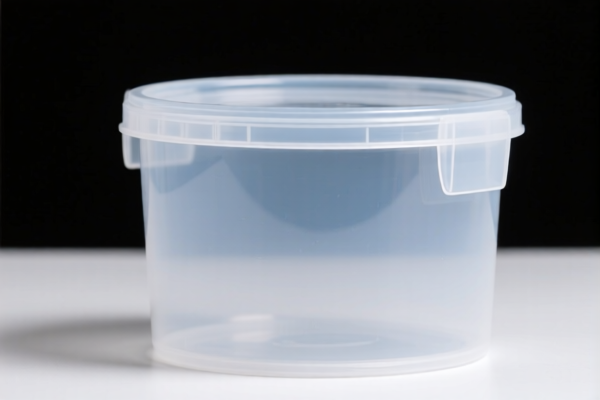
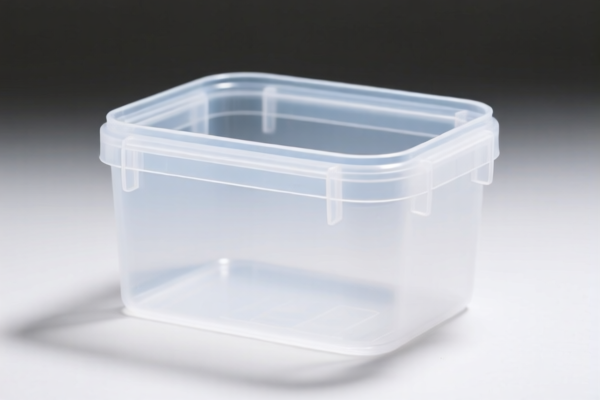
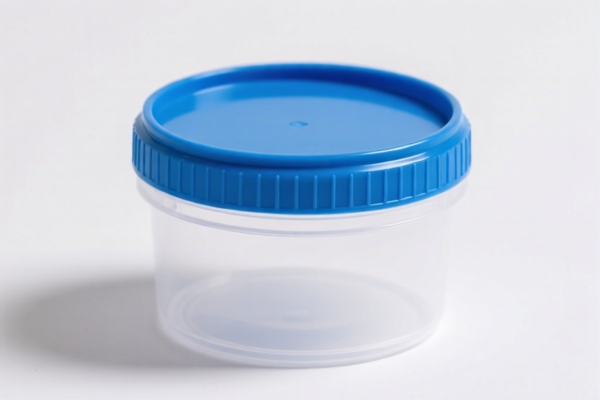
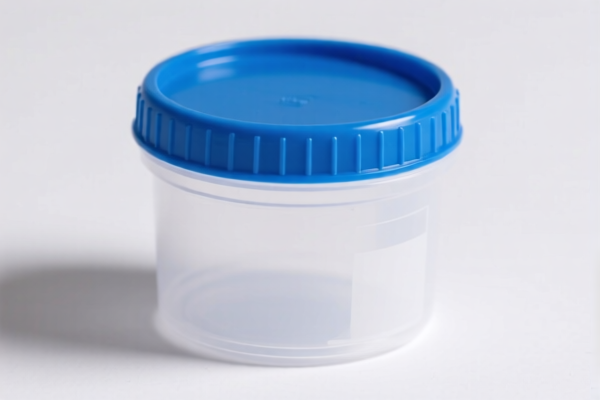
Plastic Laboratory Container
CN → US| HS编码 | 关税税率 | 原产国 | 目的国 | 文档 |
|---|---|---|---|---|
| 3926909910 | 22.8% | CN | US | 官方文档 |
| 3926204050 | 16.5% | CN | US | 官方文档 |
| 9023000000 | 17.5% | CN | US | 官方文档 |
| 3923300090 | 38.0% | CN | US | 官方文档 |
| 3926909989 | 22.8% | CN | US | 官方文档 |
商品图片
AI分析
🧪 Plastic Laboratory Container: HS Code Classification & Tax Strategy (2026)
🌐 HS Code Reference & Customs Clearance Guide | Latest 2026 Tariff Analysis | Professional通关 Strategy
📌 I. Product Definition: What Exactly is a "Plastic Laboratory Container"?
In international trade, "Plastic Laboratory Container" is a broad term that lacks specificity. It generally covers items made of plastic used for storage, culture, or testing in scientific environments. However, the exact shape, intended use, and accessories determine the HS Code and, consequently, the tariff rate.
There are two main categories: 1. Primary Lab Consumables: Petri dishes, flasks, vials used for growing cultures or holding reagents (Harmonized System Chapter 39). 2. Lab Accessories/Parts: Components for larger instruments, mounts, or specific functional parts (Harmonized System Chapter 90).
⚠️ Critical Distinction:
- If the item is a Petri Dish (shallow, wide, for culture) → Chapter 39 (Plastics Articles).
- If the item is a Vial/Bottle (narrow, for storage) → Chapter 39 (Plastics Articles).
- If the item is an Accessorie/Part for a lab instrument (e.g., a clip, a mount, a specialized holder) → Chapter 90 (Instruments/Apparatus).
📦 II. HS Code Classification Details (2026 Latest Tariff Alignment)
Based on the provided data, here are the specific HS Codes and their logical justifications. The classification depends on the specific type of plastic container.
| HS Code | Product Description & Logic | Application Scenario |
|---|---|---|
3926.90.99.10 |
Plastic Petri Dishes & Accessories: Classified as other plastic articles. Specifically covers Petri dishes or their accessories used in labs. | Standard Petri dishes, lids, or specialized plastic accessories for incubators. |
3926.20.40.50 |
Plastic Petri Dishes (Specific Subheading): A more specific classification for Petri dishes under Chapter 39, inferred as "Other articles of plastics." | Standard sterile Petri dishes. Note: This code has a lower tax burden compared to 3926.90.99.10. |
9023.00.00.00 |
Plastic Laboratory Accessories/Parts: Parts of instruments, apparatus, or machines designed for scientific research. No conflict with demonstration/teaching. | Non-consumable parts, mounts, clips, or specialized holders for lab equipment. |
3923.30.00.90 |
Plastic Laboratory Vials/Bottles: Plastic containers for conveyance or packing of goods. Excludes specific small-capacity categories already listed elsewhere. | Small plastic vials, reagent bottles, or storage containers for liquids. Highest Tax Risk. |
3926.90.99.89 |
Other Plastic Lab Vials/Bottles: "Other" plastic articles not specifically named. Inferred for small plastic vials not fitting into the specific bottle category. | Generic small plastic vials or unclassified plastic lab storage items. |
🔍 Key Insight:
- Petri Dishes (3926) generally face lower tariffs (16.5% - 22.8%) than Vials/Bottles (3923).
- Accessories (9023) have a moderate tax rate (17.5%) but require proof that the item is a part of an instrument, not just a generic storage container.
💰 III. 2026 Latest Tariff Rate Breakdown (Detailed Tax Clauses)
✅ Applicable Country: USA (US)
✅ Origin: China (CN)
✅ Effective Date: 2025/2026 Import Cycle
🎯 1. 3926.20.40.50 – Plastic Petri Dishes (Most Favorable for Petri Dishes)
| Item | Detail |
|---|---|
| Base Tariff | 6.5% |
| Section 301 (Retaliatory) | 0.0% |
| Section 122 Tariff | +10.0% |
| Total Tax Rate | 16.5% |
| Tax Calculation | CIF Value × 16.5% |
| De Minimis Eligibility | ⚠️ Check (Usually subject to scrutiny if high volume) |
| Legal Path | Base: 6.5% + Sec 301: 0% + Sec 122: 10% |
📌 Explanation:
- This code offers the lowest total tax rate (16.5%) for Petri dishes.
- Section 301 (Retaliatory Tariff) is 0%, which is rare for Chinese plastics.
- Section 122 adds a flat 10% to cover specific trade remedy provisions.
🎯 2. 3926.90.99.10 – Other Plastic Lab Accessories (Petri Dish Accessories)
| Item | Detail |
|---|---|
| Base Tariff | 5.3% |
| Section 301 (Retaliatory) | +7.5% |
| Section 122 Tariff | +10.0% |
| Total Tax Rate | 22.8% |
| Tax Calculation | CIF Value × 22.8% |
| De Minimis Eligibility | ❌ Denied (High risk) |
| Legal Path | Base: 5.3% + Sec 301: 7.5% + Sec 122: 10% |
📌 Explanation:
- Slightly higher base tariff (5.3%) but incurs 7.5% Section 301 duties.
- Total cost is 6.3% higher than3926.20.40.50.
- Section 122 still applies (+10%).
🎯 3. 9023.00.00.00 – Plastic Lab Parts/Accessories
| Item | Detail |
|---|---|
| Base Tariff | 0.0% |
| Section 301 (Retaliatory) | +7.5% |
| Section 122 Tariff | +10.0% |
| Total Tax Rate | 17.5% |
| Tax Calculation | CIF Value × 17.5% |
| De Minimis Eligibility | ❌ Denied |
| Legal Path | Base: 0.0% + Sec 301: 7.5% + Sec 122: 10% |
📌 Explanation:
- Zero Base Tariff makes this attractive, but Section 301 (7.5%) kicks in.
- Ideal if the item is clearly a part of a larger scientific instrument, not a standalone container.
🎯 4. 3923.30.00.90 – Plastic Lab Vials/Bottles (Highest Risk)
| Item | Detail |
|---|---|
| Base Tariff | 3.0% |
| Section 301 (Retaliatory) | +25.0% |
| Section 122 Tariff | +10.0% |
| Total Tax Rate | 38.0% |
| Tax Calculation | CIF Value × 38.0% |
| De Minimis Eligibility | ❌ Denied |
| Legal Path | Base: 3.0% + Sec 301: 25% + Sec 122: 10% |
📌 Explanation:
- HIGHEST TAX RATE (38.0%).
- Section 301 is 25%, a significant penalty on Chinese plastic bottles.
- Avoid this code unless the product is strictly defined as a small-volume bottle with no other classification.
🎯 5. 3926.90.99.89 – Other Plastic Lab Vials (Fallback)
| Item | Detail |
|---|---|
| Base Tariff | 5.3% |
| Section 301 (Retaliatory) | +7.5% |
| Section 122 Tariff | +10.0% |
| Total Tax Rate | 22.8% |
| Tax Calculation | CIF Value × 22.8% |
| De Minimis Eligibility | ❌ Denied |
| Legal Path | Base: 5.3% + Sec 301: 7.5% + Sec 122: 10% |
📌 Explanation:
- Better than3923.30.00.90(38%) but worse than Petri Dishes (16.5%).
- Use only if the vial does not fit into the specific "bottle" category.
🛠️ IV. Customs Clearance Practical Advice (Pitfall Avoidance Guide)
✅ 1. Required Documentation Checklist
| Document | Mandatory? | Description |
|---|---|---|
| ✅ Product Specification Sheet | ✔️ | Must clearly state: Material (Plastic Type), Intended Use (Lab Culture, Storage, etc.), Dimensions. |
| ✅ Photos (Clear & Detailed) | ✔️ | Show the item alone, with scale, and any markings. Distinguish between "Petri Dish" (shallow) vs. "Vial" (tall/narrow). |
| ✅ Commercial Invoice | ✔️ | Use precise descriptions: e.g., "Plastic Petri Dishes" NOT just "Plastic Containers". |
| ✅ Certificate of Origin | ✔️ | To determine eligibility for any potential FTAs (though Section 122/301 may still apply). |
| ✅ Labeling | ✔️ | "Made in China" must be clearly visible. |
✅ 2. Declaration Strategy (Key Mantra)
🔥 "Shape Determines Code, Code Determines Tax!"
| Scenario | Recommended HS Code | Reason |
|---|---|---|
| Shallow, Wide, Sterile | 3926.20.40.50 |
Best rate (16.5%). Clearly a Petri Dish. |
| Petri Dish Lids/Accessories | 3926.90.99.10 |
Slightly higher rate (22.8%). |
| Parts for Machines (e.g., Rack, Mount) | 9023.00.00.00 |
Moderate rate (17.5%). Must be a part, not a standalone container. |
| Tall, Narrow, Liquid Storage | 3926.90.99.89 |
High risk. Avoid if possible. If unavoidable, use this instead of 3923. |
| Small Vials (Specific Bottle Type) | 3923.30.00.90 |
AVOID if possible. 38% tax is brutal. |
📌 Warning:
- Do NOT declare "Plastic Petri Dishes" as "Plastic Containers" under3923.30.00.90. This leads to 38% tax instead of 16.5%.
- Do NOT declare "Accessories" as "Containers" if they are parts of instruments. Misclassification can lead to audits.
✅ 3. Special Cases
| Situation | Advice |
|---|---|
| OEM Custom Lab Ware | Provide design specs. If it’s a Petri Dish, insist on 3926.20.40.50. |
| Combined Packages (Dish + Lid) | Declare as one item. If it’s a Petri Dish set, use the Petri Dish code. |
| Non-Sterile vs. Sterile | Does not change HS Code, but may affect inspection requirements. |
| High Volume Shipments | Consider applying for Section 301 Exclusions if available (check current status). |
🌍 V. Global Market Comparison (2026)
| Country | Recommended HS Code | Est. Total Tax (China Origin) | Notes |
|---|---|---|---|
| 🇺🇸 USA | 3926.20.40.50 (Petri) |
16.5% | Low tax for Petri Dishes. High for Vials. |
| 🇨🇳 China | 3926.20.40.50 |
~2.5% - 5% | Low base rate, no Section 122/301. |
| 🇪🇺 EU | 3926.90 |
~6.5% | No Section 122. Standard WTO rates. |
| 🇬🇧 UK | 3926.90 |
~6.5% | Post-Brexit tariffs apply. |
| 🇨🇦 Canada | 3926.20 |
~0% - 5% | Often CUSMA eligible if qualified. |
📌 Conclusion:
- USA is the most complex market due to Section 122 (10%) and Section 301 (0%-25%).
- Petri Dishes (3926) are the safest bet for low taxes (16.5%).
- Vials/Bottles (3923) are tax traps (38%). Avoid if possible.
📌 VI. Common Mistakes & Pitfalls (Lessons Learned)
❌ Mistake 1: Calling all plastic lab items "Plastic Containers" (3923.30)
👉 Result: 38% Tax instead of 16.5%. Loss of $21,500 per $100k shipment.
❌ Mistake 2: Declaring Petri Dish Accessories as "Parts of Instruments" (9023)
👉 Result: Customs may reject if it’s not clearly a part of a machine. Risk of audit.
❌ Mistake 3: Ignoring Section 122 (10%)
👉 Result: Underestimating total landed cost. Always include +10% in calculations.
❌ Mistake 4: Using generic names like "Lab Plastic"
👉 Result: Customs request for clarification, delays, and potential reclassification to higher tax codes.
✅ Correct Practice:
"Sterile Plastic Petri Dishes, 90mm, Packaged" →
3926.20.40.50
"Plastic Lab Vials, 2mL, Polypropylene" →3926.90.99.89(If not bottle-specific)
🎯 VII. Conclusion: Professional Declaration, Cost Efficiency!
🎯 Key Takeaways:
🔹 "Petri Dishes are Cheap, Vials are Expensive."
🔹 "Section 122 is Always +10% for China."
🔹 "Section 301 Varies: 0% for Petri Dishes, 7.5% for Accessories, 25% for Bottles."
📌 Pro Tip:
If you are shipping high-volume Petri Dishes, ensure your commercial invoice clearly states "Plastic Petri Dishes" and not "Plastic Containers." This simple change saves 6.3% in tariffs ($6,300 per $100k).
📣 Immediate Action:
📞 Consult a Customs Broker for HS Code Pre-Ruling.
📄 Label Clearly: "Made in China", "Plastic Petri Dishes".
📉 Optimize Supply Chain: Consider sourcing from non-China origins if possible to avoid Section 122/301.
✨ Precision in Classification Saves Money!
💼 Every Percentage Point Counts in International Trade!
用户评价
关于 HS 编码归类
协调制度(HS)是由世界海关组织(WCO)制定的国际贸易商品分类标准。全球 200 多个国家采用 HS 系统作为海关关税、贸易统计和进出口监管的基础。
每个 HS 编码遵循以下层级结构:
- 章(2 位)——商品大类(例如:第 84 章:机器和机械设备)
- 品目(4 位)——章内的更具体分类
- 子目(6 位)——国际通用细分,所有 WCO 成员国统一使用
- 本国细分(8-10 位)——各国自行扩展的细分编码,如美国 HTSUS 10 位编码
正确的 HS 编码归类对于顺利通关、准确缴纳关税和遵守贸易法规至关重要。错误归类可能导致海关延误、多缴关税或罚款。
从CN进口到US时,适用的关税税率可能包括:
- 最惠国(MFN)税率——适用于 WTO 成员国的标准关税税率
- 普通税率——适用于无贸易协定国家
- 贸易救济关税——附加关税,如 301 条款(反倾销)、232 条款(国家安全)或反补贴税
本页内容仅供参考。如需正式归类,请咨询当地海关或持牌报关代理。