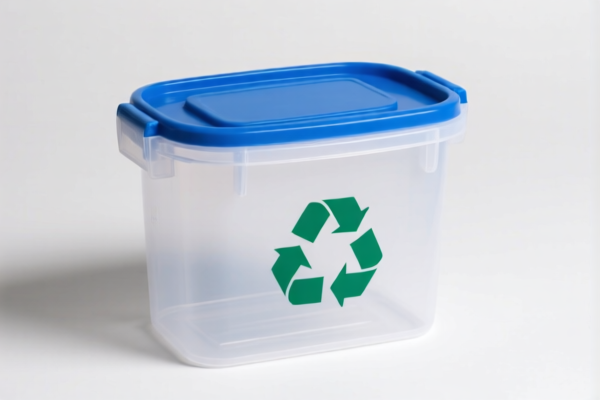
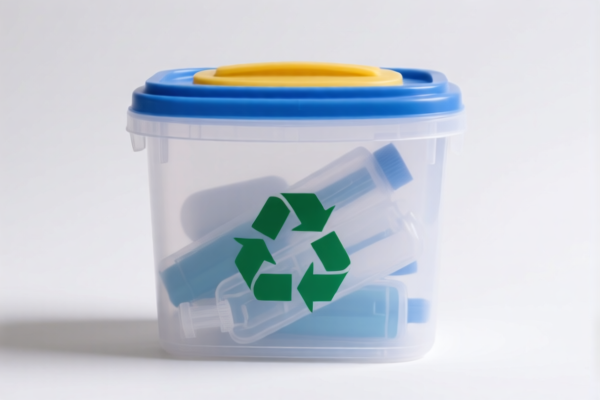
Plastic Medical Waste Foot Pedal Container
CN → US| HS编码 | 关税税率 | 原产国 | 目的国 | 文档 |
|---|---|---|---|---|
| 3923900080 | 38.0% | CN | US | 官方文档 |
| 3923900014 | 38.0% | CN | US | 官方文档 |
| 3926909950 | 22.8% | CN | US | 官方文档 |
商品图片


AI分析
🏥 Plastic Medical Waste Foot Pedal Container
🌐 HS Code Reference & Customs Clearance Guide | 2026 Latest Tariff Analysis | Professional Compliance Strategy
📌 I. Product Definition & Classification: What Exactly Is This Product?
A Plastic Medical Waste Foot Pedal Container is a specialized waste disposal unit designed for healthcare environments (hospitals, clinics, laboratories). Its defining feature is the foot pedal mechanism, which allows healthcare workers to open the lid without using their hands, ensuring strict hygiene and preventing cross-contamination.
Key Attributes: 1. Material: Plastic (typically Polypropylene or Polyethylene). 2. Function: Storage and containment of medical waste. 3. Mechanism: Hands-free operation via foot pedal. 4. Category: It is considered a "container for goods/objects" but with specific medical/hygiene applications.
⚠️ Critical Distinction:
- Is it a general-purpose plastic box (like a storage tote)? → Likely 3923 or 3926.
- Is it explicitly designed as a medical waste container? → Likely 3926 (Articles of plastic, not specified elsewhere).
- Note: The foot pedal mechanism adds complexity. If the pedal is integral to the container structure, it usually stays within the container classification. If it were a mechanical device with motors, it might shift to Chapter 84, but manual foot pedals typically remain with the container.
📦 II. HS Code Classification Details (Based on Provided Data)
The provided data suggests three potential classifications. Here is the breakdown of why each might be applied and the associated tax implications.
| HS Code | Product Description | Reason for Classification | Total Tax Rate |
|---|---|---|---|
| 3923.90.00.80 | Plastic Medical Waste Container (Foot Pedal) | Classified as a "container for goods/objects" made of plastic. This is a broad category for plastic packaging or storage containers. | 38.0% |
| 3923.90.00.14 | Plastic Medical Waste Container (Foot Pedal) | Classified as a "container for transport or packaging". This is a specific sub-category under plastic containers often used for logistics or specialized packaging applications. | 38.0% |
| 3926.90.99.50 | Plastic Medical Waste Container (Foot Pedal) | Classified as an "article of plastic" specifically recognized for its medical waste container purpose. This is a more specific "other articles" classification. | 22.8% |
🔍 Analysis of Classification Logic:
- 3923 vs. 3926:
- 3923 covers "Articles for the conveyance or packing of goods" (e.g., boxes, bags, bottles). If the container is viewed primarily as a packaging/transport vessel for waste, it falls here.
- 3926 covers "Other articles of plastic". If the container is viewed as a fixed installation or specialized article for medical hygiene (not just for transporting waste away, but for on-site containment), it falls here.
- Why the Tax Difference?
- The 3923 codes attract higher tariffs (38%) due to broader USITC and IEEPA penalties on general plastic containers.
- The 3926.90.99.50 code has a lower total tax (22.8%) because it is categorized under "other articles" which may have different duty schedules, though it still incurs significant add-ons.
💰 III. 2026 Latest Tariff Rate Breakdown (USA, China Origin)
✅ Applicable Country: United States (US)
✅ Origin: China (CN)
✅ Effective Date: Post-November 10, 2025 (Current Policy)
🎯 1. HS Code 3923.90.00.80 & 3923.90.00.14
(Both share the same tax structure in the provided data)
| Item | Detail |
|---|---|
| Base Tariff | 3.0% |
| USITC 301 Tariff | 25.0% |
| Section 122 Tariff | 10.0% |
| Total Tax Rate | 38.0% |
| Calculation | CIF Value × 38.0% |
| De Minimis Exemption | ❌ Not Eligible (Likely denied for plastic containers from China) |
| Legal Path | USITC:3923.90.00.80/14 → 301 Footnote → Section 122 |
📌 Explanation:
- The 3.0% is the standard MFN (Most Favored Nation) duty.
- The 25.0% is the Section 301 tariff on Chinese goods.
- The 10% is an additional penalty or specific duty (Section 122) often applied to certain plastic products or under specific trade enforcement actions.
- Total 38% is a very high tariff. This means the duty cost nearly quadruples the base value.
🎯 2. HS Code 3926.90.99.50
| Item | Detail |
|---|---|
| Base Tariff | 5.3% |
| USITC 301 Tariff | 7.5% |
| Section 122 Tariff | 10.0% |
| Total Tax Rate | 22.8% |
| Calculation | CIF Value × 22.8% |
| De Minimis Exemption | ❌ Not Eligible |
| Legal Path | USITC:3926.90.99.50 → 301 Footnote → Section 122 |
📌 Explanation:
- The Base Tariff (5.3%) is higher than 3923, but the 301 Tariff (7.5%) is significantly lower than the 25% applied to 3923.
- The 10% Section 122 still applies.
- Total 22.8% is much lower than 38%. This makes3926.90.99.50the preferred classification for cost-saving, provided the product meets the definition of "other articles of plastic" for medical use.
🛠️ IV. Customs Clearance Practical Advice (Avoiding Pitfalls)
✅ 1. Documentation Checklist (Mandatory)
| Document | Required? | Notes |
|---|---|---|
| Product Specification Sheet | ✔️ | Must clearly state: "Foot Pedal," "Medical Waste," "Plastic Material." |
| Product Photos | ✔️ | Show the foot pedal mechanism and the interior/exterior. |
| Commercial Invoice | ✔️ | Description must match the HS code. E.g., "Plastic Medical Waste Container with Foot Pedal." |
| Packing List | ✔️ | Item weight and dimensions. |
| Material Declaration | ✔️ | Specify plastic type (e.g., PP, PE) to confirm Chapter 39. |
| Intended Use Statement | ✔️ | Confirm use in medical/healthcare settings to support 3926 classification. |
✅ 2. Classification Strategy & Risk Mitigation
| Scenario | Recommended HS Code | Risk/Note |
|---|---|---|
| Maximize Cost Savings | 3926.90.99.50 |
Best Option. 22.8% vs 38%. Requires strong justification that it is a "medical article" not just a "container for transport." |
| Safe/Conservative | 3923.90.00.80 |
38%. Accepted as a general plastic container. Lower risk of rejection but higher tax. |
| Avoid | Any non-Chapter 39 code | If the foot pedal has electronic components, it might shift to Chapter 85 or 90, but for manual pedals, stick to Chapter 39. |
🔥 Key Tip:
- To justify3926.90.99.50, emphasize the medical hygiene function and the integrated foot pedal as a specialized article, not just a box.
- If the product is marketed as "Biohazard Waste Bin," use this terminology in documentation to support medical use.
✅ 3. Common Mistakes to Avoid
❌ Mistake 1: Calling it just "Plastic Box"
👉 Consequence: Customs may classify it as a general container (3923) or reject it for vague description.
✅ Fix: Use "Plastic Medical Waste Container with Foot Pedal."
❌ Mistake 2: Assuming "Foot Pedal" makes it a "Machine"
👉 Consequence: Incorrect Chapter 84 classification.
✅ Fix: Clarify it is a manual foot pedal, not motorized.
❌ Mistake 3: Ignoring Section 122 Tariffs
👉 Consequence: Unexpected 10% penalty.
✅ Fix: Budget for the 10% additional duty in all scenarios.
🌍 V. Global Market Comparison (2026)
| Market | Recommended HS Code | Est. Total Duty | Notes |
|---|---|---|---|
| 🇺🇸 USA | 3926.90.99.50 |
22.8% | Best balance of cost and compliance. |
| 🇺🇸 USA | 3923.90.00.80 |
38.0% | Higher cost, broader classification. |
| 🇨🇳 China | 3926.90.99.50 |
~5-13% | Lower import duties for Chinese domestic use. |
| 🇪🇺 EU | 3926.90.97 |
0-6.5% | No major tariffs if CE certified. |
| 🇬🇧 UK | 3926.90.90 |
0-6.5% | Post-Brexit rules apply. |
📌 Conclusion:
- The US market is the most challenging due to high Section 301 and Section 122 tariffs.
- Optimizing for3926.90.99.50can save 15.2% in duty costs compared to3923.
- Always verify the Section 122 applicability with a customs broker, as it can change based on trade policy.
📌 VI. Final Recommendation: How to Clear Customs Smoothly
- Declare Accurately: Use the full description: "Plastic Medical Waste Container, Foot-Pedal Operated, for Healthcare Use."
- Support
3926.90.99.50: Provide evidence that the product is designed for medical hygiene (e.g., catalog, marketing materials showing hospital use). - Budget for 22.8%: Assume the total landed cost will include this duty.
- Consult a Broker: Before shipping, submit an Advance Ruling request to CBP to confirm
3926.90.99.50is accepted for your specific product design.
🚀 Pro Tip:
If you are importing in large volumes, the 15.2% tax difference between3923and3926can amount to thousands of dollars in savings. Invest in proper documentation to secure the lower rate.
✨ Professional Customs Clearance Starts with Precise Classification!
💼 Your Cost Efficiency Depends on It!
用户评价
关于 HS 编码归类
协调制度(HS)是由世界海关组织(WCO)制定的国际贸易商品分类标准。全球 200 多个国家采用 HS 系统作为海关关税、贸易统计和进出口监管的基础。
每个 HS 编码遵循以下层级结构:
- 章(2 位)——商品大类(例如:第 84 章:机器和机械设备)
- 品目(4 位)——章内的更具体分类
- 子目(6 位)——国际通用细分,所有 WCO 成员国统一使用
- 本国细分(8-10 位)——各国自行扩展的细分编码,如美国 HTSUS 10 位编码
正确的 HS 编码归类对于顺利通关、准确缴纳关税和遵守贸易法规至关重要。错误归类可能导致海关延误、多缴关税或罚款。
从CN进口到US时,适用的关税税率可能包括:
- 最惠国(MFN)税率——适用于 WTO 成员国的标准关税税率
- 普通税率——适用于无贸易协定国家
- 贸易救济关税——附加关税,如 301 条款(反倾销)、232 条款(国家安全)或反补贴税
本页内容仅供参考。如需正式归类,请咨询当地海关或持牌报关代理。