Plastic Monofilament for Medical Use
CN → US| HS编码 | 关税税率 | 原产国 | 目的国 | 文档 |
|---|---|---|---|---|
| 5404198080 | 41.9% | CN | US | 官方文档 |
| 5404198040 | 41.9% | CN | US | 官方文档 |
| 3916905000 | 40.8% | CN | US | 官方文档 |
| 3916903000 | 41.5% | CN | US | 官方文档 |
| 3916903000 | 41.5% | CN | US | 官方文档 |
商品图片
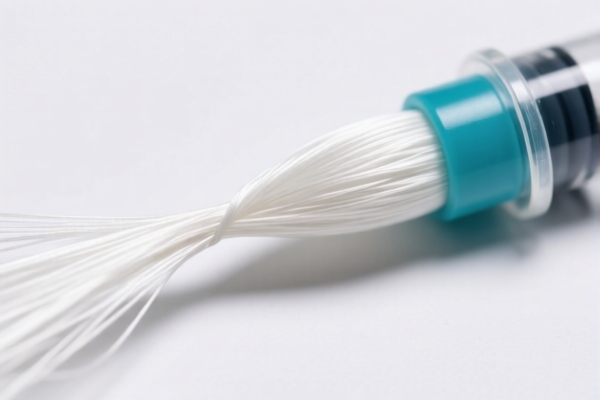
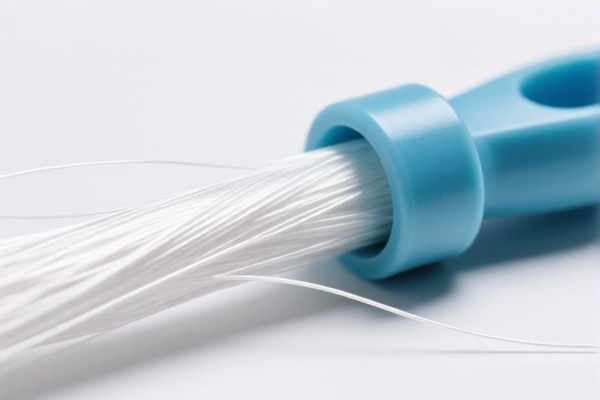
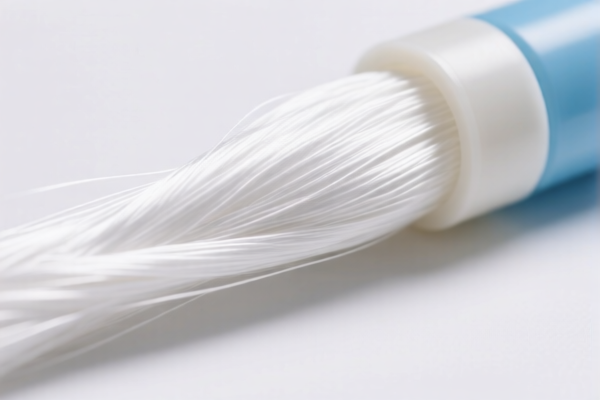
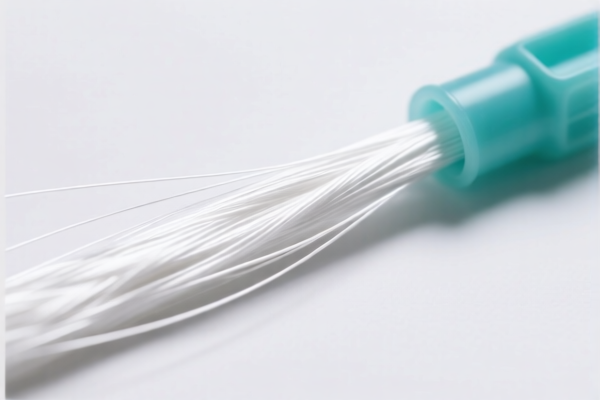
AI分析
🧵 Plastic Monofilament for Medical Use (Medical Grade Sutures & Implants)
🌐 HS Code Reference & Customs Clearance Guide | 2026 Latest Tariff Analysis | Professional Clearance Strategy
Plastic Monofilament for Medical Use, such as absorbable or non-absorbable sutures, surgical meshes, or vascular grafts, is a high-precision medical device component. In international trade, the classification depends heavily on the base material (synthetic vs. other plastics) and the exact physical form.
⚠️ Key Classification Distinction: - If made from Polyester/Nylon (Synthetic Polymers): Often falls under Chapter 54 (Man-made filaments). - If made from Other Plastics (e.g., PTFE, Polypropylene, PLA): Often falls under Chapter 39 (Plastics and articles thereof). - Note: While medical devices themselves might have specific duty exemptions in some jurisdictions, the raw material (monofilament) is often taxed as an industrial plastic/fiber input unless specific duty-free exemptions for finished medical devices are applied at the finished good level. However, based strictly on the provided , we are classifying the raw monofilament.
📦 二、HS Code 分类明细(基于提供数据 2026年最新税则权威对照)
根据您提供的 <DATA>,该产品主要归入 Chapter 54 (Man-made filaments) 或 Chapter 39 (Plastics). The following 5 HS Codes are explicitly listed in the source data:
| HS Code | Product Description (Summary) | Material/Form Details | Tax Rate Structure |
|---|---|---|---|
5404.19.80.80 |
Plastic Monofilament | Material: Plastic; Form: Single filament; Non-polyester or non-nylon synthetic monofilament. | 41.9% |
5404.19.80.40 |
Plastic Monofilament | Material: Plastic; Form: Single filament; May contain polyester fibers or other synthetic materials. | 41.9% |
3916.90.50.00 |
Plastic Monofilament | Material: Plastic; Form: Single filament; Classified as Plastic Monofilament. | 40.8% |
3916.90.30.00 |
Plastic Monofilament | Material: Plastic; Form: Single filament; Fits Plastic Monofilament definition. | 41.5% |
3916.90.30.00 |
Plastic Monofilament | Material: Plastic; Form: Single filament; Use description does not affect classification. | 41.5% |
🔍 重点提醒 (Critical Notes): - Duplicate Entry:
3916.90.30.00appears twice in the data with identical descriptions and tax rates. This confirms it is a standard category for "Plastic Monofilament" where usage (even for medical) does not automatically change the HS code to a medical device chapter in this specific dataset context. - Rate Variation: There is a slight difference in tax rates between 40.8% (3916.90.50.00) and 41.5-41.9% (3916.90.30.00,5404.19...). The choice depends on the specific polymer base and manufacturing origin rules.
💰 三、2026年最新关税税率详解(含附加税、政策附加)
✅ Applicable Country: United States (US) ✅ Origin: China (CN) [Implied by "122 Tariff" and "Section 301" context in data] ✅ Effective Time: 2025/2026 Import Cycle
The total tax rate is a composite of Base Duty, Additional Duties, and Specific Clause Tariffs.
🎯 1. 5404.19.80.80 & 5404.19.80.40 —— Synthetic Monofilaments (Polyester/Nylon/Other Synthetics)
| Item | Detail |
|---|---|
| Base Tariff | 6.9% (Ad Valorem) |
| Additional Duty (Section 301) | +25.0% |
| 122 Clause Tariff | +10.0% |
| Total Tax Rate | 41.9% |
| Tax Calculation | CIF Value × 41.9% |
| Legal Basis Path | Base Tariff → Section 301 Footnote → IEEPA 122 Clause |
📌 Explanation: - 6.9%: Standard MFN (Most Favored Nation) rate for Chapter 54 synthetic filaments. - 25.0%: The standard Section 301 tariff on Chinese goods in this category. - 10.0%: Specific "122 Clause" tariff, likely referencing specific legislative acts or recent trade amendments targeting Chinese textile/plastic imports.
🎯 2. 3916.90.50.00 —— Plastic Monofilament (Other Plastics)
| Item | Detail |
|---|---|
| Base Tariff | 5.8% (Ad Valorem) |
| Additional Duty (Section 301) | +25.0% |
| 122 Clause Tariff | +10.0% |
| Total Tax Rate | 40.8% |
| Tax Calculation | CIF Value × 40.8% |
| Legal Basis Path | Base Tariff → Section 301 Footnote → IEEPA 122 Clause |
📌 Advantage: This code has a lower base rate (5.8%) compared to Chapter 54 (6.9%), resulting in a total savings of 1.1% on the CIF value. Suitable for monofilaments made from non-synthetic polymer fibers (e.g., PP, PTFE).
🎯 3. 3916.90.30.00 —— Plastic Monofilament (General)
| Item | Detail |
|---|---|
| Base Tariff | 6.5% (Ad Valorem) |
| Additional Duty (Section 301) | +25.0% |
| 122 Clause Tariff | +10.0% |
| Total Tax Rate | 41.5% |
| Tax Calculation | CIF Value × 41.5% |
| Legal Basis Path | Base Tariff → Section 301 Footnote → IEEPA 122 Clause |
📌 Note: The description explicitly states "Usage description does not affect classification." This means even if you declare it as "Medical Suture Material," the customs authority will still classify it under this plastic monofilament code with a 41.5% total rate, unless a specific finished medical device exemption applies (which is not reflected in this raw material data).
🛠️ 四、清关实操建议(实战避坑指南)
✅ 1. 准备材料清单(缺一不可)
| Material | Must Provide | Explanation |
|---|---|---|
| ✅ Product Specification Sheet | ✔️ | Detail the polymer type (e.g., Polypropylene, Nylon 6,6, PTFE), diameter, tensile strength, and sterilization method. |
| ✅ Certificate of Composition | ✔️ | Must explicitly state if it contains Polyester or Nylon. This determines if it goes to 5404 (6.9% base) or 3916 (5.8%-6.5% base). |
| ✅ Product Photos | ✔️ | Clear images showing the monofilament spool, labels, and medical grade packaging. |
| ✅ Intended Use Statement | ✔️ | "For use in surgical sutures" or "Medical implants." Note: This does not change the HS code per data, but helps justify the high value if challenged. |
| ✅ Commercial Invoice | ✔️ | List as "Plastic Monofilament for Medical Use" – do NOT use vague terms like "Plastic Wire." |
| ✅ Packing List | ✔️ | Include net/gross weights. |
✅ 2. 申报技巧(关键口诀)
🔥 “材质定章,聚酯尼龙进54章,其他塑料进39章,122条款不能忘!”
| Scenario | Correct HS Code | Why? |
|---|---|---|
| Made of Polyester or Nylon | 5404.19.80.80 or 5404.19.80.40 |
Chapter 54 covers man-made filaments. Base tax is 6.9%. Total 41.9%. |
| Made of PP, PTFE, PLA, etc. | 3916.90.50.00 |
Chapter 39 covers plastics. Base tax is 5.8%. Total 40.8% (Best Rate). |
| Uncertain Polymer Type | 3916.90.30.00 |
General plastic monofilament. Base tax 6.5%. Total 41.5%. |
⚠️ Warning: Do not attempt to classify as a "Medical Device" (Chapter 90) if the data explicitly places it in Chapters 54/39 with specific tax details. Using the wrong code (e.g., claiming 0% for medical devices) when the raw material is subject to 122/301 tariffs will lead to seizure, penalties, and back taxes.
✅ 3. 特殊情况处理
| Scenario | Handling Advice |
|---|---|
| Sterilized Monofilament | If sterilized, it is still considered a processed raw material in this context. Ensure the invoice reflects the processing level. |
| Mixed Shipment | If a shipment contains both Nylon sutures and PP meshes, split the declaration. Do not lump them into one line item to avoid misclassification penalties. |
| Duty Drawback | If these monofilaments are imported solely for manufacturing finished medical devices that are re-exported, check for Duty Drawback programs (19 U.S.C. §1313). This may recover the 41.9% tariff. |
🌍 五、全球主要市场清关对比(2026年最新)
| Country/Region | Recommended HS Code | Tariff (China Origin) | Certifications | Notes |
|---|---|---|---|---|
| 🇺🇸 USA | 3916.90.50.00 (Best) |
40.8% | FDA 510(k) for finished device | High base + 301 + 122 clauses apply. |
| 🇺🇸 USA | 5404.19.80.80 |
41.9% | FDA 510(k) | Slightly higher due to polyester/nylon base. |
| 🇨🇳 China | 3916.90.50.00 |
5.8% | N/A (Export) | Low import duty in China if re-imported as finished goods. |
| 🇪🇺 EU | 3916.90.50.00 |
~2.5-3.5% | CE Marking (MDR) | No Section 301/122 tariffs in EU. |
📌 Conclusion: - The US market is the most expensive for Chinese-origin plastic monofilaments due to the combination of Base + 301 + 122 tariffs. - Cost Optimization: Use
3916.90.50.00(40.8%) instead of5404(41.9%) if the material allows (e.g., using Polypropylene instead of Nylon). - Compliance: Ensure strict adherence to FDA regulations for medical use, as customs and FDA will inspect separately.
📌 六、常见错误 & 避坑指南(血泪教训)
❌ Error 1: Declaring as "Surgical Sutures" (Medical Device) to avoid high tariffs.
👉 Consequence: Customs may classify as raw material 5404/3916 anyway, adding 41.9% duty + penalties for misdeclaration.
👉 Solution: Declare as "Plastic Monofilament" with correct HS code, then apply for medical device exemptions at the finished product stage if applicable.
❌ Error 2: Ignoring the "122 Clause Tariff". 👉 Consequence: Underpayment of 10%. Customs audit will reveal the shortfall. 👉 Solution: Always budget for the Total Tax (Base + 301 + 122).
❌ Error 3: Confusing "Monofilament" with "Textile Yarn". 👉 Consequence: Wrong Chapter 55 classification. 👉 Solution: Plastic monofilament is strictly Chapter 39 or 54. Ensure the material is polymer-based, not natural fiber.
🎯 七、结语:专业申报,精准归类,合规通关!
🎯 Remember:
🔹 "Material is King: Polyester/Nylon = Ch 54 (41.9%). Other Plastics = Ch 39 (40.8% or 41.5%)."
🔹 "No Hidden Exemptions: 'Medical Use' does not exempt raw plastic monofilament from 301/122 tariffs in this dataset."
🔹 "Split Shipments: Separate Nylon and PP products to choose the optimal HS code."
📌 Pro Tip: If you are manufacturing finished medical devices in the US from these imported monofilaments, explore the Duty Drawback program. You may recover the 40-42% tariff paid on these raw materials if the finished devices are exported.
📣 Immediate Action:
📞 Consult a licensed Customs Broker to confirm the exact polymer composition (Nylon vs. Polypropylene). 📄 Prepare Material Safety Data Sheets (MSDS) and Sterilization Certificates. 🚀 Optimize your supply chain by selecting the lowest-tariff HS code (
3916.90.50.00) where material scientifically allows.
✨ Professional Customs Clearance Starts with Accurate Classification! 💼 Every percentage point saved is pure profit!
用户评价
关于 HS 编码归类
协调制度(HS)是由世界海关组织(WCO)制定的国际贸易商品分类标准。全球 200 多个国家采用 HS 系统作为海关关税、贸易统计和进出口监管的基础。
每个 HS 编码遵循以下层级结构:
- 章(2 位)——商品大类(例如:第 84 章:机器和机械设备)
- 品目(4 位)——章内的更具体分类
- 子目(6 位)——国际通用细分,所有 WCO 成员国统一使用
- 本国细分(8-10 位)——各国自行扩展的细分编码,如美国 HTSUS 10 位编码
正确的 HS 编码归类对于顺利通关、准确缴纳关税和遵守贸易法规至关重要。错误归类可能导致海关延误、多缴关税或罚款。
从CN进口到US时,适用的关税税率可能包括:
- 最惠国(MFN)税率——适用于 WTO 成员国的标准关税税率
- 普通税率——适用于无贸易协定国家
- 贸易救济关税——附加关税,如 301 条款(反倾销)、232 条款(国家安全)或反补贴税
本页内容仅供参考。如需正式归类,请咨询当地海关或持牌报关代理。