Plastic Oil Pipe Fitting
CN → US| HS编码 | 关税税率 | 原产国 | 目的国 | 文档 |
|---|---|---|---|---|
| 3917400010 | 40.3% | CN | US | 官方文档 |
| 3926909987 | 22.8% | CN | US | 官方文档 |
| 3917400095 | 40.3% | CN | US | 官方文档 |
| 3926909989 | 22.8% | CN | US | 官方文档 |
| 8481909040 | 35.0% | CN | US | 官方文档 |
| 8481909085 | 85.0% | CN | US | 官方文档 |
商品图片
AI分析
🛢️ Plastic Oil Pipe Fittings: HS Code Classification & US Customs Clearance Guide (2026)
🌐 HS Code Reference & Customs Clearance Guide | Latest 2026 Tariff Analysis | Professional Strategy for Cross-Border Trade
📌 I. Product Definition: What Exactly is a "Plastic Oil Pipe Fitting"?
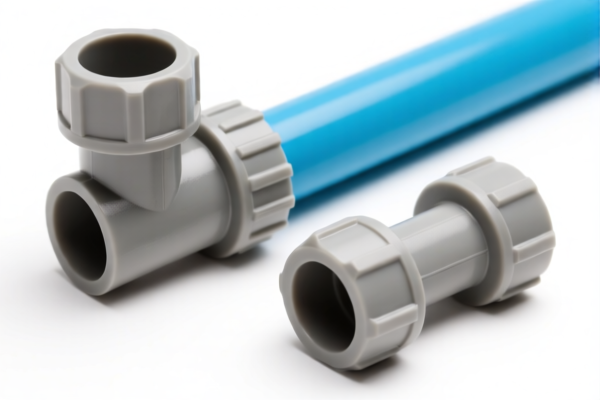
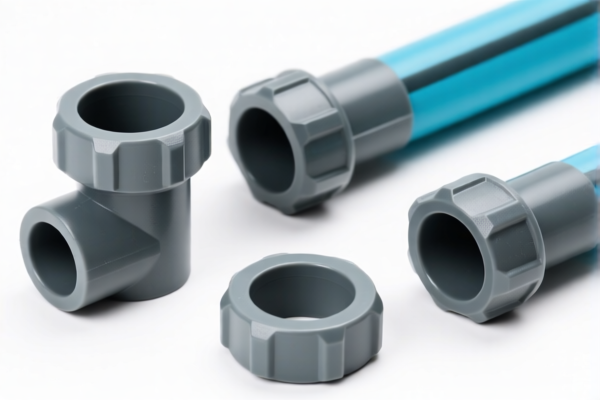
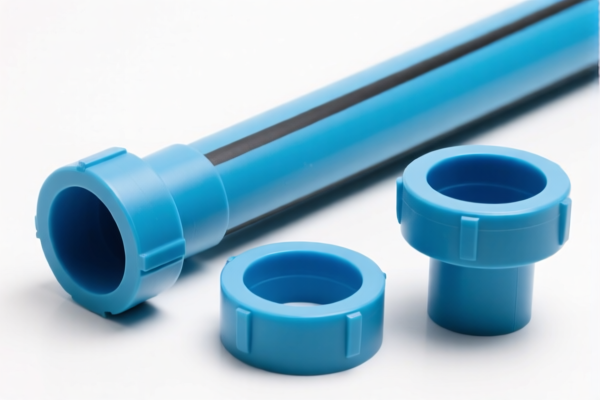
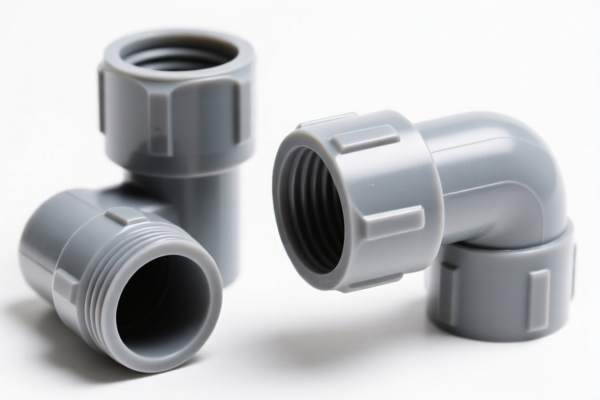
Plastic Oil Pipe Fittings are critical components used in fluid transport systems, specifically for connecting sections of plastic oil pipes. In international trade, the classification depends heavily on material composition, structural form, and functional role.
Key Distinctions: * Hose/Pipe Fittings (3917): Specifically designed to connect flexible hoses or rigid pipes, often threaded or compression-style. * General Plastic Articles (3926): Catch-all category for plastic articles not specified elsewhere, often used if the fitting is considered a general "part" rather than a specific pipe accessory. * Valve Parts (8481): If the fitting is integral to a valve assembly or serves a pressure-control function beyond simple connection.
⚠️ Critical Classification Point:
- If the item is strictly a connector/joint for pipes/hoses → Chapter 39 (Plastics) is most likely.
- If the item is a mechanical part of a valve system → Chapter 84 (Machinery/Valves) may apply, but plastic material often pushes it back to Chapter 39 unless specifically engineered as a valve component.
- Misclassification Risk: Declaring as "Valve Parts" (8481) when it’s just a simple plastic joint can lead to audits, as 8481 has different duty structures (0% base vs 5.3% for plastics).
📦 II. HS Code Classification Matrix (Based on Provided Data)
The following 5 HS Codes are potential classifications for Plastic Oil Pipe Fittings. Each has distinct tax implications due to US Trade Policies (Section 301 & IEEPA).
| HS Code | Summary Description | Tax Rate Profile | Key Reasoning |
|---|---|---|---|
| 3917.40.00.10 | Plastic hose/pipe fittings, connector type | 40.3% | Direct match: Plastic material + Connector form + Oil pipe accessory. High duty due to Section 301. |
| 3917.40.00.95 | Plastic hose/pipe fittings, other | 40.3% | Plastic material + Pipe accessory classification. High duty due to Section 301. |
| 3926.90.99.87 | Other plastic articles, connector as part | 22.8% | Plastic material match; fitting treated as a general plastic part/accessory. Lower Section 301 impact. |
| 3926.90.99.89 | Other plastic articles, general part | 22.8% | Plastic material (3901-3914 range); fitting as a plastic article part. Lower Section 301 impact. |
| 8481.90.90.40 | Parts of valves, tubing apparatus | 35.0% | Classified as a valve/tubing apparatus part. Plastic material does not conflict, but valve classification changes base duty. |
💰 III. Detailed Tax Breakdown (2026 US Import from China)
✅ Applicable Country: United States (US)
✅ Origin: China (CN)
✅ Effective Date: Current trade policies apply (Section 301 + IEEPA)
🎯 Scenario 1: High Duty Classification (40.3%)
HS Codes: 3917.40.00.10 & 3917.40.00.95
| Item | Detail |
|---|---|
| Base Duty | 5.3% |
| Section 301 Tariff | +25.0% (Trade Remedy Tariff) |
| IEEPA Tariff | +10.0% (National Emergency Tariff) |
| Total Effective Rate | 40.3% |
| Calculation | CIF Value × 40.3% |
| De Minimis Exemption | ❌ Not Applicable (Deny De Minimis) |
📌 Explanation:
- These codes fall under Chapter 39 (Plastics), specifically for hose, pipe, and tubing fittings.
- The 25% Section 301 tariff is heavily applied to Chinese plastic goods.
- The 10% IEEPA tariff adds further cost for Chinese-origin goods.
- Risk: If customs determines the item is not a "fitting" under 3917 but a "valve part," this rate might be disputed, but 40.3% is the safe, high-risk estimate for direct pipe connections.
🎯 Scenario 2: Moderate Duty Classification (22.8%)
HS Codes: 3926.90.99.87 & 3926.90.99.89
| Item | Detail |
|---|---|
| Base Duty | 5.3% |
| Section 301 Tariff | +7.5% |
| IEEPA Tariff | +10.0% |
| Total Effective Rate | 22.8% |
| Calculation | CIF Value × 22.8% |
| De Minimis Exemption | ❌ Not Applicable (Deny De Minimis) |
📌 Explanation:
- These codes fall under Chapter 39, but as "Other Plastic Articles" (3926), not specifically as "pipe fittings."
- The Section 301 tariff is only 7.5% (a significant saving vs. 25%).
- Strategy: If the fitting can be legitimately described as a general "plastic part" rather than a specialized "pipe fitting," this classification saves 17.5% in duties. However, it requires strong justification that the item is not primarily a pipe/hose connector.
🎯 Scenario 3: Valve Part Classification (35.0%)
HS Code: 8481.90.90.40
| Item | Detail |
|---|---|
| Base Duty | 0.0% |
| Section 301 Tariff | +25.0% |
| IEEPA Tariff | +10.0% |
| Total Effective Rate | 35.0% |
| Calculation | CIF Value × 35.0% |
| De Minimis Exemption | ❌ Not Applicable (Deny De Minimis) |
📌 Explanation:
- This code classifies the item as a part of a valve or similar apparatus.
- While the base duty is 0%, the 25% Section 301 still applies, making the total rate 35.0%.
- Risk: Customs may reject this if the item is not clearly part of a valve mechanism. Simple connectors do not qualify as valve parts. Misclassification here can lead to penalties.
🛠️ IV. Customs Clearance Strategy & Tips
✅ 1. Documentation Requirements
| Document | Required | Purpose |
|---|---|---|
| Commercial Invoice | ✔️ | Must clearly state "Plastic Oil Pipe Fitting" and material (e.g., PVC, PE, PTFE). |
| Product Specification Sheet | ✔️ | Detail dimensions, thread type, pressure rating, and connection method. |
| Material Certificate | ✔️ | Prove plastic type (e.g., HDPE, PP) to support Chapter 39 classification. |
| Organogram/Structure Diagram | ✔️ | Show how the fitting connects to pipes/hoses. Critical for distinguishing from valves. |
| Certificate of Origin | ✔️ | Essential for confirming Chinese origin and applying correct IEEPA/Section 301 rates. |
✅ 2. Classification Strategy: How to Save Money
🔥 "Know Your Function: Connector vs. Part vs. Valve"
| Scenario | Recommended HS Code | Duty Rate | Why? |
|---|---|---|---|
| Standard Pipe Joint | 3917.40.00.10 |
40.3% | Most accurate for "hose/pipe fittings." Safe but costly. |
| General Plastic Connector | 3926.90.99.87 |
22.8% | Best Savings Opportunity. If the fitting is not a dedicated pipe joint but a general plastic component, use this. Requires strong documentation that it’s not a specialized pipe fitting. |
| Valve Component | 8481.90.90.40 |
35.0% | Only if the fitting is part of a valve assembly. Not for simple connectors. |
⚠️ Warning: Do not arbitrarily choose
3926to save taxes if the product is clearly a "pipe fitting." Customs will audit based on function. If it’s a threaded oil pipe connector,3917is the legally correct choice, and you must pay 40.3%.
✅ 3. Common Pitfalls to Avoid
❌ Pitfall 1: Under-declaring by using "Plastic Part" (3926) for obvious pipe fittings.
👉 Consequence: Customs may reclassify to 3917, leading to back taxes of ~17.5% + penalties.
❌ Pitfall 2: Claiming "Valve Part" (8481) for simple connectors.
👉 Consequence: Rejected by CBP. Valve parts must be integral to a valve mechanism.
❌ Pitfall 3: Ignoring IEEPA 10%.
👉 Consequence: All these codes include the 10% IEEPA tariff for Chinese goods. Failure to account for this leads to underestimated landed costs.
🌍 V. Global Market Comparison (2026)
| Region | Recommended HS Code | Total Duty (China Origin) | Key Requirements |
|---|---|---|---|
| 🇺🇸 USA | 3917.40.00.10 or 3926.90.99.87 |
22.8% – 40.3% | Strict Section 301 + IEEPA enforcement. No de minimis. |
| 🇨🇳 China | 3917.40.00.10 |
~5.3% | No additional anti-dumping tariffs for this category. |
| 🇪🇺 EU | 3917.40 (Harmonized System) |
~4% + VAT | No Section 301 equivalent, but high VAT. |
| 🇲🇽 Mexico | 3917.40 |
~5% | USMCA may apply if originating, but plastic fittings often require local production. |
📌 Conclusion:
- USA is the most expensive market for Chinese plastic fittings due to Section 301 and IEEPA.
- Duty Savings Strategy: If the product design allows, try to classify under3926.90.99.87(22.8%) instead of3917(40.3%) by emphasizing its role as a general plastic component rather than a specialized pipe fitting. This requires expert customs broker support and clear product documentation.
📌 VI. Final Recommendations
- Verify Product Function: Is it a pipe/hose connector (3917) or a general plastic part (3926)?
- Consult a Customs Broker: Pre-classification rulings can save significant costs.
- Document Rigorously: Ensure invoices and specs clearly describe the material and function.
- Budget for Taxes: Assume 40.3% if using 3917, or 22.8% if using 3926 (with justification).
- Avoid De Minimis: These goods do not qualify for the $800 de minimis exemption.
📣 Immediate Action:
📞 Contact a Licensed Customs Broker to review your product’s technical specifications.
📄 Prepare a Detailed Product Description that highlights its material and general utility to support the lower-duty3926classification if applicable.
🚀 Optimize Landed Cost: Every percentage point of duty reduction directly impacts your profit margin in the US market.
✨ Precise Classification, Maximum Profit!
💼 Don’t Let Tariffs Eat Your Margins – Classify Correctly!
用户评价
关于 HS 编码归类
协调制度(HS)是由世界海关组织(WCO)制定的国际贸易商品分类标准。全球 200 多个国家采用 HS 系统作为海关关税、贸易统计和进出口监管的基础。
每个 HS 编码遵循以下层级结构:
- 章(2 位)——商品大类(例如:第 84 章:机器和机械设备)
- 品目(4 位)——章内的更具体分类
- 子目(6 位)——国际通用细分,所有 WCO 成员国统一使用
- 本国细分(8-10 位)——各国自行扩展的细分编码,如美国 HTSUS 10 位编码
正确的 HS 编码归类对于顺利通关、准确缴纳关税和遵守贸易法规至关重要。错误归类可能导致海关延误、多缴关税或罚款。
从CN进口到US时,适用的关税税率可能包括:
- 最惠国(MFN)税率——适用于 WTO 成员国的标准关税税率
- 普通税率——适用于无贸易协定国家
- 贸易救济关税——附加关税,如 301 条款(反倾销)、232 条款(国家安全)或反补贴税
本页内容仅供参考。如需正式归类,请咨询当地海关或持牌报关代理。