Plastic Pipes for Construction
CN → US| HS编码 | 关税税率 | 原产国 | 目的国 | 文档 |
|---|---|---|---|---|
| 3917290090 | 38.1% | CN | US | 官方文档 |
| 3917230000 | 38.1% | CN | US | 官方文档 |
| 3916200020 | 40.8% | CN | US | 官方文档 |
| 3916200010 | 40.8% | CN | US | 官方文档 |
| 3926909987 | 22.8% | CN | US | 官方文档 |
商品图片
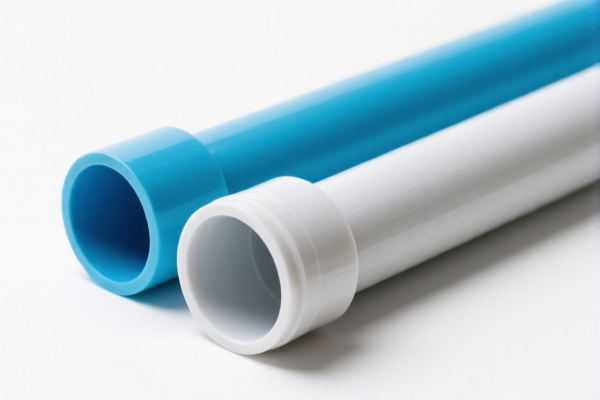
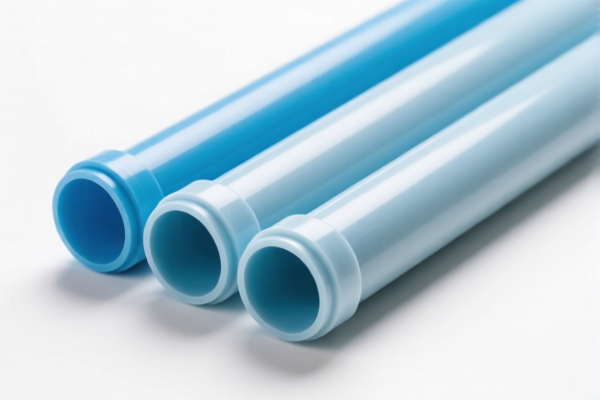

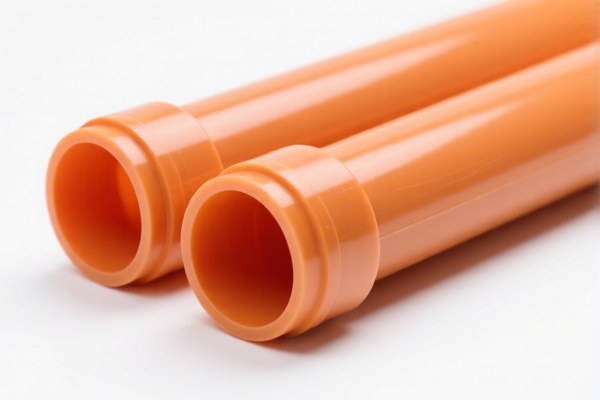
AI分析
🏗️ Plastic Pipes for Construction
🌐 HS Code Reference & Customs Clearance Guide | 2026 Latest Tariff Analysis | Professional Entry Strategy
📌 I. Product Definition & Classification: Are You Classifying "Plastic Pipes" Correctly?
"Plastic Pipes for Construction" is a broad category. In international trade, the specific HS Code depends heavily on the exact material composition, structural form (solid vs. hollow), and specific application within construction (e.g., structural profiles vs. fluid transport). Misclassification can lead to significant duty discrepancies, especially with current US trade policies.
⚠️ Key Distinction Point:
- If the pipe is hollow and used for conveying fluids/air → Generally falls under Chapter 39.17 (Plastic Pipes and Fittings).
- If the pipe is solid profile or rod-like, used for structural purposes (like window frames, railings) → May fall under Chapter 39.16 (Plastic Plates, Sheets, Rods, Tubes, and Profiles).
- If it’s a generic plastic article not specifically named → Falls under Chapter 39.26 (Other Plastic Articles).
📦 II. HS Code Classification Details (Based on Provided Data)
| HS Code | Product Description | Application/Logic | Estimated Total Tax Rate |
|---|---|---|---|
3917.29.00.90 |
Plastic pipes for construction, non-specific length limits, matches plastic material & pipe form. | General purpose plastic pipes where specific sub-category doesn't apply. | 38.1% |
3917.23.00.00 |
Plastic pipes for construction, plastic and pipe form fully correspond; usage matches construction attributes. | Specific classification for plastic pipes where material/form are explicitly defined for construction. | 38.1% |
3916.20.00.20 |
Plastic pipes for construction, material is plastic, form is pipe, usage matches construction profiles (windows, doors, railings). | Classified as Plastic Profiles because they are used as structural components (e.g., window frames) rather than just for conveying fluid. | 40.8% |
3916.20.00.10 |
Plastic pipes for construction, material is plastic, usage is construction, form inferred as tubular structure matching profile characteristics. | Another variant of Plastic Profiles for construction, emphasizing the structural profile nature. | 40.8% |
3926.90.99.87 |
Plastic pipes for construction, material is plastic, form is pipe, matched to other general "catch-all" category with no conflict. | Used as a fallback if the pipe doesn't fit specific "pipe" or "profile" definitions strictly, often for complex or non-standard plastic construction parts. | 22.8% |
🔍 Critical Insight:
-3917vs3916: The biggest risk is misclassifying a hollow pipe (3917) as a solid profile (3916) or vice versa. While both are "plastic for construction,"3916often attracts a higher base duty (5.8% vs 3.1%) in this dataset, leading to a higher total tax.
-3926Advantage: The "catch-all" code3926.90.99.87has the lowest total tax (22.8%) in this specific dataset. However, using this code requires justification that the item does not fit more specific definitions.
💰 III. Detailed Tariff Rate Breakdown (US Market Analysis)
✅ Applicable Country: United States (US)
✅ Origin: China (CN)
✅ Effective Time: Current Rates (Subject to 301 & IEEPA)
🎯 1. Lower Tax Group: 3917.29.00.90 & 3917.23.00.00
Total Rate: 38.1%**
| Item | Content |
|---|---|
| Base Duty Rate | 3.1% (General Ad Valorem) |
| Section 301 Duty | +25.0% (USITC Footnote 9903.88.01) |
| 122 Clause / IEEPA | +10.0% (Targeted surcharge on Chinese goods) |
| Total Effective Rate | 38.1% |
| Calculation Basis | CIF Value × 38.1% |
| De Minimis Exemption | ❌ Not Eligible |
📌 Explanation:
- These codes fall under Chapter 39.17 (Plastic Pipes, Tubes, and Hoses).
- The 38.1% rate is driven by the combination of the low base duty (3.1%) and the heavy additive tariffs (35% total).
🎯 2. Higher Tax Group: 3916.20.00.20 & 3916.20.00.10
Total Rate: 40.8%**
| Item | Content |
|---|---|
| Base Duty Rate | 5.8% (Higher base for plastic profiles) |
| Section 301 Duty | +25.0% (USITC Footnote 9903.88.01) |
| 122 Clause / IEEPA | +10.0% (Targeted surcharge on Chinese goods) |
| Total Effective Rate | 40.8% |
| Calculation Basis | CIF Value × 40.8% |
| De Minimis Exemption | ❌ Not Eligible |
📌 Explanation:
- These codes fall under Chapter 39.16 (Plastic Plates, Sheets, Rods, Tubes, and Profiles).
- The higher base duty (5.8% vs 3.1%) results in a total rate that is 2.7% higher than the3917codes.
🎯 3. Lowest Tax Group: 3926.90.99.87
Total Rate: 22.8%**
| Item | Content |
|---|---|
| Base Duty Rate | 5.3% |
| Section 301 Duty | +7.5% (Note: Lower Section 301 rate for this specific sub-category in this dataset) |
| 122 Clause / IEEPA | +10.0% (Targeted surcharge) |
| Total Effective Rate | 22.8% |
| Calculation Basis | CIF Value × 22.8% |
| De Minimis Exemption | ❌ Not Eligible |
📌 Explanation:
- This code is in Chapter 39.26 (Other Plastic Articles).
- It offers the lowest total tax rate (22.8%). However, Customs may scrutinize this classification more heavily if the item is clearly a "pipe." You must ensure the product definition aligns with "other plastic articles" to avoid penalties.
🛠️ IV. Customs Clearance Practical Advice
✅ 1. Documentation Checklist (Essential)
| Document | Required? | Notes |
|---|---|---|
| Product Specification Sheet | ✔️ | Must specify material (e.g., PVC, PE, PP), dimensions, and intended use. |
| Technical Data Sheet | ✔️ | Confirm if it is a hollow pipe (fluid transfer) or solid profile (structural). |
| Product Photos | ✔️ | Clear images showing cross-section (hollow vs. solid) and end-use. |
| Commercial Invoice | ✔️ | Clearly state "Plastic Pipes/Profiles for Construction." Avoid vague terms like "Plastic Items." |
| Certificate of Origin | ✔️ | Required for tariff calculations. |
| Packing List | ✔️ | List each component if shipped as a kit (pipes + fittings). |
✅ 2. Classification Strategy & Pitfalls
| Scenario | Recommended HS Code | Risk/Note |
|---|---|---|
| Standard Hollow Pipes (PVC/PE for water/gas) | 3917.23.00.00 or 3917.29.00.90 |
Lowest risk. Ensure description matches "Pipes." |
| Window Frames / Door Profiles | 3916.20.00.10 or 3916.20.00.20 |
Higher duty (40.8%). These are legally "Profiles," not just "Pipes." |
| Complex/Non-Standard Plastic Parts | 3926.90.99.87 |
Lowest duty (22.8%), but high scrutiny. Only use if the item doesn't fit Chapter 39.16 or 39.17 precisely. |
🔥 "Profile vs. Pipe" Rule:
If your product is a hollow tube used for flow →3917.
If your product is a solid shape (or hollow shape) used for structural support (like a window frame) →3916.
Mislabeling a window frame as a "pipe" to save 2.7% can lead to customs delays and penalties.
✅ 3. Special Considerations
| Situation | Advice |
|---|---|
| Mixed Shipment | If shipping both pipes (3917) and profiles (3916), declare separately. Mixing them can confuse customs brokers. |
| Fittings Included | If pipes and fittings are shipped together, ensure they are classified under the same chapter or declared as a set if appropriate. Fittings often follow the pipe classification. |
| Origin Declaration | Clearly mark "Made in China" to ensure the correct 122 Clause (10%) and Section 301 rates are applied. Incorrect origin declaration can double the penalty. |
🌍 V. Global Market Comparison (2026 Overview)
| Market | Recommended HS Code | Est. Total Duty | Key Requirements |
|---|---|---|---|
| 🇺🇸 USA | 3917.23.00.00 / 3917.29.00.90 |
38.1% | IEEPA 10% + 301 25% + Base 3.1% |
| 🇺🇸 USA | 3916.20.00.10/20 |
40.8% | Higher base duty (5.8%) |
| 🇺🇸 USA | 3926.90.99.87 |
22.8% | Lower 301 rate (7.5%) |
| 🇪🇺 EU | 3917.23.00 / 3917.29.00 |
Varies (0-5%) | No US-style 301 tariffs. Standard EU duty. |
| 🇨🇳 China | 3917.23.00 / 3917.29.00 |
6.5% | Import duty 6.5% (No 301/IEEPA) |
📌 Conclusion:
- For US Imports,3926.90.99.87offers the lowest cost (22.8%), but carries classification risk.
-3917codes are the safest and most common for standard plastic pipes.
-3916codes are for structural profiles and are more expensive.
📌 VI. Common Mistakes & How to Avoid Them
❌ Mistake 1: Calling a window frame a "plastic pipe."
👉 Result: Incorrect classification under 3917. While it might save 2.7% temporarily, customs may reclassify it as 3916 (40.8%) plus penalties during audit.
👉 Fix: Declare accurately as "Plastic Profile for Construction."
❌ Mistake 2: Using 3926 for standard PVC pipes to save tax.
👉 Result: Customs will reject the classification because PVC pipes are specifically covered in Chapter 39.17.
👉 Fix: Only use 3926 for items that truly don't fit "pipes" or "profiles."
❌ Mistake 3: Ignoring the 122 Clause (10%).
👉 Result: Underpayment of duties.
👉 Fix: Ensure all HS Codes from the dataset include the 10% surcharge in your cost calculations.
🎯 VII. Conclusion: Choose Wisely for Maximum Profit
🎯 Key Takeaway:
- Standard Pipes: Use 3917 (38.1%). Safe, accurate, widely accepted.
- Structural Profiles: Use 3916 (40.8%). Higher duty, but legally correct for windows/railings.
- Non-Standard/Complex Items: Consider 3926 (22.8%) if the item is truly unique and doesn't fit pipes/profiles.
💡 Pro Tip:
Always provide cross-sectional drawings to Customs brokers. A clear image of a hollow tube vs. a solid profile is the single best way to avoid classification disputes.
📣 Immediate Action:
📞 Consult a licensed customs broker before shipping.
📄 Prepare technical data sheets showing material and structure.
🚀 Get an Advance Ruling if you are importing large volumes to lock in the HS Code and duty rate.
✨ Precision in Classification = Savings in Cost!
💼 Every percentage point matters in international trade.
用户评价
关于 HS 编码归类
协调制度(HS)是由世界海关组织(WCO)制定的国际贸易商品分类标准。全球 200 多个国家采用 HS 系统作为海关关税、贸易统计和进出口监管的基础。
每个 HS 编码遵循以下层级结构:
- 章(2 位)——商品大类(例如:第 84 章:机器和机械设备)
- 品目(4 位)——章内的更具体分类
- 子目(6 位)——国际通用细分,所有 WCO 成员国统一使用
- 本国细分(8-10 位)——各国自行扩展的细分编码,如美国 HTSUS 10 位编码
正确的 HS 编码归类对于顺利通关、准确缴纳关税和遵守贸易法规至关重要。错误归类可能导致海关延误、多缴关税或罚款。
从CN进口到US时,适用的关税税率可能包括:
- 最惠国(MFN)税率——适用于 WTO 成员国的标准关税税率
- 普通税率——适用于无贸易协定国家
- 贸易救济关税——附加关税,如 301 条款(反倾销)、232 条款(国家安全)或反补贴税
本页内容仅供参考。如需正式归类,请咨询当地海关或持牌报关代理。