Plastic Plate
CN → US| HS编码 | 关税税率 | 原产国 | 目的国 | 文档 |
|---|---|---|---|---|
| 3920995000 | 40.8% | CN | US | 官方文档 |
| 3923109000 | 38.0% | CN | US | 官方文档 |
| 3923900080 | 38.0% | CN | US | 官方文档 |
| 3924102000 | 24.0% | CN | US | 官方文档 |
| 3924104000 | 13.4% | CN | US | 官方文档 |
商品图片
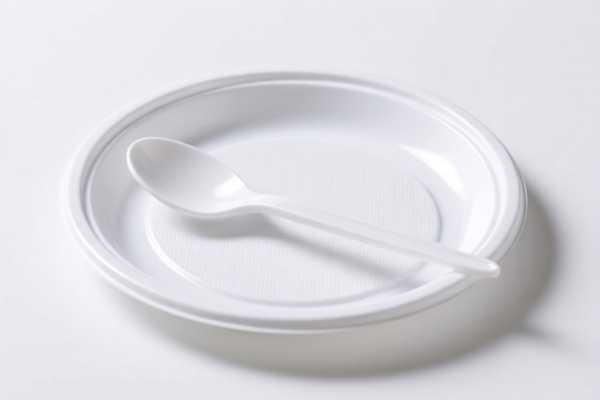
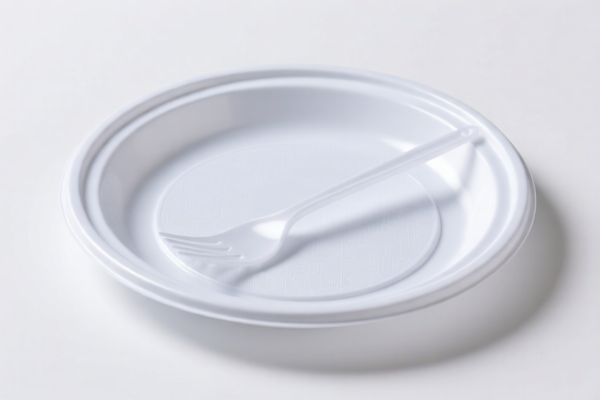
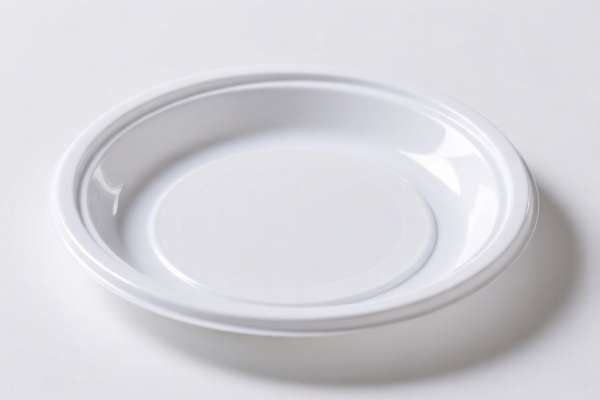
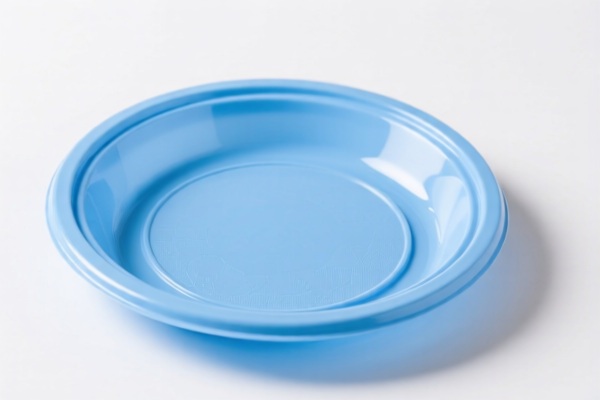
AI分析
Here is a comprehensive, Wiki-style guide for Plastic Plates, strictly based on the provided data and formatted for clarity, engagement, and strategic clarity.
🍽️ Plastic Plates (Plastic Dinnerware & Tableware)
🌐 HS Code Reference & Clearance Guide | 2026 Tax Rate Analysis | Strategic Customs Strategy
📌 I. Product Definition & Classification: Do You Know Your "Plastic Plate"?
In international trade, "Plastic Plates" are not a single entity. They fall into distinct categories based on physical morphology (is it a sheet or a finished dish?) and specific usage (dining vs. general packaging). The classification determines whether you face a 24% tariff or a 40.8% tariff.
The Critical Distinction:
- Category A: Finished Tableware (Rigid, shaped, used for serving food) → Usually 3924.10.x0.
- Category B: Packaging/Containers (Boxes, lids, trays used to hold goods) → Usually 3923.x0.
- Category C: Raw/Semi-Finished Sheets (Semi-finished plates/discs) → Usually 3920.99.50.
⚠️ Key Differentiator:
- If the item is a finished, molded dish for eating → Go to 3924.10.
- If the item is a box, lid, or generic container → Go to 3923.10/3923.90.
- If the item is a sheet/foil/disc meant to be processed further → Go to 3920.99.
📦 II. HS Code Classification Details (Strictly Based on Provided Data)
| HS Code | Product Description (Based on Data) | Total Tax Rate | Tax Breakdown |
|---|---|---|---|
| 3924.10.20.00 | Plastic Plates (Tableware) · Material: Plastic · Morphology: Defined as "Dishes" under Plastic Cutlery |
24.0% | • Base: 6.5% • Add-on: 7.5% • 122 Clause: 10% |
| 3924.10.40.00 | Plastic Plates (Dining) · Material: Plastic · Usage/Morphology: Fits "Dishes" definition under Tableware |
13.4% | • Base: 3.4% • Add-on: 0.0% • 122 Clause: 10% |
| 3923.10.90.00 | Plastic Boxes/Pallets/Containers · Material: Plastic · Morphology: Boxes, Trays, Similar Items (Other types) |
38.0% | • Base: 3.0% • Add-on: 25.0% • 122 Clause: 10% |
| 3923.90.00.80 | Plastic Packaging Articles · Material: Plastic · Usage: Packaging/Containers (Other Articles) |
38.0% | • Base: 3.0% • Add-on: 25.0% • 122 Clause: 10% |
| 3920.99.50.00 | Plastic Sheets/Foils/Discs · Material: Plastic · Morphology: Fits "Sheet/Film/Foil" attribute (Plate/Disc form) |
40.8% | • Base: 5.8% • Add-on: 25.0% • 122 Clause: 10% |
🔍 Critical Insight:
- 3923 Series (3923.10/3923.90): These are Packaging Codes. Even if the "plate" looks like a tray, if it's primarily for packaging goods, the tax is 38.0%.
- 3920 Series (3920.99): This is a Raw Material Code. If your "plate" is actually a semi-finished disc (not yet molded for dining), tax jumps to 40.8%.
- 3924 Series (3924.10): This is the Tableware Code. For actual dining plates, taxes vary significantly between 13.4% and 24.0% depending on specific sub-classification.
💰 III. 2026 Latest Tariff Rate Breakdown (Detailed Policy Analysis)
✅ Scope: Applies to goods exported to the US (Based on provided "122 Clause" and "Add-on" structure).
✅ Origin: China (Implied by "122 Clause" & specific tax rates in data).
✅ Effective: Current Data Cycle.
🎯 1. 3924.10.40.00 —— The "Sweet Spot" for Tableware
Best Scenario for Dining Plates
| Item | Content |
|---|---|
| Base Rate | 3.4% (Low duty for finished tableware) |
| Additional Duty | 0.0% (No Section 301 or 349 add-ons) |
| 122 Clause Duty | +10% (Specific Section 301/China-specific tariff) |
| TOTAL RATE | 13.4% |
| Calculation | CIF Value × 13.4% |
| Legal Path | 3924.10.40 → Base 3.4% + 122 Clause 10% |
📌 Analysis: This is the most economical route for finished plastic dining plates. The absence of the 25% "Add-on" tariff makes it highly competitive.
🎯 2. 3924.10.20.00 —— The "Standard" Tableware Route
Standard Dining Plates
| Item | Content |
|---|---|
| Base Rate | 6.5% |
| Additional Duty | +7.5% (Section 301/Add-on) |
| 122 Clause Duty | +10% |
| TOTAL RATE | 24.0% |
| Calculation | CIF Value × 24.0% |
| Legal Path | 3924.10.20 → Base 6.5% + Add-on 7.5% + 122 10% |
📌 Analysis: Slightly higher cost. Often applies if the plate has specific features or fails the strict criteria of the 40.00 subheading.
🎯 3. 3923.10.90.00 & 3923.90.00.80 —— The "Packaging" Trap
Boxes, Trays, and General Containers
| Item | Content |
|---|---|
| Base Rate | 3.0% |
| Additional Duty | +25.0% (High Section 301 Add-on) |
| 122 Clause Duty | +10% |
| TOTAL RATE | 38.0% |
| Legal Path | 3923 Category → Base 3% + Add-on 25% + 122 10% |
📌 Warning: If your "plate" is classified as a tray for packaging or a container, you lose the "Tableware" advantage. The 25% Add-on tax crushes the margin.
🎯 4. 3920.99.50.00 —— The "Raw Sheet" Penalty
Semi-finished Plates/Discs
| Item | Content |
|---|---|
| Base Rate | 5.8% |
| Additional Duty | +25.0% (High Section 301 Add-on) |
| 122 Clause Duty | +10% |
| TOTAL RATE | 40.8% (Highest in List) |
| Legal Path | 3920 Category → Base 5.8% + Add-on 25% + 122 10% |
📌 Warning: This code applies if the item is a sheet, foil, or disc that has not yet been fully finished into a dining plate. Avoid this classification if you are selling finished goods!
🛠️ IV. Customs Clearance Practical Advice (Avoiding Pitfalls)
✅ 1. Strategic Classification (The "Plate" vs. "Tray" Debate)
| Scenario | Correct HS Code | Tax Impact | Why? |
|---|---|---|---|
| Serving a meal (Standard dinner plate) | 3924.10.40.00 |
13.4% ✅ | Fits "Tableware/Dish" definition perfectly. |
| Serving a meal (Specific type/feature) | 3924.10.20.00 |
24.0% ✅ | Fits "Tableware" but triggers 7.5% add-on. |
| Packaging a product (e.g., cupcake box with lid) | 3923.10.90.00 |
38.0% ❌ | Classified as "Box/Container". High tax. |
| Bulk raw material (Plastic discs before molding) | 3920.99.50.00 |
40.8% ❌❌ | Classified as "Sheet/Foil". Highest tax. |
🔥 Golden Rule:
"If it's for eating, it's 3924. If it's for packing, it's 3923. If it's raw, it's 3920."
Misclassifying a dining plate as a "packaging tray" saves nothing; misclassifying raw discs as plates causes seizure.
✅ 2. Required Documentation for Smooth Clearance
| Document | Requirement | Purpose |
|---|---|---|
| Product Photos | High-res images of the item in use (on a table) | Proves it is "Tableware" (3924), not a "Container". |
| Material Certificate | Proof of "Plastic" material | Mandatory for all codes. |
| Mold Drawing | Technical drawing of the shape | Confirms it is a finished "Plate", not a semi-finished "Disc". |
| Commercial Invoice | Clear description: "Plastic Dinner Plate" (Not "Plastic Tray") | Avoids ambiguity with "Packaging" codes. |
| Declaration of Use | Statement: "For dining service, not packaging" | Crucial for 3924 classification. |
✅ 3. "122 Clause" & Tax Breakdown Explanation
The total tax includes three distinct layers: 1. Base Tariff: The standard duty (3.0% - 6.5%). 2. Add-on Tariff (Section 301/349): The 25% or 7.5% surcharge. This is the most volatile part. * 3924.10.40.00 is the only plate code with 0.0% add-on. * 3923 and 3920 codes carry the heavy 25% load. 3. 122 Clause (Section 301 Phase 3/4): A flat 10% surcharge on Chinese goods (as per your data). * Note: This applies to ALL 5 HS Codes listed.
🌍 V. Global Market Comparison (Contextual Data)
| Market | Recommended Code | Approx. Total Tax | Notes |
|---|---|---|---|
| 🇺🇸 USA (Data Source) | 3924.10.40.00 |
13.4% | Best rate for finished plates. |
| 🇺🇸 USA (Packaging) | 3923.10.90.00 |
38.0% | Very expensive for packaging trays. |
| 🇺🇸 USA (Raw Material) | 3920.99.50.00 |
40.8% | Do not export raw discs to US as "plates". |
| 🇪🇺 EU (General) | 3924.10 |
~0% - 4% | Generally lower duties (No 122 Clause). |
| 🇨🇳 China (Export) | Varies | ~5% - 10% | Base export duties usually low. |
📌 Conclusion: The USA is the only market in this dataset with the 122 Clause and Add-on Tariffs. This makes accurate classification critical to avoiding the 38-40% tax trap.
📌 VI. Common Mistakes & "Blood-Stain" Lessons
❌ Mistake 1: Labeling a dinner plate as a "Plastic Tray" or "Packaging Container".
👉 Consequence: Tax jumps from 13.4% to 38.0%.
👉 Fix: Use "Dinnerware", "Tableware", or "Plate" in the description.
❌ Mistake 2: Exporting raw plastic discs as "Plastic Plates".
👉 Consequence: Tax jumps to 40.8% + potential "Incomplete Goods" seizure.
👉 Fix: Classify as "Sheet/Foil" if unfinished, or finish the product before export.
❌ Mistake 3: Ignoring the 122 Clause.
👉 Consequence: Underestimating total cost by 10%.
👉 Fix: Always add 10% to your cost model for Chinese-origin goods.
✅ Correct Strategy:
"Ship finished, molded plastic dining plates.
Declare as 'Plastic Tableware'.
Aim for HS 3924.10.40.00 to pay only 13.4%."
🎯 VII. Final Conclusion: Precision is Profit
🎯 The Bottom Line:
- Finished Plates = 13.4% (The Winner)
- Packaging Trays = 38.0% (The Loser)
- Raw Discs = 40.8% (The Danger Zone)
🔹 "Know your morphology: Plate vs. Tray vs. Sheet."
🔹 "Avoid the 25% Add-on: Target 3924.10.40.00."
🔹 "Don't let a 10% Clause eat your margin."
📌 Action Item:
🚀 Review your product molds. Are they fully finished for dining?
📝 Update your HS Code to3924.10.40.00if possible.
💰 Re-calculate your FOB price including the 13.4% total tax.
✨ Expert Customs, Smart Logistics, Maximum Profit!
💼 Every percentage point counts in the world of plastic trade.
用户评价
关于 HS 编码归类
协调制度(HS)是由世界海关组织(WCO)制定的国际贸易商品分类标准。全球 200 多个国家采用 HS 系统作为海关关税、贸易统计和进出口监管的基础。
每个 HS 编码遵循以下层级结构:
- 章(2 位)——商品大类(例如:第 84 章:机器和机械设备)
- 品目(4 位)——章内的更具体分类
- 子目(6 位)——国际通用细分,所有 WCO 成员国统一使用
- 本国细分(8-10 位)——各国自行扩展的细分编码,如美国 HTSUS 10 位编码
正确的 HS 编码归类对于顺利通关、准确缴纳关税和遵守贸易法规至关重要。错误归类可能导致海关延误、多缴关税或罚款。
从CN进口到US时,适用的关税税率可能包括:
- 最惠国(MFN)税率——适用于 WTO 成员国的标准关税税率
- 普通税率——适用于无贸易协定国家
- 贸易救济关税——附加关税,如 301 条款(反倾销)、232 条款(国家安全)或反补贴税
本页内容仅供参考。如需正式归类,请咨询当地海关或持牌报关代理。