Plastic Raw Materials
CN → US| HS编码 | 关税税率 | 原产国 | 目的国 | 文档 |
|---|---|---|---|---|
| 3901101000 | 41.5% | CN | US | 官方文档 |
| 3902100000 | 41.5% | CN | US | 官方文档 |
| 3902900050 | 41.5% | CN | US | 官方文档 |
| 3904100000 | 41.5% | CN | US | 官方文档 |
| 3904210000 | 41.5% | CN | US | 官方文档 |
| 3901105010 | 41.5% | CN | US | 官方文档 |
商品图片


AI分析
🧪 Plastic Raw Materials: Ultimate HS Code Guide & Customs Clearance Strategy (2026 Edition)
🌐 HS Code Reference & Customs Clearance Guide | 2026 Latest Tariff Analysis | Professional通关 Strategy
📌 I. Product Definition & Classification: What Are "Plastic Raw Materials" Really?
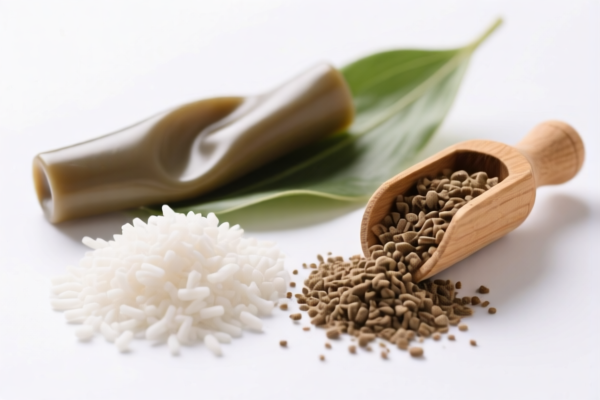
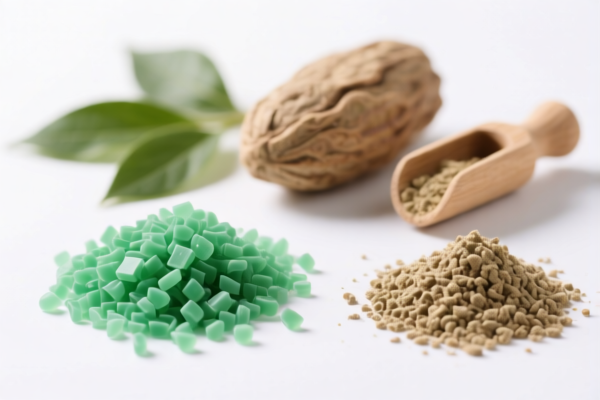
Plastic Raw Materials refer to polymers in their primary forms, such as granules, powders, or irregular shapes, used as feedstock for manufacturing processes (injection molding, extrusion, etc.). Unlike finished plastic products (bottles, pipes, toys), these are unprocessed chemical compounds.
⚠️ Critical Distinction:
- Raw Materials (Primary Forms): Granules, powders, liquid resins, irregular chunks. → Classified under Chapter 39 (Plastics and Articles Thereof).
- Finished Products: Shaped items with specific functions. → Classified under Chapter 39 (other headings) or other chapters depending on use.
- Key Factor: The state of matter ("Primary Form") and the specific polymer type (Polyethylene, Polypropylene, PVC, etc.).
📦 II. HS Code Classification Details (2026 Latest Tariff Authority Comparison)
Based on the provided data, the following HS Codes are identified as potential classifications for "Plastic Raw Materials." Note that while the summary is generic ("Plastic"), the specific HS code depends on the exact polymer type (e.g., PE, PP, PVC).
| HS Code | Product Description | Application Scenario | Polymer Type | Conflict Analysis |
|---|---|---|---|---|
3901.10.10.00 |
Primary forms of ethylene polymers | Polyethylene (PE) granules/powders | Ethylene Polymer | ✅ No conflict. "Plastic" matches polymer; "Raw Material" matches primary form. |
3902.10.00.00 |
Primary forms of propylene or other olefin polymers | Polypropylene (PP), Polybutylene granules | Olefin Polymer | ✅ No conflict. "Plastic" is a broad term; "Raw Material" fits primary form. |
3902.90.00.50 |
Other polymers in primary forms | Mixed or other olefin polymers not specified above | Other Olefin | ✅ No conflict. "Raw Material" aligns with primary form; no conflict with specific polymer description. |
3904.10.00.00 |
Primary forms of vinyl chloride or other halogenated olefin polymers | Polyvinyl Chloride (PVC) resin/powder | Vinyl Chloride Polymer | ✅ No conflict. "Plastic" is consistent with PVC; "Raw Material" matches primary form. |
3904.21.00.00 |
Primary forms of vinyl chloride copolymers | PVC Copolymer resins | Vinyl Chloride Copolymer | ✅ No conflict. "Raw Material" fits primary form; material attributes logically consistent. |
3901.10.50.10 |
Other primary forms of ethylene polymers | Specific grades of Polyethylene (PE) | Ethylene Polymer | ✅ No conflict. "Raw Material" is explicit; material inference (polymer/plastic) is reasonable. |
🔍 Key Insight:
- All listed codes share the same tariff structure because they all represent Polymers in Primary Forms. - The exact HS Code depends on which plastic it is: - Polyethylene (PE) →3901...- Polypropylene (PP) →3902...- Polyvinyl Chloride (PVC) →3904...- Misclassifying the specific polymer can lead to severe customs penalties, even if the general category is correct.
💰 III. 2026 Latest Tariff Rate Breakdown (Including Surcharges & Policy Add-ons)
✅ Applicable Country: United States (US)
✅ Origin: China (CN)
✅ Effective Date: From November 10, 2025 (for subsequent imports)
✅ Total Tax Rate: 41.5%
🎯 1. Universal Tax Structure for All Listed HS Codes
| Item | Detail |
|---|---|
| Basic Customs Duty | 6.5% |
| Section 301 Tariff (Add-on) | 25.0% |
| Section 122 Tariff (Add-on) | 10.0% |
| Total Tariff Rate | 41.5% |
| Tax Calculation | CIF Value × 41.5% |
| De Minimis Exemption | ❌ Not Applicable (High value goods, strategic materials) |
| Legal Basis Path | USITC:Chapter39 → Section301:Footnote9903.88.01 → Section122:Authority |
📌 Explanation:
- "Section 301 Tariff (25%)": Based on the U.S. Trade Representative's list targeting Chinese goods, including plastics and chemical intermediates. - "Section 122 Tariff (10%)": Under Section 122 of the Trade Act of 1974, this tariff is applied to imports that threaten to impair U.S. national security or economic stability, often used for strategic raw materials. - "Basic Duty (6.5%)": The standard Most Favored Nation (MFN) rate for plastic resins in primary forms. - Total 41.5% is a very high barrier, significantly impacting the cost competitiveness of Chinese plastic raw materials.
🛠️ IV. Customs Clearance Practical Advice (Pitfall Avoidance Guide)
✅ 1. Required Documentation Checklist (Non-negotiable)
| Document | Must Provide | Purpose |
|---|---|---|
| ✅ Product Specification Sheet | ✔️ | Must specify Polymer Type (PE, PP, PVC, etc.), Molecular Weight, Melt Flow Index (MFI), and Primary Form (granules, powder). |
| ✅ Certificate of Origin (CO) | ✔️ | Essential for determining eligibility for any potential exemptions (though unlikely for 41.5% tariff). |
| ✅ Commercial Invoice | ✔️ | Must clearly state "Plastic Raw Materials" and the specific HS Code. Avoid vague terms like "Plastic Stuff." |
| ✅ Packing List | ✔️ | Detail net/gross weight, number of packages. Ensure consistency with invoice. |
| ✅ Test Report (SGS/BV) | ✔️ | Proves the material is indeed a polymer in primary form and not a finished good or mixture. |
| ✅ Bill of Lading (B/L) | ✔️ | Clean on-board bill of lading. |
✅ 2. Declaration Tips (Key Mantra)
🔥 "Specify the Polymer, Declare Primary Form, Avoid Vague Terms!"
| Scenario | Correct Declaration | Incorrect Practice |
|---|---|---|
| Polyethylene (PE) Granules | 3901.10.10.00 / 3901.10.50.10 |
Generic "Plastic Pellets" → High risk of misclassification |
| Polypropylene (PP) Powder | 3902.10.00.00 |
"Chemical Powder" → Wrong Chapter |
| PVC Resin | 3904.10.00.00 / 3904.21.00.00 |
"Building Material" → Wrong Heading |
| Mixed Plastic Waste | ❌ Not Allowed | Raw materials must be virgin/polymers, not recycled waste unless specifically classified under 3915. |
⚠️ Critical Warning:
- Do not declare "Plastic Raw Materials" without specifying the type of polymer. Customs will request clarification, leading to delays. - Ensure the physical state is clearly "primary form" (granules, powder, liquid). If it is molded into a semi-finished shape, it may be classified differently.
✅ 3. Special Circumstances Handling
| Situation | Handling Advice |
|---|---|
| OEM/Custom Grades | Provide technical data sheets showing the polymer is identical to standard HS code descriptions. |
| Additives/Fillers | If the plastic contains <10% additives, it may still be classified under the base polymer. >10% may change the HS code. Consult a specialist. |
| Transshipment | Ensure documents reflect the Country of Origin (China). Transshipment through Vietnam/Malaysia does not eliminate the 301/122 tariffs unless a Substantial Transformation certificate is provided (very difficult for simple blending). |
| Hybrid Shipments | If shipping plastic raw materials with finished plastic goods, declare separately. Mixing categories can trigger audits. |
🌍 V. Global Market Clearance Comparison (2026 Latest)
| Country/Region | Recommended HS Code (Example: PE) | Tariff Rate (China Origin) | Certification Requirements | Notes |
|---|---|---|---|---|
| 🇺🇸 United States | 3901.10.10.00 |
41.5% (6.5% Base + 25% Sec301 + 10% Sec122) | No specific tech cert, but strict origin proof | Highest Barrier. Tariff is punitive. |
| 🇨🇳 China | 3901.10.10.00 |
5% | None | Low import duty, but domestic consumption dominates. |
| 🇪🇺 European Union | 3901.10.10.00 |
6.5% (MFN) | REACH Registration (Chemicals) | No Section 301/122 tariffs. REACH compliance is the main hurdle. |
| 🇦🇺 Australia | 3901.10.10.00 |
5% | ACCC Compliance | Low tariff, no major surcharges. |
| 🇯🇵 Japan | 3901.10.10.00 |
5-7% | JIS Standards | Moderate tariff, no additional surcharges. |
📌 Conclusion:
- The United States is the most challenging market for Chinese plastic raw materials due to the 41.5% combined tariff. - EU, Australia, and Japan offer significantly lower tariff barriers, making them more attractive alternatives for exporters. - Cost Optimization Strategy: Consider supply chain diversification to non-China origins if targeting the US market, or absorb the cost if the product has high margin and low elasticity.
📌 VI. Common Mistakes & Pitfall Guide (Lessons Learned)
❌ Mistake 1: Declaring "Plastic Raw Materials" without specifying the polymer type (PE, PP, PVC).
👉 Consequence: Customs will issue a Query Letter, causing delays of 2-4 weeks. If unresolved, goods may be seized or returned.
❌ Mistake 2: Confusing "Primary Form" with "Finished Good."
👉 Consequence: If granules are molded into simple shapes (e.g., beads, blocks), they may be classified as articles, changing the HS code and potentially the tariff.
❌ Mistake 3: Ignoring Section 122 Tariff.
👉 Consequence: Many importers only account for Section 301 (25%). Missing the additional 10% leads to budget shortfalls and unpaid duty liabilities upon release.
❌ Mistake 4: Using "Plastic Pellets" as the only description.
👉 Consequence: Insufficient detail for customs valuation and classification. Always include Technical Data Sheet references.
✅ Best Practice:
"Polyethylene Resin, HDPE, Granular, Primary Form, MFI: 2.0g/10min, For Injection Molding, Origin: China, HS: 3901.10.10.00"
🎯 VII. Conclusion: Precision Classification, Cost Control, and Compliance!
🎯 Remember the Mantra:
🔹 "Specify Polymer, Declare Primary Form, Account for All Surcharges!"
🔹 "41.5% Total Tariff is the Reality for US Imports. Plan Your Budget!"
🔹 "HS Code Determines Duty, Details Determine Speed, Compliance Determines Safety!"
📌 Pro Tip:
If your plastic raw materials are destined for the US market, consider:
1. Advance Ruling: Request a Binding Tariff Information (BTI) or Advance Ruling from US Customs (CBP) to confirm the specific HS code for your exact polymer grade.
2. Supply Chain Review: Evaluate if sourcing from Vietnam, India, or Korea can mitigate the 41.5% tariff (check rules of origin).
3. Cost Absorption vs. Price Increase: Decide whether to pass the 41.5% cost to customers or absorb it.
📣 Immediate Action:
📞 Consult a Licensed Customs Broker + Provide Technical Data Sheets + Apply for HS Code Pre-Ruling
🚀 Ensure Your Plastic Raw Materials Clear Customs Smoothly, Control Costs, and Maximize Profit!
✨ Professional Clearance Starts with Accurate Classification!
💼 Every Penny Saved on Tariffs is Pure Profit!
用户评价
关于 HS 编码归类
协调制度(HS)是由世界海关组织(WCO)制定的国际贸易商品分类标准。全球 200 多个国家采用 HS 系统作为海关关税、贸易统计和进出口监管的基础。
每个 HS 编码遵循以下层级结构:
- 章(2 位)——商品大类(例如:第 84 章:机器和机械设备)
- 品目(4 位)——章内的更具体分类
- 子目(6 位)——国际通用细分,所有 WCO 成员国统一使用
- 本国细分(8-10 位)——各国自行扩展的细分编码,如美国 HTSUS 10 位编码
正确的 HS 编码归类对于顺利通关、准确缴纳关税和遵守贸易法规至关重要。错误归类可能导致海关延误、多缴关税或罚款。
从CN进口到US时,适用的关税税率可能包括:
- 最惠国(MFN)税率——适用于 WTO 成员国的标准关税税率
- 普通税率——适用于无贸易协定国家
- 贸易救济关税——附加关税,如 301 条款(反倾销)、232 条款(国家安全)或反补贴税
本页内容仅供参考。如需正式归类,请咨询当地海关或持牌报关代理。