Plastic Reducing Fitting
CN → US| HS编码 | 关税税率 | 原产国 | 目的国 | 文档 |
|---|---|---|---|---|
| 3926305000 | 22.8% | CN | US | 官方文档 |
| 3917400095 | 40.3% | CN | US | 官方文档 |
| 3917400080 | 40.3% | CN | US | 官方文档 |
| 8481909085 | 85.0% | CN | US | 官方文档 |
| 8481905000 | 20.5% | CN | US | 官方文档 |
| 3926902500 | 24.0% | CN | US | 官方文档 |
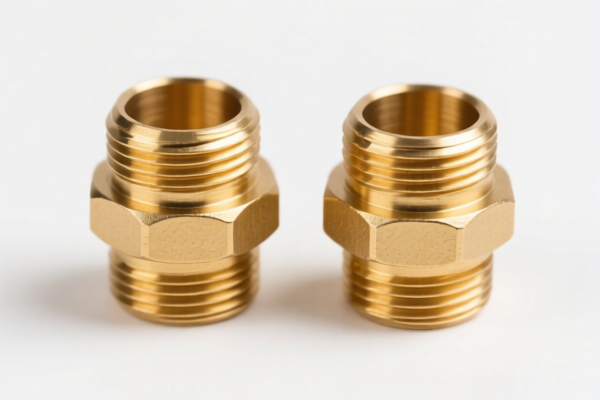
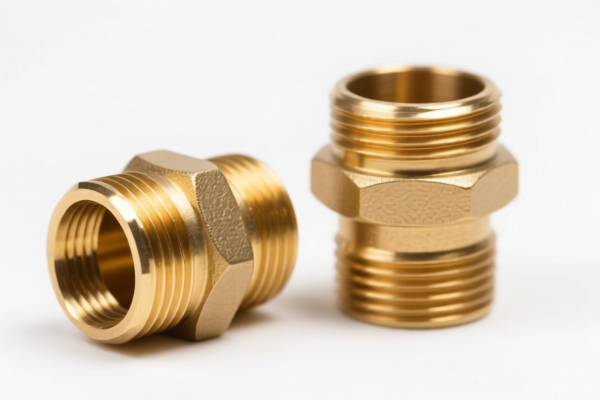
商品图片


AI分析
🧩 Plastic Reducing Fitting (Plastic Pipe Fittings)
🌐 HS Code Reference & Clearance Guide | 2026 Latest Tariff Analysis | Professional-Level Customs Strategy
📌 I. Product Definition & Classification: Do You Really Know What a "Reducing Fitting" Is?
A Plastic Reducing Fitting is a crucial component in piping systems, designed to connect two pipes of different diameters. In international trade, it is generally classified under Chapter 39 (Plastics) or Chapter 84 (Valves/Pumps), depending on its specific structural design, intended use, and material composition.
Key Distinctions:
- Pipe Accessories (Chapter 39): If the item is simply a connector, adapter, or coupling made of plastic, without complex mechanical functions (like flow control via internal mechanisms), it falls under 3917 or 3926.
- Valve Parts (Chapter 84): If the fitting is explicitly designed as a part for a valve (e.g., a threaded end for a valve body) or is classified as a "part of valves," it falls under 8481.
⚠️ Critical Differentiation Point:
- If it is a simple pipe connector/adapter (no moving parts, just for joining pipes) → HS 3917.40 or 3926.30.
- If it is a valve component (specifically listed as a part of a valve in customs rulings) → HS 8481.90.
📦 II. HS Code Classification Details (2026 Latest Tariff Authority Comparison)
Based on the provided data, here are the five possible classifications for Plastic Reducing Fittings, along with their rationale and tax implications.
| HS Code | Product Description & Rationale | Applicable Scenario | Total Tax Rate (US Import from China) |
|---|---|---|---|
| 3926.30.50.00 | Plastic Articles (Other): Classified as "Connecting Parts." The rationale states it belongs to the category of "plastic products and connectors." | General plastic connectors, adapters, or couplings that do not fit strictly into the "pipes/tubes" chapter. | 22.8% |
| 3917.40.00.95 | Plastic Pipes & Fittings: Classified as "Plastic Pipe Accessories." The name explicitly includes material (Plastic) and form (Fitting/Adapter). | Standard plastic pipe fittings (elbows, tees, reducers) used in plumbing or industrial piping. | 40.3% |
| 3917.40.00.80 | Plastic Pipe Fittings (Reducer): Specifically "Fittings in the category of pipe accessories," material is plastic, usage and classification explanation are fully consistent. | Direct match for plastic reducing fittings used in pipe networks. | 40.3% |
| 8481.90.90.85 | Parts of Valves: Classified under "Parts of Valves and Similar Devices." Material is plastic, matching the logic for parts made of other materials. | If customs authorities rule that the reducing fitting is a part of a valve (e.g., integral part of a valve assembly) rather than a pipe connector. | 85.0% |
| 8481.90.50.00 | Parts of Valves/Pipes: Classified under "Parts of Valves/Pipe Accessories." Material is plastic, consistent with inference for "made of other materials." | Alternative valve part classification; possibly for specific valve-related plastic components. | 20.5% |
🔍 Key Reminder:
- Chapter 39 (3917/3926) is the most common classification for general plastic pipe fittings (reducers, elbows, couplings).
- Chapter 84 (8481) applies only if the item is deemed a part of a valve (not just a pipe connector). This carries a massive tax burden in some cases (85%) but can be lower in others (20.5%).
- Misclassification Risk: Declaring a simple plastic reducer as a "valve part" (8481) to avoid Chapter 39 tariffs is risky and may lead to penalties if it lacks valve-specific functional characteristics.
💰 III. 2026 Latest Tariff Rate Details (Including Surtaxes, Policy Additions)
✅ Applicable Country: United States (US)
✅ Origin: China (CN)
✅ Effective Date: 2025/2026 (Current Trade Policies)
🎯 1. 3926.30.50.00 —— Plastic Articles (Connecting Parts)
| Item | Content |
|---|---|
| Base Tariff | 5.3% |
| Section 301 Surtax | 7.5% |
| Section 122 Tariff | 10% |
| Total Rate | 22.8% |
| Tax Calculation | CIF Value × 22.8% |
| De Minimis Exemption? | ❌ No (High-risk category for de minimis claims due to high volume) |
| Legal Basis Path | USITC:3926.30.50.00 → Section 301: 7.5% → Section 122: 10% |
📌 Explanation:
- This is a moderate-rate classification.
- The "Section 122 Tariff" (10%) is a specific U.S. trade measure often applied to strategic materials or specific plastic products.
- Recommendation: If your fitting is a simple connector, this might be a viable, lower-cost alternative to 3917 if you can justify it as a "general plastic article" rather than a "pipe fitting."
🎯 2. 3917.40.00.95 & 3917.40.00.80 —— Plastic Pipe Fittings
| Item | Content |
|---|---|
| Base Tariff | 5.3% |
| Section 301 Surtax | 25.0% |
| Section 122 Tariff | 10% |
| Total Rate | 40.3% |
| Tax Calculation | CIF Value × 40.3% |
| De Minimis Exemption? | ❌ No |
| Legal Basis Path | USITC:3917.40.00.XX → Section 301: 25.0% → Section 122: 10% |
📌 Explanation:
- This is the standard classification for most plastic pipe fittings.
- The 25% Section 301 Surtax is the dominant cost driver.
- Recommendation: This is the safest and most accurate classification for standard plastic reducers. However, the tax burden is significant. Consider supply chain diversification if volume is high.
🎯 3. 8481.90.90.85 —— Parts of Valves (High-Risk/High-Tax)
| Item | Content |
|---|---|
| Base Tariff | 0.0% |
| Section 301 Surtax | 25.0% |
| Section 122 Tariff | 10% |
| Steel/Aluminum/Copper Surtax | 50% (If applicable, but this is plastic, so 0%) |
| Total Rate | 85.0% |
| Tax Calculation | CIF Value × 85.0% |
| De Minimis Exemption? | ❌ No |
| Legal Basis Path | USITC:8481.90.90.85 → Section 301: 25.0% → Section 122: 10% |
📌 Explanation:
- Extremely High Tax! This classification should only be used if the item is definitively a part of a valve and not a general pipe connector.
- Warning: Do not use this classification to save money. It is the most expensive option for plastic fittings.
- Risk: If misclassified (i.e., it's actually a pipe fitting), you face severe penalties, back taxes, and potential audits.
🎯 4. 8481.90.50.00 —— Parts of Valves (Lower-Tax Valve Part)
| Item | Content |
|---|---|
| Base Tariff | 3.0% |
| Section 301 Surtax | 7.5% |
| Section 122 Tariff | 10% |
| Total Rate | 20.5% |
| Tax Calculation | CIF Value × 20.5% |
| De Minimis Exemption? | ❌ No |
| Legal Basis Path | USITC:8481.90.50.00 → Section 301: 7.5% → Section 122: 10% |
📌 Explanation:
- This is an interesting anomaly. If customs accepts the item as a "valve part" under this specific subheading, the tax is lower (20.5%) than even the pipe fitting category (40.3%).
- However, the definition of "part of a valve" is strict. A simple reducing fitting may not qualify.
- Strategy: Only pursue this if you have a strong technical argument that the fitting is integral to a valve system and not a general pipe connector.
🛠️ IV. Customs Clearance Practical Advice (Battle-Tested Pitfall Guide)
✅ 1. Documentation Checklist (Non-Negotiable)
| Document | Must Provide? | Explanation |
|---|---|---|
| ✅ Product Specification Sheet | ✔️ | Must detail: Material (e.g., PVC, PP, PE), Dimensions (Outer/Inner Diameter), Pressure Rating, Temperature Range. |
| ✅ Technical Diagram | ✔️ | Clear drawing showing the fitting is a connector (no internal moving parts) vs. a valve part. |
| ✅ Product Photos (With Label) | ✔️ | Show the item clearly as a "Reducer Fitting," not a "Valve." |
| ✅ Commercial Invoice | ✔️ | Description must be precise: "Plastic Reducing Fitting for Pipe Connection, Made of PVC." Avoid vague terms like "Plastic Part." |
| ✅ Packing List | ✔️ | Ensure quantity matches invoice. |
| ✅ Material Test Report | ✔️ | Optional but helpful: Proof of material composition to confirm Chapter 39 classification. |
✅ 2. Declaration Tactics (Key Mantra)
🔥 “Pipe Fitting = 3917 (40.3%), Valve Part = 8481 (20.5%-85%). Be precise!”
| Scenario | Correct Declaration | Wrong Practice |
|---|---|---|
| Standard Plastic Reducer | 3917.40.00.80 or 3917.40.00.95 | Misdeclare as "Valve Part" (8481) → Risk of 85% tax or penalties. |
| Simple Connector | 3926.30.50.00 | If it’s a generic plastic connector, this offers a lower tax (22.8%) if justified. |
| Valve Component | 8481.90.50.00 | Only if it’s truly a valve part. If not, high risk of audit. |
| High-Tax Valve Part | 8481.90.90.85 | Avoid! Only for specific valve parts with high strategic classification. |
✅ 3. Special Case Handling
| Situation | Handling Advice |
|---|---|
| OEM Custom Fittings | Provide customer order + design drawing. Clarify if it’s for a specific valve system or general piping. |
| Mixed Shipment (Pipes + Fittings) | Declare separately! Fittings go to Chapter 39/84, Pipes to 3917. Do not mix. |
| Plastic vs. Metal Parts | If the fitting has a metal insert, declare based on the primary material or as a composite. Plastic reduces generally fall under Chapter 39. |
| Pre-Ruling Application | Strongly Recommended. Apply for an Advance Ruling (CBP Ruling Letter) from U.S. Customs and Border Protection (CBP) before shipping. This locks in the HS Code and avoids surprise taxes. |
🌍 V. Global Market Comparison (2026 Latest)
| Country/Region | Recommended HS Code | Tariff (Approx.) | Certification Requirements | Remarks |
|---|---|---|---|---|
| 🇺🇸 United States | 3917.40.00.80 |
40.3% | N/A (Standard) | High tax due to Section 301. Pre-ruling advised. |
| 🇨🇳 China | 3917.40.00.80 |
5-10% | N/A | Lower tariffs for domestic/re-export. |
| 🇪🇺 EU | 3917.40.00.80 |
0-2.5% | REACH, RoHS | Low tariffs. Strict chemical compliance. |
| 🇬🇧 UK | 3917.40.00.80 |
0-2.5% | UKCA, REACH | Post-Brexit rules apply. |
| 🇦🇺 Australia | 3917.40.00.80 |
5% | N/A | Standard duty. |
📌 Conclusion:
- USA is the most challenging market due to Section 301 and 122 tariffs.
- Chapter 39 (3917) is the standard, but expensive.
- Chapter 84 (8481.90.50.00) offers a lower rate (20.5%) but is risky if the item is not a true valve part.
- 3926.30.50.00 (22.8%) is a potential "middle ground" if the fitting can be classified as a general plastic article.
📌 VI. Common Errors & Pitfall Guide (Lessons Learned)
❌ Error 1: Declaring a standard plastic reducer as a "Valve Part" to avoid 40.3% tax, resulting in an 85% tax liability.
👉 Consequence: Massive overpayment + potential fraud allegations.
❌ Error 2: Using "Plastic Fitting" without specifying "Reducing" or "Pipe Connector."
👉 Consequence: Customs may assign a generic code with higher duties or hold the shipment for clarification.
❌ Error 3: Assuming all plastic parts are Chapter 39.
👉 Consequence: If it’s a valve part, Chapter 84 applies. Misclassification leads to penalties.
❌ Error 4: Ignoring Section 122 Tariff (10%).
👉 Consequence: Underestimating total landed cost. Always add 10% to Section 301 tariffs if applicable.
✅ Correct Practice:
"Plastic Reducing Pipe Fitting, PVC, 2-inch to 1-inch, for Water Supply System, Made in China"
→ HS Code:3917.40.00.80
→ Tax: 40.3%
🎯 VII. Conclusion: Professional Declaration, Save Time, Reduce Costs!
🎯 Remember the Mantra:
🔹 "Pipe Fitting = 3917 (40.3%). General Plastic = 3926 (22.8%). Valve Part = 8481 (20.5%-85%). Choose wisely!"
🔹 "HS Code Determines Fate, Tax Difference is Huge, One Mistake Costs Thousands!"
📌 Pro Tip:
If your Plastic Reducing Fitting is not destined for the U.S., or if you can source from Vietnam, Mexico, or Thailand, you may avoid Section 301 tariffs.
Strongly Recommend: Apply for an Advance Ruling from CBP to confirm whether your specific fitting qualifies for 3917.40.00.80 (40.3%) or 3926.30.50.00 (22.8%). This can save you 17.5% on your CIF value!
📣 Take Action Now:
📞 Contact a professional customs broker + Provide Product Photos + Apply for HS Code Advance Ruling
🚀 Let your fittings clear smoothly, export efficiently, and maximize profits!
✨ Professional Customs Clearance Starts with Accurate Classification!
💼 Every Dollar of Your Cost Deserves Precise Calculation!
用户评价
关于 HS 编码归类
协调制度(HS)是由世界海关组织(WCO)制定的国际贸易商品分类标准。全球 200 多个国家采用 HS 系统作为海关关税、贸易统计和进出口监管的基础。
每个 HS 编码遵循以下层级结构:
- 章(2 位)——商品大类(例如:第 84 章:机器和机械设备)
- 品目(4 位)——章内的更具体分类
- 子目(6 位)——国际通用细分,所有 WCO 成员国统一使用
- 本国细分(8-10 位)——各国自行扩展的细分编码,如美国 HTSUS 10 位编码
正确的 HS 编码归类对于顺利通关、准确缴纳关税和遵守贸易法规至关重要。错误归类可能导致海关延误、多缴关税或罚款。
从CN进口到US时,适用的关税税率可能包括:
- 最惠国(MFN)税率——适用于 WTO 成员国的标准关税税率
- 普通税率——适用于无贸易协定国家
- 贸易救济关税——附加关税,如 301 条款(反倾销)、232 条款(国家安全)或反补贴税
本页内容仅供参考。如需正式归类,请咨询当地海关或持牌报关代理。