Plastic Rice Bowls
CN → US| HS编码 | 关税税率 | 原产国 | 目的国 | 文档 |
|---|---|---|---|---|
| 3924102000 | 24.0% | CN | US | 官方文档 |
| 3926901000 | 20.9% | CN | US | 官方文档 |
| 3926904000 | 12.8% | CN | US | 官方文档 |
| 3924104000 | 13.4% | CN | US | 官方文档 |
| 3924102000 | 24.0% | CN | US | 官方文档 |
商品图片
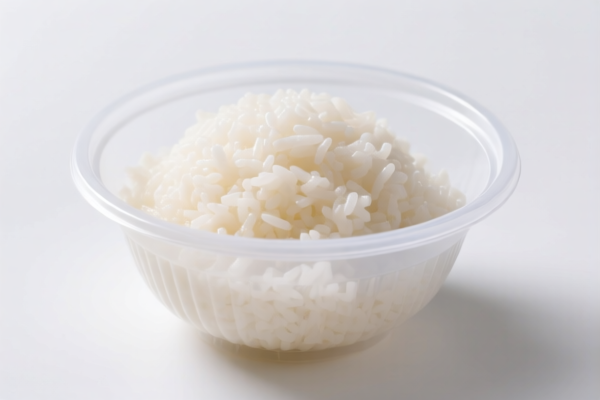
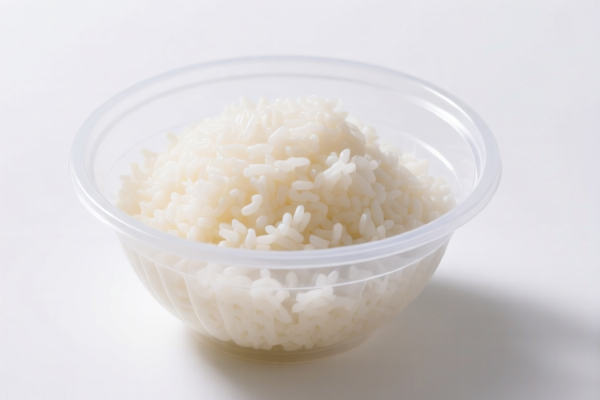
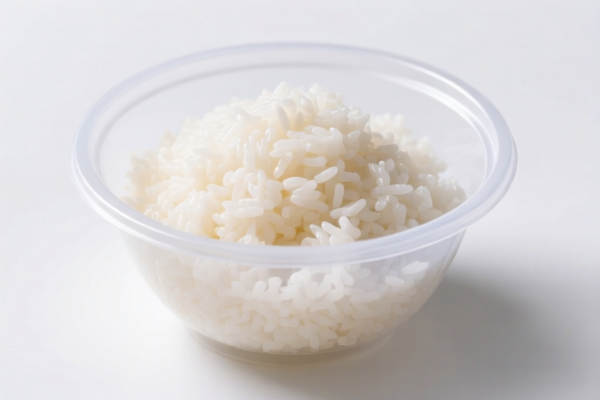
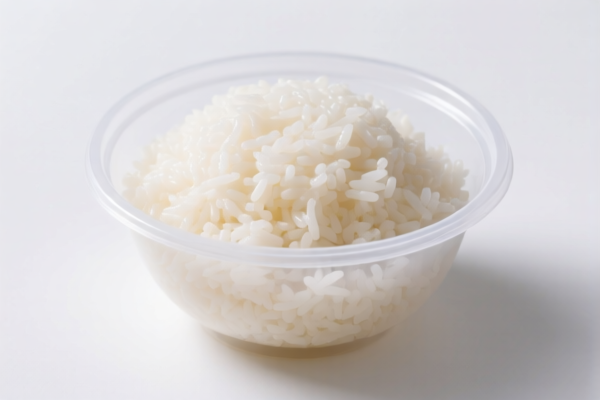
AI分析
🍚 Plastic Rice Bowls (Plastic Tableware & Containers)
🌐 HS Code Reference & Customs Clearance Guide | 2026 Latest Tariff Analysis | Professional Customs Strategy
📌 Part I: Product Definition & Classification: Do You Know Your "Plastic Bowl"?
Plastic rice bowls are ubiquitous in daily life, food service, and manufacturing. In international trade, they are classified into two main categories based on their primary function and nomenclature:
- Tableware (Cutlery/Tableware): Bowls specifically designed for eating/dining (e.g., disposable takeout bowls, durable dining bowls). These fall under Chapter 39, Heading 39.24 ("Tableware and kitchenware of plastics").
- General Plastic Containers: Bowls used for storage, mixing, or as general-purpose vessels not strictly defined as "tableware" in customs terminology. These often fall under Chapter 39, Heading 39.26 ("Other articles of plastics").
⚠️ Key Distinction Point:
- If the item is explicitly marketed as "Plastic Bowl for Rice/Dining" or has a rim/design typical of eating vessels → Likely 3924.10.xxxx (Tableware).
- If the item is a generic storage container or a "bowl" used in industrial/commercial contexts not primarily for dining → Likely 3926.90.xxxx (Other Plastic Articles).
- "Sugar Bowls" and "Dishes/Plates" are explicitly grouped under Tableware (3924.10.xxxx).
📦 Part II: HS Code Classification Details (2026 Latest Tariff Authority Match)
Based on the provided <DATA>, here are the specific HS Codes applicable to plastic rice bowls, depending on their precise description and usage:
| HS Code | Product Description (Summary) | Applicable Scenario | Total Tax Rate | Tax Composition Details |
|---|---|---|---|---|
3924.10.20.00 |
Plastic tableware and plates; applicable to plastic dinner plates or similar tableware uses | Generic plastic rice bowls, Plastic Sugar Bowls, dinner plates | 24.0% | Base Duty: 6.5% Retaliatory/Added: 7.5% Section 301 (122): 10% |
3924.10.40.00 |
Plastic tableware; applicable to plastic bowls and other tableware uses | Specific plastic rice bowls intended for dining/eating | 13.4% | Base Duty: 3.4% Retaliatory/Added: 0.0% Section 301 (122): 10% |
3926.90.10.00 |
Container articles of plastic; applicable to plastic bowls and other container uses | Storage bowls, mixing bowls, non-dining container uses | 20.9% | Base Duty: 3.4% Retaliatory/Added: 7.5% Section 301 (122): 10% |
3926.90.40.00 |
Other plastic articles; applicable to plastic bowl and other article uses | General plastic bowls not classified elsewhere (generic) | 12.8% | Base Duty: 2.8% Retaliatory/Added: 0.0% Section 301 (122): 10% |
🔍 Critical Note on "Rice Bowls":
- If your product is a dining bowl (for eating rice), customs often scrutinize 3924.10 (Tableware).
-3924.10.20.00explicitly mentions "plates" and "similar tableware," making it a strong candidate if the bowl resembles a plate or is used for serving.
-3924.10.40.00explicitly mentions "plastic bowls" for tableware use, which is the most direct fit for a standard rice bowl.
- If it's a storage container (e.g., Tupperware-style rice keeper),3926.90.10.00or3926.90.40.00applies.
💰 Part III: 2026 Latest Tariff Rate Breakdown (Including Additional Duties)
✅ Applicable Country: United States (US)
✅ Origin: China (CN) (Implied by Section 301/122 Clause context)
✅ Effective Date: Current tariffs apply (Section 301/122 clauses active)
🎯 1. 3924.10.20.00 – Plastic Tableware & Plates (High Risk)
| Item | Content |
|---|---|
| Base Duty Rate | 6.5% |
| Retaliatory/Added Duty | +7.5% |
| Section 301 (122 Clause) | +10% |
| Total Effective Tax Rate | 24.0% |
| Tax Calculation | CIF Value × 24.0% |
| De Minimis Exemption | ❌ Not Applicable (Section 301 goods generally excluded from de minimis benefits) |
| Legal Basis Path | 3924.10.20.00 → Base:6.5% + Added:7.5% + Section301:10% |
📌 Explanation:
- This code carries the highest tax burden (24%).
- It applies if customs classifies your "rice bowl" as a "plate" or "similar tableware" under the broader 3924.10.20 heading.
- The 10% Section 301 tax is mandatory for Chinese origin.
🎯 2. 3924.10.40.00 – Plastic Tableware (Bowls) (Optimal for Dining Bowls)
| Item | Content |
|---|---|
| Base Duty Rate | 3.4% |
| Retaliatory/Added Duty | 0.0% |
| Section 301 (122 Clause) | +10% |
| Total Effective Tax Rate | 13.4% |
| Tax Calculation | CIF Value × 13.4% |
| De Minimis Exemption | ❌ Not Applicable |
| Legal Basis Path | 3924.10.40.00 → Base:3.4% + Added:0.0% + Section301:10% |
📌 Explanation:
- This is the most favorable rate for dining bowls (13.4% vs 24%).
- Key advantage: No added retaliatory duty (7.5% saved).
- Strategy: Ensure product descriptions and images clearly show it as a "bowl" for eating, not a "plate" or "container," to argue for this code.
🎯 3. 3926.90.10.00 – Plastic Containers (Storage/Mixing)
| Item | Content |
|---|---|
| Base Duty Rate | 3.4% |
| Retaliatory/Added Duty | +7.5% |
| Section 301 (122 Clause) | +10% |
| Total Effective Tax Rate | 20.9% |
| Tax Calculation | CIF Value × 20.9% |
| De Minimis Exemption | ❌ Not Applicable |
| Legal Basis Path | 3926.90.10.00 → Base:3.4% + Added:7.5% + Section301:10% |
📌 Explanation:
- Applies if the bowl is classified as a "container" rather than "tableware."
- Higher than 3924.10.40.00 due to the 7.5% added duty.
🎯 4. 3926.90.40.00 – Other Plastic Articles (Generic)
| Item | Content |
|---|---|
| Base Duty Rate | 2.8% |
| Retaliatory/Added Duty | 0.0% |
| Section 301 (122 Clause) | +10% |
| Total Effective Tax Rate | 12.8% |
| Tax Calculation | CIF Value × 12.8% |
| De Minimis Exemption | ❌ Not Applicable |
| Legal Basis Path | 3926.90.40.00 → Base:2.8% + Added:0.0% + Section301:10% |
📌 Explanation:
- Lowest total tax rate (12.8%).
- However, it is a "catch-all" category. You must prove the item is not primarily tableware (3924) or a standard container (3926.90.10) to justify this code.
- Risk: Customs may challenge this classification if the item is obviously a dining bowl.
🛠️ Part IV: Customs Clearance Practical Advice (Pitfall Avoidance Guide)
✅ 1. Documentation Checklist (Non-negotiable)
| Document | Required | Explanation |
|---|---|---|
| ✅ Product Specifications | ✔️ | Must specify: Material (e.g., PP, PS), Size, Shape, Intended Use (Dining vs. Storage). |
| ✅ Product Photos | ✔️ | Clear images showing the bowl from multiple angles. Include a ruler for scale. |
| ✅ Commercial Invoice | ✔️ | Description must match HS Code logic. E.g., "Plastic Rice Bowl, Dining Use, PP Material" vs. "Plastic Storage Container." |
| ✅ Packing List | ✔️ | Detail weight, dimensions, and quantity. |
| ✅ Origin Certificate | ✔️ | Proof of Chinese origin (triggers Section 301). |
✅ 2. Declaration Strategy (Key Mnemonic)
🔥 “Dining Bowl = 3924, Storage = 3926. Pick the Right Head!”
| Scenario | Recommended HS Code | Tax Rate | Why? |
|---|---|---|---|
| Rice Bowl for Eating | 3924.10.40.00 |
13.4% | Lowest rate for dining tableware. No added 7.5% duty. |
| Sugar Bowl / Plate-like Bowl | 3924.10.20.00 |
24.0% | Higher rate. Avoid if possible; classify as "bowl" not "plate." |
| Tupperware-style Storage Bowl | 3926.90.10.00 |
20.9% | Classified as a container. Higher base + added duty. |
| Generic/Unspecified Plastic Bowl | 3926.90.40.00 |
12.8% | Lowest rate, but highest risk of customs challenge. Use only if non-tableware. |
✅ 3. Special Cases & Handling
| Situation | Handling Advice |
|---|---|
| Set with Lid | If the bowl comes with a lid, declare as a complete unit. Do not split into "bowl" + "lid" to avoid partial classification errors. |
| Disposable vs. Reusable | Both fall under the same HS codes if they are plastic tableware. Focus on "Use" (dining) rather than "Durability." |
| Material Matters | PP (Polypropylene) is common for microwave-safe bowls. PS (Polystyrene) for disposable. Ensure material is declared accurately. |
| Customs Challenge | If customs rejects 3924.10.40.00, have a backup argument for 3926.90.40.00 (lowest tax) but be prepared to pay the higher 3924.10.20.00 if they insist on "plate-like" classification. |
🌍 Part V: Global Market Comparison (2026 Latest)
| Country/Region | Recommended HS Code | Tax Rate (China Origin) | Key Certification | Notes |
|---|---|---|---|---|
| 🇺🇸 USA | 3924.10.40.00 |
13.4% | FDA (if food contact) | Section 301 (10%) applies. |
| 🇨🇳 China | 3924.10.40.00 |
~5-9% | GB Standards | No Section 301. |
| 🇪🇺 EU | 3924.10.10 |
~3-6.5% | LFGB / EU 10/2011 | No Section 301. |
| 🇬🇧 UK | 3924.10.10 |
~3-6.5% | UKCA / FSA | No Section 301. |
| 🇦🇺 Australia | 3924.10.10 |
~5% | AS/NZS Standards | No Section 301. |
📌 Conclusion:
- USA is the only market with significant Section 301 surcharges (10-20%).
- For US exports,3924.10.40.00(13.4%) is the most cost-effective and logical code for standard rice bowls.
- Avoid3924.10.20.00(24%) unless the product is clearly a "plate."
📌 Part VI: Common Errors & Pitfalls (Blood & Tears Lessons)
❌ Error 1: Classifying a dining bowl as 3926.90.40.00 (12.8%) to save money.
👉 Consequence: Customs may reclassify it as 3924.10.xxxx (Tableware), leading to back taxes, penalties, and delays.
💡 Fix: Only use 3926 for non-dining containers.
❌ Error 2: Classifying a rice bowl as 3924.10.20.00 (24%).
👉 Consequence: Overpaying 10.6% in taxes unnecessarily.
💡 Fix: Argue for 3924.10.40.00 (13.4%) by emphasizing it is a "bowl" not a "plate."
❌ Error 3: Ignoring Food Contact Material (FCM) Regulations.
👉 Consequence: Seizure of goods in US/EU if not FDA/LFGB compliant.
💡 Fix: Ensure all plastic bowls have proper FCM certification and test reports.
🎯 Part VII: Conclusion: Professional Declaration, Cost Savings, Efficiency!
🎯 Remember the Mnemonic:
🔹 “Dining Bowl = 3924.40 (13.4%), Sugar/Plate = 3924.20 (24%), Storage = 3926.10 (20.9%), Generic = 3926.40 (12.8%)!”
🔹 “Don’t pay 24% for a bowl! Fight for 13.4%!”
🔹 “Customs Code decides the tax. Declaration details decide the clearance.”
📌 Tips:
- If your product is exported to the US, always aim for 3924.10.40.00 for standard plastic rice bowls.
- Ensure your commercial invoice clearly states: "Plastic Rice Bowl, Dining Use, Polypropylene (PP), Not for Industrial Storage."
- Request an Advance Ruling from US CBP if you are shipping large volumes, to lock in the 13.4% rate.
📣 Immediate Action:
📞 Contact your customs broker + Provide product images + Confirm "Dining Use" description
🚀 Let your plastic rice bowls clear customs smoothly, reduce tax burden, and maximize profit!
✨ Professional customs clearance starts with accurate classification!
💼 Every cent of tax saved is pure profit!
用户评价
关于 HS 编码归类
协调制度(HS)是由世界海关组织(WCO)制定的国际贸易商品分类标准。全球 200 多个国家采用 HS 系统作为海关关税、贸易统计和进出口监管的基础。
每个 HS 编码遵循以下层级结构:
- 章(2 位)——商品大类(例如:第 84 章:机器和机械设备)
- 品目(4 位)——章内的更具体分类
- 子目(6 位)——国际通用细分,所有 WCO 成员国统一使用
- 本国细分(8-10 位)——各国自行扩展的细分编码,如美国 HTSUS 10 位编码
正确的 HS 编码归类对于顺利通关、准确缴纳关税和遵守贸易法规至关重要。错误归类可能导致海关延误、多缴关税或罚款。
从CN进口到US时,适用的关税税率可能包括:
- 最惠国(MFN)税率——适用于 WTO 成员国的标准关税税率
- 普通税率——适用于无贸易协定国家
- 贸易救济关税——附加关税,如 301 条款(反倾销)、232 条款(国家安全)或反补贴税
本页内容仅供参考。如需正式归类,请咨询当地海关或持牌报关代理。