Plastic Rods, Tubes, and Profiles
CN → US| HS编码 | 关税税率 | 原产国 | 目的国 | 文档 |
|---|---|---|---|---|
| 3916100000 | 40.8% | CN | US | 官方文档 |
| 3916905000 | 40.8% | CN | US | 官方文档 |
| 3917290090 | 38.1% | CN | US | 官方文档 |
| 3926909987 | 22.8% | CN | US | 官方文档 |
| 3917290050 | 38.1% | CN | US | 官方文档 |
商品图片
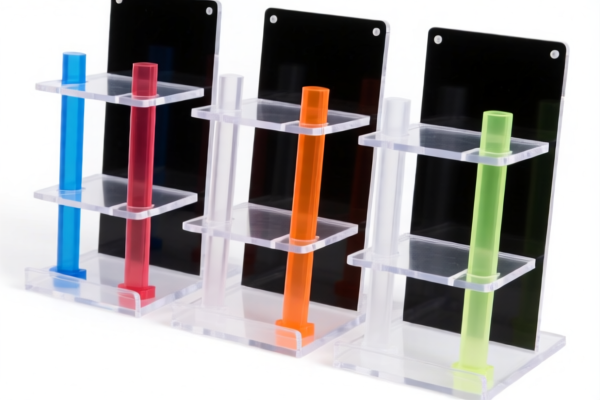



AI分析
🏗️ Plastic Rods, Tubes, and Profiles: The Ultimate 2026 Customs & Tariff Guide
🌐 HS Code Classification & US Tariff Strategy | 2026 Latest Regulations | High-Tax Alert
📌 I. Product Definition: What Are We Actually Importing?
"Plastic Rods, Tubes, and Profiles" is a broad category in international trade, covering semi-finished or finished plastic products in specific shapes. In the US customs context, the classification depends heavily on the material composition (e.g., Polyethylene vs. Other Plastics) and the final form (Rod/Profile vs. Pipe/Tube).
⚠️ Critical Distinction:
- Polyethylene (PE) Rods/Profiles fall under 3916.10.
- Other Plastic Rods/Profiles generally fall under 3916.90 or 3926.90 depending on if they are "basic forms" or "articles."
- Plastic Pipes/Tube Accessories often fall under 3917.29, which has different tariff implications than solid rods.
📦 II. HS Code Classification Matrix (2026 Latest Data)
| HS Code | Product Description | Material/Form Details | Total Tax Rate |
|---|---|---|---|
3916.10.00.00 |
Plastic Rods/Profiles (Polyethylene) | Made of ethylene polymers; forms include rods, bars, and profiles. | 40.8% |
3916.90.50.00 |
Plastic Rods/Profiles (Other) | General plastic rods/profiles (non-PE); basic forms. | 40.8% |
3917.29.00.90 |
Plastic Pipes/Tube Accessories (Other) | Hard pipes, tubing, or fittings not specified elsewhere; general plastic. | 38.1% |
3926.90.99.87 |
Other Plastic Articles (Rod/Profile) | Plastic rods/profiles classified as "other plastic articles"; not basic forms. | 22.8% |
3917.29.00.50 |
Plastic Pipes/Tubes (Specific) | Pipes/tubes for pipeline-related extensions/hard structures. | 38.1% |
🔍 Key Insight:
- The highest tax (40.8%) applies to 3916 codes (basic rods/profiles of PE or other plastics).
- The lowest tax (22.8%) applies to 3926.90.99.87, but this requires the item to be classified as an "article" rather than a "basic form."
- Pipes/Tubes (3917) sit in the middle at 38.1%, often due to specific structural definitions.
💰 III. Detailed Tariff Breakdown (US Imports from China)
✅ Applicable Country: United States (US)
✅ Origin: China (CN)
✅ Effective Date: 2025/2026 (Current Enforcement)
🎯 1. High Tax Bracket: 40.8%
HS Codes: 3916.10.00.00, 3916.90.50.00
| Component | Rate | Source |
|---|---|---|
| Basic Duty | 5.8% | Standard MFN Rate for Chapter 39 |
| Section 301 Tariff | 25.0% | USITC List 4A (High Tariff Section) |
| 122 Clause Tariff | 10.0% | USITC 122 Clause (Specific Plastic Categories) |
| Total Effective Rate | 40.8% | Sum of all applicable duties |
📌 Explanation:
- These codes represent "Basic Forms" of plastics.
- Section 301 (25%) applies to almost all plastic rods/profiles from China.
- 122 Clause (10%) is a specific additional duty on certain plastic goods, stacking on top of the 301 tariff.
- Result: A 40.8% duty burden makes these items extremely expensive to import.
🎯 2. Medium Tax Bracket: 38.1%
HS Codes: 3917.29.00.90, 3917.29.00.50
| Component | Rate | Source |
|---|---|---|
| Basic Duty | 3.1% | Lower MFN Rate for Pipes/Tubes |
| Section 301 Tariff | 25.0% | USITC List 4A |
| 122 Clause Tariff | 10.0% | USITC 122 Clause |
| Total Effective Rate | 38.1% | Sum of all applicable duties |
📌 Explanation:
- These codes cover Pipes, Tubing, and Fittings.
- While the basic duty is lower (3.1% vs. 5.8%), the 301 and 122 clauses still apply, keeping the total high.
- Warning: Do not misdeclare pipes as "rods" to avoid the 122 clause; customs will verify the physical form.
🎯 3. Low Tax Bracket: 22.8%
HS Code: 3926.90.99.87
| Component | Rate | Source |
|---|---|---|
| Basic Duty | 5.3% | Standard MFN Rate for Other Articles |
| Section 301 Tariff | 7.5% | Reduced Section 301 Rate (List 4B or Special Provision) |
| 122 Clause Tariff | 10.0% | USITC 122 Clause |
| Total Effective Rate | 22.8% | Sum of all applicable duties |
📌 Explanation:
- This code is for "Other Plastic Articles" (e.g., finished profiles, custom shapes, or non-basic forms).
- The Section 301 rate is significantly lower (7.5% vs. 25%).
- Strategic Opportunity: If your product can be justified as a finished "article" rather than a "basic form" (rod/bar), you save 17.5% in Section 301 duties.
- Risk: Customs may challenge this classification if the product looks like a standard industrial rod.
🛠️ IV. Clearance & Compliance Recommendations
✅ 1. Documentation Checklist (Mandatory)
| Document | Requirement | Purpose |
|---|---|---|
| Product Specification Sheet | Must detail material (e.g., HDPE, PVC, PP), dimensions, and shape. | Determines if it’s a "basic form" (3916) or "article" (3926). |
| Commercial Invoice | Clearly state "Plastic Rod/Profile/Pipe" + HS Code. | Avoids ambiguity that leads to audits. |
| Material Safety Data Sheet (MSDS) | Required for chemical composition proof. | Prevents delays in lab testing. |
| Photos of Product | Show cross-section and ends. | Proves if it’s a rod, tube, or complex profile. |
| Origin Certificate | COO (Certificate of Origin). | Essential for proving Chinese origin (triggers tariffs). |
✅ 2. Classification Strategy (How to Save Money)
🔥 "Form Matters: Basic vs. Article!"
| Strategy | Action | Potential Tax | Risk Level |
|---|---|---|---|
| Default Classification | Declare as 3916 (Rods/Profiles) |
40.8% | Low (Correct if basic form) |
| Optimization Strategy | Declare as 3926.90.99.87 (Other Articles) |
22.8% | High (Requires proof of finished article status) |
| Pipe Misclassification | Declare Pipes as Rods | 40.8% | Extreme (High audit risk, penalties) |
📌 Pro Tip:
- If you are importing custom-shaped plastic profiles (e.g., for furniture, windows, or machinery), argue for 3926.90.99.87.
- If you are importing standard cylindrical rods or simple extruded shapes, stick to 3916.
- Do not try to hide pipes as rods; the HS code 3917 is very specific to hollow structures.
✅ 3. Common Pitfalls & Avoidance
❌ Pitfall 1: Using "Plastic Rod" for hollow pipes.
👉 Result: Customs reclassifies to 3917.29.00.90 → 38.1% tax + potential penalties for misdeclaration.
❌ Pitfall 2: Assuming all plastics are treated equally.
👉 Result: Ethylene polymers (PE) have their own subheading (3916.10). Misclassifying PE as "Other Plastic" (3916.90) can trigger audits.
❌ Pitfall 3: Ignoring the 122 Clause.
👉 Result: Even if the basic duty is low, the 10% 122 Clause is almost always applied to plastic goods from China. Always factor this into your Landed Cost.
🌍 V. Global Comparison (Quick Reference)
| Market | Typical HS Code | Basic Duty | US-Specific Surcharge | Total Est. Rate |
|---|---|---|---|---|
| 🇺🇸 USA | 3916 or 3926 |
3.1% - 5.8% | Section 301 + 122 Clause | 22.8% - 40.8% |
| 🇨🇳 China | 3916 or 3926 |
5% - 10% | None | ~5-10% |
| 🇪🇺 EU | 3916 or 3926 |
0% - 6.5% | None | ~0-6.5% |
| 🇯🇵 Japan | 3916 or 3926 |
0% - 6% | None | ~0-6% |
📌 Conclusion:
- The US is the most expensive market for plastic rods/profiles due to Section 301 + 122 Clause.
- For other markets, the duty burden is significantly lower.
- Recommendation: If importing to the US, strongly consider reclassifying to 3926.90.99.87 if the product qualifies as an "article" to save 17.5%.
📌 VI. Final Action Plan
- Verify Material: Is it Polyethylene (PE)? If yes, use
3916.10. - Verify Shape: Is it hollow (pipe/tube)? If yes, use
3917.29. - Verify Form: Is it a finished "article" (custom shape) or basic rod?
- If Finished Article: Try
3926.90.99.87(22.8%). - If Basic Form: Use
3916(40.8%). - Calculate Landed Cost: Include CIF Value × Total Rate.
- Consult Customs Broker: Before filing, get a Pre-Ruling if you are attempting to use the lower
3926rate.
✨ Smart Customs Strategy:
"Know your form: Rod is 40%, Pipe is 38%, Article is 22%. Choose wisely to save your margin!"
📣 Need Help?
📞 Contact a licensed US Customs Broker for a Binding Ruling on your specific plastic profiles.
🚀 Don’t let 40% tariffs eat your profits!
用户评价
关于 HS 编码归类
协调制度(HS)是由世界海关组织(WCO)制定的国际贸易商品分类标准。全球 200 多个国家采用 HS 系统作为海关关税、贸易统计和进出口监管的基础。
每个 HS 编码遵循以下层级结构:
- 章(2 位)——商品大类(例如:第 84 章:机器和机械设备)
- 品目(4 位)——章内的更具体分类
- 子目(6 位)——国际通用细分,所有 WCO 成员国统一使用
- 本国细分(8-10 位)——各国自行扩展的细分编码,如美国 HTSUS 10 位编码
正确的 HS 编码归类对于顺利通关、准确缴纳关税和遵守贸易法规至关重要。错误归类可能导致海关延误、多缴关税或罚款。
从CN进口到US时,适用的关税税率可能包括:
- 最惠国(MFN)税率——适用于 WTO 成员国的标准关税税率
- 普通税率——适用于无贸易协定国家
- 贸易救济关税——附加关税,如 301 条款(反倾销)、232 条款(国家安全)或反补贴税
本页内容仅供参考。如需正式归类,请咨询当地海关或持牌报关代理。