Plastic Shell Document Case
CN → US| HS编码 | 关税税率 | 原产国 | 目的国 | 文档 |
|---|---|---|---|---|
| 3923900080 | 38.0% | CN | US | 官方文档 |
| 3923109000 | 38.0% | CN | US | 官方文档 |
| 4820300040 | 35.0% | CN | US | 官方文档 |
| 3926908700 | 40.3% | CN | US | 官方文档 |
| 3926909989 | 22.8% | CN | US | 官方文档 |
商品图片
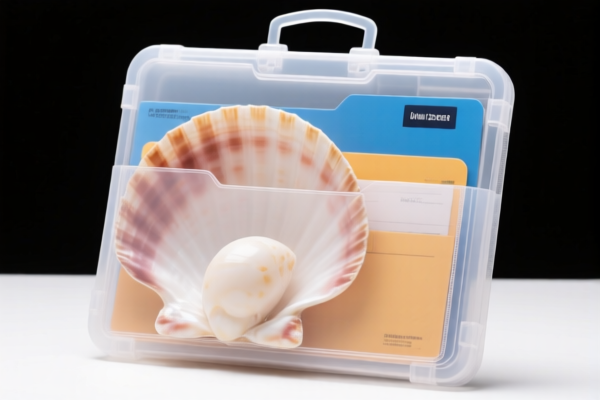
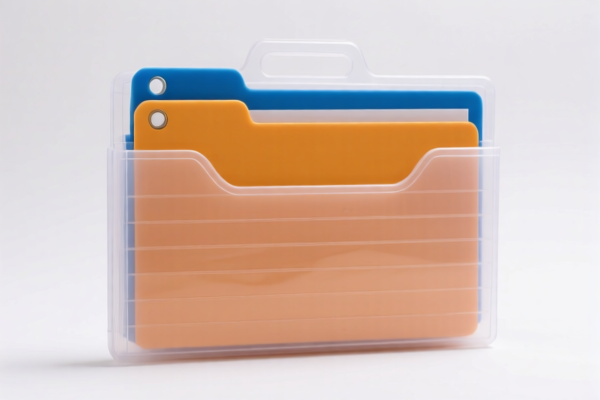
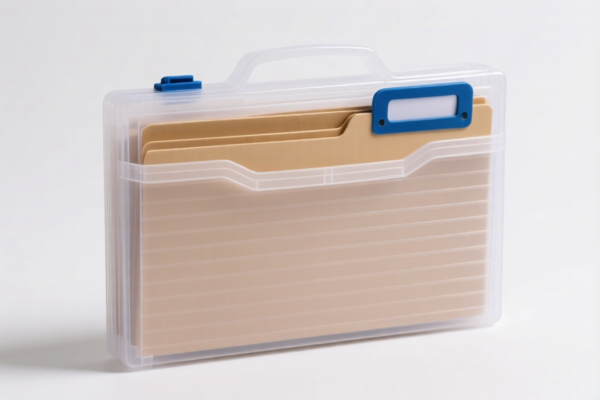
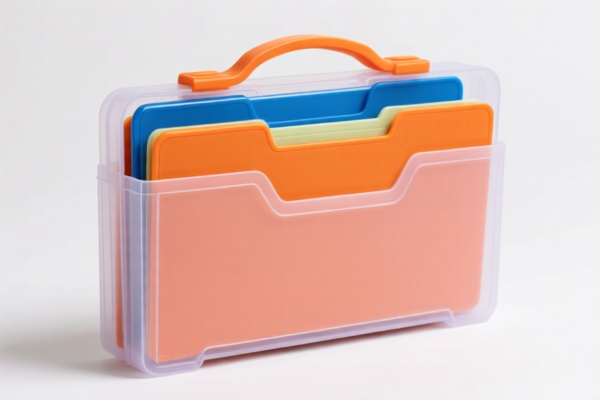
AI分析
📂 Plastic Shell Document Case (塑料文件夹/文件夹外壳)
🌐 HS Code Reference & Customs Clearance Guide | 2026 Latest Tariff Breakdown | Professional Entry Strategy
📌 I. Product Definition & Classification: What Exactly Is a "Plastic Shell Document Case"?
A "Plastic Shell Document Case" refers to accessories used for organizing, storing, and protecting documents. In international trade, these items are classified based on their material, function, and structural integrity.
The key distinction lies in whether the item is: 1. A Packaging/Container: Designed to hold other items (like files or papers) and made of plastic (Chapter 39). 2. An Article of Stationery: Specifically designed as a file folder, even if made of plastic (Chapter 48). 3. A Miscellaneous Plastic Article: If it doesn't fit specific folder definitions or packaging definitions (Chapter 39).
⚠️ Critical Distinction:
- If the product is primarily a container (box, case, clip) for holding documents → Chapter 39 (Plastics).
- If the product is structurally a folder (binding, ring, sleeve) → Chapter 48 (Paper/Paperboard) or Chapter 39 (Miscellaneous) depending on specific design.
- Note: Many "plastic folders" are classified under Paper/Paperboard (Ch 48) if they function as paper products, but rigid plastic shells often fall under Plastics (Ch 39).
📦 II. HS Code Classification Details (2026 Latest Tariff Authority Comparison)
Based on the provided data, here are the five potential HS Codes and their exact applicability:
| HS Code | Product Description | Applicable Scenario | Tax Rate |
|---|---|---|---|
3923.90.00.80 |
Plastic packaging/containment goods, consistent with plastic folder material and use | Rigid plastic boxes, cases, or clips used for document storage; Packaging-oriented | 38.0% |
3923.10.90.00 |
Other plastic boxes, cases, clips, and similar articles | General-purpose plastic cases/boxes not specifically listed as packaging; General Plastic Containers | 38.0% |
4820.30.00.40 |
Other file folders (excluding ring binders), made of plastic | Plastic-covered or plastic-based folders that function as stationery; Paper-Product Logic | 35.0% |
3926.90.87.00 |
Flexible plastic articles, plastic material, folder form | Flexible plastic sleeves, document sleeves, or soft folders | 40.3% |
3926.90.99.89 |
Plastic articles, folder form, classified as "Other" | Plastic folders that do not fit specific flexible or rigid packaging categories; Miscellaneous Plastic Items | 22.8% |
🔍 Key Insight:
- Cheapest Duty:3926.90.99.89(22.8%) is the most cost-effective for general plastic folders.
- Most Common:3923.90.00.80and3923.10.90.00(38.0%) are typical for rigid "shells" or boxes.
- Stationery Classification:4820.30.00.40(35.0%) applies if the item is treated more like a paper file than a plastic container.
💰 III. 2026 Latest Tariff Rate Detailed Breakdown (Including Surcharges & Policy Add-ons)
✅ Applicable Country: United States (US)
✅ Origin: China (CN)
✅ Effective Time: Post-2025 (Current Trade Policy)
🎯 1. 3923.90.00.80 & 3923.10.90.00 —— Plastic Packaging/Container (High Volume Use)
| Item | Detail |
|---|---|
| Base Tariff | 3.0% (Ad Valorem) |
| Section 301 Surcharge | +25.0% (USITC Footnote) |
| Section 122 Tariff | +10.0% (Specific to certain plastic items/documents) |
| Total Tax Rate | 38.0% |
| Tax Calculation | CIF Value × 38% |
| De Minimis Exemption | ❌ Not Applicable |
| Legal Basis | USITC:3923.90.00.80 / 3923.10.90.00 → Section 301: 25% + Section 122: 10% |
📌 Explanation:
- These codes are treated as packaging materials.
- The 38% total rate is a combination of the standard USMF duty, the aggressive Section 301 tariff, and the Section 122 surcharge.
- Risk: High compliance scrutiny on "packaging" vs. "product."
🎯 2. 4820.30.00.40 —— Other File Folders (Plastic Material)
| Item | Detail |
|---|---|
| Base Tariff | 0.0% |
| Section 301 Surcharge | +25.0% |
| Section 122 Tariff | +10.0% |
| Total Tax Rate | 35.0% |
| Tax Calculation | CIF Value × 35% |
| De Minimis Exemption | ❌ Not Applicable |
| Legal Basis | USITC:4820.30.00.40 → Section 301: 25% + Section 122: 10% |
📌 Explanation:
- Classified under Chapter 48 (Paper), which often has a 0% base duty.
- However, it still incurs the Section 301 (25%) and Section 122 (10%) surcharges.
- Strategy: If your product is a standard file folder, this code saves 3% compared to packaging codes.
🎯 3. 3926.90.87.00 —— Flexible Plastic Articles (Folder Form)
| Item | Detail |
|---|---|
| Base Tariff | 5.3% |
| Section 301 Surcharge | +25.0% |
| Section 122 Tariff | +10.0% |
| Total Tax Rate | 40.3% |
| Tax Calculation | CIF Value × 40.3% |
| De Minimis Exemption | ❌ Not Applicable |
| Legal Basis | USITC:3926.90.87.00 → Section 301: 25% + Section 122: 10% |
📌 Explanation:
- This is the highest tax rate (40.3%).
- It applies to flexible plastic folders (e.g., polypropylene sleeves).
- Avoid this code unless absolutely necessary, as it has a non-zero base duty plus full surcharges.
🎯 4. 3926.90.99.89 —— Other Plastic Articles (Miscellaneous Folder)
| Item | Detail |
|---|---|
| Base Tariff | 5.3% |
| Section 301 Surcharge | +7.5% |
| Section 122 Tariff | +10.0% |
| Total Tax Rate | 22.8% |
| Tax Calculation | CIF Value × 22.8% |
| De Minimis Exemption | ❌ Not Applicable |
| Legal Basis | USITC:3926.90.99.89 → Section 301: 7.5% + Section 122: 10% |
📌 Explanation:
- This is the most advantageous code (22.8%).
- It benefits from a reduced Section 301 rate (7.5%) instead of 25%.
- Strategy: Classify as "Other Plastic Articles" if the product does not strictly fit "Packaging" (Ch 39.23) or "Stationery" (Ch 48). This requires careful product description to avoid misclassification.
🛠️ IV. Customs Clearance Practical Advice (Real-World Pitfall Guide)
✅ 1. Required Documentation Checklist (Non-Negotiable)
| Document | Required | Description |
|---|---|---|
| ✅ Product Specification Sheet | ✔️ | Must detail: Material (e.g., PP, PE, PVC), Dimensions, Flexibility (Rigid vs. Flexible), Closure Type. |
| ✅ Product Photos | ✔️ | Clear images of the folder in use (with documents) and empty. Show hinges, rings, or clips. |
| ✅ Commercial Invoice | ✔️ | Must explicitly state: "Plastic Document Folder/Case" or "Plastic Storage Case". Avoid vague terms like "Accessory." |
| ✅ Material Certificate | ✔️ | Proof of plastic type (e.g., PP, PVC) to determine Chapter 39 vs. 48. |
| ✅ Packing List | ✔️ | Item quantity, net/gross weight. |
✅ 2. Declaration Strategy (Key Mantra)
🔥 “Flexible vs. Rigid, Packaging vs. Stationery!”
| Scenario | Recommended HS Code | Reason |
|---|---|---|
| Rigid Plastic Box/Case | 3923.90.00.80 or 3923.10.90.00 |
Fits definition of "Plastic Containers" (38% Tax) |
| Standard Plastic File Folder | 4820.30.00.40 |
Treated as Paper Product/Stationery (35% Tax) |
| Flexible Plastic Sleeve | 3926.90.87.00 |
Flexible article (40.3% Tax) |
| General Plastic Folder (Misc) | 3926.90.99.89 |
Best rate if misclassified as "Other" (22.8% Tax) |
✅ 3. Special Cases & Risk Management
| Situation | Handling Advice |
|---|---|
| Combo Sets (Folder + Clip) | If the clip is integral, declare as one item. Do not split unless the clip is sold separately. |
| With Paper Inserts | If it contains paper, the essential character test applies. If paper >50%, consider Ch 48. If plastic structure dominates, Ch 39. |
| Custom OEM Design | Provide design blueprints to justify 3926.90.99.89 (Miscellaneous) to achieve lower 22.8% rate. |
| Misclassification Risk | Using 4820.30.00.40 for a rigid plastic box may be challenged. Ensure the product is actually a "folder" (for holding loose papers), not a "box" (for storage). |
🌍 V. Global Market Comparison (2026 Outlook)
| Region | Recommended HS Code | Est. Total Tax | Notes |
|---|---|---|---|
| 🇺🇸 USA | 3926.90.99.89 |
22.8% | Lowest duty via "Other Plastic Articles" classification. |
| 🇺🇸 USA | 3923.90.00.80 |
38.0% | High duty for packaging-style cases. |
| 🇨🇳 China | 3926.90.99.89 |
~5-10% | Lower base duties; no Section 301/122. |
| 🇪🇺 EU | 3926.90.99.89 |
6.5% | No Section 301/122. CE marking required. |
📌 Conclusion:
- US Market: Tariffs are highly sensitive to classification.
- Best Practice: Aim for3926.90.99.89(22.8%) if product design allows.
- Avoid:3926.90.87.00(40.3%) unless it is explicitly a flexible sleeve.
📌 VI. Common Mistakes & Pitfalls (Lessons Learned)
❌ Mistake 1: Declaring a rigid plastic box as a "Folder" (4820.30.00.40)
👉 Consequence: Customs may reclassify as 3923... (38%) and impose penalties.
❌ Mistake 2: Declaring a plastic sleeve as "Packaging" (3923...)
👉 Consequence: Higher tax rate (38% vs 40.3%? Actually, 3926.87 is 40.3%, so packaging might be cheaper, but compliance risk is high). Correction: 3923 is 38%, 3926.87 is 40.3%. So packaging is cheaper, but must be justified.
❌ Mistake 3: Ignoring Section 122
👉 Consequence: Many importers forget the 10% Section 122 tariff, leading to underpayment and audits.
✅ Correct Declaration Example:
"Plastic Document Folder, Rigid, Polypropylene, Non-Ring Binding, Model XYZ, For Office Use"
🎯 VII. Conclusion: Smart Classification, Lower Costs!
🎯 Key Takeaways:
🔹 "Flexible is Expensive (40.3%), Rigid is Standard (38%), Miscellaneous is Cheapest (22.8%)."
🔹 "Section 301 & 122 Apply to All, So Base Duty Matters!"
🔹 "Stationery (Ch 48) Can Be 35%, But Only If It’s Truly a Folder!"
📌 Pro Tip:
If your plastic document case has unique features (e.g., digital integration, special locking mechanisms), it might qualify for a different HS Code. Consult a customs broker for Advance Rulings.
📣 Action Required:
📞 Verify Material: Confirm if it’s Flexible or Rigid.
📦 Check Structure: Is it Packaging, Stationery, or Miscellaneous?
🚀 Optimize: Target3926.90.99.89for the lowest 22.8% duty if possible.
✨ Customs Clearance Starts with Accurate Classification!
💼 Every Percent Saved is Pure Profit!
用户评价
关于 HS 编码归类
协调制度(HS)是由世界海关组织(WCO)制定的国际贸易商品分类标准。全球 200 多个国家采用 HS 系统作为海关关税、贸易统计和进出口监管的基础。
每个 HS 编码遵循以下层级结构:
- 章(2 位)——商品大类(例如:第 84 章:机器和机械设备)
- 品目(4 位)——章内的更具体分类
- 子目(6 位)——国际通用细分,所有 WCO 成员国统一使用
- 本国细分(8-10 位)——各国自行扩展的细分编码,如美国 HTSUS 10 位编码
正确的 HS 编码归类对于顺利通关、准确缴纳关税和遵守贸易法规至关重要。错误归类可能导致海关延误、多缴关税或罚款。
从CN进口到US时,适用的关税税率可能包括:
- 最惠国(MFN)税率——适用于 WTO 成员国的标准关税税率
- 普通税率——适用于无贸易协定国家
- 贸易救济关税——附加关税,如 301 条款(反倾销)、232 条款(国家安全)或反补贴税
本页内容仅供参考。如需正式归类,请咨询当地海关或持牌报关代理。