Plastic Sliding Door
CN → US| HS编码 | 关税税率 | 原产国 | 目的国 | 文档 |
|---|---|---|---|---|
| 3925200010 | 22.8% | CN | US | 官方文档 |
| 3925200020 | 22.8% | CN | US | 官方文档 |
商品图片
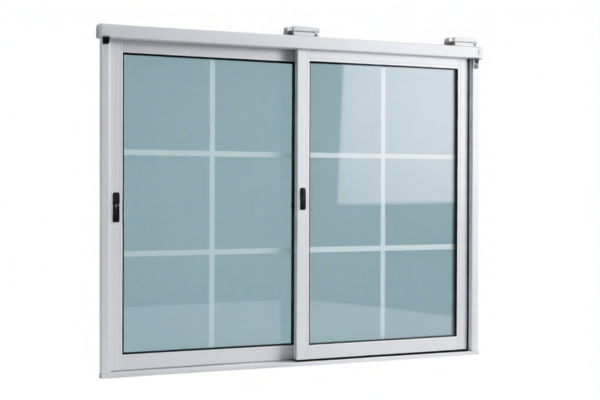
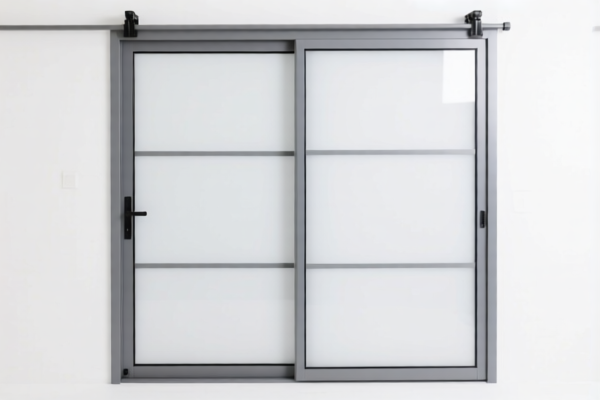
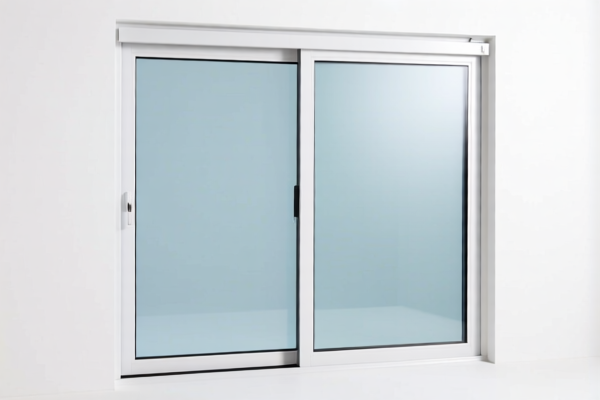
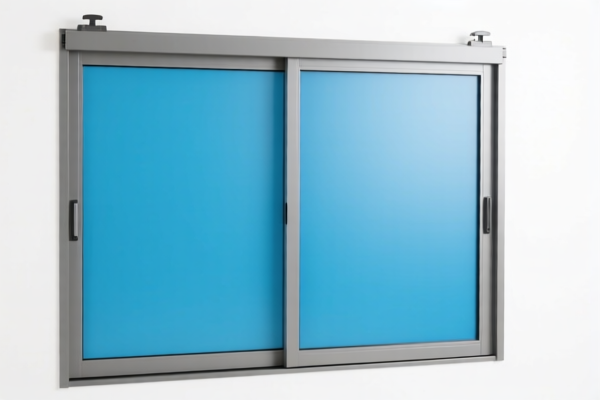
AI分析
🏠 Plastic Sliding Doors (Builders' Ware of Plastics)
🌐 HS Code Reference & Customs Clearance Guide | 2026 Latest Tariff Analysis | Professional Customs Strategy
📌 I. Product Definition & Classification: Do You Really Understand "Plastic Doors"?
In international trade, Plastic Sliding Doors fall under the category of "Builders' ware of plastics." They are not considered simple plastic sheets or profiles but are finished construction components. The classification depends on whether the item is the door leaf itself or the accompanying frame structure.
Key Distinction:
- Doors & Door Frames: Specifically the door panel (sliding type) and its associated frame hardware.
- Windows & Window Frames: If the product is technically a window but marketed similarly, it has a separate code, though the tax rate is identical in this dataset.
⚠️ Critical Identification Point:
- If the item is a door (including sliding mechanisms and frames) →归类 to 3925.20.00.10
- If the item is a window (including frames) → 归类 to 3925.20.00.20
Note: Both codes carry the exact same tax burden, but accurate description is vital for customs compliance.
📦 II. HS Code Classification Details (2026 Latest Tariff Authority)
| HS Code | Product Description | Applicable Scenario | Tax Detail (US Import) |
|---|---|---|---|
3925.20.00.10 |
Builders' ware of plastics: Doors, windows and their frames and thresholds for doors; Doors and door frames | Plastic sliding doors, PVC doors, uPVC door frames | Base: 5.3% + Addl: 7.5% = 12.8% |
3925.20.00.20 |
Builders' ware of plastics: Doors, windows and their frames and thresholds for doors; Windows and window frames | Plastic windows, uPVC window frames | Base: 5.3% + Addl: 7.5% = 12.8% |
🔍 Key Reminder:
- Even if the "door" is made of uPVC (unplasticized polyvinyl chloride), PVC, or other plastics, it falls under Chapter 39.
- It does not belong to Chapter 73 (Metal doors) or Chapter 44 (Wooden doors).
- Thresholds included with the door assembly are generally classified with the door itself under this subheading.
💰 III. 2026 Latest Tariff Rate Detailed Explanation
✅ Applicable Country: United States (US)
✅ Origin: China (CN) (Assumed based on typical high-tariff context for plastics; verify origin for exemptions)
✅ Total Tax Rate: 12.8%
🎯 1. 3925.20.00.10 —— Plastic Doors and Door Frames
| Item | Content |
|---|---|
| Base Tariff | 5.3% (Standard MFN Rate for Chapter 39) |
| Additional Tariff (Section 301) | +7.5% (Specific to Chinese-origin plastics/builders' ware) |
| Total Tax Rate | 12.8% |
| Tax Calculation | CIF Value × 12.8% |
| De Minimis Exemption | ❌ Not Applicable (Construction materials > $800 require full entry) |
| Legal Basis | HTSUS 3925.20.00 → Section 301 Footnote for Chapter 39 items |
📌 Explanation:
- The 5.3% is the standard duty for "Builders' ware of plastics, n.e.s."
- The 7.5% is the additional tariff imposed under Section 301 on specific plastic products and construction materials from China.
- Total 12.8% is relatively moderate compared to electronics (which can reach 25-45%), but significant for low-margin construction goods.
🎯 2. 3925.20.00.20 —— Windows and Window Frames
| Item | Content |
|---|---|
| Base Tariff | 5.3% |
| Additional Tariff (Section 301) | +7.5% |
| Total Tax Rate | 12.8% |
| Tax Calculation | CIF Value × 12.8% |
| De Minimis Exemption | ❌ Not Applicable |
| Legal Basis | HTSUS 3925.20.00 → Section 301 Footnote for Chapter 39 items |
📌 Note:
- Even though the user asked for "Sliding Door," if the customs officer misclassifies it as a window (due to glass pane presence), the tax remains 12.8%.
- However, misclassification can lead to inspections, delays, or penalties. Accuracy is key.
🛠️ IV. Customs Clearance Practical Advice (Pitfall Avoidance Guide)
✅ 1. Required Documentation Checklist
| Document | Must Provide | Description |
|---|---|---|
| ✅ Commercial Invoice | ✔️ | Clearly state "Plastic Sliding Door, uPVC, Model XYZ" |
| ✅ Packing List | ✔️ | Detail number of doors, frames, and hardware per box |
| ✅ Product Specification | ✔️ | Material composition (e.g., 100% uPVC), dimensions, weight |
| ✅ HS Code Pre-ruling | ✔️ | Highly recommended to confirm 3925.20.00.10 vs 3925.20.00.20 |
| ✅ Certificate of Origin | ✔️ | Essential for verifying Chinese origin and applying correct 301 rates |
✅ 2. Declaration Tips (Key Mantra)
🔥 "Material First, Function Second, Frame Included!"
| Scenario | Correct Declaration | Wrong Practice |
|---|---|---|
| Sliding Door with Frame | 3925.20.00.10 Plastic Doors & Frames |
Splitting door and frame into different HTS codes |
| Door with Glass Panes | Still 3925.20.00.10 |
Misclassifying as "Glass" (Chapter 70) → Higher duty! |
| Plastic Profile (Raw) | 3916.10.00.00 |
Misclassifying as "Door" if not assembled |
| Threshold/Sill Included | Part of 3925.20.00.10 |
Declaring separately as "Plastic Fittings" |
📌 Why this matters:
- A "Plastic Door" is often perceived as containing glass. Do not classify the glass portion separately as "Glassware" (Chapter 70). The entire assembly is classified as Builders' Ware of Plastics because the plastic structure is the primary characteristic.
- Thresholds are considered part of the door frame assembly.
✅ 3. Special Cases & Handling
| Case | Handling Advice |
|---|---|
| uPVC vs PVC | Both fall under 3925.20.00.10/20. Specify material type in specs for customs clarity. |
| Aluminum Reinforcement | If the plastic door has internal aluminum reinforcement, it is still classified under Chapter 39 as long as plastic is the principal material. |
| Kit vs. Assembled | If shipped as a kit (frames + panels), declare as assembled doors. If shipped as raw profiles, declare as profiles (Chapter 3916). |
| Thresholds Only | If importing only plastic thresholds without doors, classify under 3925.90 or 3926.90 depending on shape. |
🌍 V. Global Market Clearance Comparison (2026 Latest)
| Country/Region | Recommended HS Code | Tariff Rate | Certification/Notes |
|---|---|---|---|
| 🇺🇸 USA | 3925.20.00.10 |
12.8% (5.3% + 7.5%) | Section 301 applies; strict on plastic waste labels |
| 🇨🇳 China | 3925.20.00.10 |
~2.5% | Standard import duty for plastics |
| 🇪🇺 EU | 3925.20.00 |
0% - 2.5% | CE marking not required for non-electrical, but REACH compliance needed |
| 🇨🇦 Canada | 3925.20.00 |
0% (Under CUSMA) | Preferential tariff if Canadian/Mexican origin |
| 🇲🇽 Mexico | 3925.20.00 |
0% (Under USMCA) | Check local origin rules |
📌 Conclusion:
- The US market is the most costly due to the 7.5% Section 301 addition.
- EU and Canada offer competitive or zero tariffs, making them more attractive for exports if supply chain allows.
📌 VI. Common Errors & Pitfall Guide (Lessons Learned)
❌ Error 1: Classifying Plastic Doors under Chapter 70 (Glass)
👉 Consequence: Incorrect HTS; may face 5-10% difference in duties + audit risk.
Correction: Plastic structure = Chapter 39, even with glass inserts.
❌ Error 2: Declaring "Plastic Building Material" too vaguely
👉 Consequence: Customs may reclassify to higher duty or request extensive documentation.
Correction: Use specific terms: "uPVC Sliding Door Assembly, Including Frame and Threshold."
❌ Error 3: Ignoring the 7.5% Additional Tariff
👉 Consequence: Underpayment of duties, penalties, and storage fees at US port.
Correction: Always verify Section 301 applicability for Chinese-origin plastics.
❌ Error 4: Splitting Door and Frame into Separate Line Items
👉 Consequence: Potential misclassification if one part is deemed a "fitting" (higher duty).
Correction: Declare as a single set: "Plastic Door Set (Door + Frame + Threshold)."
✅ Correct Declaration Example:
"uPVC Plastic Sliding Door, White, 24x80 inches, Includes Frame and Bottom Threshold, Model PD-2026, HS 3925.20.00.10"
🎯 VII. Conclusion: Accurate Classification Saves Money!
🎯 Remember the Mantra:
🔹 "Plastic Structure is King! Even with Glass, it’s Chapter 39."
🔹 "12.8% Total for US: 5.3% Base + 7.5% 301."
🔹 "Don’t Split Door and Frame – Declare as One Set!"
📌 Pro Tip:
If your plastic doors are shipped from Vietnam, Thailand, or Malaysia, check if they qualify for Section 301 exemptions or lower tariffs under FTAs. Pre-ruling with CBP is highly recommended for large shipments.
📣 Immediate Action:
📞 Consult a licensed customs broker + Provide detailed product photos (including cross-section) + Apply for HS Code Pre-ruling.
🚀 Ensure smooth clearance, avoid 12.8% surprises, and keep your construction exports profitable!
✨ Professional customs clearance starts with precise classification!
💼 Every percentage point counts in the building materials trade!
用户评价
关于 HS 编码归类
协调制度(HS)是由世界海关组织(WCO)制定的国际贸易商品分类标准。全球 200 多个国家采用 HS 系统作为海关关税、贸易统计和进出口监管的基础。
每个 HS 编码遵循以下层级结构:
- 章(2 位)——商品大类(例如:第 84 章:机器和机械设备)
- 品目(4 位)——章内的更具体分类
- 子目(6 位)——国际通用细分,所有 WCO 成员国统一使用
- 本国细分(8-10 位)——各国自行扩展的细分编码,如美国 HTSUS 10 位编码
正确的 HS 编码归类对于顺利通关、准确缴纳关税和遵守贸易法规至关重要。错误归类可能导致海关延误、多缴关税或罚款。
从CN进口到US时,适用的关税税率可能包括:
- 最惠国(MFN)税率——适用于 WTO 成员国的标准关税税率
- 普通税率——适用于无贸易协定国家
- 贸易救济关税——附加关税,如 301 条款(反倾销)、232 条款(国家安全)或反补贴税
本页内容仅供参考。如需正式归类,请咨询当地海关或持牌报关代理。