Plastic Stretch Film
CN → US| HS编码 | 关税税率 | 原产国 | 目的国 | 文档 |
|---|---|---|---|---|
| 3920991000 | 41.0% | CN | US | 官方文档 |
| 3920992000 | 39.2% | CN | US | 官方文档 |
| 3919905060 | 40.8% | CN | US | 官方文档 |
| 3921190010 | 41.5% | CN | US | 官方文档 |
| 3921110000 | 40.3% | CN | US | 官方文档 |
商品图片
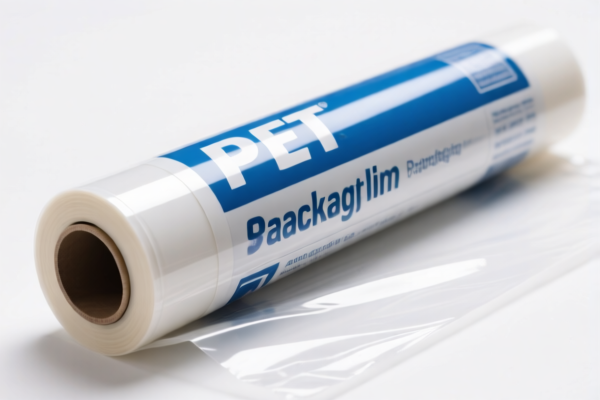


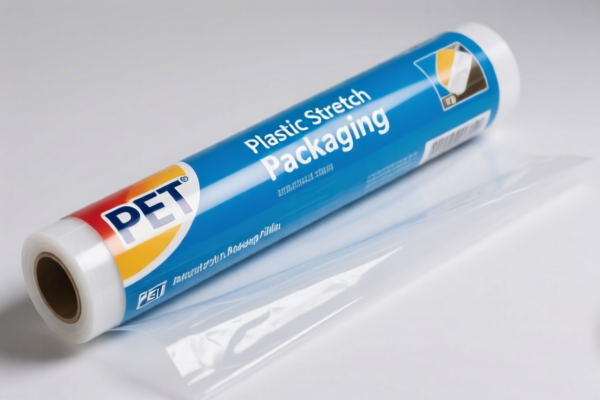
AI分析
📦 Plastic Stretch Film (Flexible Plastic Stretching Materials)
🌐 HS Code Reference & Customs Clearance Guide | 2024/2025 Latest Tariff Analysis | Professional Strategy
📌 I. Product Definition & Classification: What Exactly is "Plastic Stretch Film"?
Plastic Stretch Film is a high-performance packaging material used for palletizing, bundling, and protecting goods during transit. It is characterized by its elasticity, clinginess, and tensile strength. In international trade, it is primarily classified under Chapter 39 (Plastics and Articles Thereof), specifically focusing on plates, sheets, film, foil, and tape.
The classification depends on two critical factors: 1. Material Composition: Typically Polyethylene (PE) or Polypropylene (PP). 2. Processing State: Is it pre-stretched (machine stretch) or manual? Is it self-adhesive (stick-to-itself) or just tensile?
⚠️ Key Distinction: - Pre-stretched Film: Often classified under Heading 3919 (Self-adhesive plates/sheets) or 3921 (Other plates/sheets), depending on specific material codes. - Raw/Manual Stretch Roll: Often classified under Heading 3920 (Other plates/sheets, not self-adhesive) or 3921 (if coated). - General Flexible Plastic: If the exact material/type isn't specified, it may fall under residual categories in 3920.99.
📊 II. HS Code Classification Details (Based on Provided Data)
| HS Code | Product Description | Application Scenario | Material/State |
|---|---|---|---|
3920.99.10.00 |
Flexible Plastic Stretch Material (General/Unspecified Type) | General packaging, mismatched material types, generic film/foil/tape | Plastic, Flexible |
3920.99.20.00 |
Flexible Plastic Stretch Material (Standard Type) | Standard PE/PP stretch wraps, flexible sheets/films/tapes | Plastic, Flexible |
3919.90.50.60 |
Pre-stretched Film (Specific Material) | Machine-ready stretch rolls, likely PE/PP | Plastic, Pre-stretched |
3921.19.00.10 |
Pre-stretched Film (PE/PP Specific) | High-quality pre-stretch wraps, explicitly Polyethylene/Polypropylene | PE/PP Plastic |
3921.11.00.00 |
Pre-stretched Film (Other Plastics) | Pre-stretch films made from non-PE/PP plastics (e.g., PVC, specialized polymers) | Other Plastic |
🔍 Critical Note: - 3919 vs. 3921: If the film is self-adhesive (sticks to itself without tape), it often leans towards 3919. If it is purely tensile (needs a clamp/disposable tape), it often falls under 3921 (specifically 3921.19 for other plastics) or 3920 if not pre-stretched. - 3920.99: This is a "basket" category for plastic sheets/films not elsewhere specified. Use only if the specific pre-stretched codes don't fit.
💰 III. 2024/2025 Tariff Rate Breakdown (Including Additional Duties)
✅ Applicable Country: United States (US)
✅ Origin: China (CN)
✅ Effective Time: Current rates include Section 301 and 122 provisions.
🎯 1. 3920.99.10.00 — Flexible Plastic Stretch Material (General)
| Item | Detail |
|---|---|
| Base Tariff | 6.0% |
| Section 301 Additional Tariff | +25.0% |
| Section 122 Tariff | +10.0% |
| Total Effective Rate | 41.0% |
| Calculation | CIF Value × 41.0% |
| De Minimis Exemption | ❌ NOT Eligible (Deny de minimis) |
| Legal Basis | Standard USITC HTS + Section 301 Footnotes + Section 122 Provisions |
📌 Explanation:
- 6%: Standard MFN (Most Favored Nation) duty for general plastic sheets. - 25%: Section 301 Tariff imposed on Chinese goods to address trade practices. - 10%: Section 122 Tariff (often applied to specific strategic materials or under emergency powers). - Result: A 41% tax burden significantly impacts profit margins for bulk imports.
🎯 2. 3920.99.20.00 — Flexible Plastic Stretch Material (Standard)
| Item | Detail |
|---|---|
| Base Tariff | 4.2% |
| Section 301 Additional Tariff | +25.0% |
| Section 122 Tariff | +10.0% |
| Total Effective Rate | 39.2% |
| Calculation | CIF Value × 39.2% |
| De Minimis Exemption | ❌ NOT Eligible |
| Legal Basis | Standard USITC HTS + Section 301 Footnotes + Section 122 Provisions |
📌 Explanation:
- Slightly lower base rate (4.2% vs 6.0%) makes this code marginally more cost-effective, but the 39.2% total remains very high. - Suitable for standard PE/PP films where specific pre-stretch codes (3919/3921) might not apply due to material nuances.
🎯 3. 3919.90.50.60 — Pre-stretched Film (General Pre-stretch)
| Item | Detail |
|---|---|
| Base Tariff | 5.8% |
| Section 301 Additional Tariff | +25.0% |
| Section 122 Tariff | +10.0% |
| Total Effective Rate | 40.8% |
| Calculation | CIF Value × 40.8% |
| De Minimis Exemption | ❌ NOT Eligible |
| Legal Basis | Standard USITC HTS + Section 301 Footnotes + Section 122 Provisions |
📌 Explanation:
- Pre-stretched films are often treated as specialized products. - The 5.8% base is moderate. If the film is explicitly marketed as "machine-ready pre-stretch," this code is a strong candidate, provided it doesn't fit the more specific PE/PP codes below.
🎯 4. 3921.19.00.10 — Pre-stretched Film (PE/PP Specific)
| Item | Detail |
|---|---|
| Base Tariff | 6.5% |
| Section 301 Additional Tariff | +25.0% |
| > Section 122 Tariff | +10.0% |
| Total Effective Rate | 41.5% |
| Calculation | CIF Value × 41.5% |
| De Minimis Exemption | ❌ NOT Eligible |
| Legal Basis | Standard USITC HTS + Section 301 Footnotes + Section 122 Provisions |
📌 Explanation:
- Highest total rate in the list (41.5%). - Crucial: Only use if the film is definitively Polyethylene (PE) or Polypropylene (PP) AND is pre-stretched AND fits this specific subheading description. Misclassification here could lead to penalties if the material is actually PVC or another plastic.
🎯 5. 3921.11.00.00 — Pre-stretched Film (Other Plastics)
| Item | Detail |
|---|---|
| Base Tariff | 5.3% |
| Section 301 Additional Tariff | +25.0% |
| Section 122 Tariff | +10.0% |
| Total Effective Rate | 40.3% |
| Calculation | CIF Value × 40.3% |
| De Minimis Exemption | ❌ NOT Eligible |
| Legal Basis | Standard USITC HTS + Section 301 Footnotes + Section 122 Provisions |
📌 Explanation:
- Low base rate (5.3%). - Best option if the stretch film is made from non-PE/PP plastics (e.g., PVC, EVOH blends, or specialized polymer films) and is pre-stretched.
🛠️ IV. Customs Clearance Practical Advice (Avoiding Pitfalls)
✅ 1. Documentation Checklist (Mandatory)
| Document | Required? | Purpose |
|---|---|---|
| ✅ Product Specification Sheet | ✔️ | Must list: Material (PE/PP/PVC), Thickness, Width, Length, Pre-stretch Ratio (e.g., 300%). |
| ✅ Material Safety Data Sheet (MSDS) | ✔️ | For chemical composition verification. |
| ✅ Commercial Invoice | ✔️ | Clearly state "Plastic Stretch Film, Pre-stretched, PE/PP Material." |
| ✅ Packing List | ✔️ | Detail roll dimensions and core size. |
| ✅ Certified Label | ✔️ | If applicable, confirm no restricted substances (e.g., Phthalates). |
✅ 2. Classification Strategy (Key Mnemonic)
🔥 “Check Material First, Then Stretch State!”
| Scenario | Recommended HS Code | Why? |
|---|---|---|
| PE/PP + Pre-stretched | 3921.19.00.10 |
Specific material match. |
| Other Plastic + Pre-stretched | 3921.11.00.00 |
Non-PE/PP pre-stretch. |
| Pre-stretched (Material Unspecified) | 3919.90.50.60 |
Generic pre-stretch. |
| Not Pre-stretched (Raw Rolls) | 3920.99.10.00 or 3920.99.20.00 |
General flexible plastic. |
| Self-Adhesive (Cling) | Often 3919.90.50.60 |
If it sticks to itself without force. |
⚠️ Warning:
- Do NOT classify self-adhesive cling film as non-adhesive (3920) if it is technically self-adhesive (3919). - Do NOT misdeclare "Plastic Film" if it is "Pre-stretched." The processing method affects the subheading.
✅ 3. Cost-Saving & Risk Mitigation
| Strategy | Action |
|---|---|
| Pre-Ruling Application | Apply for an Advance Ruling from CBP if you are unsure whether the film is PE, PP, or "Other." A pre-ruling locks in the correct HS code and duty rate. |
| Material Verification | Ensure the supplier’s COO (Certificate of Origin) and material specs match. Discrepancies between "PE" on invoice and "PVC" in testing can lead to audits. |
| Section 301 Exclusion | Check if any specific plastic film categories are excluded from Section 301 tariffs (rare for stretch film, but worth verifying current lists). |
| De Minimis Avoidance | Since de minimis ($800) does NOT apply, ensure your broker is accurate with the Total Value declaration. Under-declaring value to avoid taxes can lead to severe penalties. |
🌍 V. Global Market Comparison (2024/2025)
| Region | Recommended HS Code | Approx. Duty (China Origin) | Notes |
|---|---|---|---|
| 🇺🇸 USA | 3921.19.00.10 or 3919.90.50.60 |
39.2% – 41.5% | High tariffs due to Sec 301 & 122. |
| 🇪🇺 EU | 3920.20.00 (PE) / 3920.10.00 (PP) |
6.5% | Lower base duty, no Section 301 equivalent. |
| 🇨🇳 China | 3920.20.90 / 3921.12.00 |
5% – 10% | Lower import duties, focus on domestic production. |
| 🇬🇧 UK | 3920.20.90 |
6.5% | Post-Brexit tariffs similar to pre-Brexit EU. |
| 🇨🇦 Canada | 3920.20.00.90 |
5% | CUSMA benefits may apply if from US/Mexico. |
📌 Conclusion:
- USA is the most expensive market for Chinese plastic stretch film due to layered tariffs (Base + 301 + 122). - EU/Canada offer significantly better duty rates (~5-7%), making them more competitive if sourced from third countries or if duty drawbacks apply.
📌 VI. Common Errors & Pitfalls (Blood Lessons)
❌ Error 1: Classifying "Self-Adhesive Cling Film" under 3920 (Non-adhesive).
👉 Consequence: Incorrect classification, potential penalty, and correct duty may be higher or lower depending on specific subheadings. CBP may reclassify and audit past entries.
❌ Error 2: Ignoring the "Pre-stretched" status.
👉 Consequence: If you declare as 3920.99.10.00 (raw film) but import pre-stretched rolls, you may be flagged for misrepresentation. Pre-stretched films often have different chemical/physical processing standards.
❌ Error 3: Assuming De Minimis ($800) applies.
👉 Consequence: It does not apply. You must file a formal entry (Type 86) for all shipments, regardless of value. Failure to do so can result in seizure of goods.
❌ Error 4: Vague Description on Invoice ("Plastic Film").
👉 Consequence: CBP requests clarification, delaying clearance by weeks. Always specify: "Plastic Stretch Film, Pre-stretched, 300% Elongation, Material: LDPE."
✅ Correct Declaration Example:
"PLASTIC STRETCH FILM, PRE-STRETCHED, MATERIAL: LOW DENSITY POLYETHYLENE (LDPE), WIDTH: 50CM, ROLLED, FOR INDUSTRIAL PACKAGING, HS CODE: 3921.19.00.10"
🎯 VII. Conclusion: Precision in Classification Saves Money
🎯 Remember the Golden Rule:
🔹 "Material Defines the Code, Stretch State Defines the Subheading."
🔹 "41% is the Price of Inaccuracy." (If misclassified, you might face higher duties or penalties).
🔹 "No De Minimis for Plastic Films."
📌 Pro Tip:
If you are importing large volumes, consider duty drawback claims if the finished goods are re-exported. Also, explore if any HTS exemption codes apply for specific medical or food-grade packaging films, which might have lower base rates.
📣 Immediate Action:
📞 Consult a Licensed Customs Broker to verify if your specific film formulation (PE vs. PP vs. Other) fits the most optimal HS Code.
📄 Request a Pre-Ruling from CBP if you are unsure. It provides legal certainty and prevents costly errors.
🚀 Optimize your supply chain: If US duties are prohibitive, consider sourcing from Vietnam or Mexico (if eligible for CUSMA/USMCA benefits) to reduce costs.
✨ Professional Customs Clearance Starts with Accurate Classification!
💼 Your Profit Margin is Directly Linked to Your HS Code Strategy!
用户评价
关于 HS 编码归类
协调制度(HS)是由世界海关组织(WCO)制定的国际贸易商品分类标准。全球 200 多个国家采用 HS 系统作为海关关税、贸易统计和进出口监管的基础。
每个 HS 编码遵循以下层级结构:
- 章(2 位)——商品大类(例如:第 84 章:机器和机械设备)
- 品目(4 位)——章内的更具体分类
- 子目(6 位)——国际通用细分,所有 WCO 成员国统一使用
- 本国细分(8-10 位)——各国自行扩展的细分编码,如美国 HTSUS 10 位编码
正确的 HS 编码归类对于顺利通关、准确缴纳关税和遵守贸易法规至关重要。错误归类可能导致海关延误、多缴关税或罚款。
从CN进口到US时,适用的关税税率可能包括:
- 最惠国(MFN)税率——适用于 WTO 成员国的标准关税税率
- 普通税率——适用于无贸易协定国家
- 贸易救济关税——附加关税,如 301 条款(反倾销)、232 条款(国家安全)或反补贴税
本页内容仅供参考。如需正式归类,请咨询当地海关或持牌报关代理。