Plastic Study Table Covers
CN → US| HS编码 | 关税税率 | 原产国 | 目的国 | 文档 |
|---|---|---|---|---|
| 5903102010 | 35.0% | CN | US | 官方文档 |
| 3920100000 | 39.2% | CN | US | 官方文档 |
| 5903102090 | 35.0% | CN | US | 官方文档 |
| 3920200055 | 39.2% | CN | US | 官方文档 |
商品图片

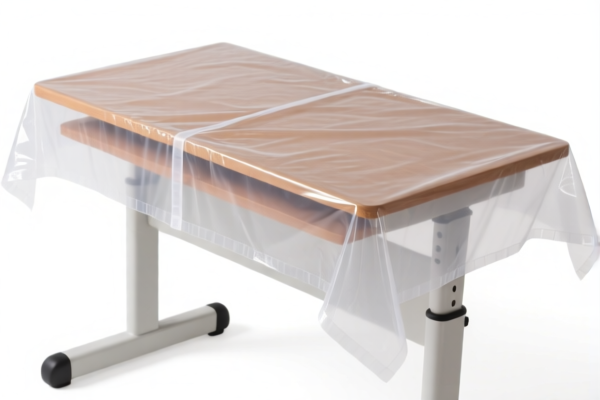
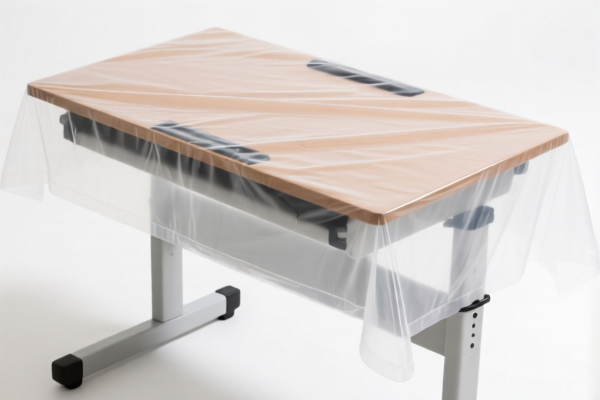
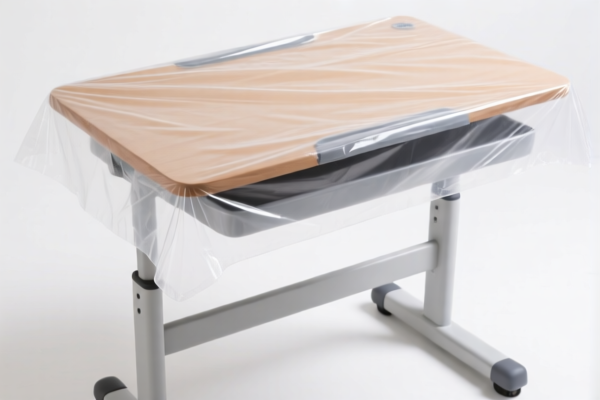
AI分析
🖥️ Plastic Study Table Covers (塑料桌布)
🌐 HS Code Reference & Customs Clearance Guide | 2026 Latest Tariff Analysis | Professional Clearance Strategy
📌 I. Product Definition & Classification: What Exactly Are "Plastic Study Table Covers"?
Plastic study table covers are typically protective or decorative sheets placed on study desks. In international trade, they are broadly categorized based on their material composition and physical form:
- Textile-Based with Plastic Coating: Fabric (polyester, cotton, etc.) impregnated, coated, covered, or laminated with plastics. These are classified under Chapter 59.
- Pure Plastic Sheets/Films: Made entirely of plastic polymers (PVC, PP, PE), formed into sheets, films, plates, or strips without textile backing. These are classified under Chapter 39.
⚠️ Key Distinction Point:
- If the product has a fabric base with a plastic layer → It belongs to 5903.10.20 (Impregnated/Coated Textiles).
- If the product is pure plastic (no fabric backing) → It belongs to 3920 (Plastic Sheets/Films).
📦 II. HS Code Classification Details (2026 Latest Tariff Authority Cross-Reference)
| HS Code | Product Description | Material/Form Match | Applicable Scenario |
|---|---|---|---|
5903.10.20.10 |
Textile fabrics impregnated, coated, covered or laminated with plastics (PVC) | Material: Plastic-coated textile. Form: Fabric-type consumer goods. |
Tablecloths with a fabric base and plastic surface; durable, washable covers. |
3920.10.00.00 |
Other plates, sheets, film, foil and strip, of polymers of ethylene | Material: Polyethylene (PE) or similar vinyl polymers. Form: Sheet/film/laminated covering. |
Pure plastic sheets or films used as covers; inferred by common sense as plastic sheeting. |
5903.10.20.90 |
Other textile fabrics impregnated, coated, covered or laminated with plastics | Material: Plastic (e.g., PVC) impregnated/coated textile. Form: Covering/laminated fabric. |
General plastic-coated table covers where specific sub-category (10) is not precise; "Other" category logic. |
3920.20.00.55 |
Other plates, sheets, film, foil and strip, of polymers of propylene | Material: Polypropylene (PP). Form: Board, sheet, film, foil, or strip. |
Pure PP plastic table covers; "Other" category fallback for non-PE plastics. |
🔍 Key Reminder:
- Textile-Based Covers (Fabric + Plastic) generally attract lower base tariffs (0%) but still face high additional tariffs.
- Pure Plastic Sheets (No Textile) generally attract higher base tariffs (4.2%) and similar additional tariffs.
- The classification depends strictly on whether a textile substrate exists.
💰 III. 2026 Latest Tariff Rate Breakdown (Including Surtaxes & Policy Add-ons)
✅ Applicable Country: United States (US)
✅ Origin: China (CN)
✅ Effective Date: From November 10, 2025 (and subsequent imports)
🎯 1. 5903.10.20.10 & 5903.10.20.90 —— Plastic-Coated Textile Table Covers
| Item | Content |
|---|---|
| Base Tariff | 0.0% (ad valorem) |
| Section 301 Surtax | +25.0% |
| IEEPA Surtax | +10.0% (Specific to China/HK products) |
| Total Rate | 35.0% |
| Tax Calculation | CIF Value × 35% |
| De Minimis Exemption | ❌ Not Available (deny_de_minimis) |
| Legal Basis Path | 301: Footnote 9903.88.01 → IEEPA:9903.01.25 → HS:5903.10.20.x0 |
📌 Explanation:
- The base rate is 0%, making the cost structure heavily dependent on surtaxes.
- Section 301 (25%) applies to most Chinese textiles and coated fabrics.
- IEEPA (10%) is an additional levy under the International Emergency Economic Powers Act.
- Total 35% is high, but lower than pure plastic sheets due to the 0% base rate.
🎯 2. 3920.10.00.00 & 3920.20.00.55 —— Pure Plastic Sheet/Film Table Covers
| Item | Content |
|---|---|
| Base Tariff | 4.2% (ad valorem) |
| Section 301 Surtax | +25.0% |
| IEEPA Surtax | +10.0% (Specific to China/HK products) |
| Total Rate | 39.2% |
| Tax Calculation | CIF Value × 39.2% |
| De Minimis Exemption | ❌ Not Available (deny_de_minimis) |
| Legal Basis Path | 301: Footnote 9903.88.01 → IEEPA:9903.01.25 → HS:3920.xx.00.xx |
📌 Explanation:
- The base rate is 4.2%, which is significantly higher than the textile-based category.
- Even though the product is simple, Chapter 39 plastics often face stricter base duties.
- Total 39.2% makes pure plastic covers more expensive to import than coated fabric covers.
🛠️ IV. Customs Clearance Practical Advice (Battle-Tested Pitfall Avoidance Guide)
✅ 1. Required Documentation Checklist (All Are Mandatory)
| Document | Mandatory | Description |
|---|---|---|
| ✅ Product Spec Sheet | ✔️ | Must specify material composition (e.g., "100% Polyester with PVC Coating" vs. "100% PP Plastic"). |
| ✅ Material Composition Statement | ✔️ | Crucial for distinguishing between HS 5903 (Textile) and HS 3920 (Plastic). |
| ✅ Product Photos (Clear) | ✔️ | Show texture, thickness, and whether a fabric weave is visible. |
| ✅ Commercial Invoice | ✔️ | Must clearly state "Plastic Table Cover" and include HS Code. |
| ✅ Packing List | ✔️ | Detail weight and dimensions for CIF calculation. |
| ✅ Third-Party Test Report | ✔️ | If claiming specific plastic types (PP/PE), lab reports help verification. |
✅ 2. Declaration Tips (Key Mnemonics)
🔥 “Fabric Base? Go 5903! Pure Plastic? Go 3920! Name It Right, Save the Fight!”
| Scenario | Correct Declaration | Incorrect Action |
|---|---|---|
| Fabric backing + Plastic surface | 5903.10.20.10 / .90 |
Declare as pure plastic → 39.2% instead of 35% |
| Pure PVC/PP Sheet | 3920.10.00.00 / .55 |
Declare as fabric → Customs Rejection or reclassification penalty |
| Vinyl Tablecloth (Common) | Usually 5903.10.20 |
Mislabeling as "Plastic Sheet" when fabric is visible → Audit Risk |
| Thin Disposable Cover | Check if it’s truly plastic-only | If it has any cloth layer, it’s Chapter 59 |
✅ 3. Special Case Handling
| Situation | Handling Advice |
|---|---|
| Mixed Material | If the "plastic" is just a thin coating on a thick fabric, Chapter 59 usually wins. Provide material % breakdown. |
| Custom Printed Covers | Printing doesn’t change the HS code, but ensure the invoice says "Printed Plastic Table Cover" to avoid ambiguity. |
| De Minimis (Section 321) | ❌ Do Not Use. Table covers are explicitly denied de minimis status for China-origin goods. |
| Origin Marking | Ensure "Made in China" is marked on the product or packaging to trigger IEEPA taxes correctly. |
🌍 V. Global Market Comparison (2026 Latest)
| Country/Region | Recommended HS Code | Tariff (China Origin) | Certification | Notes |
|---|---|---|---|---|
| 🇺🇸 USA | 5903.10.20 or 3920 |
35.0% or 39.2% | None specific | High surtaxes apply; de minimis denied. |
| 🇨🇳 China | 5903.10.20 or 3920 |
5% - 9% | None | Standard import duties; no US-style surtaxes. |
| 🇪🇺 EU | 5903.10 or 3920 |
0% - 6.5% | REACH/RoHS | Lower base duties; no 301/IEEPA equivalents. |
| 🇬🇧 UK | 5903.10 or 3920 |
0% - 6.5% | UKCA | Post-Brexit tariffs align closely with EU. |
📌 Conclusion:
- The US is the most challenging market due to the layered surtaxes (25% + 10%).
- Material composition is critical. Choosing the wrong HS code can lead to overpayment (if you should have been 35% but paid 39.2%) or underpayment penalties.
- Textile-based covers (HS 5903) are cheaper to import into the US than pure plastic sheets (HS 3920) due to the 0% base rate.
📌 VI. Common Mistakes & Pitfall Guide (Blood & Tears Lessons)
❌ Mistake 1: Declaring a fabric-backed plastic table cover as 3920 (Pure Plastic)
👉 Consequence: Overpaying by 4.2% on the CIF value. While small per unit, it adds up for bulk shipments.
❌ Mistake 2: Declaring a pure plastic sheet as 5903 (Textile)
👉 Consequence: Customs Audit. If inspectors find no textile, they will reclassify, leading to back taxes + fines + delays.
❌ Mistake 3: Ignoring IEEPA 10% surtax
👉 Consequence: Underestimating landed costs by 10%. Many suppliers only quote base + 301, forgetting IEEPA.
❌ Mistake 4: Assuming De Minimis (Section 321) applies
👉 Consequence: Shipment Rejection. Table covers are explicitly listed as ineligible for the $800 de minimis exemption for China.
✅ Correct Approach:
"Table Cover, 100% Polyester Fabric with PVC Coating, Washable, Model XYZ" → HS 5903.10.20.10
"Table Cover, 100% Polypropylene Sheet, Clear, Unprinted, Model ABC" → HS 3920.20.00.55
🎯 VII. Conclusion: Precision Classification, Cost Efficiency!
🎯 Remember the Mnemonics:
🔹 "Fabric Base? 5903. Pure Plastic? 3920."
🔹 "35% vs 39.2%: A 4.2% Gap Matters."
🔹 "No De Minimis for China: Plan for CIF x Total Rate."
📌 Pro Tip:
If you are importing large volumes, consider applying for a Binding Tariff Information (BTI) or Advance Ruling from US Customs to lock in the HS code.
If possible, sourcing from non-China countries (Vietnam, Thailand) can help avoid the 10% IEEPA surtax and potentially the 25% Section 301 (depending on specific trade agreements and rules of origin).
📣 Immediate Action:
📞 Contact a professional customs broker + Provide material specs + Verify HS Code pre-shipment
🚀 Ensure smooth clearance, avoid audits, and maximize profit margins!
✨ Professional Clearance Starts with Accurate Classification!
💼 Every percentage point of tariff is a point of profit protection!
用户评价
关于 HS 编码归类
协调制度(HS)是由世界海关组织(WCO)制定的国际贸易商品分类标准。全球 200 多个国家采用 HS 系统作为海关关税、贸易统计和进出口监管的基础。
每个 HS 编码遵循以下层级结构:
- 章(2 位)——商品大类(例如:第 84 章:机器和机械设备)
- 品目(4 位)——章内的更具体分类
- 子目(6 位)——国际通用细分,所有 WCO 成员国统一使用
- 本国细分(8-10 位)——各国自行扩展的细分编码,如美国 HTSUS 10 位编码
正确的 HS 编码归类对于顺利通关、准确缴纳关税和遵守贸易法规至关重要。错误归类可能导致海关延误、多缴关税或罚款。
从CN进口到US时,适用的关税税率可能包括:
- 最惠国(MFN)税率——适用于 WTO 成员国的标准关税税率
- 普通税率——适用于无贸易协定国家
- 贸易救济关税——附加关税,如 301 条款(反倾销)、232 条款(国家安全)或反补贴税
本页内容仅供参考。如需正式归类,请咨询当地海关或持牌报关代理。