Plastic Timer
CN → US商品图片


AI分析
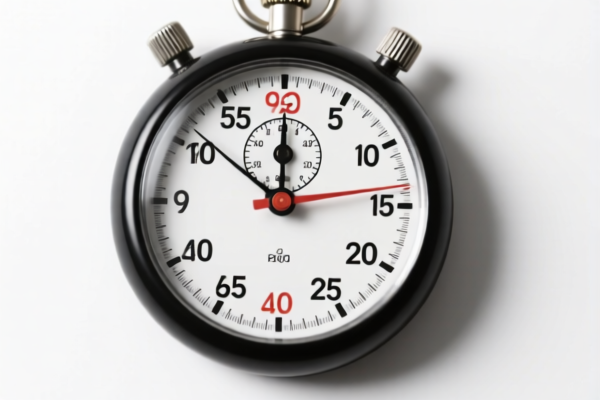
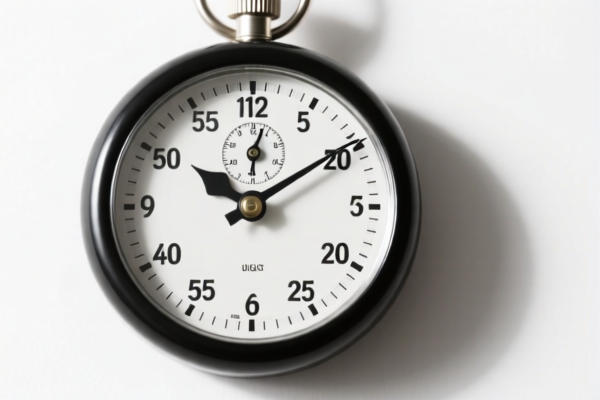
⏱️ Plastic Timer (Household/Non-Professional)
🌐 HS Code Reference & Customs Clearance Guide | 2026 Latest Tariff Analysis | Professional Strategy 📌 I. Product Definition & Classification: What is a "Plastic Timer"?
A "Plastic Timer" is a broad term that can refer to different functional devices. In international trade, the material (plastic) is often a distractor. Customs classification depends primarily on the function, power source, and intended use.
Most "plastic timers" fall into two main categories: 1. Mechanical/Kitchen Timers: Simple, often wind-up or battery-operated, used for cooking or general household timing. 2. Electronic/Programmable Timers: Digital displays, plug-in (AC powered) or battery-operated, used for lighting control, appliances, or irrigation.
⚠️ Critical Distinction: - If it is a mechanical device (no circuit board, no digital display) → Often falls under Chapter 90 or Chapter 83. - If it is an electronic device (circuit board, microprocessor, LCD/LED display) → Often falls under Chapter 85 (Electrical Machinery). - Do not classify based on "Plastic" alone! The casing material is secondary to the internal function.
📦 II. HS Code Classification Details (2026 Latest Tariff Authority)
| HS Code | Product Description | Use Case | Key Feature |
|---|---|---|---|
8543.70.96.00 |
Other electrical machines & apparatus (Electronic Timers) | Smart home timers, digital plug-in timers, programmable controllers | ✅ Contains circuit board/microprocessor |
9101.91.00.00 |
Watch cases and parts (if highly integrated into wearable) | Smartwatch components (rare for standalone "timer") | ❌ Not a standalone timer |
9031.80.80.40 |
Other instruments & appliances (General Purpose) | Simple mechanical kitchen timers, manual winding timers | ✅ No electronics; purely mechanical |
8306.29.00.00 |
Ornamental articles (if purely decorative) | Decorative sand timers, novelty plastic clocks | ❌ Non-functional timing device |
🔍 Key Note: - The most common classification for a modern electronic/plastic timer (like a digital plug-in outlet timer) is
8543.70.96.00. - For a mechanical kitchen timer (the wind-up kind with a dial), it is often9031.80.80.40. - Never use3926(Plastic Articles) unless it is a raw plastic housing with no function.
💰 III. 2026 Latest Tariff Rate Breakdown (Including Surcharges, Policy Add-ons)
✅ Applicable Country: United States (US) ✅ Origin: China (CN) ✅ Effective Time: From November 10, 2025 (including subsequent imports)
🎯 1. 8543.70.96.00 —— Electronic Timer (Circuit Board Included)
| Item | Content |
|---|---|
| Base Tariff Rate | 0% (ad valorem) |
| USITC Surcharge | +25% (From USITC Footnote 9903.88.01) |
| IEEPA Surcharge | +10% (For China/HK products, starting Nov 10, 2025) |
| Total Tariff Rate | 35% |
| Tax Calculation | CIF Value × 35% |
| De Minimis Eligibility | ❌ Not Eligible (deny_de_minimis) |
| Legal Basis Path | IEEPA:9903.01.25 → IEEPA:9903.01.24 → USITC:8543.70.96.00 → FOOTNOTE:9903.88.01 |
📌 Explanation: - 25% USITC Surcharge: Derived from Section 301 of the Trade Act, targeting specific electrical machinery components. - 10% IEEPA Surcharge: International Emergency Economic Powers Act surcharge on Chinese goods. - Total 35%: A high tariff rate. Must be factored into your landed cost calculation immediately.
🎯 2. 9031.80.80.40 —— Mechanical Timer (No Electronics)
| Item | Content |
|---|---|
| Base Tariff Rate | 0% |
| USITC Surcharge | +25% (Check specific footnote, often applies to "other instruments") |
| IEEPA Surcharge | +10% |
| Total Tariff Rate | 35% |
| Tax Calculation | CIF Value × 35% |
| De Minimis Eligibility | ❌ Not Eligible |
| Legal Basis Path | Similar path to electronic timers if classified under electrical/mechanical instruments subject to Section 301. |
📌 Note: - Even mechanical instruments can be subject to Section 301 tariffs if they are considered "manufactured articles" of China. - Verify if your specific mechanical timer is exempt from Section 301. Some simple mechanical items may have different footnotes.
🛠️ IV. Customs Clearance Practical Advice (Combat Pitfalls)
✅ 1. Preparation Checklist (Missing items lead to delays)
| Document | Required | Explanation |
|---|---|---|
| ✅ Product Specification Sheet | ✔️ | Must specify: Power source (Battery/AC), Display type (Digital/Analog), Function (Timer only/Timer+Outlet). |
| ✅ Circuit Diagram/Photo | ✔️ | Crucial to distinguish between 8543 (Electronic) and 9031 (Mechanical). If it has a chip, it's 8543. |
| ✅ Product Photos (Labeled) | ✔️ | Clear image of the timer, showing buttons, display, and power port. |
| ✅ FCC Certification | ✔️ | Mandatory for any electronic timer imported into the US. No FCC ID = Seized. |
| ✅ Commercial Invoice | ✔️ | Describe as "Digital Programmable Timer" or "Mechanical Kitchen Timer", NOT just "Plastic Part". |
| ✅ Packing List | ✔️ | Show quantity and weight. |
✅ 2. Declaration Tips (Key Mantra)
🔥 "Function over Material, Circuit over Plastic, FCC is King!"
| Scenario | Correct Declaration | Wrong Practice |
|---|---|---|
| Digital Plug-in Timer | 8543.70.96.00 |
Misdeclare as "Plastic Socket" (8536) → 35% + Potential Fraud |
| Mechanical Wind-up Timer | 9031.80.80.40 |
Misdeclare as "Electrical Machine" → Unnecessary FCC requirement |
| Decorative Sand Timer | 9031.80.80.40 or 9031.90.80.00 |
Do not declare as functional timer |
| Smart Home Timer (WiFi) | 8543.70.96.00 |
Must include FCC ID and KDB (Know Your Device) filing |
✅ 3. Special Cases Handling
| Situation | Handling Advice |
|---|---|
| OEM Custom Timers | Provide design drawings to prove it's a new product, not a generic copy. |
| Timer with Outlet | If it’s a "Smart Plug with Timer," it may still be 8543.70.96.00 or 8536.50.00.00. Check if the switching mechanism is the primary function. Usually, timing control makes it 8543. |
| Low-Cost Bulk Imports | Ensure FCC compliance is not skipped. CBP frequently audits electronic imports from China for FCC violations. |
| De Minimis (Section 321) | Do not rely on De Minimis for these codes. The deny_de_minimis flag is active for many electronic components from China. |
🌍 V. Global Market Comparison (2026 Latest)
| Country/Region | Recommended HS Code | Tariff (China Origin) | Certification Req. | Notes |
|---|---|---|---|---|
| 🇺🇸 USA | 8543.70.96.00 |
35% (25% + 10%) | FCC + UL (if plug-in) | High tariff, strict FCC |
| 🇨🇳 China | 8543.70.96.00 |
5% - 8% | CCC (if plug-in) | Standard import duty |
| 🇪🇺 EU | 8543.70.90 |
0% - 2% | CE + RoHS + ErP | Low tariff, high compliance cost |
| 🇬🇧 UK | 8543.70.90 |
0% - 2% | UKCA | Post-Brexit standards apply |
| 🇯🇵 Japan | 8543.70.90 |
0% - 2% | PSE (if plug-in) | Strict safety standards |
📌 Conclusion: - USA is the most expensive market for plastic/electronic timers due to Section 301 and IEEPA surcharges. - EU and Asia offer lower tariffs but higher compliance/documentation burdens (CE, PSE).
📌 VI. Common Mistakes & Pitfalls (Blood & Tears)
❌ Mistake 1: Declaring as "Plastic Toy" or "Part" to avoid tariff 👉 Result: CBP will inspect, find the circuit board, reclassify, and impose fraud penalties.
❌ Mistake 2: Missing FCC ID for electronic timers 👉 Result: Seizure and Destruction by US Customs. No exceptions.
❌ Mistake 3: Confusing "Timer" with "Clock"
👉 Result: Clocks (9101) and Timers (8543/9031) have different duties. Misdeclaration leads to underpayment.
✅ Correct Approach:
"Digital Programmable Timer, 120V AC, Plug-in, with LCD Display, FCC ID: XYZ123, Model: T-100"
🎯 VII. Conclusion: Professional Declaration Saves Money!
🎯 Remember the Mantra:
🔹 "Electronic = 8543, Mechanical = 9031, Plastic is Irrelevant." 🔹 "FCC is Non-Negotiable, 35% Tax is Real, Avoid De Minimis."
📌 Tips: - If your timer is manufactured in Vietnam, Malaysia, or Thailand, you may exempt from USITC/IEEPA surcharges, dropping the rate to 0%~5%. - Consider Advance Ruling for large shipments to confirm the exact HS Code.
📣 Immediate Action:
📞 Contact a professional customs broker + Provide FCC ID + Apply for Pre-Ruling 🚀 Ensure your plastic timer, passes customs smoothly, avoids fines, and maximizes profit!
✨ Professional Clearance Starts with Accurate Classification! 💼 Every cent of cost deserves precise calculation!
用户评价
关于 HS 编码归类
协调制度(HS)是由世界海关组织(WCO)制定的国际贸易商品分类标准。全球 200 多个国家采用 HS 系统作为海关关税、贸易统计和进出口监管的基础。
每个 HS 编码遵循以下层级结构:
- 章(2 位)——商品大类(例如:第 84 章:机器和机械设备)
- 品目(4 位)——章内的更具体分类
- 子目(6 位)——国际通用细分,所有 WCO 成员国统一使用
- 本国细分(8-10 位)——各国自行扩展的细分编码,如美国 HTSUS 10 位编码
正确的 HS 编码归类对于顺利通关、准确缴纳关税和遵守贸易法规至关重要。错误归类可能导致海关延误、多缴关税或罚款。
从CN进口到US时,适用的关税税率可能包括:
- 最惠国(MFN)税率——适用于 WTO 成员国的标准关税税率
- 普通税率——适用于无贸易协定国家
- 贸易救济关税——附加关税,如 301 条款(反倾销)、232 条款(国家安全)或反补贴税
本页内容仅供参考。如需正式归类,请咨询当地海关或持牌报关代理。