Plastic Wall Soundproofing Material (Textile)
CN → US| HS编码 | 关税税率 | 原产国 | 目的国 | 文档 |
|---|---|---|---|---|
| 5903102010 | 35.0% | CN | US | 官方文档 |
| 5903102090 | 35.0% | CN | US | 官方文档 |
| 3921131100 | 39.2% | CN | US | 官方文档 |
| 3921121100 | 39.2% | CN | US | 官方文档 |
| 3921131100 | 39.2% | CN | US | 官方文档 |
商品图片
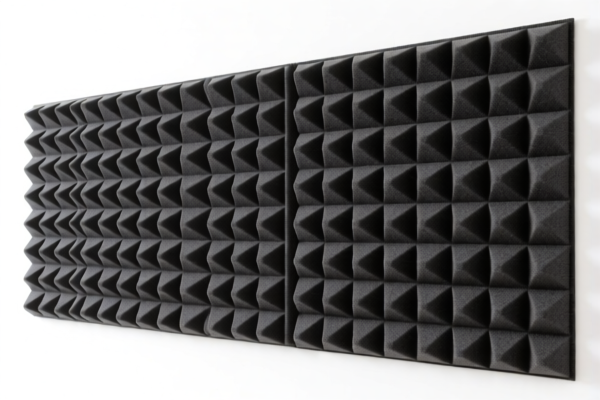
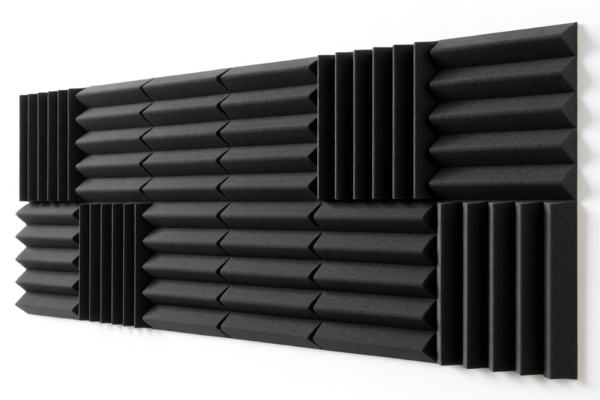
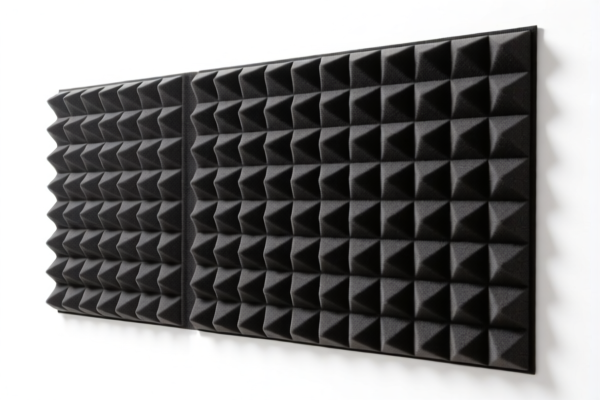
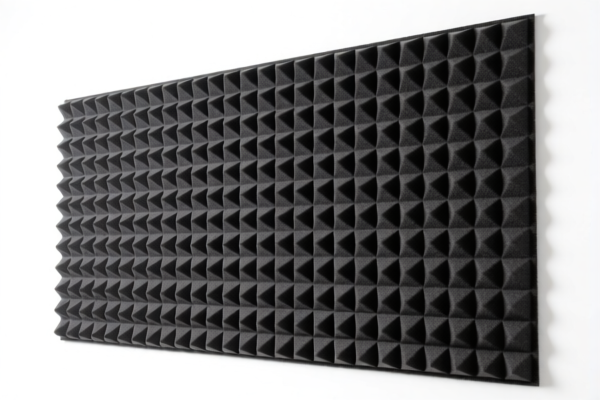
AI分析
🧱 Plastic Wall Soundproofing Material (Textile-Composite)
🌐 HS Code Reference & Customs Clearance Guide | 2026 Latest Tariff Analysis | Professional Entry Strategy
📌 1. Product Definition & Classification: Do You Really Understand "Plastic-Textile Composite Panels"?
Plastic wall soundproofing materials, often referred to as acoustic panels or decorative wall boards, are composite products typically consisting of a plastic core (e.g., polyethylene, PVC) bonded with textile layers for acoustic absorption or aesthetic purposes. In international trade, the classification depends heavily on the plastic weight proportion and the specific composition of the plastic used.
Key Distinction Points: * Plastic Content > 70%: If the plastic constitutes the essential character and exceeds 70% by weight, it is classified under Chapter 39 (Plastics). * PVC Content: If the plastic component is primarily Polyvinyl Chloride (PVC), a specific subheading applies. * End Use: If used specifically for building decoration or acoustic insulation in construction, it may fall under Chapter 39.25 (Plastic Articles for Use in Agriculture, Building, or Similar Purposes).
⚠️ Critical Note for "Soundproofing Materials":
- If the product is a finished board/panel where plastic is the main material, it falls under 3921 (Plates, Sheets, Film, Foil, and Strip, of Plastics) or 3925 (Plastic Builders' Ware).
- Do NOT classify under Chapter 56 (Textiles) unless the textile provides the essential character (which is rare for hard wall panels).
- Do NOT classify under Chapter 83 (Miscellaneous Metal Articles) if plastic is dominant.
📦 2. HS Code Classification Details (2026 Latest Tariff Authority Mapping)
| HS Code | Product Description | Applicable Scenario | Plastic Type/Weight |
|---|---|---|---|
3921.13.11.00 |
Plastic and textile composite boards, sheets, films, plates, or strips; Plastic weight > 70% | General plastic-textile composite wall panels, acoustic baffles | >70% Plastic |
3921.12.11.00 |
Plastic and textile composite boards...; Containing Polyvinyl Chloride (PVC) | PVC-based acoustic panels, vinyl-wrapped foam boards | PVC dominant |
3925.90.00.00 |
Plastic building articles, for decorative or acoustic purposes | Finished soundproofing wall tiles, decorative acoustic planks | Any Plastic (Building Use) |
3925.30.50.00 |
Plastic building fittings (e.g., blinds, shades), extended use for acoustic/shading | Plastic louvers, acoustic blinds, shading screens for walls | Any Plastic (Fitting Use) |
🔍 Key Reminder:
- For flat panels used as wall covering,3921is often more accurate if it's a sheet/panel form.
- For specific building components like louvers or shades,3925.30.50.00applies.
- For general acoustic building materials not fitting other specific building parts,3925.90.00.00is the catch-all.
- Always verify the exact plastic resin (PE, PP, PVC) to distinguish between3921.13and3921.12.
💰 3. 2026 Latest Tariff Rate Breakdown (Including Surtaxes & Policy Add-ons)
✅ Applicable Country: United States (US)
✅ Country of Origin: China (CN)
✅ Effective Date: From November 10, 2025 onwards (including subsequent imports)
🎯 1. 3921.13.11.00 & 3921.12.11.00 —— Plastic-Textile Composite Panels
| Item | Content |
|---|---|
| Base Duty Rate | 4.2% (Ad Valorem) |
| Section 301 Surcharge | +25.0% (Under USITC Footnote 9903.88.01) |
| Section 122 Tariff | +10.0% (Under IEEPA/Executive Order for specific composite materials) |
| Total Effective Rate | 39.2% |
| Tax Calculation | CIF Value × 39.2% |
| De Minimis Eligibility | ❌ Not Eligible (Deny de minimis for Section 301/122 goods) |
| Legal Basis Path | USITC:3921.13/12 → SECTION_301:9903.88.01 → SECTION_122:IEEPA_TARIFF |
📌 Explanation:
- The 4.2% is the standard Most Favored Nation (MFN) rate for plastic composites.
- The +25% is the mandatory Section 301 tariff on Chinese plastic products.
- The +10% is an additional Section 122 tariff applied to specific composite materials for national security or economic protection reasons.
- Total 39.2% is a high-cost barrier. Accurate classification is vital to avoid misclassification penalties.
🎯 2. 3925.90.00.00 —— Plastic Building Articles (Decorative/Acoustic)
| Item | Content |
|---|---|
| Base Duty Rate | 5.3% (Ad Valorem) |
| Section 301 Surcharge | +25.0% (Under USITC Footnote 9903.88.01) |
| Section 122 Tariff | +10.0% (Under IEEPA/Executive Order) |
| Total Effective Rate | 40.3% |
| Tax Calculation | CIF Value × 40.3% |
| De Minimis Eligibility | ❌ Not Eligible (Deny de minimis) |
| Legal Basis Path | USITC:3925.90 → SECTION_301:9903.88.01 → SECTION_122:IEEPA_TARIFF |
📌 Note:
- Slightly higher total rate (40.3%) due to a higher base rate (5.3% vs 4.2%).
- Applies if the product is considered a "building article" rather than a general "plastic sheet."
🎯 3. 3925.30.50.00 —— Plastic Building Fittings (Blinds/Shades/Acoustic Louvers)
| Item | Content |
|---|---|
| Base Duty Rate | 5.3% (Ad Valorem) |
| Section 301 Surcharge | +7.5% (Reduced Section 301 rate for certain building fittings) |
| Section 122 Tariff | +10.0% (Under IEEPA/Executive Order) |
| Total Effective Rate | 22.8% |
| Tax Calculation | CIF Value × 22.8% |
| De Minimis Eligibility | ❌ Not Eligible (Deny de minimis) |
| Legal Basis Path | USITC:3925.30 → SECTION_301:9903.50.00 → SECTION_122:IEEPA_TARIFF |
📌 Key Advantage:
- This is the most cost-effective classification if the product can be argued as a "fitting" like a blind, shade, or louver.
- The Section 301 rate is significantly lower (7.5% vs 25%).
- Strategy: If your soundproofing material includes louvers, slats, or shading elements, argue for3925.30.50.00to save ~17.5% in tariffs.
🛠️ 4. Customs Clearance Practical Advice (Battle-Tested Pitfall Guide)
✅ 1. Required Documentation Checklist (Non-Negotiable)
| Document | Must Provide | Description |
|---|---|---|
| ✅ Product Specification Sheet | ✔️ | Detailed composition: % Plastic, % Textile, Layers, Density, Acoustic Rating (NRC/STC) |
| ✅ Technical Diagram/Structure | ✔️ | Cross-section showing plastic core and textile facing |
| ✅ Product Photos | ✔️ | Front, back, edge view, and label showing Model No. |
| ✅ Bill of Materials (BOM) | ✔️ | Lists all raw materials and their proportions |
| ✅ Commercial Invoice | ✔️ | Must clearly state: "Plastic-Textile Composite Acoustic Panel" or "Plastic Building Fitting" |
| ✅ Certificate of Origin (CO) | ✔️ | Required to prove CN origin for Section 301/122 application |
| ✅ Packing List | ✔️ | Show net/gross weight, carton dimensions |
✅ 2. Declaration Strategy (Key Mnemonics)
🔥 "Plastic Core Determines HS, Textile is Just Skin!"
| Scenario | Correct Declaration | Wrong Declaration | Consequence |
|---|---|---|---|
| Flat acoustic panel, >70% plastic | 3921.13.11.00 or 3921.12.11.00 |
"Textile Wall Covering" (Chapter 56) | Classification Error + Penalties |
| PVC-based panel | 3921.12.11.00 |
Generic "Plastic Board" | Potential Under-reporting |
| Louver-style acoustic screen | 3925.30.50.00 |
3925.90.00.00 |
Pay 22.8% instead of 40.3% (SAVE $) |
| General acoustic tile | 3925.90.00.00 |
3921... |
Slightly higher base rate (5.3% vs 4.2%) |
📌 Pro Tip:
- If your product is a flat sheet/panel, use 3921.
- If it is a functional building component (like a louver, blind, or specific tile), use 3925.
- Always emphasize the plastic content >70% in the description to justify Chapter 39 over Chapter 56.
✅ 3. Special Case Handling
| Case | Handling Advice |
|---|---|
| OEM Custom Acoustic Panels | Provide customer design specs. If the customer requests PVC, declare as 3921.12. If PE/PP, declare as 3921.13. |
| Hybrid Products (Plastic + Wood) | If plastic is <50%, it may fall under Wood (Chapter 44). Keep plastic >70% for Chapter 39. |
| Import from Non-CN Countries | Section 301/122 tariffs do NOT apply. Rates drop to base duty (e.g., 4.2% or 5.3%). |
| Small Samples (De Minimis) | ❌ Cannot use Section 321 (De Minimis) for Section 301/122 goods. Must formally enter. |
🌍 5. Global Market Customs Comparison (2026 Latest)
| Country/Region | Recommended HS Code | Tariff (CN Origin) | Certification Requirements | Notes |
|---|---|---|---|---|
| 🇺🇸 USA | 3921.13.11.00 |
39.2% | None (General) | Highest Cost. Section 301/122 apply. |
| 🇺🇸 USA | 3925.30.50.00 |
22.8% | None (General) | Best Option if product is a louver/shade. |
| 🇨🇳 China | 3921.13.11.00 |
5.0% | None | No Section 301/122. Low cost. |
| 🇪🇺 EU | 3921.13.11.00 |
6.5% | REACH, RoHS | No US-style surtaxes. |
| 🇬🇧 UK | 3921.13.11.00 |
6.5% | UKCA, REACH | Post-Brexit rules. |
📌 Conclusion:
- The USA is the most expensive market due to Section 301 and 122 tariffs.
- Cost-saving Strategy: If your product design allows, classify as3925.30.50.00(Building Fittings) to reduce total tariff from 39.2% to 22.8%.
- Consider supply chain diversification (Vietnam, Mexico) to avoid US surtaxes if volume is large.
📌 6. Common Mistakes & Pitfall Guide (Blood Lessons)
❌ Mistake 1: Classifying as "Textile Wall Covering" (Chapter 56)
👉 Consequence: Customs will reclassify to Chapter 39 (Plastics) due to >70% plastic, but may impose penalties for incorrect initial declaration.
❌ Mistake 2: Ignoring Section 122 Tariff
👉 Consequence: Underpayment of 10%. Audit Risk + Back Taxes + Interest.
❌ Mistake 3: Trying to use De Minimis (Section 321) for B2B shipments
👉 Consequence: Strictly Prohibited. Customs will seize goods and impose fines.
❌ Mistake 4: Not specifying Plastic Type (PVC vs PE)
👉 Consequence: Misclassification between 3921.12 and 3921.13. While rates are similar, it triggers additional documentation requests.
✅ Correct Approach:
"Plastic-Textile Composite Acoustic Panel, PE Core, Textile Facing, >70% Plastic by Weight, Model XYZ, USITC Compliant."
🎯 7. Conclusion: Precision Classification, Maximize Profit!
🎯 Remember the Golden Rules:
🔹 "Plastic > 70%? It's Plastic (Ch. 39), Not Textile!"
🔹 "Louvers/Shades? Use 3925.30 to Save 17.5% in Tariffs!"
🔹 "Section 301 + 122 = High Cost. Plan Ahead!"
📌 Pro Tip:
If your plastic composite is made in Vietnam, Thailand, or Mexico, you can avoid US Section 301 and 122 tariffs entirely. The total duty may drop to 4.2% - 5.3%.
Action: Consider Foreign Trade Zones (FTZ) or supply chain relocation if volumes are high.
📣 Immediate Action:
📞 Consult with a licensed customs broker before shipping.
📦 Get an Advance Ruling from CBP if your product structure is unique.
🚀 Avoid costly audits and delays by getting the HS Code right the first time!
✨ Professional Customs Clearance Starts with Accurate Classification!
💼 Every percentage point of tariff matters. Optimize your logistics strategy today!
用户评价
关于 HS 编码归类
协调制度(HS)是由世界海关组织(WCO)制定的国际贸易商品分类标准。全球 200 多个国家采用 HS 系统作为海关关税、贸易统计和进出口监管的基础。
每个 HS 编码遵循以下层级结构:
- 章(2 位)——商品大类(例如:第 84 章:机器和机械设备)
- 品目(4 位)——章内的更具体分类
- 子目(6 位)——国际通用细分,所有 WCO 成员国统一使用
- 本国细分(8-10 位)——各国自行扩展的细分编码,如美国 HTSUS 10 位编码
正确的 HS 编码归类对于顺利通关、准确缴纳关税和遵守贸易法规至关重要。错误归类可能导致海关延误、多缴关税或罚款。
从CN进口到US时,适用的关税税率可能包括:
- 最惠国(MFN)税率——适用于 WTO 成员国的标准关税税率
- 普通税率——适用于无贸易协定国家
- 贸易救济关税——附加关税,如 301 条款(反倾销)、232 条款(国家安全)或反补贴税
本页内容仅供参考。如需正式归类,请咨询当地海关或持牌报关代理。