Pliers, Scissors, Shears and Similar Hand Tools
CN → US| HS编码 | 关税税率 | 原产国 | 目的国 | 文档 |
|---|---|---|---|---|
| 8203206030 | 0.0% | CN | US | 官方文档 |
| 8203202000 | 39.0% | CN | US | 官方文档 |
| 8205513060 | 38.7% | CN | US | 官方文档 |
| 8205595560 | 40.3% | CN | US | 官方文档 |
| 8203206030 | 0.0% | CN | US | 官方文档 |
商品图片
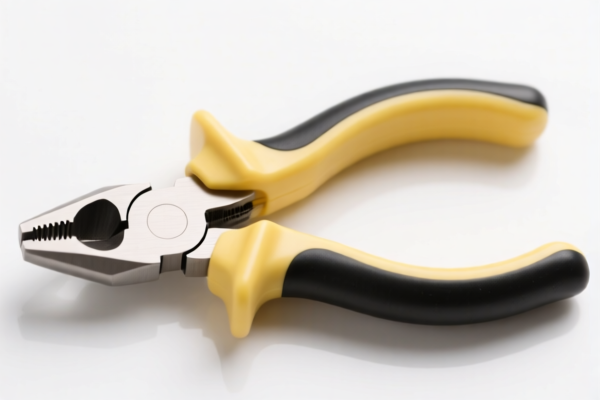
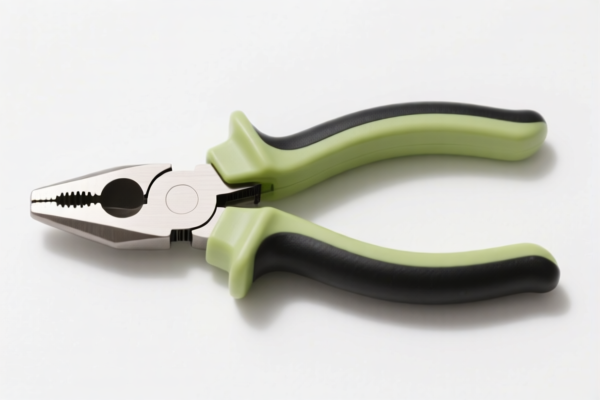
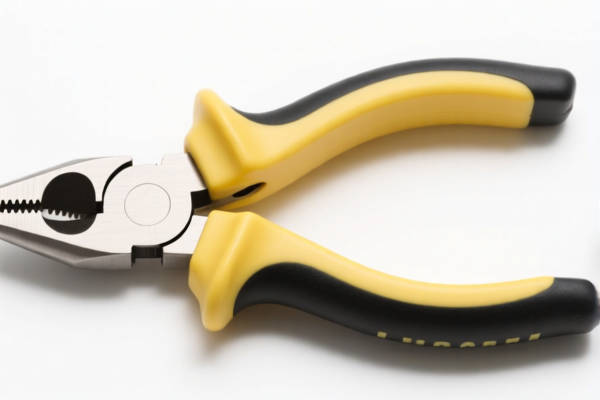
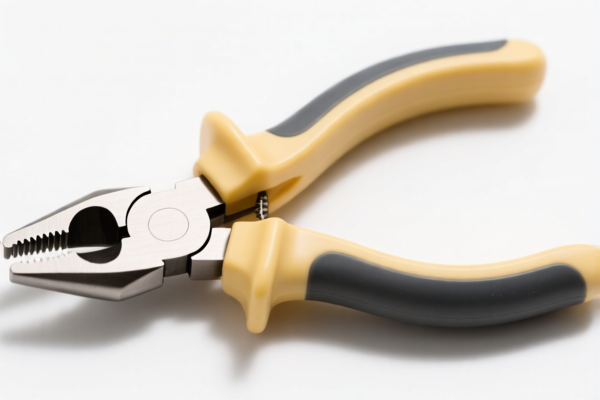
AI分析
🔧 Pliers, Scissors, Shears & Similar Hand Tools (Manual Cutting & Gripping Instruments)
🌐 HS Code Reference & Customs Clearance Guide | 2026 Latest Tariff Analysis | Professional Clearance Strategy
📌 Part I: Product Definition & Classification: Do You Really Understand "Hand Tools"?
Pliers, scissors, shears, and similar hand tools are essential manual instruments used for gripping, cutting, bending, or shaping materials. In international trade, these items are primarily classified under Chapter 82 (Tools, Implements, Spoons, Forks of Base Metal; Parts thereof).
Key Distinctions: * Pliers (Clamping Tools): Designed for gripping or bending. Classification depends on material (steel vs. other metals) and specific type (e.g., needle-nose, locking). * Scissors & Shears (Cutting Tools): Often classified separately based on whether they are for household, professional, or industrial use, and the material of the blades. * Similar Hand Tools: A residual category for tools not specifically named, often falling under "Other hand tools" if they don't fit specific subheadings like pliers or scissors.
⚠️ Critical Distinction Point:
- Metal Material: Most tools in this category are made of steel or other base metals.
- Specific Function: "Pliers" have a specific heading (8203), while "Scissors" might fall under 8213 or other provisions depending on context. However, the provided data focuses on Pliers and similar hand tools under HS Codes 8203 and 8205.
- Domestic vs. Industrial: Household pliers may have different duty rates compared to industrial-grade pliers.
📦 Part II: HS Code Classification Details (2026 Latest Tariff Authority对照)
Based on the provided data, the classification focuses on Pliers and similar hand tools, primarily made of metal. Here is the breakdown:
| HS Code | Product Description | Applicable Scenario | Material | Tax Rate (Total) |
|---|---|---|---|---|
8203.20.60.30 |
Pliers, matching "Pliers", Metal Material | Standard metal pliers, household or professional use | Metal (Steel/Iron) | 12¢/doz. + 5.5% + 35.0% |
8203.20.20.00 |
Pliers, Matching Pliers & Similar Tools | General pliers, not specified as "Pliers" in the specific subheading | Metal | 40.0% (39.0% total) |
8205.51.30.60 |
Pliers, Household Tools, Iron or Steel | Household pliers, iron/steel construction | Iron/Steel | 38.7% (38.7% total) |
8205.59.55.60 |
Pliers, Other Hand Tools, Metal Material | Other metal hand tools, not specifically pliers or household tools | Metal | 40.3% (40.3% total) |
🔍 Key Reminder:
- HS Code8203.20.60.30is for specific pliers with a mixed tax structure (specific + ad valorem + additional tariffs).
- HS Code8203.20.20.00is a general category for pliers, with a flat ad valorem rate.
- HS Code8205.51.30.60is for household tools, with a lower base tariff but still subject to additional tariffs.
- HS Code8205.59.55.60is a catch-all for other metal hand tools, with the highest ad valorem rate.
💰 Part III: 2026 Latest Tariff Rate Details (Including Additional Taxes)
✅ Applicable Country: United States (US)
✅ Origin: China (CN)
✅ Effective Date: 2025年11月10日起 (From Nov 10, 2025, onwards)
🎯 1. 8203.20.60.30 —— Pliers, Matching "Pliers", Metal Material
| Item | Content |
|---|---|
| Base Tariff | 12¢/doz. + 5.5% (ad valorem) |
| USITC Additional Tariff | +25.0% (Section 301) |
| IEEPA Additional Tariff | +10.0% (Against China/HK products) |
| Total Tariff | 12¢/doz. + 40.5% (5.5% + 25% + 10%) |
| Tax Calculation | (12¢ per dozen) + (CIF Value × 40.5%) |
| De Minimis Eligible? | ❌ No (deny_de_minimis) |
| Legal Basis | USITC:8203.20.60.30 → FOOTNOTE:301 → IEEPA:9903.01.24 |
📌 Explanation:
- This code has a mixed duty: a specific duty per dozen plus an ad valorem rate.
- The additional tariffs (35%) make this a high-cost item for importers.
- Total cost impact: The 12¢/doz. is negligible for small shipments, but the 40.5% ad valorem rate is significant.
🎯 2. 8203.20.20.00 —— Pliers, Matching Pliers & Similar Tools
| Item | Content |
|---|---|
| Base Tariff | 4.0% |
| USITC Additional Tariff | +25.0% |
| IEEPA Additional Tariff | +10.0% |
| Total Tariff | 39.0% |
| Tax Calculation | CIF Value × 39.0% |
| De Minimis Eligible? | ❌ No (deny_de_minimis) |
| Legal Basis | USITC:8203.20.20.00 → FOOTNOTE:301 → IEEPA:9903.01.24 |
📌 Note:
- This is a flat ad valorem rate.
- Total 39.0% is high, but slightly lower than the mixed duty code8203.20.60.30for small quantities (due to the specific duty).
- Applicable to general pliers not covered by the more specific8203.20.60.30.
🎯 3. 8205.51.30.60 —— Pliers, Household Tools, Iron or Steel
| Item | Content |
|---|---|
| Base Tariff | 3.7% |
| USITC Additional Tariff | +25.0% |
| IEEPA Additional Tariff | +10.0% |
| Total Tariff | 38.7% |
| Tax Calculation | CIF Value × 38.7% |
| De Minimis Eligible? | ❌ No (deny_de_minimis) |
| Legal Basis | USITC:8205.51.30.60 → FOOTNOTE:301 → IEEPA:9903.01.24 |
📌 Note:
- Household tools have a slightly lower base tariff (3.7%) compared to general pliers (4.0%).
- Total 38.7% is the lowest among the listed codes, but still high.
- Suitable for domestic, non-professional pliers.
🎯 4. 8205.59.55.60 —— Pliers, Other Hand Tools, Metal Material
| Item | Content |
|---|---|
| Base Tariff | 5.3% |
| USITC Additional Tariff | +25.0% |
| IEEPA Additional Tariff | +10.0% |
| Total Tariff | 40.3% |
| Tax Calculation | CIF Value × 40.3% |
| De Minimis Eligible? | ❌ No (deny_de_minimis) |
| Legal Basis | USITC:8205.59.55.60 → FOOTNOTE:301 → IEEPA:9903.01.24 |
📌 Note:
- This is a catch-all code for other metal hand tools.
- Total 40.3% is the highest ad valorem rate in the list.
- Use only if the tool does not fit the specific descriptions of pliers or household tools.
🛠️ Part IV: Customs Clearance Practical Advice (Practical Pitfall Avoidance Guide)
✅ 1. Required Documents Checklist (None Can Be Omitted)
| Document | Mandatory | Explanation |
|---|---|---|
| ✅ Product Specification Sheet | ✔️ | Include material (steel, iron, etc.), type (pliers, scissors), dimensions |
| ✅ Product Photos (Including Labels) | ✔️ | Clear view of the tool, brand, model, and material markings |
| ✅ Commercial Invoice | ✔️ | Must specify "Pliers" or "Hand Tools" and HS Code |
| ✅ Packing List | ✔️ | Detail the number of units, weight, and packaging type |
| ✅ Origin Certificate (CO) | ✔️ | If not from China, may qualify for lower tariffs |
| ✅ Third-Party Test Reports | ✔️ | If applicable (e.g., safety standards for household tools) |
✅ 2. Declaration Tips (Key Mnemonics)
🔥 "Material Matters, Function Defines, Specificity Saves Money!"
| Scenario | Correct Declaration Method | Incorrect Practice |
|---|---|---|
| Standard Metal Pliers | 8203.20.60.30 or 8203.20.20.00 |
Misdeclaring as "Household Tool" → Lower base rate but potential audit risk |
| Household Pliers | 8205.51.30.60 |
Declaring as "Industrial Tool" → Higher tax |
| Other Metal Hand Tools | 8205.59.55.60 |
Declaring as "Pliers" → Potential misclassification |
| Scissors (Not Listed) | Check HS 8213 | Declaring as "Pliers" → Incorrect classification |
✅ 3. Special Circumstances Handling
| Situation | Handling Advice |
|---|---|
| OEM Custom Tools | Provide customer orders + design drawings to avoid "non-standard" classification |
| Tools with Plastic Handles | Still classified as metal tools if the functional part is metal |
| Tools for Medical/Industrial Use | May qualify for special exemptions, but requires proof of non-commercial use |
| Small Samples (< $800) | Not eligible for de minimis due to Section 301 tariffs |
🌍 Part V: Global Market Comparison (2026 Latest)
| Country/Region | Recommended HS Code | Tariff | Certification Requirements | Notes |
|---|---|---|---|---|
| 🇺🇸 United States | 8203.20.60.30 / 8203.20.20.00 |
38.7% - 40.3% | No specific certification required for hand tools | High additional tariffs |
| 🇨🇳 China | 8203.20.60.30 / 8203.20.20.00 |
5% - 10% | CCC (if applicable) | No additional tariffs |
| 🇪🇺 European Union | 8203.20.60.30 / 8203.20.20.00 |
4.5% - 6% | CE (if applicable) | No additional tariffs |
| 🇦🇺 Australia | 8203.20.60.30 / 8203.20.20.00 |
5% | RCM (if applicable) | No additional tariffs |
| 🇯🇵 Japan | 8203.20.60.30 / 8203.20.20.00 |
3% - 5% | PSE (if applicable) | No additional tariffs |
📌 Conclusion:
- The US is the only market with high additional tariffs on Chinese-made hand tools.
- Chinese-made hand tools face high clearance costs in the US. Consider supply chain adjustments or alternative origins.
📌 Part VI: Common Mistakes & Pitfall Avoidance (Lessons Learned)
❌ Mistake 1: Declaring "Scissors" as "Pliers"
👉 Consequence: Misclassification → Delay or Return!
❌ Mistake 2: Ignoring the Material (Steel vs. Iron)
👉 Consequence: Incorrect HS Code → Additional Tariffs or Penalties!
❌ Mistake 3: Using "Hand Tools" as a generic description without specifying type
👉 Consequence: Customs may assign a higher tax rate code → Higher Tax!
❌ Mistake 4: Assuming small shipments qualify for de minimis
👉 Consequence: Denied → Back Taxes and Fines!
✅ Correct Practice:
"Pliers, Steel, Needle-Nose, Household Use, Model XYZ, 12 pcs/box, HS Code 8203.20.60.30"
🎯 Part VII: Conclusion: Precise Classification, Time-Saving, Cost-Effective!
🎯 Remember the Mnemonic:
🔹 "Pliers are Metal, Tax is High, Specificity Saves Money!"
🔹 "HS Code Determines Destiny, 40% Tax is No Joke, Precise Declaration Saves Thousands!"
📌 Pro Tip:
If your hand tools are originating from Vietnam, Mexico, Thailand, or Malaysia, you may apply for IEEPA Exemptions, reducing tariffs to 0%~5%.
Recommend Advance Ruling (Pre-Classification) to avoid clearance risks.
📣 Act Now:
📞 Contact Professional Customs Broker + Provide Product Photos + Apply for HS Code Pre-Classification
🚀 Let your hand tools clear customs smoothly, export efficiently, and double profits!
✨ Professional Clearance Starts with Precise Classification!
💼 Every Cost Matters, Calculate Precisely!
用户评价
关于 HS 编码归类
协调制度(HS)是由世界海关组织(WCO)制定的国际贸易商品分类标准。全球 200 多个国家采用 HS 系统作为海关关税、贸易统计和进出口监管的基础。
每个 HS 编码遵循以下层级结构:
- 章(2 位)——商品大类(例如:第 84 章:机器和机械设备)
- 品目(4 位)——章内的更具体分类
- 子目(6 位)——国际通用细分,所有 WCO 成员国统一使用
- 本国细分(8-10 位)——各国自行扩展的细分编码,如美国 HTSUS 10 位编码
正确的 HS 编码归类对于顺利通关、准确缴纳关税和遵守贸易法规至关重要。错误归类可能导致海关延误、多缴关税或罚款。
从CN进口到US时,适用的关税税率可能包括:
- 最惠国(MFN)税率——适用于 WTO 成员国的标准关税税率
- 普通税率——适用于无贸易协定国家
- 贸易救济关税——附加关税,如 301 条款(反倾销)、232 条款(国家安全)或反补贴税
本页内容仅供参考。如需正式归类,请咨询当地海关或持牌报关代理。