Polishing Tool
CN → US| HS编码 | 关税税率 | 原产国 | 目的国 | 文档 |
|---|---|---|---|---|
| 8466201010 | 39.6% | CN | US | 官方文档 |
| 8203103000 | 35.0% | CN | US | 官方文档 |
| 8203106000 | 35.0% | CN | US | 官方文档 |
| 8509805095 | 14.2% | CN | US | 官方文档 |
| 8479892000 | 35.0% | CN | US | 官方文档 |
商品图片
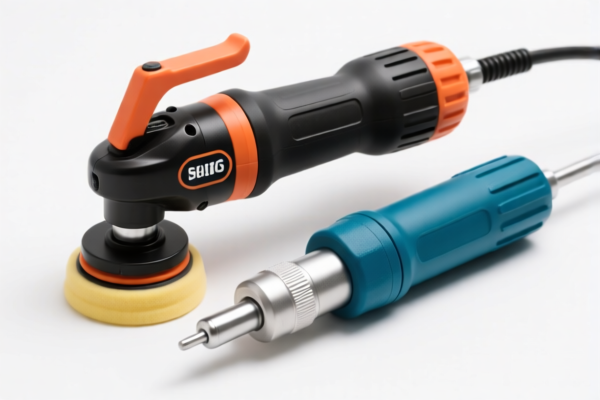
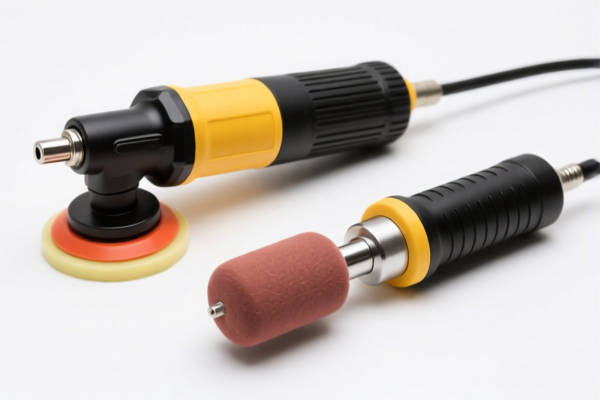
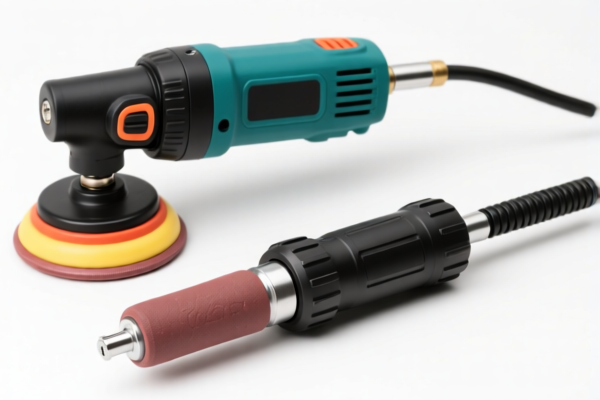
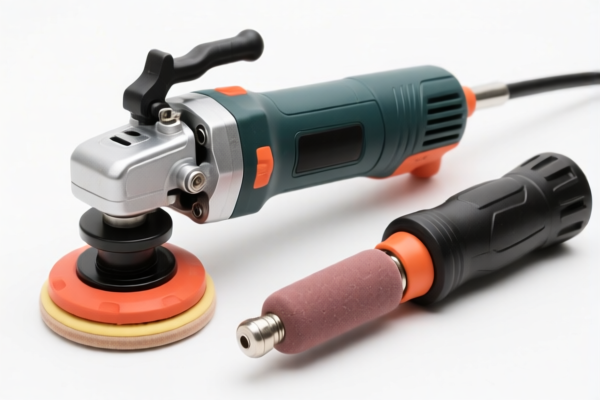
AI分析
✨ Polishing Tools (Manual & Electric)
🌐 HS Code Reference & Customs Clearance Guide | 2026 Latest Tariff Analysis | Strategic Compliance Strategy
📌 I. Product Definition and Classification: What Exactly is a "Polishing Tool"?
Polishing tools are essential instruments for surface finishing, ranging from manual hand tools to electric appliances. In international trade, they are classified differently based on their power source, mechanism, and specific application. The distinction is critical because the tariff impact varies significantly between manual metal tools and electric household appliances.
1. Manual Metal Polishers (Hand Tools):
These include files, rasps, and abrasive sticks used for manual material removal. They fall under Chapter 82 (Tools of Base Metal).
2. Electric Appliances:
These are powered devices, such as electric shoe polishers or bench grinders. They generally fall under Chapter 85 (Electrical Machinery) or Chapter 84 (Machinery).
⚠️ Key Distinction Point:
- If it is manual and made of metal (e.g., files, rasps, abrasive sticks) → Go to 8203 or 8466.
- If it is electric and designed for household use (e.g., shoe polishers) → Go to 8509.
- If it is electric but classified as industrial/mechanical machinery → Go to 8479.
📦 II. HS Code Classification Details (2026 Latest Tariff Authority Comparison)
| HS Code | Product Description | Application Scenario | Power Source |
|---|---|---|---|
8466.20.10.10 |
Accessories for machine tools; Manual polishing/polishing tools | Accessories for machinery, auxiliary tools | ❌ Manual (Mechanical accessory) |
8203.10.30.00 |
Files, rasps, and similar tools | Manual metalworking, fine filing | ❌ Manual |
8203.10.60.00 |
Files, file sticks, and similar tools | General purpose manual filing | ❌ Manual |
8509.80.50.95 |
Shoe polishers; Other electro-mechanical domestic appliances | Household shoe maintenance, personal care | ✅ Electric (Domestic) |
8479.89.20.00 |
Machines and mechanical appliances having individual functions, not specified elsewhere | Industrial shoe polishing machines, non-domestic | ✅ Electric (Mechanical) |
🔍 Important Reminder:
- Manual tools are split between 8466 (if considered machine accessories) and 8203 (if considered basic metal tools like files).
- Electric shoe polishers can be tricky: if marketed as a household gadget, it’s 8509; if classified as a general mechanical device, it’s 8479. This distinction changes the base tariff from 4.2% to 0%.
💰 III. 2026 Latest Tariff Rate Breakdown (Including Additional Taxes, Policy Add-ons)
✅ Applicable Country: United States (US)
✅ Origin: China (CN)
✅ Effective Date: 2025/11/10 onwards (including subsequent imports)
🎯 1. 8466.20.10.10 —— Machine Tool Accessories: Manual Polishing Tools
| Item | Content |
|---|---|
| Base Tariff | 4.6% (ad valorem) |
| Section 301 Additional Tariff | +25.0% |
| Section 122 Tariff | +10.0% (Targeted Chinese goods) |
| Total Effective Rate | 39.6% |
| Tax Calculation | CIF Value × 39.6% |
| De Minimis Exemption Available? | ❌ No (deny_de_minimis) |
| Legal Authority Path | Section 301 → Section 122 → USITC:8466.20.10.10 |
📌 Explanation:
- This code classifies manual polishing tools as accessories to machine tools.
- The base 4.6% is relatively low, but the Section 301 (25%) and Section 122 (10%) add-ons make the total rate high at 39.6%.
- Warning: Do not assume all manual tools are cheap to import. Accessories often attract higher scrutiny and additional tariffs.
🎯 2. 8203.10.30.00 & 8203.10.60.00 —— Files, Rasps, and Similar Tools (Manual)
| Item | Content |
|---|---|
| Base Tariff | 0.0% (ad valorem) |
| Section 301 Additional Tariff | +25.0% |
| Section 122 Tariff | +10.0% |
| Total Effective Rate | 35.0% |
| Tax Calculation | CIF Value × 35.0% |
| De Minimis Exemption Available? | ❌ No (deny_de_minimis) |
| Legal Authority Path | Section 301 → Section 122 → USITC:8203.10.xx.xx |
📌 Note:
- These codes cover files (8203.10.30.00) and file sticks/rasps (8203.10.60.00).
- Unlike machine accessories, the base tariff is 0%, which saves 4.6% compared to8466.20.10.10.
- Total Rate: 35.0%. Still significant due to Section 301 and 122 tariffs.
- Strategic Tip: If your product is a simple file or rasp, ensure it is not misclassified as a "machine accessory" to avoid the higher 39.6% rate.
🎯 3. 8509.80.50.95 —— Shoe Polishers (Electro-mechanical Domestic Appliances)
| Item | Content |
|---|---|
| Base Tariff | 4.2% (ad valorem) |
| Section 301 Additional Tariff | 0.0% |
| Section 122 Tariff | +10.0% |
| Total Effective Rate | 14.2% |
| Tax Calculation | CIF Value × 14.2% |
| De Minimis Exemption Available? | ❌ No (deny_de_minimis) |
| Legal Authority Path | Section 122 → USITC:8509.80.50.95 |
📌 Key Advantage:
- This is the LOWEST tax rate option for electric polishing devices.
- Why? Section 301 tariffs (25%) do not apply to this subheading. Only Section 122 (10%) applies.
- Condition: The product must be clearly marketed and functioning as a domestic appliance (e.g., shoe polisher, hair dryer, kitchen mixer).
- Strategy: If you are selling an electric shoe polisher, strictly classify as 8509 rather than 8479 to save 20.8% in taxes.
🎯 4. 8479.89.20.00 —— Machines and Mechanical Appliances (e.g., Industrial Shoe Polishers)
| Item | Content |
|---|---|
| Base Tariff | 0.0% (ad valorem) |
| Section 301 Additional Tariff | +25.0% |
| Section 122 Tariff | +10.0% |
| Total Effective Rate | 35.0% |
| Tax Calculation | CIF Value × 35.0% |
| De Minimis Exemption Available? | ❌ No (deny_de_minimis) |
| Legal Authority Path | Section 301 → Section 122 → USITC:8479.89.20.00 |
📌 Warning:
- If an electric shoe polisher is classified as a general mechanical appliance instead of a domestic appliance, it jumps to 35.0%.
- Difference: Comparing8509(14.2%) vs.8479(35.0%) results in a massive 20.8% tax difference.
- Do not use this code unless the machine is clearly industrial, large-scale, or not intended for household use.
🛠️ IV. Customs Clearance Practical Advice (Real-World Pitfall Avoidance Guide)
✅ 1. Documentation Checklist (Essential Items)
| Document | Mandatory | Notes |
|---|---|---|
| ✅ Product Specification Sheet | ✔️ | Must clearly state: Manual vs. Electric, Power Supply, Intended Use. |
| ✅ Product Photos (Labeled) | ✔️ | Clear view of brand, model, and any "Domestic Use" labels. |
| ✅ Instruction Manual | ✔️ | Must indicate household or industrial application. |
| ✅ Commercial Invoice | ✔️ | Accurate description: "Electric Shoe Polisher for Household Use" NOT "General Polisher". |
| ✅ Packing List | ✔️ | Include accessories to prove completeness. |
| ✅ Certificate of Origin (CO) | ✔️ | Required to verify Chinese origin for Section 301/122 assessment. |
✅ 2. Classification Strategy (Critical Rules of Thumb)
🔥 "Manual Files are Cheap (0% Base), Machine Accessories are Expensive (4.6% Base). Electric Home Goods are Cheapest (No Sec 301)!"
| Scenario | Correct HS Code | Incorrect Code | Tax Difference |
|---|---|---|---|
| Manual File/Rasp | 8203.10.30.00 / 8203.10.60.00 |
8466.20.10.10 |
Save 4.6% (Total 35% vs 39.6%) |
| Electric Shoe Polisher (Home) | 8509.80.50.95 |
8479.89.20.00 |
Save 20.8% (Total 14.2% vs 35.0%) |
| Industrial Bench Polisher | 8479.89.20.00 |
8509.80.50.95 |
Penalty: Misclassification risk + potential audits |
| Accessory for CNC Machine | 8466.20.10.10 |
8203.10.30.00 |
Higher rate if misclassified as basic tool |
✅ 3. Special Case Handling
| Scenario | Handling Advice |
|---|---|
| Electric Shoe Polisher | Must emphasize "Domestic/Household" use in all marketing materials, manuals, and invoices to qualify for 8509 and avoid Section 301. |
| Manual Abrasive Sticks | Classify under 8203 (Files/Rasps) rather than 8466 (Accessories) to avoid the 4.6% base tariff, provided they fit the description of "similar tools." |
| Mixed Shipments | Do not mix electric and manual tools on the same HS code line. Separate declarations are required to apply correct tariffs. |
| De Minimis (Section 321) | ❌ NOT APPLICABLE. All these HS codes are explicitly excluded from the $800 de minimis exemption for Chinese-origin goods. Full duty payment is required. |
🌍 V. Global Market Comparison (2026 Latest)
| Country/Region | Recommended HS Code | Tariff Rate (China Origin) | Certification Required | Notes |
|---|---|---|---|---|
| 🇺🇸 USA | 8509.80.50.95 (Electric) |
14.2% (Sec 122 only) | FCC, UL (if applicable) | Best rate if classified correctly. Avoid 8479 (35%). |
| 🇨🇳 China | 8203.10.30.00 |
0% (Export) | N/A | Export duties are generally zero. |
| 🇪🇺 EU | 8203.10.30.00 |
1.7% | CE, RoHS | No equivalent to US Section 301/122. Much lower risk. |
| 🇬🇧 UK | 8203.10.30.00 |
1.7% | UKCA | Post-Brexit tariffs remain stable. |
| 🇨🇦 Canada | 8203.10.30.00 |
0% (MFN) | IC | No major anti-dumping duties on these codes. |
📌 Conclusion:
- The US market is the only one with punitive tariffs (Section 301 & 122).
- Correct classification is paramount in the US to minimize costs.
- Electric appliances benefit most from proper classification as 8509 (Domestic) to escape Section 301.
📌 VI. Common Mistakes & Pitfall Guide (Lessons Learned)
❌ Mistake 1: Classifying an Electric Shoe Polisher as 8479.89.20.00
👉 Consequence: Pay 35% instead of 14.2%. Overpaid $20.8 per $100 value.
👉 Fix: Ensure documentation highlights "Household Use" and market it as a consumer appliance.
❌ Mistake 2: Classifying Manual Files as 8466.20.10.10
👉 Consequence: Pay 39.6% instead of 35.0%. Unnecessary 4.6% base tariff.
👉 Fix: Verify if the item fits "Files, Rasps, and Similar Tools" (8203).
❌ Mistake 3: Assuming De Minimis ($800) applies
👉 Consequence: Cargo held at border, duties assessed, storage fees accrue.
👉 Fix: All these codes are subject to full duty. Plan logistics accordingly.
❌ Mistake 4: Vague Descriptions ("Polisher")
👉 Consequence: Customs holds shipment for classification review. Delay costs.
👉 Fix: Use precise descriptions:
"Electric Shoe Polisher, Household Use, 110V, Model XYZ"
"Manual Steel File, Coarse Grind, For Metalworking"
🎯 VII. Conclusion: Precision Classification Saves Money!
🎯 Remember the Golden Rules:
🔹 "Electric Shoe Polisher = Domestic (8509) = 14.2%. Industrial (8479) = 35%."
🔹 "Manual File = 8203 = 35%. Machine Accessory = 8466 = 39.6%."
🔹 "No De Minimis for China. Pay Full Duty."
📌 Pro Tip:
For electric polishing tools, obtain a Binding Ruling (Pre-classification) from US CBP if the product’s intended use is ambiguous. This locks in the 8509 classification and avoids surprise audits or re-classification to 8479.
📣 Immediate Action Required:
📞 Review Product Marketing Materials: Ensure "Household Use" is prominent for electric tools.
📋 Audit HS Codes: Confirm8203vs8466for manual tools.
🚀 Calculate Landed Cost: Use the correct rates (14.2% or 35.0%) to ensure profit margins are intact.
✨ Professional Clearance Starts with Accurate Classification!
💼 Every Percentage Point Saved is Pure Profit!
用户评价
关于 HS 编码归类
协调制度(HS)是由世界海关组织(WCO)制定的国际贸易商品分类标准。全球 200 多个国家采用 HS 系统作为海关关税、贸易统计和进出口监管的基础。
每个 HS 编码遵循以下层级结构:
- 章(2 位)——商品大类(例如:第 84 章:机器和机械设备)
- 品目(4 位)——章内的更具体分类
- 子目(6 位)——国际通用细分,所有 WCO 成员国统一使用
- 本国细分(8-10 位)——各国自行扩展的细分编码,如美国 HTSUS 10 位编码
正确的 HS 编码归类对于顺利通关、准确缴纳关税和遵守贸易法规至关重要。错误归类可能导致海关延误、多缴关税或罚款。
从CN进口到US时,适用的关税税率可能包括:
- 最惠国(MFN)税率——适用于 WTO 成员国的标准关税税率
- 普通税率——适用于无贸易协定国家
- 贸易救济关税——附加关税,如 301 条款(反倾销)、232 条款(国家安全)或反补贴税
本页内容仅供参考。如需正式归类,请咨询当地海关或持牌报关代理。