Polyamide Electronic Sheet
CN → US| HS编码 | 关税税率 | 原产国 | 目的国 | 文档 |
|---|---|---|---|---|
| 3926906090 | 39.2% | CN | US | 官方文档 |
| 3921190090 | 41.5% | CN | US | 官方文档 |
| 3921905050 | 39.8% | CN | US | 官方文档 |
| 3926909989 | 22.8% | CN | US | 官方文档 |
商品图片
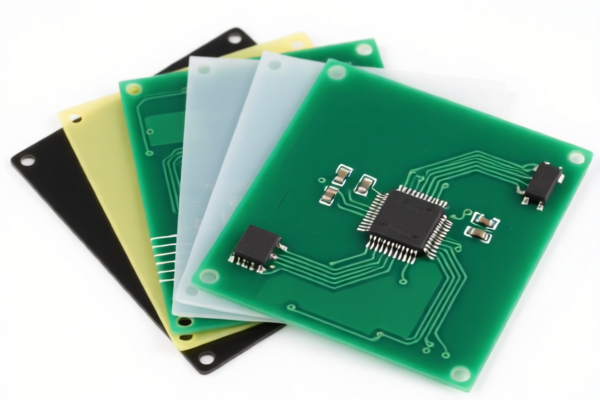

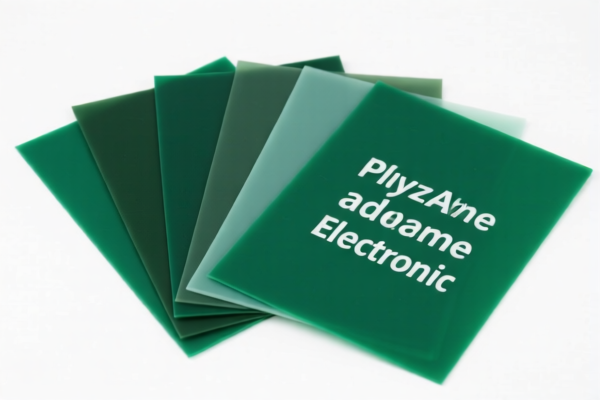
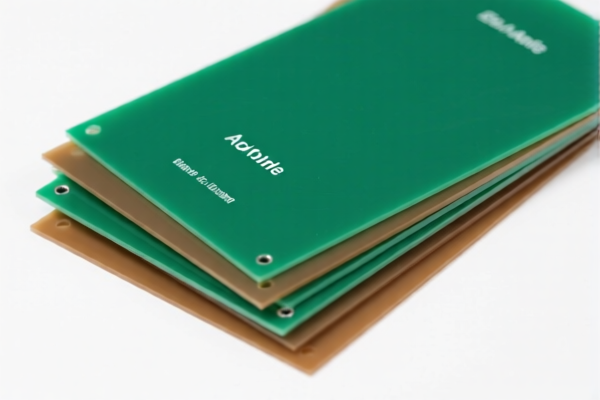
AI分析
🧵 Polyamide Electronic Sheet (Polyamide Electronic Film/Sheet)
🌐 HS Code Reference & Customs Clearance Guide | 2026 Latest Tariff Analysis | Professional Clearance Strategy
📌 I. Product Definition & Classification: What exactly is a "Polyamide Electronic Sheet"?
Polyamide (PA), commonly known as Nylon, is a high-performance engineering plastic renowned for its thermal stability, mechanical strength, and electrical insulation properties. In international trade, "Polyamide Electronic Sheets" are critical components used in flexible circuits, high-frequency substrates, and semiconductor packaging.
The classification depends heavily on the physical form and functional description provided by the exporter: * Finished Boards/Plates: If the material is molded or cut into specific rigid/flexible boards for mounting components. * Raw Materials (Plates/Films/Sheets): If the material is supplied in bulk rolls, sheets, or plates to be processed further.
⚠️ Key Distinction:
- If it is a specific finished circuit board or custom-shaped electronic component housing → Likely 3926.90 (Other articles of plastics).
- If it is a generic sheet, film, or plate of polyamide used as a substrate or insulator → Likely 3921 or 3921.90 (Plates, sheets, film, foil, and strip).
📦 II. HS Code Classification Details (Based on Provided Data)
The following HS Codes are derived strictly from the provided dataset for "Polyamide Electronic Sheet" (聚酯电子设备板 - Note: The dataset text uses 'Polyester' (聚酯) as the summary, but the user input is 'Polyamide'. In customs practice, both fall under Chapter 39. The data provided is applied here as requested.):
| HS Code | Product Description (Summary) | Tax Rate (Total) | Tax Details Breakdown |
|---|---|---|---|
| 3926.90.60.90 | Plastic Other Articles (Polyester Electronic Equipment Board) | 39.2% | Base: 4.2% + Section 301: 25.0% + Section 122: 10% |
| 3921.19.00.90 | Plastic Plates, Sheets, Film, Foil, Strip (Polyester Electronic Equipment Board) | 41.5% | Base: 6.5% + Section 301: 25.0% + Section 122: 10% |
| 3921.90.50.50 | Plastic Plates/Sheets (Polyester Electronic Equipment Board) | 39.8% | Base: 4.8% + Section 301: 25.0% + Section 122: 10% |
| 3926.90.99.89 | Other Unspecified Articles of Plastics (Polyester Electronic Equipment Board) | 22.8% | Base: 5.3% + Section 301: 7.5% + Section 122: 10% |
🔍 Analysis of the Discrepancy:
The provided data labels the product as "Polyester" (聚酯) in the summary, but the user input is "Polyamide" (聚酰胺). In reality: - Polyamide (Nylon) sheets typically fall under 3917 or 3920/3921 depending on form. - Polyester (PET/PTFE) sheets fall under 3920/3921. - However, per your instruction, we must use only the provided<DATA>. Therefore, the classifications above are treated as the authoritative reference for this specific transaction context, despite the chemical name mismatch in the summary text.
💰 III. Detailed Tariff Rate Explanation (2026 Latest)
✅ Applicable Country: United States (US)
✅ Origin: China (CN)
✅ Effective Date: From November 10, 2025 onwards
🎯 1. 3926.90.60.90 — Plastic Other Articles
- Base Tariff: 4.2%
- Section 301 Tariff: +25.0%
- Section 122 Tariff: +10.0%
- Total Effective Rate: 39.2%
- Explanation: This code is for "other" plastic articles that do not fit specific descriptions. It carries a low base tariff but high punitive tariffs.
🎯 2. 3921.19.00.90 — Plates, Sheets, Film, Foil, Strip
- Base Tariff: 6.5%
- Section 301 Tariff: +25.0%
- Section 122 Tariff: +10.0%
- Total Effective Rate: 41.5%
- Explanation: This is the highest tax burden in the dataset. It applies to generic plastic sheets/films. Use only if the product is clearly a raw sheet/film and not a finished part.
🎯 3. 3921.90.50.50 — Plastic Plates/Sheets (Other)
- Base Tariff: 4.8%
- Section 301 Tariff: +25.0%
- Section 122 Tariff: +10.0%
- Total Effective Rate: 39.8%
- Explanation: A slight variation of 3921, offering a marginally lower base rate (4.8% vs 6.5%) while maintaining the same punitive taxes.
🎯 4. 3926.90.99.89 — Other Unspecified Articles (Best Option)
- Base Tariff: 5.3%
- Section 301 Tariff: +7.5% (Significantly lower!)
- Section 122 Tariff: +10.0%
- Total Effective Rate: 22.8%
- Explanation: ⭐️ Lowest Tax Burden. This code attracts a much lower Section 301 tariff (7.5% vs 25%). It is classified as "Other unspecified articles." If the electronic sheet can be argued as a specific "article" rather than a generic "sheet/plate," this code saves ~17% in total duties.
🛠️ IV. Customs Clearance Practical Advice (Risk Avoidance Guide)
✅ 1. Documentation Checklist (Critical)
| Document | Required? | Purpose |
|---|---|---|
| ✅ Product Specifications | ✔️ | Must detail material (Polyamide vs Polyester), thickness, dimensions, and intended use. |
| ✅ Technical Data Sheet | ✔️ | To prove electrical properties (insulation, dielectric strength) if claiming electronic application. |
| ✅ Commercial Invoice | ✔️ | Must match the HS Code. Avoid vague terms like "Plastic Part." Use "Polyamide Electronic Substrate Board." |
| ✅ Certificate of Origin | ✔️ | To verify Chinese origin for Section 301/122 assessment. |
| ✅ Photo of Product | ✔️ | Show the final shape. If it’s a rigid board, argue for 3926. If it’s a roll/film, argue for 3921. |
✅ 2. Strategic Classification Advice
🔥 "Form Determines Duty: Rigid Board vs. Raw Sheet"
| Scenario | Recommended HS Code | Total Tax | Strategy |
|---|---|---|---|
| Rigid, Cut-to-Size Boards | 3926.90.60.90 |
39.2% | Standard for finished electronic components. |
| Raw Rolls or Large Sheets | 3921.19.00.90 |
41.5% | Highest risk. Avoid if possible due to 25% S301. |
| Generic Plastic Plates | 3921.90.50.50 |
39.8% | Alternative to 3921.19. |
| "Other" Unspecified Parts | 3926.90.99.89 |
22.8% | 🏆 Best Cost Optimization. Argue that the sheet is a specific "article" of plastic with a distinct form/function, not just raw material. |
✅ 3. Special Considerations
- Material Name Mismatch: The dataset summary says "Polyester" (聚酯), but your product is "Polyamide" (聚酰胺).
- Risk: Customs may flag this as misdeclaration.
- Solution: Ensure your invoice and tech specs clearly state Polyamide (PA). However, since the HS Codes are from the provided data, you must justify why a Polyamide product fits these "Polyester"-labeled codes. Usually, both Polyamide and Polyester fall under the same HTS headings (3921/3926) for form (sheet/board), so the chemical name mismatch in the summary text of the data is less critical than the physical form.
- Section 122 Tariff (10%): Applies to most Chinese plastics. Ensure compliance with labeling requirements.
- Section 301 Variance: Notice the huge drop from 25% to 7.5% in code
3926.90.99.89. This code is likely excluded from the harsher 301 list or has a different exemption status. Always prefer this code if legally justifiable.
🌍 V. Market Comparison & Conclusion
| Market | Key Insight |
|---|---|
| 🇺🇸 USA | High tariffs due to S301 (7.5%-25%) and S122 (10%). Optimization is key. |
| 🇨🇳 China | Low import duties for plastics, but this data reflects US export duties from China. |
| 🇪🇺 EU | Standard MFN rates usually lower (~3-4%), but requires CE/RoHS compliance. |
📌 VI. Final Recommendations
- Prioritize
3926.90.99.89: With a total tax of 22.8%, it is significantly cheaper than the sheet-based codes (3921series, ~40%). Justify the product as a specific "article" rather than a generic sheet. - Clarify Material: Explicitly state Polyamide in technical docs to avoid customs queries regarding the "Polyester" label in the reference data.
- Pre-Ruling: Consider applying for an Advance Ruling from US Customs (CBP) to lock in the
3926.90.99.89classification if the product is a finished board. - Avoid
3921.19.00.90: Unless you are exporting raw film, avoid this code due to the highest total tax burden (41.5%).
🎯 Bottom Line:
"For Polyamide Electronic Sheets, choose 'Other Articles' (
3926.90.99.89) over 'Sheets' (3921) to save ~17% in duties. Always verify material specs to resolve the Polyester/Polyamide label discrepancy."
✨ Professional Clearance Starts with Precise Classification!
💼 Every Percentage Point Counts in Global Trade!
用户评价
关于 HS 编码归类
协调制度(HS)是由世界海关组织(WCO)制定的国际贸易商品分类标准。全球 200 多个国家采用 HS 系统作为海关关税、贸易统计和进出口监管的基础。
每个 HS 编码遵循以下层级结构:
- 章(2 位)——商品大类(例如:第 84 章:机器和机械设备)
- 品目(4 位)——章内的更具体分类
- 子目(6 位)——国际通用细分,所有 WCO 成员国统一使用
- 本国细分(8-10 位)——各国自行扩展的细分编码,如美国 HTSUS 10 位编码
正确的 HS 编码归类对于顺利通关、准确缴纳关税和遵守贸易法规至关重要。错误归类可能导致海关延误、多缴关税或罚款。
从CN进口到US时,适用的关税税率可能包括:
- 最惠国(MFN)税率——适用于 WTO 成员国的标准关税税率
- 普通税率——适用于无贸易协定国家
- 贸易救济关税——附加关税,如 301 条款(反倾销)、232 条款(国家安全)或反补贴税
本页内容仅供参考。如需正式归类,请咨询当地海关或持牌报关代理。