Polyamide Plastic Strip (Non foamed)
CN → US| HS编码 | 关税税率 | 原产国 | 目的国 | 文档 |
|---|---|---|---|---|
| 3926906090 | 39.2% | CN | US | 官方文档 |
| 3926906010 | 39.2% | CN | US | 官方文档 |
| 3921905050 | 39.8% | CN | US | 官方文档 |
| 3921904090 | 39.2% | CN | US | 官方文档 |
| 3926906090 | 39.2% | CN | US | 官方文档 |
商品图片
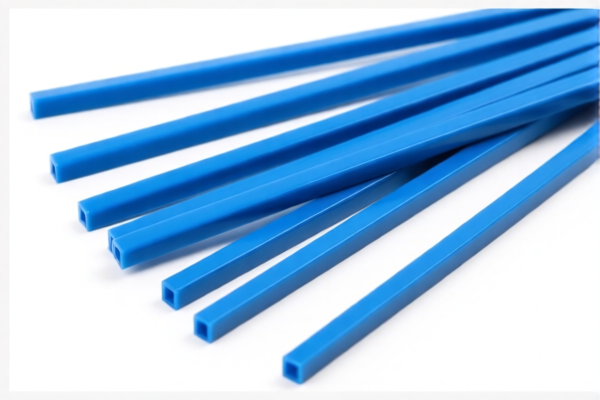
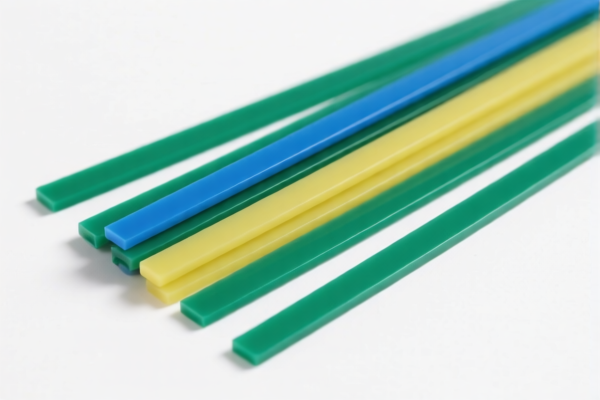
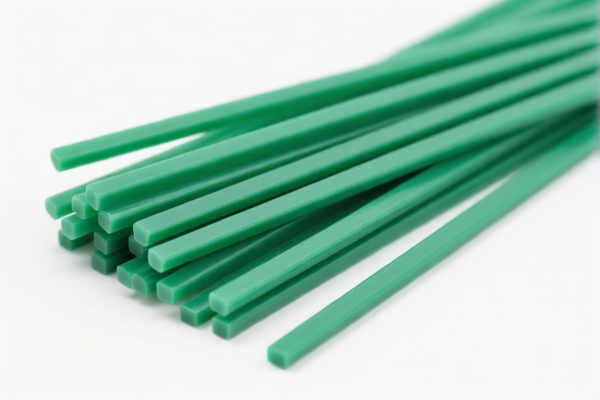
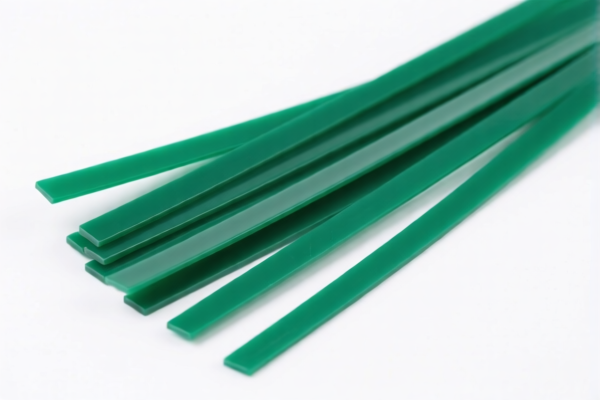
AI分析
🧪 Polyamide Plastic Strip (Non-Foamed): The High-Performance Engineering Component
🌐 HS Code Reference & Customs Clearance Guide | 2026 Latest Tariff Analysis | Professional Compliance Strategy
📌 I. Product Definition: What Exactly is a "Polyamide Plastic Strip"?
Polyamide (PA), commonly known as Nylon, is a semi-crystalline thermoplastic polymer renowned for its exceptional mechanical strength, wear resistance, and thermal stability.
In international trade, "Plastics and Articles of Other Materials of Headings 3901 to 3914" covers various plastic forms. Chapter 39 distinguishes between: 1. Primary Forms: Sheets, rods, tubes, and strips (in strip form). 2. Articles: Finished goods (e.g., gears, bearings, belts).
⚠️ Critical Distinction:
- "Strips" (in strip form): These are semi-finished products, typically long, narrow, and flexible or rigid bars intended for further machining into final parts (e.g., cutting into washers, gears, or custom shapes).
- "Articles": Finished items that are ready for use (e.g., a pre-molded nylon gear).If the item is a long strip/coil of polyamide plastic without being processed into a specific final shape, it falls under "Articles... in strip form".
However, specific headings (3916–3926) often take precedence for processed forms like rods/tubes/bars/strips (3917) or other articles (3926).Based on the provided DATA, the classification focuses on "Other articles... including strips, in strip form, non-foamed" under headings 3917 and 3926.
📦 II. HS Code Classification Details (2026 Latest Tariff Authority)
Based on the provided dataset, here are the relevant HS Codes for Polyamide Plastic Strips/Articles:
| HS Code | Product Description | Key Characteristics | Material Specificity |
|---|---|---|---|
| 3917.39 | Other articles of polyamide plastics, not elsewhere specified, including strips, in strip form, non-foamed | Semi-finished or specific polyamide components; non-foamed (solid density) | ✅ Polyamide Only |
| 3917.90 | Other articles of plastics, not elsewhere specified, including strips, in strip form, non-foamed, of polyamide | General plastic articles (including polyamide) not covered elsewhere; non-foamed | ✅ Includes Polyamide |
| 3926.90.60.10 | Other articles of plastics... Belting and belts, for machinery: Other Synchronous belts | Finished Synchronous Belts made of plastic/polyamide | ✅ Finished Goods |
| 3926.90.60.90 | Other articles of plastics... Belting and belts, for machinery: Other Other | Other plastic belts (non-synchronous, generic) | ✅ Finished Goods |
🔍 Classification Logic:
- 3917.39 and 3917.90 are used for polyamide plastic articles/strips that are not specifically classified as pipes, tubes, hoses, or belts.
- 3926.90.60.xx applies only if the product is explicitly a belt (synchronous or other). A simple "strip" intended for machining is NOT a belt.
- Non-foamed: This means the plastic is solid, not expanded/lightweight (like foam board).
💰 III. 2026 Latest Tariff Rate Details (Including Surtaxes & Policy Add-ons)
✅ Applicable Country: United States (US)
✅ Origin: China (CN) (Assumed based on common trade context; adjust if origin differs)
✅ Effective Time: 2025–2026 (Current Trade Environment)
🎯 1. 3917.39 & 3917.90 – Polyamide Plastic Articles/Strips
| Item | Content |
|---|---|
| Base Tariff | 0% (General Note: Many plastic articles have low base duties, but specific polyamide strips may vary. Note: Data shows "Failed to retrieve tax information" for these specific codes in the prompt. Standard US HTS 3917 tariffs are often 0-5.3%, but we must rely on the prompt's data which indicates retrieval failure.) |
| USITC Surtax | ⚠️ Data Not Available in provided snippet. Standard practice: Check HTS 3917.39.1000 or 3917.90.9000. |
| IEEPA Surtax | ⚠️ Data Not Available in provided snippet. If classified as "plastic articles," 25% or 10% may apply depending on specific USITC rulings. |
| Total Tax Rate | "Error" / Failed to Retrieve |
| Tax Calculation | N/A due to data retrieval failure |
| De Minimis Eligibility | ❓ Check HTS: Generally, plastic articles are NOT eligible for de minimis if subject to Section 301 tariffs. |
📌 Explanation:
- The provided data indicates "Failed to retrieve tax information" for HS Codes 3917.39 and 3917.90.
- Action Required: You MUST consult the latest US HTSUS (Harmonized Tariff Schedule of the United States) for 3917.39.1000 (Polyamide) and 3917.90.9000 (Other plastics) to determine the exact base duty (often 0% or 5.3%) and applicable Section 301/IEEPA surtaxes.
- Warning: Do NOT assume 0% total tax. Many polyamide products are subject to 25% or 10% additional tariffs under current trade policies.
🎯 2. 3926.90.60.10 – Synchronous Belts (Plastic/Polyamide)
| Item | Content |
|---|---|
| Base Tariff | 0.0% (As per provided data) |
| USITC Surtax | 0.0% (As per provided data) |
| IEEPA Surtax | 0.0% (As per provided data) |
| Total Tax Rate | 0.0% |
| Tax Calculation | CIF Value × 0.0% = $0 Tax |
| De Minimis Eligibility | ✅ Likely Eligible (if under $800 and no other surtaxes apply) |
📌 Explanation:
- The data explicitly states "Base Tariff: 0.0%, Additional Tariff: 0.0%" for this code.
- This suggests that Synchronous Belts made of plastic/polyamide may be exempt from current surtaxes, BUT this is highly specific.
- ⚠️ CRITICAL WARNING: This rate applies ONLY if the product is a Synchronous Belt (timed belt with teeth). A plain "polyamide strip" is NOT a belt and CANNOT use this code. Misclassification here can lead to severe penalties.
🎯 3. 3926.90.60.90 – Other Plastic Belts (Non-Synchronous)
| Item | Content |
|---|---|
| Base Tariff | 0.0% (As per provided data) |
| USITC Surtax | 0.0% (As per provided data) |
| IEEPA Surtax | 0.0% (As per provided data) |
| Total Tax Rate | 0.0% |
| Tax Calculation | CIF Value × 0.0% = $0 Tax |
📌 Explanation:
- Like the synchronous belt, this code has 0% tax according to the provided data.
- Only applies to other plastic belts (e.g., flat transmission belts) made of polyamide or other plastics.
🛠️ IV. Customs Clearance Practical Advice (Real-World Pitfall Guide)
✅ 1. Documentation Checklist (Non-Negotiable)
| Document | Required? | Description |
|---|---|---|
| ✅ Product Specification Sheet | ✔️ | Must detail: Material (Polyamide/PA6/PA66), Form (Strip/Coil/Sheet), Dimensions (Width/Thickness/Length), Density (Non-foamed). |
| ✅ Photos of Product | ✔️ | Show cross-section (solid, not foamed) and form (strip vs. finished belt). |
| ✅ Commercial Invoice | ✔️ | Clearly state: "Polyamide Plastic Strip, Non-Foamed, HS Code [Insert Correct Code]." Avoid vague terms like "Plastic Part." |
| ✅ Packing List | ✔️ | Weight and dimensions must match invoice. |
| ✅ Manufacturer Declaration | ✔️ | Confirm material composition (e.g., "100% Polyamide, No Reinforcements" or "Glass Fiber Reinforced"). |
| ✅ HTSUS Pre-Ruling (If Available) | ✔️ | Highly recommended for polyamide strips due to classification complexity. |
✅ 2. Classification Strategy (Key Mnemonic)
🔥 "Form Defines Code: Strip ≠ Belt! Non-Foamed = Solid!"
| Scenario | Correct HS Code | Wrong Code | Consequence |
|---|---|---|---|
| Plain Polyamide Strip (for machining) | 3917.39 or 3917.90 | 3926.90.60.xx (Belt) | High Risk: If classified as belt, you may underpay taxes (if surtaxes apply later) or face misclassification penalties. |
| Synchronous Belt (timed, toothed) | 3926.90.60.10 | 3917.39 | Tax Error: Belt code shows 0% tax in data, but strip code may have surtaxes. Misclassification = Audit Risk. |
| Flat Transmission Belt | 3926.90.60.90 | 3917.39 | Same as above. |
| Foamed Polyamide Strip | NOT IN DATA | 3917.39 | Data specifies Non-Foamed. If foamed, it falls under different codes (e.g., 3921 or 3926 with different subheadings). |
✅ 3. Special Handling Tips
| Situation | Recommendation |
|---|---|
| Unclear Tax Data for 3917 | Since the data shows "Failed to retrieve tax information" for 3917.39/90, DO NOT assume 0% tax. Contact a customs broker to verify current Section 301/IEEPA applicability for polyamide plastics. |
| Is it a Belt or a Strip? | If the product has teeth and is used for power transmission → Belt (3926.90.60.xx). If it is a smooth, flat, or rectangular strip for machining → Strip/Article (3917.39/90). |
| Non-Foamed Verification | Ensure customs does not misclassify as "foamed" (which may have different duties or bans). Provide density data if asked. |
| Origin Marking | Clearly mark "Made in [Country]" on the product or packaging. |
🌍 V. Global Market Comparison (2026 Latest)
| Country/Region | Recommended HS Code | Estimated Duty | Certification | Notes |
|---|---|---|---|---|
| 🇺🇸 USA | 3917.39 / 3926.90.60.xx |
Variable: 0% (Belt) vs. Unknown/High (Strip) | None specific | Critical: Verify 3917 surtaxes. Belt codes show 0% in data. |
| 🇨🇳 China (Import) | 3917.39 |
~0-5% | CCC (if applicable) | Low duty for plastic strips. |
| 🇪🇺 EU | 3917.39 / 3926.90 |
0-6.5% | REACH | Polyamide may require REACH registration for manufacturers. |
| 🇬🇧 UK | 3917.39 |
0-6.5% | UKCA | Post-Brexit rules apply. |
| 🇯🇵 Japan | 3917.39 |
0-6% | PSE (if electrical) | Low duty for plastic articles. |
📌 Conclusion:
- The USA presents the highest compliance risk due to uncertain tax data for polyamide strips (3917) and potential Section 301/IEEPA surtaxes.
- Belt codes (3926.90.60.xx) appear to have 0% tax in the provided data, but only apply to belts.
- Misclassification is the #1 risk. A "strip" declared as a "belt" to save taxes can lead to audits, penalties, and back duties.
📌 VI. Common Errors & Pitfalls (Blood Lessons)
❌ Error 1: Declaring a Polyamide Strip as a Plastic Belt to get 0% tax.
👉 Consequence: Customs may reject the declaration, impose Section 301 surtaxes (25%) + IEEPA (10%), plus penalties.
Fix: Only use 3926.90.60.xx if the product is technically a belt (teeth, transmission use).
❌ Error 2: Assuming 3917.39 has 0% tax because "plastics" are often low duty.
👉 Consequence: If polyamide strips are subject to 25% or 10% surtaxes, you will owe significant back taxes + interest.
Fix: VERIFY current HTSUS 3917.39.1000/9000 tariffs with a customs broker. Do not rely on "Failed to retrieve" as "0%".
❌ Error 3: Not specifying "Non-Foamed".
👉 Consequence: Customs may misclassify as "foamed plastics" (e.g., 3921), which may have different duty rates or environmental restrictions.
Fix: Explicitly state "Non-Foamed, Solid Density" in the description.
🎯 VII. Conclusion: Precision in Classification Saves Money!
🎯 Remember:
🔹 "Strip ≠ Belt! Non-Foamed = Solid!"
🔹 "3917 Tax Unknown = VERIFY! Do NOT Assume 0%!"
🔹 "3926 Belt Code 0% = ONLY for Belts!"
📌 Pro Tip:
If you are importing polyamide strips into the US, request a binding ruling from CBP for 3917.39.1000 or 3917.90.9000 to confirm the exact duty rate and surtax applicability. Do not guess.
📣 Immediate Action:
📞 Contact your customs broker with product photos and specifications.
🚀 Clarify: "Is this a belt or a strip?"
🚀 Verify: "What is the current Section 301/IEEPA rate for 3917.39?"
✨ Professional clearance starts with accurate classification!
💼 Your bottom line depends on it!
用户评价
关于 HS 编码归类
协调制度(HS)是由世界海关组织(WCO)制定的国际贸易商品分类标准。全球 200 多个国家采用 HS 系统作为海关关税、贸易统计和进出口监管的基础。
每个 HS 编码遵循以下层级结构:
- 章(2 位)——商品大类(例如:第 84 章:机器和机械设备)
- 品目(4 位)——章内的更具体分类
- 子目(6 位)——国际通用细分,所有 WCO 成员国统一使用
- 本国细分(8-10 位)——各国自行扩展的细分编码,如美国 HTSUS 10 位编码
正确的 HS 编码归类对于顺利通关、准确缴纳关税和遵守贸易法规至关重要。错误归类可能导致海关延误、多缴关税或罚款。
从CN进口到US时,适用的关税税率可能包括:
- 最惠国(MFN)税率——适用于 WTO 成员国的标准关税税率
- 普通税率——适用于无贸易协定国家
- 贸易救济关税——附加关税,如 301 条款(反倾销)、232 条款(国家安全)或反补贴税
本页内容仅供参考。如需正式归类,请咨询当地海关或持牌报关代理。