Polyaromatic Resin
CN → US商品图片
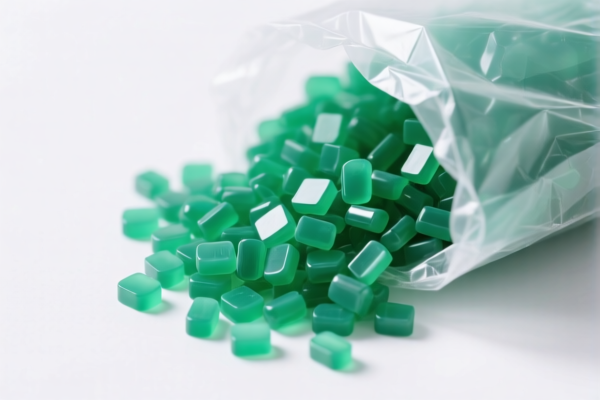
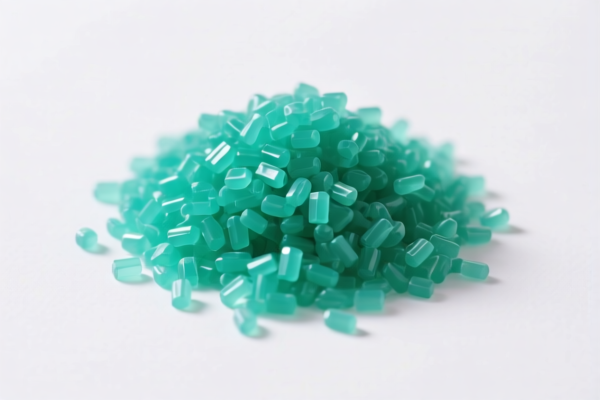

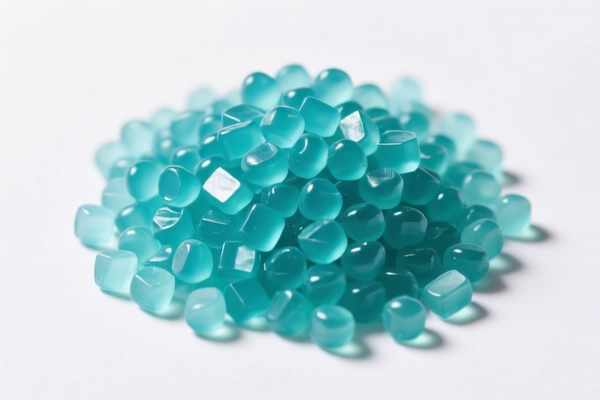
AI分析
🧪 Polyaromatic Resin (PAR)
🌐 HS Code Reference & Customs Clearance Guide | 2026 Latest Tariff Analysis | Professional Level Clearance Strategy
📌 I. Product Definition & Classification: Do You Really Understand "Polyaromatic Resin"?
Polyaromatic Resins (often referred to as Polyamide-Imide, PI, or modified phenolic/resin blends depending on specific chemistry) are high-performance synthetic materials known for exceptional thermal stability, chemical resistance, and mechanical strength. In international trade, they are primarily classified based on their physical form (powder, liquid, or solid blocks) and whether they are in a primary state or prepared for specific uses.
Primary Forms: * Powders/Granules: Often used as additives for high-performance coatings, lubricants, or composite materials. * Liquids/Emulsions: Often used in specialized paints, varnishes, or adhesive formulations. * Solids (Blocks/Sheets): Used for molding, machining into aerospace components, or electrical insulation.
⚠️ Key Distinction Point:
- If the resin is not polymerized or is in a primary form (powder/liquid/granules) → Generally falls under Chapter 39 (Plastics and Articles Thereof), specifically 3906 or 3913.
- If the resin is prepared for a specific use (e.g., pre-preg, specific adhesive formulation) → May fall under Chapter 35 (Protein substances) or 3906/3913 depending on base material.
- If it is a modified product (mixed with fillers/curing agents) → May fall under 3913.90 (Modified natural resins/polymers) or 3906.90.
📦 II. HS Code Classification Details (2026 Latest Tariff Authority Comparison)
| HS Code | Product Description | Application Scenario | Primary State |
|---|---|---|---|
3906.10.80.00 |
Acrylic polymers in primary forms | Not PAR (Exclusion for clarity) | ✅ N/A |
3906.90.00.00 |
Other acrylic polymers in primary forms | Not PAR (Exclusion for clarity) | ✅ N/A |
3913.00.90.50 |
Modified natural resins and modified polyesters, in primary forms; semi-finished products of heading 3913 or 3914 | High Probability for PAR if derived from natural/semi-synthetic bases or modified polyesters. Common for "modified" resin powders. | ✅ Powder/Granules/Liquid |
3906.90.00.00 |
Other polymers in primary forms | If PAR is a synthetic polymer (like PI) not specifically listed elsewhere. Often used for high-performance engineering plastics in powder form. | ✅ Powder/Granules |
3506.91.90.00 |
Prepared glues and other prepared adhesives, whether or not containing dryers, other than those of heading 3501 to 3505 | If the resin is specifically formulated as an adhesive. | ✅ Liquid/Paste |
3208.90.90.90 |
Paints and varnishes (including enamels and lacquers) based on polymers... | If the resin is pre-mixed with solvents/pigments to form a coating. | ✅ Liquid (Coating) |
🔍 Important Reminder:
- Pure Polyamide-Imide (PI) Powder: Often classified under 3906.90.00.00 ("Other polymers in primary forms") because PI is a synthetic polymer not explicitly listed in 3906.10 (Acrylics) or 3906.90 sub-headings for specific polymers like vinyl chloride. However, customs may scrutinize if it fits 3913.00.90.50 if it is considered a "modified" resin.
- Resin for Adhesives: If sold as a "prepended adhesive," use 3506.
- Resin for Coatings: If sold as a ready-to-use paint base, use 3208.
- Consistency is Key: The physical state (powder vs. liquid) and chemical composition must match the HS code definition.
💰 III. 2026 Latest Tariff Rate Details (Including Surcharges & Policy Additions)
✅ Applicable Country: United States (US)
✅ Country of Origin: China (CN)
✅ Effective Date: November 10, 2025 (and subsequent imports)
🎯 1. 3906.90.00.00 —— Other Polymers in Primary Forms (e.g., PI Powder)
| Item | Content |
|---|---|
| Base Tariff | 5.3% (ad valorem) |
| USITC Surcharge | +25% (From USITC Footnote 9903.88.01 / Section 301) |
| IEEPA Surcharge | +10% (Targeting China/HK products, from Nov 10, 2025) |
| Total Tariff | 40.3% |
| Tax Calculation | CIF Value × 40.3% |
| De Minimis Eligible? | ❌ No (deny_de_minimis) |
| Legal Basis Path | IEEPA:9903.01.25 → IEEPA:9903.01.24 → USITC:3906.90.00.00 → FOOTNOTE:9903.88.01 |
📌 Explanation:
- The 25% USITC surcharge applies to most plastics/polymers under Section 301.
- The 10% IEEPA surcharge is the new additional tariff for Chinese goods effective late 2025.
- Total of 40.3% is significant for high-value resins. Must be factored into costing.
🎯 2. 3913.00.90.50 —— Modified Natural Resins / Modified Polyesters
| Item | Content |
|---|---|
| Base Tariff | 5.7% (ad valorem) |
| USITC Surcharge | +25% (From USITC Footnote 9903.88.01) |
| IEEPA Surcharge | +10% (Targeting China/HK products) |
| Total Tariff | 40.7% |
| Tax Calculation | CIF Value × 40.7% |
| De Minimis Eligible? | ❌ No (deny_de_minimis) |
| Legal Basis Path | IEEPA:9903.01.25 → IEEPA:9903.01.24 → USITC:3913.00.90.50 → FOOTNOTE:9903.88.01 |
📌 Note:
- If your Polyaromatic Resin is classified as a "modified resin" (e.g., chemically altered natural polymer or polyester blend), it falls here.
- The rate is nearly identical to pure polymers.
- Critical: Ensure the MSDS and Technical Data Sheet clearly indicate "Modified" status to support this classification if applicable.
🎯 3. 3506.91.90.00 —— Prepared Adhesives (If Used as Glue)
| Item | Content |
|---|---|
| Base Tariff | 5.3% (ad valorem) |
| USITC Surcharge | +25% |
| IEEPA Surcharge | +10% |
| Total Tariff | 40.3% |
| Tax Calculation | CIF Value × 40.3% |
| De Minimis Eligible? | ❌ No (deny_de_minimis) |
| Legal Basis Path | IEEPA:9903.01.25 → IEEPA:9903.01.24 → USITC:3506.91.90.00 → FOOTNOTE:9903.88.01 |
📌 Note:
- Only applicable if the resin is formulated as an adhesive.
- Do not misclassify pure resin as adhesive to avoid penalties.
🛠️ IV. Customs Clearance Practical Advice (Battle-Tested Pitfall Guide)
✅ 1. Documentation Checklist (All Required)
| Document | Mandatory | Description |
|---|---|---|
| ✅ MSDS (SDS) | ✔️ | Critical for chemical products. Must list composition, hazard class, and proper shipping name. |
| ✅ Technical Data Sheet (TDS) | ✔️ | Shows physical form (powder/liquid), molecular weight, Tg, and intended use. |
| ✅ Product Photographs | ✔️ | Clear images of packaging, labeling, and content (powder vs. granules). |
| ✅ Commercial Invoice | ✔️ | Must clearly state "Polyaromatic Resin" or "Polyamide-Imide Powder," NOT generic "Plastic." |
| ✅ Certificate of Origin (CO) | ✔️ | Required for tariff determination. If from Vietnam/Malaysia, may qualify for exemptions. |
| ✅ Packing List | ✔️ | Net/Gross weight, number of packages. |
| ✅ Usage Declaration | ✔️ | "For use in high-temperature coating/adhesive application." |
✅ 2. Declaration Tips (Key Mantras)
🔥 "State Matters, Chemistry Matters, Intent Matters!"
| Scenario | Correct Declaration | Wrong Practice |
|---|---|---|
| Pure PI Powder | 3906.90.00.00 - "Polyamide-Imide Powder, Primary Form" |
Vague term "Resin" → Potential 18-month delay |
| Resin mixed with solvents (Coating) | 3208.90.90.90 - "Paint Base, Not Ready-to-Use" |
Misdeclare as 3906 → Evaporative solvent issues |
| Resin formulated as Glue | 3506.91.90.00 - "Prepared Adhesive" |
Misdeclare as 3906 → Wrong chapter |
| Mixed with Fillers (Composite) | 3906.90.00.00 (if < critical %) or 3913.00.90.50 |
Split shipment → Higher risk |
✅ 3. Special Cases Handling
| Scenario | Handling Advice |
|---|---|
| OEM Custom Resin | Provide customer contract + formulation spec. Avoid "Generic Resin" description. |
| Resin with Hazardous Components | Ensure UN Number and Proper Shipping Name are on the Bill of Lading. DOT Regulations apply. |
| Small Samples (< 1kg) | Still subject to tariffs if value > $800? No, De Minimis is $800, but Section 301/IEEPA EXCLUDES De Minimis. So even small packages are taxed! |
| Resin for Aerospace | If "Dual-Use," ensure ITAR/EAR compliance. May require additional licenses. |
🌍 V. Global Customs Clearance Comparison (2026 Latest)
| Country/Region | Recommended HS Code | Tariff (China Origin) | Certification Requirements | Notes |
|---|---|---|---|---|
| 🇺🇸 USA | 3906.90.00.00 or 3913.00.90.50 |
40.3% - 40.7% | None for entry, but EPA/FDA may apply if food-contact | High Tariff Wall |
| 🇨🇳 China | 3906.90.00.00 |
5-6% | None for entry | Low tariff |
| 🇪🇺 EU | 3906.90.00 |
0% (if MFN) | REACH Registration Mandatory | REACH is costly/time-consuming |
| 🇦🇺 Australia | 3906.90.00 |
5% | AICIS (Australian Industrial Chemicals Introduction Scheme) | Chemical reporting required |
| 🇯🇵 Japan | 3906.90.00 |
5% | CSCL (Chemical Substances Control Law) | Notification required |
📌 Conclusion:
- USA: Highest tariff burden (40%+).
- EU/Australia/Japan: Lower tariffs but strict chemical regulations (REACH, AICIS, CSCL) which can be more costly than tariffs in terms of compliance time.
- China Origin Advantage: None in the US due to Section 301/IEEPA. Consider Vietnam/Malaysia origin for tariff avoidance.
📌 VI. Common Mistakes & Pitfall Guide (Lessons Learned)
❌ Mistake 1: Declaring "Polyaromatic Resin" as "Plastic Pellets" under 3916.00
👉 Consequence: Incorrect classification. 3916 is for semi-finished products (extruded shapes). Primary forms go to 3906. Risk of penalty + retroactive tariff.
❌ Mistake 2: Ignoring Section 301/IEEPA surcharges on "Resin"
👉 Consequence: Assuming 5% base rate. Actual cost is 40%. Profit margin destroyed.
❌ Mistake 3: Mixing Powder and Liquid in one shipment without clear separation
👉 Consequence: Customs may detain the entire shipment for chemical analysis. Delay of 2-4 weeks.
❌ Mistake 4: Using "Resin" without specifying "Polyamide-Imide" or "Modified Polyester"
👉 Consequence: Customs issues a "Notice of Redetermination." Delays clearance.
✅ Correct Practice:
"Polyamide-Imide (PAI) Powder, Primary Form, For High-Temperature Coating, UNSPSC 41111501, MSDS Available, Made in China"
🎯 VII. Conclusion: Professional Declaration Saves Money!
🎯 Remember the Mantra:
🔹 "Primary Form, 3906; Modified, 3913; Adhesive, 3506; Paint, 3208!"
🔹 "40% Tax in US, Don't Be Lazy, Know Your Chemistry!"
📌 Pro Tip:
If your Polyaromatic Resin is originated from Vietnam, Malaysia, or Thailand, you may qualify for IEEPA Exemption (tariff drops to 5-10%).
Recommendation: Conduct a Supply Chain Audit to verify Country of Origin. Consider Pre-Ruling (Advance Ruling) from US Customs to confirm HS Code.
📣 Immediate Action:
📞 Consult a licensed Customs Broker + Provide MSDS + Apply for HS Code Advance Ruling
🚀 Ensure your Polyaromatic Resin clears customs smoothly, legally, and cost-effectively!
✨ Professional Clearance Starts with Accurate Classification!
💼 Your every dollar of cost deserves precise calculation!
用户评价
关于 HS 编码归类
协调制度(HS)是由世界海关组织(WCO)制定的国际贸易商品分类标准。全球 200 多个国家采用 HS 系统作为海关关税、贸易统计和进出口监管的基础。
每个 HS 编码遵循以下层级结构:
- 章(2 位)——商品大类(例如:第 84 章:机器和机械设备)
- 品目(4 位)——章内的更具体分类
- 子目(6 位)——国际通用细分,所有 WCO 成员国统一使用
- 本国细分(8-10 位)——各国自行扩展的细分编码,如美国 HTSUS 10 位编码
正确的 HS 编码归类对于顺利通关、准确缴纳关税和遵守贸易法规至关重要。错误归类可能导致海关延误、多缴关税或罚款。
从CN进口到US时,适用的关税税率可能包括:
- 最惠国(MFN)税率——适用于 WTO 成员国的标准关税税率
- 普通税率——适用于无贸易协定国家
- 贸易救济关税——附加关税,如 301 条款(反倾销)、232 条款(国家安全)或反补贴税
本页内容仅供参考。如需正式归类,请咨询当地海关或持牌报关代理。