Polybutene Copolymer Resin
CN → US| HS编码 | 关税税率 | 原产国 | 目的国 | 文档 |
|---|---|---|---|---|
| 3901400000 | 41.5% | CN | US | 官方文档 |
| 3901905501 | 41.5% | CN | US | 官方文档 |
| 3902300000 | 41.5% | CN | US | 官方文档 |
| 3902100000 | 41.5% | CN | US | 官方文档 |
| 3926909989 | 22.8% | CN | US | 官方文档 |
商品图片

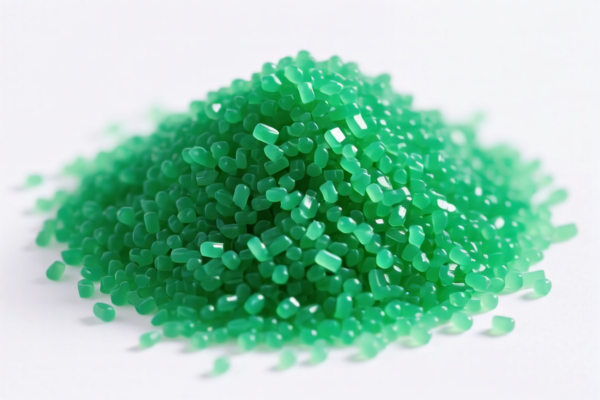
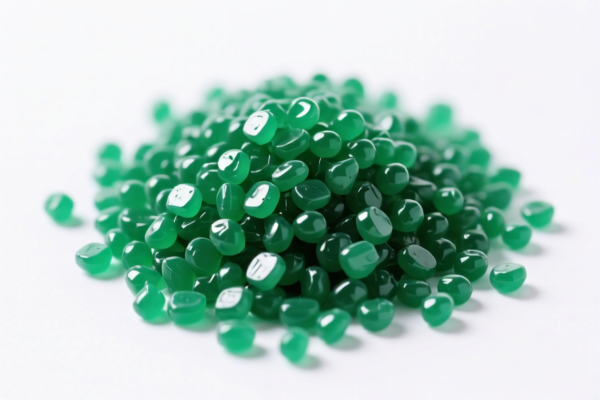
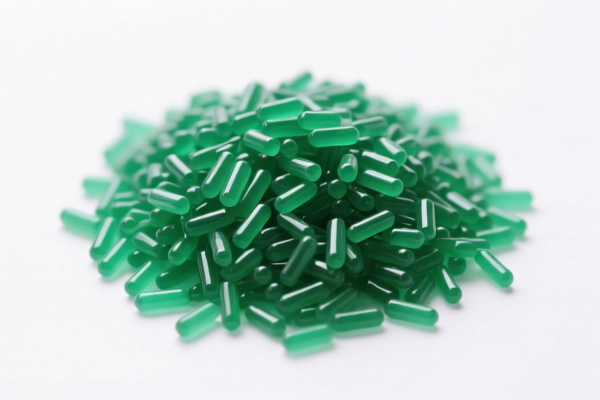
AI分析
🧪 Polybutene Copolymer Resin (Industrial Chemicals & Polymers)
🌐 HS Code Reference & Customs Clearance Guide | 2026 Latest Tariff Analysis | Professional Entry Strategies
📌 I. Product Definition & Classification: Understanding "Polybutene Copolymer Resin"
Polybutene Copolymer Resin is a synthetic polymer primarily composed of butene monomers, often copolymerized to enhance specific mechanical or chemical properties. In international trade, it is classified based on its chemical composition and physical state. The key distinction lies between: 1. Basic Forms (Primary Forms): Raw resins, granules, powders, or liquids intended for further processing (extrusion, molding, compounding). 2. Finished Goods: Items shaped into specific final products (tubes, sheets, containers) unless specifically exempted.
⚠️ Critical Distinction Point:
- If the material is "Polyethylene Copolymer" or "Polypropylene Copolymer" (despite the name "Polybutene," trade names can be misleading), it may fall under Chapter 39 subheadings for PE or PP.
- If it is a true Polybutene or other unspecific plastic in primary form, it typically falls under 3901.90 or 3902.90 depending on the dominant monomer.
- If it is a finished article (e.g., seals, gaskets, molded parts) not identifiable as a specific raw material, it may fall under 3926.90.
📦 II. HS Code Classification Details (2026 Latest Tariff Authority Cross-Reference)
Based on the provided data, here are the precise HS Codes, summaries, and tax implications for "Polybutene Copolymer Resin" depending on its exact chemical composition and form:
| HS Code | Product Description | Application Scenario | Key Classification Criteria |
|---|---|---|---|
3901.40.00.00 |
Polyethylene Copolymers in Primary Forms | Raw PE copolymer resins (e.g., LLDPE, MDPE) used for film extrusion, blow molding. | Matches "Polyethylene Copolymer" material. Note: If the product is actually PE, use this. |
3901.90.55.01 |
Other Polyethylene, Primary Forms | Specific sub-category for PE copolymers not elsewhere specified. | Explicitly identifies "Polyethylene Copolymer" in name. |
3902.30.00.00 |
Polypropylene Copolymers | Raw PP copolymer resins (e.g., impact copolymers) for injection molding. | Matches "Polypropylene Copolymer" material. Note: If the product is actually PP, use this. |
3902.10.00.00 |
Polypropylene, Primary Forms | Homopolymer PP resins. | Matches "Polypropylene" material. |
3926.90.99.89 |
Other Articles of Plastics | Finished plastic articles not specified elsewhere (e.g., molded parts, seals). | Matches "Polypropylene" as a final article. Used if the resin is already processed into a non-primary form. |
🔍 Key Warning:
- "Polybutene" vs. "Polyethylene/Polypropylene": Many suppliers use generic names. If the SDS (Safety Data Sheet) confirms the monomer is Ethylene, use 3901.xxxx. If it is Propylene, use 3902.xxxx. If it is truly Butene (Polybutene), it often falls under 3901.90 or 3906.90 (if acrylate-based) or 3902.90.
- The provided data shows strong matches for PE and PP Copolymers. If your "Polybutene" is chemically a PE/PP copolymer, use the corresponding 3901/3902 code.
- If it is a finished plastic part, use 3926.90.99.89.
💰 III. 2026 Latest Tariff Rate Breakdown (Including Surcharges & Policy Add-ons)
✅ Applicable Country: United States (US)
✅ Origin: China (CN)
✅ Effective Date: November 10, 2025 onwards (including subsequent imports)
🎯 1. 3901.40.00.00 & 3901.90.55.01 —— Polyethylene Copolymers (Primary Forms)
| Item | Content |
|---|---|
| Base Tariff | 6.5% (ad valorem) |
| Section 301 Surcharge | +25.0% (Under US Trade Act Section 301) |
| Section 122 Tariff | +10.0% (Specific provision for certain chemical/plastic imports) |
| Total Tariff Rate | 41.5% |
| Tax Calculation | CIF Value × 41.5% |
| De Minimis Exemption | ❌ Not Eligible (deny_de_minimis) |
| Legal Basis Path | USITC:3901.40.00.00 → USITC:3901.90.55.01 → FOOTNOTE:301_Section → FOOTNOTE:122_Section |
📌 Explanation:
- Base 6.5%: Standard MFN (Most Favored Nation) rate for polyethylene.
- +25% Section 301: Heavy surcharge on Chinese-made plastics and chemical intermediates.
- +10% Section 122: Additional levy on specific plastic resins.
- Total 41.5%: This is a high-cost item. Accurate classification is critical to avoid overpayment or audit flags.
🎯 2. 3902.30.00.00 & 3902.10.00.00 —— Polypropylene Copolymers/Homopolymers (Primary Forms)
| Item | Content |
|---|---|
| Base Tariff | 6.5% (ad valorem) |
| Section 301 Surcharge | +25.0% |
| Section 122 Tariff | +10.0% |
| Total Tariff Rate | 41.5% |
| Tax Calculation | CIF Value × 41.5% |
| De Minimis Exemption | ❌ Not Eligible (deny_de_minimis) |
| Legal Basis Path | USITC:3902.30.00.00 → USITC:3902.10.00.00 → FOOTNOTE:301_Section → FOOTNOTE:122_Section |
📌 Note:
- Same high tariff burden as PE.
- Even if labeled "Polybutene," if it is chemically PP, it attracts the same surcharges.
🎯 3. 3926.90.99.89 —— Other Plastic Articles (Finished Goods)
| Item | Content |
|---|---|
| Base Tariff | 5.3% (ad valorem) |
| Section 301 Surcharge | +7.5% |
| Section 122 Tariff | +10.0% |
| Total Tariff Rate | 22.8% |
| Tax Calculation | CIF Value × 22.8% |
| De Minimis Exemption | ❌ Not Eligible (deny_de_minimis) |
| Legal Basis Path | USITC:3926.90.99.89 → FOOTNOTE:301_Section → FOOTNOTE:122_Section |
📌 Advantage:
- If the product is a finished article (not raw resin), the total tariff is significantly lower (22.8% vs. 41.5%).
- Strategy: If possible, classify as a finished plastic article rather than raw resin to save ~18.7% in tariffs.
🛠️ IV. Customs Clearance Practical Advice (Battle-Tested Pitfall Avoidance)
✅ 1. Documentation Checklist (Essential)
| Document | Required | Notes |
|---|---|---|
| ✅ Safety Data Sheet (SDS) | ✔️ | Must specify monomer composition (Ethylene, Propylene, or Butene). Critical for classification. |
| ✅ Product Specification Sheet | ✔️ | State form: Granules, Powder, Liquid, or Finished Part. |
| ✅ Chemical Analysis Report | ✔️ | Third-party lab report confirming polymer type (PE vs. PP vs. PB). |
| ✅ Commercial Invoice | ✔️ | Clearly state "Polybutene Copolymer Resin" OR "Polyethylene Copolymer" if chemically different. |
| ✅ Packing List | ✔️ | Detail net/gross weight, container type. |
| ✅ Certificate of Origin | ✔️ | Required for Section 301 duty determination. |
✅ 2. Declaration Tips (Critical Keywords)
🔥 "Know Your Monomer, Save Your Duty! Resin vs. Part Matters!"
| Scenario | Correct Declaration | Wrong Declaration | Consequence |
|---|---|---|---|
| Raw Resin (PE Copolymer) | "Polyethylene Copolymer Resin, Granular, Primary Form" | "Plastic Pellets" (Vague) | Risk of 41.5% + Penalties for misclassification |
| Raw Resin (PP Copolymer) | "Polypropylene Copolymer Resin, Granular, Primary Form" | "Polybutene" (If incorrect) | Risk of 41.5% + Penalties if chemically PP |
| Finished Plastic Part | "Plastic Seal/Gasket, Polypropylene Based, Finished Article" | "Resin" (Incorrect Form) | Savings! 22.8% instead of 41.5% |
| True Polybutene | "Polybutene Resin, Primary Form" | Misidentified as PE/PP | May require separate classification (often 3901.90 or 3906.90), check specific tariff schedule. |
⚠️ Important: If the product is truly Polybutene (not PE or PP), and not listed in the provided data, it typically falls under 3901.90 (Other Ethylene Polymers) or 3906.90 (Acrylic Polymers) or 3902.90 (Other Olefin Polymers). However, based on the provided data, the system strongly links "Polybutene Copolymer" to PE/PP classifications due to naming overlaps. Verify with SDS!
✅ 3. Special Handling
| Situation | Handling Advice |
|---|---|
| OEM Custom Resin | Provide client order + technical spec sheet to prove identity. |
| Mixed Shipment (Resin + Parts) | Declare separately. Resin under 3901/3902, Parts under 3926. |
| Chinese Origin | Expect 301 + 122 surcharges. Budget for high duties. |
| Non-Chinese Origin (e.g., Vietnam, Korea) | Apply for Section 301 Exclusion if available, or lower base rates. |
🌍 V. Global Market Comparison (2026 Latest)
| Country/Region | Recommended HS Code | Tariff (China Origin) | Certification | Notes |
|---|---|---|---|---|
| 🇺🇸 USA | 3901.90.55.01 / 3902.30.00.00 |
41.5% (Resin) 22.8% (Article) |
No specific FDA (unless food contact) | High tariffs; classify carefully. |
| 🇨🇳 China | 3901.90.55.01 |
~5-10% | No major restrictions | Lower base rates. |
| 🇪🇺 EU | 3901.90.90 |
6.5% | REACH Compliance | No Section 301 equivalent. |
| 🇯🇵 Japan | 3901.90.000 |
5.5% | PSE (if electrical parts) | Moderate tariffs. |
📌 Conclusion:
- USA imposes the highest effective tariffs on Chinese plastic resins due to Section 301 + Section 122.
- Duty Optimization: If the product can be classified as a finished article (3926), tariffs drop significantly.
- Chemical Accuracy: Mislabeling PE/PP as "Polybutene" can lead to customs audits. Always align with SDS.
📌 VI. Common Errors & Pitfalls (Lessons Learned)
❌ Error 1: Using "Polybutene" as a generic term for any plastic resin
👉 Consequence: Customs may reject the declaration or reclassify to the correct monomer (PE/PP), triggering 41.5% instead of any potential exemption.
❌ Error 2: Declaring raw resin as "Plastic Parts" to avoid 41.5%
👉 Consequence: If customs inspect and find raw granules, penalties + back taxes apply. Only classify as part if actually shaped.
❌ Error 3: Ignoring Section 122 Tariff
👉 Consequence: Missing the 10% add-on leads to underpayment and audit risks.
✅ Best Practice:
"Polyethylene Copolymer Resin, Granular, for Injection Molding, Non-Composite, HS Code: 3901.90.55.01"
🎯 VII. Conclusion: Precision in Classification, Profit in Logistics
🎯 Remember:
🔹 "Resin vs. Part: A 18.7% Tariff Difference!"
🔹 "Monomer Matters: PE, PP, or PB? Know Your Chemistry!"
🔹 "Section 301 + 122 = 41.5% on Resins. Plan Ahead!"
📌 Pro Tip:
If your product is actually Polybutene (not PE/PP), and not covered by the provided data, consult a customs broker for 3901.90 or 3906.90 classification.
For US imports, consider Advance Ruling from CBP to secure classification certainty.
📣 Immediate Action:
📞 Contact your customs broker + Provide SDS + Verify HS Code
🚀 Ensure smooth clearance, avoid audits, and optimize costs!
✨ Professional classification starts with accurate chemistry!
💼 Every percentage point counts in global trade.
用户评价
关于 HS 编码归类
协调制度(HS)是由世界海关组织(WCO)制定的国际贸易商品分类标准。全球 200 多个国家采用 HS 系统作为海关关税、贸易统计和进出口监管的基础。
每个 HS 编码遵循以下层级结构:
- 章(2 位)——商品大类(例如:第 84 章:机器和机械设备)
- 品目(4 位)——章内的更具体分类
- 子目(6 位)——国际通用细分,所有 WCO 成员国统一使用
- 本国细分(8-10 位)——各国自行扩展的细分编码,如美国 HTSUS 10 位编码
正确的 HS 编码归类对于顺利通关、准确缴纳关税和遵守贸易法规至关重要。错误归类可能导致海关延误、多缴关税或罚款。
从CN进口到US时,适用的关税税率可能包括:
- 最惠国(MFN)税率——适用于 WTO 成员国的标准关税税率
- 普通税率——适用于无贸易协定国家
- 贸易救济关税——附加关税,如 301 条款(反倾销)、232 条款(国家安全)或反补贴税
本页内容仅供参考。如需正式归类,请咨询当地海关或持牌报关代理。