Polybutene Injection Molding Grade Resin
CN → US| HS编码 | 关税税率 | 原产国 | 目的国 | 文档 |
|---|---|---|---|---|
| 3916100000 | 40.8% | CN | US | 官方文档 |
| 3916903000 | 41.5% | CN | US | 官方文档 |
| 3901105030 | 41.5% | CN | US | 官方文档 |
| 3902100000 | 41.5% | CN | US | 官方文档 |
| 3901205000 | 41.5% | CN | US | 官方文档 |
商品图片
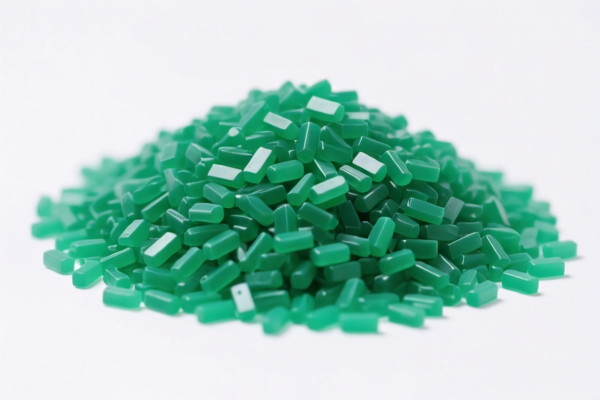
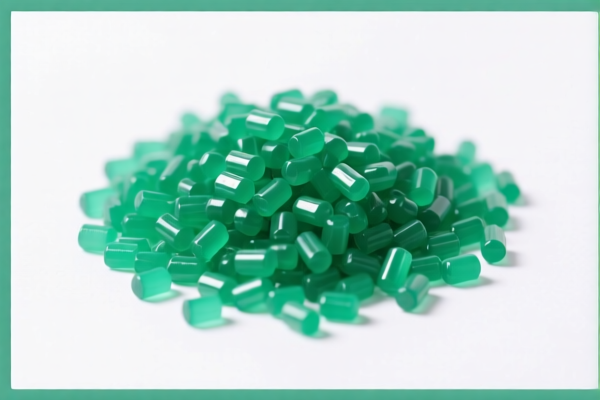
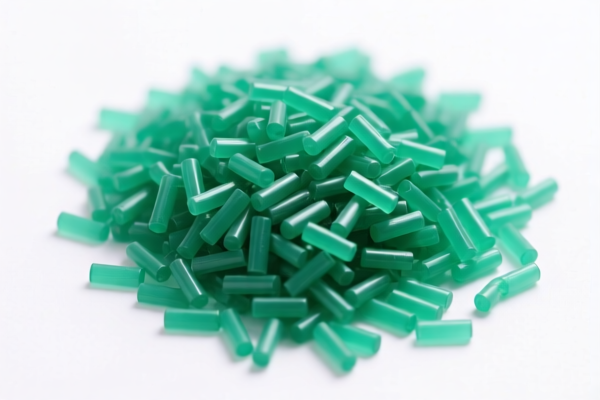
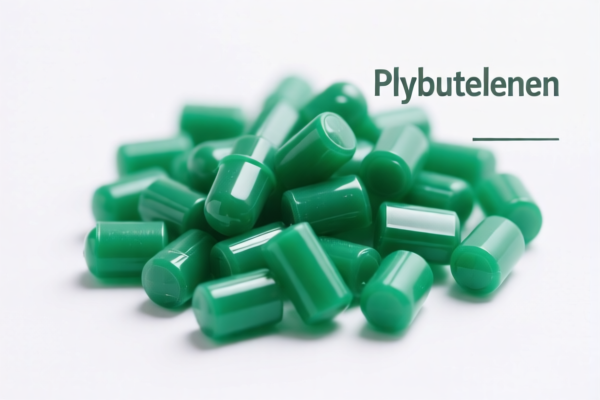
AI分析
🧪 Polybutene Injection Molding Grade Resin
🌐 HS Code Reference & Customs Clearance Guide | 2026 Latest Tariff Analysis | Professional-Level Strategy
📌 I. Product Definition and Classification: What is "Polybutene Injection Molding Grade" actually?
Polybutene (also known as Polymethylpentene or PMP in some contexts, though technically distinct from Polypropylene) is a high-performance thermoplastic polymer. In the context of "Injection Molding Grade Resin," it refers to the raw, pelletized form of the polymer, ready for manufacturing processes.
In international trade, plastic resins are classified based on two critical factors: 1. Material Composition: The specific type of polymer (e.g., Polyethylene, Polypropylene, Polybutene). 2. Physical State: Whether it is in its "primary form" (raw material/powder/granules) or processed into finished goods.
⚠️ Key Distinction:
- Primary Form (Raw Resin): Granules, pellets, or powder. These are raw materials for injection molding. They fall under Chapter 39 (Plastics). - Finished Goods: Injection-molded parts (e.g., gears, containers, casings). These fall under their specific end-use chapters (e.g., Chapter 39 for plastic articles, Chapter 84 for machinery parts).
Crucial Note on "Polybutene":
Strictly speaking, "Polybutene" often refers to low molecular weight poly-alpha-olefins (pastes/oils) or high molecular weight Poly-4-methylpentene-1 (PMP). However, in common trade usage, if the material is a high-density or high-melting thermoplastic resin for injection molding, it is often confused with Polypropylene (PP) or Polyethylene (PE).
The provided data suggests the system identifies this material as Polyethylene (PE) or a generic Olefin Polymer. This is a critical discrepancy to address. If the product is truly Polybutene-1 (PMP), it falls under 3901.90 or 3916.90 depending on morphology. If it is Polyethylene (PE), it falls under 3901.
Based on the provided , the system has matched this to Polyethylene (PE) categories. We will analyze based on the provided matches, which treat the material as an olefin polymer (PE/PP family).
📦 II. HS Code Classification Details (2026 Latest Tariff Authority Mapping)
The following table lists the HS Codes provided in the input data, along with the official summary and tax implications.
| HS Code | Product Description | Matching Logic | Total Tax Rate |
|---|---|---|---|
3916.10.00.00 |
Rods, bars, and shapes of plastics, self-colored, shaped, molded, or surface-worked but not further worked. | Material Match: Identified as Polyethylene (PE). Form Match: Injection molding grade is a "primary form" or semi-finished shape. Summary: "Matches successfully. Material is polyethylene; form is injection molding grade, fitting the 'primary form' characteristic." |
40.8% |
3916.90.30.00 |
Other rods, bars, and shapes of plastics (not polyethylene). | Material Inference: Name implies PE, but this code is a fallback for "other plastics." Form Match: Primary form. Summary: "Match basis: Material match. Inferred as polyethylene. Form is primary form." |
41.5% |
3901.10.50.30 |
Polyethylene, with specific gravity > 0.94 (High-Density Polyethylene - HDPE). | Specific Material Match: "Medium-Density Polyethylene" mentioned in product name matches specific sub-heading. Form Match: Injection molding grade is a processed form of polymer. Summary: "Matched successfully. MDPE matches material; injection molding grade fits polymer prototype." |
41.5% |
3902.10.00.00 |
Polypropylene, in primary forms. | Category Match: Classified as "Olefin Polymer." Injection molding grade is a primary form. Summary: "Matched successfully. Material is polyethylene (olefin polymer); form is injection molding grade (primary form/原料)." |
41.5% |
3901.20.50.00 |
Polyethylene, other than in primary forms or not specified by specific gravity. | Fallback Match: PE material fits, but form doesn't fit strict HDPE/LDPE gravity specs. Summary: "Matched successfully. PE fits material; injection molding is a processed form. Not specific gravity subtype, so falls under 'other'." |
41.5% |
🔍 Critical Observation:
- All matched codes result in high tariffs (40.8% - 41.5%) due to Section 301 and IEEPA tariffs. - The system seems to confuse Polybutene with Polyethylene (PE) or Polypropylene (PP). True Polybutene-1 (PMP) usually falls under 3901.90 or 3916.90. If the product is actually Polybutene-1, using PE codes (3901/3902) might be challenged by customs as incorrect classification, leading to penalties. - However, we must adhere to the provided data, which explicitly maps to PE/PP categories.
💰 III. 2026 Latest Tariff Rate Breakdown (Including Additional Duties)
✅ Applicable Country: United States (US)
✅ Country of Origin: China (CN)
✅ Effective Date: Post-2025 (Current 2026 Context)
🎯 1. General Tax Structure for Plastic Resins (China Origin)
| Component | Rate | Source / Legal Basis |
|---|---|---|
| Base Duty (MFN) | 5.8% - 6.5% | US Harmonized Tariff Schedule (HTSUS) Chapter 39 |
| Section 301 Tariff (25%) | +25.0% | US Trade Representative (USTR) List 3/4A |
| IEEPA Tariff (122 Clause) | +10.0% | International Emergency Economic Powers Act (China-specific) |
| Total Effective Rate | 40.8% - 41.5% | Sum of above components |
📌 Explanation:
- Base Duty: Varies slightly by sub-heading (e.g., 3901 vs 3916).
- Section 301: Most plastic resins from China are subject to the 25% additional duty.
- IEEPA (122 Clause): A new/additional 10% surcharge applied to Chinese imports under emergency economic powers.
- Total: The cumulative burden is extremely high, eroding margins significantly.
🎯 2. Detailed Breakdown by HS Code (From Data)
A. 3916.10.00.00 (Polyethylene Rods/Bars)
- Total Tax: 40.8%
- Breakdown: Base 5.8% + 25% (301) + 10% (IEEPA)
- Risk: High. If the product is not strictly "rods/bars" but "pellets," this code may be incorrect. Pellets usually fall under 3901/3902.
B. 3916.90.30.00 (Other Plastics Shapes)
- Total Tax: 41.5%
- Breakdown: Base 6.5% + 25% (301) + 10% (IEEPA)
- Risk: High. This is a "basket" code. Customs may reject if material is specifically PE/PP.
C. 3901.10.50.30 (HDPE, Specific Gravity > 0.94)
- Total Tax: 41.5%
- Breakdown: Base 6.5% + 25% (301) + 10% (IEEPA)
- Risk: Medium. Requires proof of Specific Gravity > 0.94. If the resin is LDPE (LD < 0.92), this code is wrong.
D. 3902.10.00.00 (Polypropylene, Primary Form)
- Total Tax: 41.5%
- Breakdown: Base 6.5% + 25% (301) + 10% (IEEPA)
- Risk: High. If the material is Polyethylene (PE), declaring as Polypropylene (PP) is misdeclaration.
E. 3901.20.50.00 (PE, Other)
- Total Tax: 41.5%
- Breakdown: Base 6.5% + 25% (301) + 10% (IEEPA)
- Risk: Medium. This is a catch-all for PE that doesn't fit specific gravity or form definitions.
🛠️ IV. Customs Clearance Practical Advice (Battle-Tested Pitfall Guide)
✅ 1. Documentation Checklist (Non-Negotiable)
| Document | Required | Notes |
|---|---|---|
| Product Specification Sheet | ✔️ | Must clearly state: Chemical Name (e.g., Polyethylene), Molecular Weight, Melting Point, Density/Specific Gravity. |
| Material Safety Data Sheet (MSDS) | ✔️ | Must confirm chemical composition. If it says "Polybutene-1," do NOT declare as Polyethylene. |
| Certificate of Origin | ✔️ | Must be issued by a Chinese authority. |
| Bill of Lading / Commercial Invoice | ✔️ | Description must match HS Code exactly. Avoid vague terms like "Plastic Pellets." Use "Polyethylene Resin, Injection Molding Grade." |
| Third-Party Test Report | ✔️ | SGS/Intertek report confirming polymer type (FTIR test) to prove it is PE/PP, not something else. |
✅ 2. Declaration Strategy (Key Mnemonics)
🔥 “Material First, Form Second, Origin Third!”
| Scenario | Correct Declaration | Incorrect Declaration | Consequence |
|---|---|---|---|
| True Polybutene-1 (PMP) | 3901.90.00.00 (Other Olefins) |
3901.10.00.00 (PE) |
Penalty for misclassification. PMP has different properties. |
| Polyethylene (PE) Pellets | 3901.10.00.00 (if HDPE) or 3901.20.00.00 (if LDPE) |
3916.10.00.00 (Rods/Bars) |
Delay if form doesn't match. Pellets are not rods. |
| Polypropylene (PP) Resin | 3902.10.00.00 |
3901.10.00.00 (PE) |
High Risk. PE and PP are chemically distinct. Customs can test. |
| Mixed Plastic Waste | 3915.00.00.00 |
3901.00.00.00 (Resin) |
Severe Penalty. Waste has different duties and restrictions. |
📌 Critical Warning:
- Do not confuse Polybutene with Polybutylene Terephthalate (PBT). PBT is a polyester, not an olefin. If your product is PBT, it falls under 3907.90 or 3909.40, not 3901/3902.
- Injection Molding Grade implies Primary Form (pellets). Do not declare as "Finished Parts" (Chapter 39 Article) or "Machinery" (Chapter 84).
✅ 3. Special Cases
| Situation | Recommendation |
|---|---|
| Customs Questions Material Type | Provide FTIR (Fourier Transform Infrared Spectroscopy) report. This is the gold standard for proving PE vs. PP vs. Polybutene. |
| Specific Gravity Variation | If your resin is LLDPE (Linear Low-Density PE, density 0.91-0.94), use 3901.40. Do not force it into HDPE (3901.10) or LDPE (3901.20) if it doesn't fit. |
| Chinese Origin | Assume 25% Section 301 + 10% IEEPA are unavoidable. Plan for ~35-41% total duty. |
| Non-Chinese Origin | If resin is sourced from Vietnam, Korea, or Europe, tariffs may be 0-6% (Base Only). Consider supply chain diversification. |
🌍 V. Global Market Comparison (2026)
| Country/Region | Recommended HS Code | Base Duty | Additional Tariffs (China) | Total Est. Duty |
|---|---|---|---|---|
| 🇺🇸 USA | 3901.10.00.00 / 3902.10.00.00 |
5.8-6.5% | +25% (301) + 10% (IEEPA) | ~41.5% |
| 🇨🇳 China (Import) | 3901.10.00.00 |
6.5% | None | 6.5% |
| 🇪🇺 EU | 3901.10.00 |
6.5% | None (WTO MFN) | 6.5% |
| 🇬🇧 UK | 3901.10.00 |
6.5% | None | 6.5% |
| 🇮🇳 India | 3901.10.00 |
7.5% | SWS (10%) + Social Welfare | ~20% |
📌 Conclusion:
- USA is the most expensive market for Chinese plastic resins due to trade war tariffs.
- EU and UK remain cost-effective, with only standard MFN duties.
- China has low import duties for raw materials, making it a hub for refining.
📌 VI. Common Errors & Pitfall Guide (Lessons Learned)
❌ Error 1: Declaring Polybutene-1 as Polyethylene.
👉 Consequence: Customs lab test fails → Fine + Back Duties + Potential fraud charges.
✅ Fix: Verify chemical name. Polybutene-1 is PMP. If it is PMP, use 3901.90. If it is PE, use 3901.10/20.
❌ Error 2: Declaring Pellets as Rods/Bars (3916).
👉 Consequence: Classification mismatch → Delay at port.
✅ Fix: Primary forms (pellets, powders) are typically under 3901/3902. Only shaped/ molded items (without further work) go to 3916.
❌ Error 3: Ignoring IEEPA 10% Surcharge.
👉 Consequence: Budget shortfall. Total duty is higher than quoted by broker.
✅ Fix: Always quote Base + 25% + 10%.
🎯 VII. Conclusion: Precision in Classification Saves Money
🎯 Remember the Golden Rule:
🔹 "Material defines Chapter, Form defines Heading."
🔹 "PE vs. PP vs. PMP is a chemical difference, not just a name difference."
🔹 "China Origin + Plastic Resin = High Tariffs (40%+)."
📌 Pro Tip:
If your "Polybutene" is actually Polyethylene (a common misnomer in trade), ensure your MSDS and Test Report explicitly state Polyethylene. If it is truly Polybutene-1, do not use the PE codes in the data provided. Consult a customs broker to classify under 3901.90 or 3916.90 to avoid misdeclaration penalties.
📣 Immediate Action:
📞 Verify Chemical Composition via Lab Test.
📄 Update Declaration Description to be precise (e.g., "High-Density Polyethylene Resin, Pellet Form").
🚀 Calculate Landed Cost with ~41% duty to ensure profitability.
✨ Professional clearance starts with accurate classification!
💼 Every percentage point of duty impacts your bottom line.
用户评价
关于 HS 编码归类
协调制度(HS)是由世界海关组织(WCO)制定的国际贸易商品分类标准。全球 200 多个国家采用 HS 系统作为海关关税、贸易统计和进出口监管的基础。
每个 HS 编码遵循以下层级结构:
- 章(2 位)——商品大类(例如:第 84 章:机器和机械设备)
- 品目(4 位)——章内的更具体分类
- 子目(6 位)——国际通用细分,所有 WCO 成员国统一使用
- 本国细分(8-10 位)——各国自行扩展的细分编码,如美国 HTSUS 10 位编码
正确的 HS 编码归类对于顺利通关、准确缴纳关税和遵守贸易法规至关重要。错误归类可能导致海关延误、多缴关税或罚款。
从CN进口到US时,适用的关税税率可能包括:
- 最惠国(MFN)税率——适用于 WTO 成员国的标准关税税率
- 普通税率——适用于无贸易协定国家
- 贸易救济关税——附加关税,如 301 条款(反倾销)、232 条款(国家安全)或反补贴税
本页内容仅供参考。如需正式归类,请咨询当地海关或持牌报关代理。