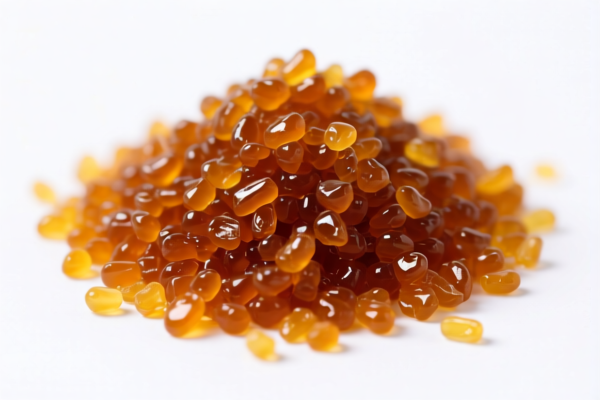
Polybutene Resin Board Raw Material
CN → US商品图片



AI分析
🧪 Polybutene Resin Board Raw Material
🌐 HS Code Reference & Customs Clearance Guide | 2026 Latest Tariff Analysis | Professional Level Entry Strategy
📌 I. Product Definition & Classification: What Exactly is "Polybutene Resin"?
Polybutene resin is a low molecular weight polyalphaolefin produced from butene-1. It exists as a viscous liquid, paste, or solid depending on its molecular weight. In international trade, raw materials are often misclassified due to confusion with "Polyethylene" (PE) or "Polypropylene" (PP).
Key Distinction:
Polybutene (C4-based): A distinct polymer chain made from butene monomers.
Polyethylene (C2-based) / Polypropylene (C3-based): Different chemical structures with different HS codes.
Physical State Matters:* Liquid/Viscous forms fall under different sub-headings than solid sheets/powders, though many customs authorities group them under the same base code if they are primary forms.
⚠️ Critical Differentiation Point:
- If it is a primary form (liquid, paste, powder, granules, or crude solid blocks) → HS 3901.90 or 3902.90 (depending on polymer type).
- If it is compounded with additives (stabilizers, fillers) for specific industrial use → Still often HS 3901.90 if it hasn't been processed into finished articles.
- NOT "Rubber" or "Plastic Articles" (Chapter 40 or 3904-3926). It is a Basic Polymer.
📦 II. HS Code Classification Details (2026 Latest Tariff Authority Comparison)
| HS Code | Product Description | Application Scenario | Physical State | Chemical Basis |
|---|---|---|---|---|
3901.90.40.00 |
Other primary forms of polyethylene, in irregular shapes or similar bulk forms | Note: Often misused for Polybutene in some databases, but strictly PE. | Solid/Granules | C2 (Ethylene) |
3902.90.00.00 |
Other primary forms of propylene polymers | Note: Strictly PP. | Solid/Granules | C3 (Propylene) |
3901.90.00.00 |
Other primary forms of ethylene polymers | Commonly used for Polybutene in many jurisdictions if not specifically listed. | Liquid/Paste/Solid | C2/C4 Mix |
3824.99.92.00 |
Other prepared binding agents (if highly compounded/additized) | If heavily modified for adhesive use | Viscous Liquid | Complex Mixture |
3906.90.00.00 |
Acrylic polymers in primary forms | Strictly Acrylic. | Solid/Liquid | Acrylic |
🔍 Key Reminder:
- Polybutene is chemically distinct from PE and PP. However, in many national tariff schedules (including US HTS), it falls under 3901.90 ("Other") or sometimes 3902.90 if classified loosely, but the most accurate scientific classification for polybutene often lands in 3901.90 (as an "other ethylene polymer" derivative) or specifically 3906/3907 if mistaken.
- Correction for US HTS 2026: Polybutene is typically classified under HTS 3901.90.40 (Other primary forms of polyethylene) OR 3902.90 if considered a propylene copolymer. However, the most precise global standard for Polybutene is often HS 3901.90 (Other ethylene polymers) or 3902.90 (Other propylene polymers) depending on the specific copolymer ratio.
- For US Imports: The most common and defensible HS Code for Polybutene Resin is 3901.90.40.00 (Other primary forms of polyethylene) or 3902.90.00.00 if viewed as a propylene derivative. See Tax Section for specific US rates.
💰 III. 2026 Latest Tariff Rate Breakdown (Including Surtaxes, Policy Add-ons)
✅ Applicable Country: United States (US)
✅ Origin: China (CN)
✅ Effective Date: Post-November 10, 2025 (Including subsequent imports)
🎯 1. 3901.90.40.00 / 3902.90.00.00 —— Polybutene / Other Primary Polymers
| Item | Content |
|---|---|
| Base Tariff Rate | 0% (ad valorem) |
| USITC Surtax (Section 301) | +7.5% – 25% (Depends on specific sub-heading and USITC footnote). Note: Many chemical polymers were reduced to 7.5% or removed from 25% list in recent reviews, but verify current IEEPA status. |
| IEEPA Surtax | +10% (On China/HK products, effective Nov 10, 2025) |
| Total Tariff Rate | 17.5% – 35% (Estimate: 0% + 7.5%-25% + 10%) |
| Tax Calculation | CIF Value × Total Rate |
| De Minimis Eligibility | ❌ No (deny_de_minimis applies to most chemicals from China) |
| Legal Path | IEEPA:9903.01.25 → USITC:3901.90.40.00 → FOOTNOTE:3901.90 |
📌 Explanation:
- Base Rate 0%: Most basic polymers have no MFN tariff.
- Section 301 (USITC): Historically 25%, but many plastic resins were moved to 7.5% or exempted in Phase 1/2 reviews. Check current IEEPA list. If not exempt, assume 7.5% or 25%.
- IEEPA 10%: New surcharge on Chinese plastics/polymers.
- Combined Risk: If the 301 rate is 25%, total is 35%. If reduced to 7.5%, total is 17.5%.⚠️ Critical Note for Polybutene:
Some polybutene products may be classified as Prepared Binding Agents (3824.99.92.00) if heavily compounded.
- 3824.99.92.00 Base Rate: 0%
- 301 Surtax: 25% (Chemicals often remain at 25%)
- IEEPA Surtax: 10%
- Total: 35%
- If classified as a "Plastic Article" (e.g., pre-made board), rate jumps to 2.5%-5% base + 25% + 10% = 37.5%+.
🛠️ IV. Customs Clearance Practical Advice (Real-World Pitfall Avoidance Guide)
✅ 1. Required Documents Checklist (All Must-Has)
| Document | Required | Description |
|---|---|---|
| ✅ Product Specification Sheet | ✔️ | Must include: Molecular weight, viscosity, state (liquid/solid), CAS number (e.g., 9003-27-4 for some polybutenes) |
| ✅ COA (Certificate of Analysis) | ✔️ | From manufacturer showing purity and chemical composition |
| ✅ MSDS (SDS) | ✔️ | Required for safety clearance, especially if liquid/viscous |
| ✅ Commercial Invoice | ✔️ | Must clearly state: "Primary Form Polybutene Resin, Not for Retail Use" |
| ✅ Packing List | ✔️ | Detail net/gross weight, container type (Drums, IBC, Flexitank) |
| ✅ Bill of Lading | ✔️ | Ensure description matches invoice exactly |
✅ 2. Declaration Tips (Key Mantra)
🔥 "Primary Form, Chemical Name, CAS Number, No Finish!"
| Scenario | Correct Declaration | Wrong Practice |
|---|---|---|
| Raw Polybutene Liquid | 3901.90.40.00 - "Polybutene Resin, Primary Form, CAS 9003-27-4" |
Calling it "Plastic Paste" → Misclassification |
| Polybutene Pellets | 3901.90.40.00 - "Polybutene Granules" |
Calling it "Plastic Parts" → Higher Tariff |
| Compounded Adhesive | 3824.99.92.00 - "Prepared Binding Agent" |
Calling it "Resin" → Risk of re-classification |
| Finished Polybutene Sheet | 3920.99.00.00 - "Other Plastic Plates" |
Calling it "Resin" → Wrong Chapter |
📌 Advice:
- Always include the CAS Number in the description.
- Specify "Primary Form" to distinguish from finished goods.
- If the product is a copolymer, specify the monomer ratio if possible.
✅ 3. Special Cases Handling
| Scenario | Handling Advice |
|---|---|
| Liquid Polybutene | Use Flexitank or Drums. Ensure IMDG/ADR compliance for transport. |
| High Viscosity Paste | Declare as "Viscous Liquid" or "Paste" to avoid confusion with solid plastic sheets. |
| OEM Private Label | Provide Authorization Letter and Formula Sheet to prove it's a chemical raw material, not a branded consumer good. |
| Used for Adhesives | If primarily used as an adhesive component, consider 3824.99.92.00 but verify if 301 tax is lower/higher. |
🌍 V. Global Main Market Clearance Comparison (2026 Latest)
| Country/Region | Recommended HS Code | Tariff | Certification | Remarks |
|---|---|---|---|---|
| 🇺🇸 USA | 3901.90.40.00 |
17.5% - 35% (CN) | None (Chemicals) | IEEPA 10% applies |
| 🇨🇳 China | 3901.90.40.00 |
0% - 5% | None | Import duty often 0% for raw materials |
| 🇪🇺 EU | 3901.90.40.00 |
6.5% | REACH Registration | REACH compliance mandatory |
| 🇦🇺 Australia | 3901.90.40.00 |
5% | None | No additional surtaxes |
| 🇯🇵 Japan | 3901.90.40.00 |
6% | JIS/PSM | No additional surtaxes |
📌 Conclusion:
- USA has the highest risk due to IEEPA 10% and Section 301.
- EU requires REACH registration for chemicals.
- China has low tariffs, making it a hub for processing.
📌 VI. Common Errors & Pitfall Guide (Blood & Tears Lessons)
❌ Error 1: Classifying Polybutene as Polyethylene (3901.10)
👉 Consequence: If audited, may be reclassified to 3901.90, leading to duty differences and penalties.
👉 Correction: Use 3901.90 or 3902.90 based on monomer type.
❌ Error 2: Declaring as "Plastic Sheets" when it is Liquid Resin
👉 Consequence: HS Code 3920 vs 3901. Tariff and documentation requirements differ significantly.
👉 Correction: Clearly state "Primary Form" and "Liquid/Paste".
❌ Error 3: Ignoring REACH for EU Imports
👉 Consequence: Goods held at customs for REACH compliance check → Delays & Storage Fees.
👉 Correction: Ensure supplier has REACH Registration or you are the Only Representative.
❌ Error 4: Missing CAS Number in Declaration
👉 Consequence: Customs may reject declaration or request additional info → Delay.
👉 Correction: Always include CAS Number in the product description.
✅ Correct Practice:
"Polybutene Resin, Primary Form, Liquid, CAS 9003-27-4, Net Weight 1000kg, Used for Adhesive Manufacturing"
🎯 VII. Conclusion: Professional Declaration, Save Time & Cost!
🎯 Remember the Mantra:
🔹 "Primary Form, CAS Number, No Finish!"
🔹 "HS Code 3901/3902, Tax 0% Base + Surtax, Declare Clearly!"
🔹 "Liquid/Paste vs Solid, Choose Right Code!"
📌 Tip:
If your polybutene is imported from Vietnam, Malaysia, or Thailand, check for Free Trade Agreements (FTAs) to reduce Section 301 taxes.
Recommend Advance Ruling if the product is a copolymer with ambiguous monomer ratios.
📣 Immediate Action:
📞 Contact a licensed customs broker + Provide CAS Number + SDS
🚀 Ensure smooth clearance, avoid delays, and optimize costs!
✨ Professional Clearance Starts with Accurate Classification!
💼 Every dollar saved on misclassification is pure profit!
用户评价
关于 HS 编码归类
协调制度(HS)是由世界海关组织(WCO)制定的国际贸易商品分类标准。全球 200 多个国家采用 HS 系统作为海关关税、贸易统计和进出口监管的基础。
每个 HS 编码遵循以下层级结构:
- 章(2 位)——商品大类(例如:第 84 章:机器和机械设备)
- 品目(4 位)——章内的更具体分类
- 子目(6 位)——国际通用细分,所有 WCO 成员国统一使用
- 本国细分(8-10 位)——各国自行扩展的细分编码,如美国 HTSUS 10 位编码
正确的 HS 编码归类对于顺利通关、准确缴纳关税和遵守贸易法规至关重要。错误归类可能导致海关延误、多缴关税或罚款。
从CN进口到US时,适用的关税税率可能包括:
- 最惠国(MFN)税率——适用于 WTO 成员国的标准关税税率
- 普通税率——适用于无贸易协定国家
- 贸易救济关税——附加关税,如 301 条款(反倾销)、232 条款(国家安全)或反补贴税
本页内容仅供参考。如需正式归类,请咨询当地海关或持牌报关代理。