Polycarbonate High Strength Board
CN → US| HS编码 | 关税税率 | 原产国 | 目的国 | 文档 |
|---|---|---|---|---|
| 3920690000 | 39.2% | CN | US | 官方文档 |
| 3926909989 | 22.8% | CN | US | 官方文档 |
| 3921190090 | 41.5% | CN | US | 官方文档 |
| 3921905050 | 39.8% | CN | US | 官方文档 |
| 3907995050 | 41.5% | CN | US | 官方文档 |
商品图片
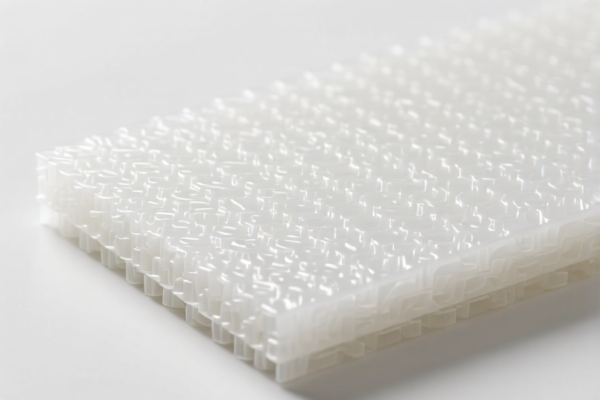
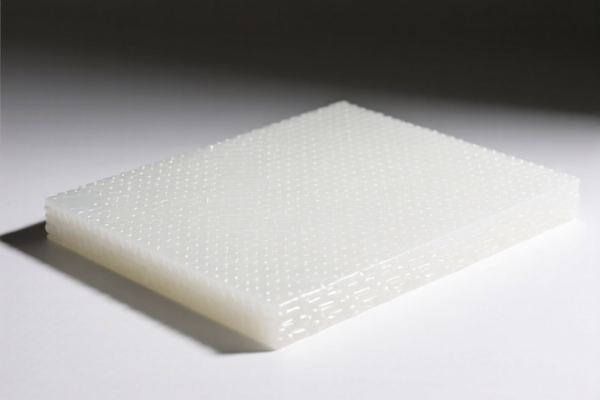
AI分析
🏗️ Polycarbonate High Strength Board (聚碳酸酯耐高温/高强度板)
🌐 HS Code Reference & Customs Clearance Guide | 2026 Latest Tariff Analysis | Professional Clearance Strategy
📌 I. Product Definition & Classification: Do You Truly Understand "Polycarbonate Boards"?
Polycarbonate (PC) boards are high-performance engineering plastics known for their exceptional impact resistance, thermal stability, and transparency. In international trade, the classification is not based solely on the material name ("Polycarbonate"), but strictly on the form, processing state, and end-use application.
There are two primary pathways for classification: 1. As a Raw Material/Plate (Chapter 39, Heading 3920/3921): If the board is a simple plate, sheet, or film without specific functional components (like windows with seals), it is often classified as a "Plate of plastics." 2. As a Finished Article (Chapter 39, Heading 3926): If the board is cut, shaped, or processed into a specific "other article" that doesn't fit the plate definition, it may fall under "Other articles of plastics."
⚠️ Key Distinction Point:
- If the product is a flat, unprocessed sheet/plate meeting the definition of "plate, sheet, film, foil, and strip," it falls under 3920 or 3921.
- If the product is considered a "other article" (e.g., specific constructed panels that don't fit the strict "plate" definition in Chapter 39 Note 2), it falls under 3926.
- Misclassification Risk: Declaring a simple PC plate as a "finished article" (3926) when it fits "plate" (3920/3921) can lead to duty discrepancies and customs delays.
📦 II. HS Code Classification Details (2026 Latest Tariff Authority Comparison)
Based on the provided data, here are the specific HS Codes for Polycarbonate High Strength Boards:
| HS Code | Product Description | Application Scenario | Form Factor | Total Tax Rate |
|---|---|---|---|---|
3920.69.00.00 |
Polycarbonate Heat-Resistant Board | Material: Polycarbonate; Form: Plate; Meets plate/film requirements | Plate/Sheet | 39.2% |
3926.90.99.89 |
Polycarbonate Heat-Resistant Board | Material: Polycarbonate; Form: Plate; Classified as "Other plastic articles" | Other Article | 22.8% |
3921.19.00.90 |
Polycarbonate Building Material Board | Material: Polycarbonate; Form: Plate; Classified as "Other plastic plates/sheets" | Plate/Sheet | 41.5% |
3921.90.50.50 |
Polycarbonate Building Material Board | Material: Polycarbonate; Form: Plate; Meets plate description | Plate/Sheet | 39.8% |
3907.99.50.50 |
Polycarbonate Building Material Board | Material: Polycarbonate; Form: Plate; Classified under Polycarbonate category | Plate/Sheet | 41.5% |
🔍 Critical Analysis:
-3926.90.99.89offers the lowest duty (22.8%). This classification treats the item as a generic "other article," avoiding the higher "122 Clause" or specific "Plate" surcharges found in other codes.
-3921and3907codes carry the highest duty (41.5%). These are often used for building materials or specific polymer forms that attract higher scrutiny and additional tariffs.
-3920(39.2%) is the standard for general polycarbonate plates but still incurs significant surcharges.
💰 III. 2026 Latest Tariff Rate Breakdown (Including Surcharges & Policy Add-ons)
✅ Applicable Country: United States (US)
✅ Origin: China (CN)
✅ Effective Date: Post-2025 (Includes 122 Clause, Section 301, and Base Duties)
🎯 1. 3926.90.99.89 — Other Plastic Articles (Lowest Duty: 22.8%)
| Item | Content |
|---|---|
| Base Duty | 5.3% |
| Section 301 Surcharge | +7.5% |
| Section 122 Clause Tariff | +10.0% |
| Total Effective Duty | 22.8% |
| Tax Calculation | CIF Value × 22.8% |
| De Minimis Exemption? | ❌ NO (Subject to all surcharges) |
| Legal Basis Path | Base: 3926.90.99.89 → Sec 301: Footnote 1 → Sec 122: 10% |
📌 Explanation:
- This code is advantageous because the Section 301 surcharge is lower (7.5%) compared to the standard 25% applied to many plastic plates.
- The 122 Clause (10%) is a recent addition targeting specific Chinese plastic products.
- Strategy: If your product can be legally described as an "other article" rather than a strict "plate," this code saves you ~15-20% in duties compared to3921or3907.
🎯 2. 3920.69.00.00 — Polycarbonate Plates (Duty: 39.2%)
| Item | Content |
|---|---|
| Base Duty | 4.2% |
| Section 301 Surcharge | +25.0% |
| Section 122 Clause Tariff | +10.0% |
| Total Effective Duty | 39.2% |
| Tax Calculation | CIF Value × 39.2% |
| De Minimis Exemption? | ❌ NO |
| Legal Basis Path | Base: 3920.69.00.00 → Sec 301: Footnote 9903.88.01 → Sec 122 |
📌 Explanation:
- Standard polycarbonate plates face the highest Section 301 tariff (25%).
- This is the "default" classification for raw PC sheets.
- Risk: If you classify a simple board here, you pay 39.2%, which is 16.4% more than the3926classification.
🎯 3. 3921.19.00.90 & 3921.90.50.50 — Building Material Boards (Duty: 41.5% & 39.8%)
| Item | Content |
|---|---|
| Base Duty | 6.5% (3921.19) / 4.8% (3921.90) |
| Section 301 Surcharge | +25.0% |
| Section 122 Clause Tariff | +10.0% |
| Total Effective Duty | 41.5% (3921.19) / 39.8% (3921.90) |
| Tax Calculation | CIF Value × Rate |
| De Minimis Exemption? | ❌ NO |
📌 Explanation:
- These codes are often used for building materials. Customs may view them as "specialty plates" subject to the full 25% Section 301 tariff.
- Warning: If you market your product as "Building Material," you may be forced into these higher brackets. Avoid using "Building Material" in the description unless absolutely necessary.
🎯 4. 3907.99.50.50 — Polycarbonate Category (Duty: 41.5%)
| Item | Content |
|---|---|
| Base Duty | 6.5% |
| Section 301 Surcharge | +25.0% |
| Section 122 Clause Tariff | +10.0% |
| Total Effective Duty | 41.5% |
| Tax Calculation | CIF Value × 41.5% |
📌 Explanation:
- This code groups PC under "Other Polyesters" or similar categories.
- It attracts the maximum duty (41.5%).
- Recommendation: Only use this if no other classification fits. It is the least favorable option.
🛠️ IV. Customs Clearance Practical Advice (Battle-Tested Pitfall Guide)
✅ 1. Preparation Checklist (All Documents Required)
| Document | Mandatory? | Notes |
|---|---|---|
| ✅ Product Specification Sheet | ✔️ | Must detail material composition (100% PC), thickness, dimensions, and heat resistance ratings. |
| ✅ Technical Data Sheet (TDS) | ✔️ | Proves the product is a "plate" or "article." Highlight if it has pre-drilled holes or specific shaping (supports 3926). |
| ✅ Product Photos (Clear) | ✔️ | Show the board flat, in a stack, and in use. If it looks like a finished panel, 3926 is more likely. |
| ✅ Commercial Invoice | ✔️ | Description must match the HS Code logic. Avoid "Building Material" if aiming for 3926. |
| ✅ Packing List | ✔️ | List net/gross weight, dimensions, and number of pieces. |
| ✅ Certificate of Origin | ✔️ | Required for Section 301 and 122 Clause verification. |
✅ 2. Declaration Strategy (Key Mantra)
🔥 “Describe the Form, Not the Use! ‘Article’ saves cash, ‘Plate’ costs more!”
| Scenario | Recommended HS Code | Reasoning |
|---|---|---|
| Standard Flat PC Sheet | 3920.69.00.00 |
Default for raw plates. High duty (39.2%) but legally safe. |
| Shaped/Pre-cut PC Board | 3926.90.99.89 |
If cut to size or shaped, argue it's an "other article." Lowest Duty (22.8%). |
| PC Used in Construction | 3921.19.00.90 |
If specifically marketed as roofing/cladding, this may be forced. Highest Duty (41.5%). |
| PC Raw Granules/Resin | 3907.99.50.50 |
DO NOT USE for solid boards. This is for resins/powders. Misuse leads to severe penalties. |
✅ 3. Special Case Handling
| Situation | Handling Advice |
|---|---|
| OEM Custom Sizes | Provide cutting diagrams. If the board is cut to specific non-standard dimensions, argue for 3926 ("Other Articles"). |
| Multi-layered Boards | If it's a composite (e.g., PC + Acrylic), clarify the principal material. Pure PC goes to Chapter 39. |
| Transparent vs. Opaque | Transparency does not change the HS Code. Both go under Chapter 39. Focus on form (plate vs. article). |
| "Building Material" Label | Avoid this term in English descriptions if you want to avoid 3921. Use "Polycarbonate Sheet" or "PC Panel" instead. |
🌍 V. Global Market Comparison (2026 Update)
| Country/Region | Recommended HS Code | Effective Duty (China Origin) | Key Requirements |
|---|---|---|---|
| 🇺🇸 USA | 3926.90.99.89 |
22.8% | FCC (if electrical), RoHS (if applicable), Strict HS classification |
| 🇨🇳 China | 3926.90.99.89 |
~5-10% | CCC (if applicable) |
| 🇪🇺 EU | 3920.69.00.00 |
0% (Most Favored Nation) | CE Mark, REACH Compliance |
| 🇦🇺 Australia | 3926.90.99.89 |
5% | RCM (if electrical) |
📌 Conclusion:
- The USA is the only market with punitive surcharges (Section 301 + 122).
- Optimization Opportunity: Shifting from3921(41.5%) to3926(22.8%) saves 18.7% on duty. This is a critical saving margin.
📌 VI. Common Mistakes & Pitfalls (Lessons Learned)
❌ Mistake 1: Declaring a cut-to-size board as a "Plate" (3920)
👉 Consequence: You pay 39.2% duty.
👉 Fix: If it's customized or shaped, declare as 3926 (22.8%).
❌ Mistake 2: Using "Building Material" in the description
👉 Consequence: Customs may force classification under 3921 (41.5%).
👉 Fix: Use neutral terms like "Polycarbonate Sheet" or "PC Panel."
❌ Mistake 3: Ignoring the "122 Clause"
👉 Consequence: All these HS codes attract a 10% Section 122 tariff.
👉 Fix: Factor this into your cost model. It is non-negotiable for Chinese origin.
❌ Mistake 4: Mixing 3907 (Resin) with solid boards
👉 Consequence: Customs rejects the declaration as "False Classification."
👉 Fix: Solid boards never go under 3907.
🎯 VII. Conclusion: Professional Classification, Cost Efficiency!
🎯 Remember the Mantra:
🔹 “Form over Function: If it’s cut, it’s an Article (22.8%). If it’s raw, it’s a Plate (39.2%-41.5%).”
🔹 “Avoid ‘Building Material’ if you want to save 18%.”
🔹 “122 Clause is 10% everywhere. Plan for it.”
📌 Pro Tip:
If your polycarbonate boards are exclusively used for non-construction purposes (e.g., machinery shields, display stands, custom enclosures), emphasize this in the commercial invoice. This strengthens the case for 3926.90.99.89 (22.8%).
📣 Immediate Action:
📞 Contact your customs broker with Product Photos and Technical Data Sheets.
🚀 Request a Pre-Ruling if the shipment value is high.
💰 Optimize your HS Code to3926.90.99.89to save ~18% in duties!
✨ Professional Clearance Starts with Precise Classification!
💼 Every Percentage Point Counts in the Age of Trade Barriers!
用户评价
关于 HS 编码归类
协调制度(HS)是由世界海关组织(WCO)制定的国际贸易商品分类标准。全球 200 多个国家采用 HS 系统作为海关关税、贸易统计和进出口监管的基础。
每个 HS 编码遵循以下层级结构:
- 章(2 位)——商品大类(例如:第 84 章:机器和机械设备)
- 品目(4 位)——章内的更具体分类
- 子目(6 位)——国际通用细分,所有 WCO 成员国统一使用
- 本国细分(8-10 位)——各国自行扩展的细分编码,如美国 HTSUS 10 位编码
正确的 HS 编码归类对于顺利通关、准确缴纳关税和遵守贸易法规至关重要。错误归类可能导致海关延误、多缴关税或罚款。
从CN进口到US时,适用的关税税率可能包括:
- 最惠国(MFN)税率——适用于 WTO 成员国的标准关税税率
- 普通税率——适用于无贸易协定国家
- 贸易救济关税——附加关税,如 301 条款(反倾销)、232 条款(国家安全)或反补贴税
本页内容仅供参考。如需正式归类,请咨询当地海关或持牌报关代理。