Polyester Resin Modified Raw Material
CN → US| HS编码 | 关税税率 | 原产国 | 目的国 | 文档 |
|---|---|---|---|---|
| 3907992000 | 35.0% | CN | US | 官方文档 |
| 3907995050 | 41.5% | CN | US | 官方文档 |
| 3907400000 | 40.8% | CN | US | 官方文档 |
| 3911901000 | 35.0% | CN | US | 官方文档 |
| 3911902500 | 41.1% | CN | US | 官方文档 |
商品图片

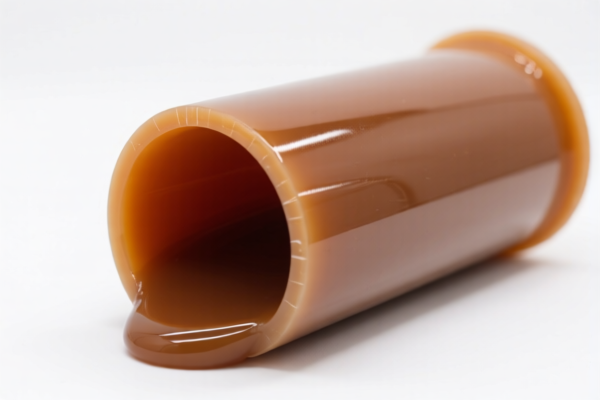
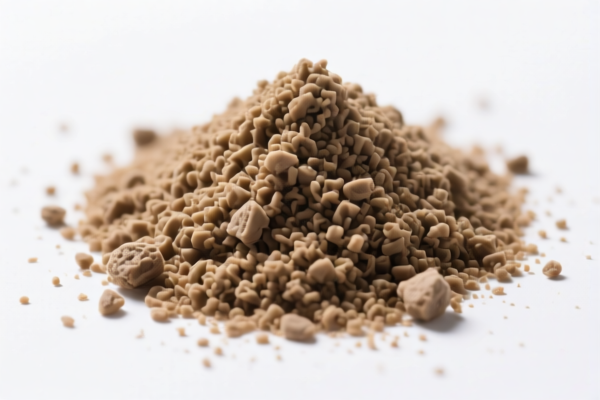

AI分析
🧪 Polyester Resin Modified Raw Material (Chemical Raw Materials)
🌐 HS Code Reference & Customs Clearance Guide | 2026 Latest Tariff Analysis | Professional Entry Strategy
📌 I. Product Definition & Classification: Do You Really Understand "Modified Polyester Resin"?
Polyester Resin Modified Raw Materials are primary forms of chemical materials used in polymer processing. In international trade, these materials are primarily classified based on their specific chemical composition (e.g., PBT, PET, PC, Polyolefins) and state (granules, flakes, powder).
The term "Modified" usually implies additives, fillers, or blending agents, but the primary classification (HS Code) is determined by the base resin type under Chapter 39 (Plastics and Articles Thereof).
⚠️ Critical Distinction Points:
- Standard Polyester (PBT/PET) → Generally falls under 3907.99 or 3907.40 depending on specific structure.
- Polycarbonate (PC) → Falls under 3907.40.
- Polyolefins (PP/PE based) → Falls under 3911.90 (if classified as other plastic materials/resins).
- State: Must be "Primary Forms" (granules, flakes, powder, liquids) to be classified under Chapter 39, not Chapter 38 (chemical products mixed).
📦 II. HS Code Classification Details (2026 Latest Tariff Authoritative Comparison)
| HS Code | Product Description | Applicable Scenario | Key Chemical Attribute |
|---|---|---|---|
3907.99.20.00 |
Raw material for polyester resin, matching polyester material attributes and primary form | Standard modified PBT/PET granules, low viscosity resins | ✅ Polyester |
3907.99.50.50 |
Polyester resin raw material, conforming to the definition of other primary forms of polyester | Specialty polyesters, high-performance modified polyesters | ✅ Other Polyester |
3907.40.00.00 |
Modified polycarbonate resin, matching polycarbonate material and resin primary form | PC alloys, PC/ABS blends, modified PC granules | ✅ Polycarbonate |
3911.90.10.00 |
Modified polyolefin resin, matching polyolefin material and petrochemical resin category | PP/PE modified resins, oil-based resins, non-polyester polyolefins | ✅ Polyolefin/Petrochemical |
3911.90.25.00 |
Modified polyolefin resin, matching plastic resin category and thermoplastic resin prototype | General thermoplastic polyolefin resins, modified PP/PE | ✅ Thermoplastic Polyolefin |
🔍 Key Reminder:
- Do not mix up "Polyester" (3907) with "Polyolefin" (3911). They have different tax rates and regulatory requirements.
- "Modified" does not automatically move the product to Chapter 38 if the base resin remains recognizable. It stays in Chapter 39 if it retains the essential character of the plastic.
- Ensure the Technical Data Sheet (TDS) clearly states the base polymer (e.g., "PBT Based," "PC Based").
💰 III. 2026 Latest Tariff Rate Details (Including Surtaxes, Policy Surcharges)
✅ Applicable Country: United States (US)
✅ Origin: China (CN)
✅ Effective Date: From November 10, 2025 (including subsequent imports)
🎯 1. 3907.99.20.00 —— Polyester Resin Raw Material (Standard Polyester)
| Item | Content |
|---|---|
| Base Tariff Rate | 0.0% (ad valorem) |
| USITC Surtax (Section 301) | +25.0% |
| IEEPA Surtax (Section 122/EO) | +10.0% (Targeting China/HK products) |
| Total Tariff Rate | 35.0% |
| Tax Calculation | CIF Value × 35.0% |
| De Minimis Exemption | ❌ Not Eligible (deny_de_minimis) |
| Legal Basis Path | Base: 0% → USITC: 301 Section → IEEPA: 10% |
📌 Explanation:
- Although the base tariff is 0%, the Section 301 (25%) and IEEPA (10%) surtaxes apply heavily to Chinese-origin polyester raw materials.
- This results in a 35% total burden, significantly impacting cost competitiveness.
- Warning: Misclassifying this as a "chemical additive" to avoid Chapter 39 will lead to severe penalties and customs audits.
🎯 2. 3907.99.50.50 —— Other Polyester Resin Raw Material (Specialty Polyester)
| Item | Content |
|---|---|
| Base Tariff Rate | 6.5% |
| USITC Surtax (Section 301) | +25.0% |
| IEEPA Surtax (Section 122/EO) | +10.0% |
| Total Tariff Rate | 41.5% |
| Tax Calculation | CIF Value × 41.5% |
| De Minimis Exemption | ❌ Not Eligible |
| Legal Basis Path | Base: 6.5% → USITC: 301 Section → IEEPA: 10% |
📌 Note:
- Higher base rate due to "other" classification, implying non-standard or specialty polyesters.
- Total 41.5% is very high. Buyers must consider cost absorption or alternative sourcing.
- Same surtaxes apply as above; only the base rate differs.
🎯 3. 3907.40.00.00 —— Modified Polycarbonate Resin
| Item | Content |
|---|---|
| Base Tariff Rate | 5.8% |
| USITC Surtax (Section 301) | +25.0% |
| IEEPA Surtax (Section 122/EO) | +10.0% |
| Total Tariff Rate | 40.8% |
| Tax Calculation | CIF Value × 40.8% |
| De Minimis Exemption | ❌ Not Eligible |
| Legal Basis Path | Base: 5.8% → USITC: 301 Section → IEEPA: 10% |
📌 Explanation:
- Polycarbonate (PC) is a high-value engineering plastic.
- Total 40.8% tax burden.
- Ensure documentation explicitly states "Polycarbonate" or "PC" to avoid being misclassified under polyester, which might trigger different scrutiny.
🎯 4. 3911.90.10.00 —— Modified Polyolefin Resin (Petrochemical Category)
| Item | Content |
|---|---|
| Base Tariff Rate | 0.0% |
| USITC Surtax (Section 301) | +25.0% |
| IEEPA Surtax (Section 122/EO) | +10.0% |
| Total Tariff Rate | 35.0% |
| Tax Calculation | CIF Value × 35.0% |
| De Minimis Exemption | ❌ Not Eligible |
| Legal Basis Path | Base: 0% → USITC: 301 Section → IEEPA: 10% |
📌 Note:
- Similar to3907.99.20.00, this has a 0% base rate but 35% total.
- "Polyolefin" refers to PP, PE, etc. Do not confuse with Polyester.
- Documentation must highlight "Polyolefin" or "PP/PE Base".
🎯 5. 3911.90.25.00 —— Modified Polyolefin Resin (Thermoplastic Category)
| Item | Content |
|---|---|
| Base Tariff Rate | 6.1% |
| USITC Surtax (Section 301) | +25.0% |
| > IEEPA Surtax (Section 122/EO) | +10.0% |
| Total Tariff Rate | 41.1% |
| Tax Calculation | CIF Value × 41.1% |
| De Minimis Exemption | ❌ Not Eligible |
| Legal Basis Path | Base: 6.1% → USITC: 301 Section → IEEPA: 10% |
📌 Warning:
- Highest base rate among polyolefins (6.1%).
- Total 41.1%.
- Clear distinction from "Petrochemical Category" (3911.90.10.00) is crucial. Check the specific chemical definition.
🛠️ IV. Customs Clearance Practical Advice (Battle-Tested Pitfall Avoidance Guide)
✅ 1. Preparation Checklist (None Missing)
| Document | Required | Explanation |
|---|---|---|
| ✅ Technical Data Sheet (TDS) | ✔️ | Must list Base Polymer (e.g., PBT, PC, PP), additives, and physical properties. |
| ✅ Certificate of Origin (CO) | ✔️ | Essential for determining origin. If not China, 301/IEEPA taxes may not apply. |
| ✅ Commercial Invoice | ✔️ | Must clearly state "Modified Polyester Resin" or "Polycarbonate Granules," NOT generic "Chemical Material." |
| ✅ Packing List | ✔️ | Detail net/gross weight, HS Code, and country of origin. |
| ✅ MSDS (SDS) | ✔️ | Required for chemical safety clearance. Ensure it matches the product description. |
| ✅ Product Photos | ✔️ | Show granules/flakes, packaging, and labels. |
✅ 2. Declaration Techniques (Key Mantra)
🔥 "Chemical Nature First, Base Resin Clear, Avoid Generic Terms, Taxes Drop Clear!"
| Scenario | Correct Declaration | Error |
|---|---|---|
| PBT-based modified resin | 3907.99.20.00 "Modified PBT Resin Granules" |
Generic "Plastic Raw Material" → Audited & Penalized |
| PC-based alloy | 3907.40.00.00 "Modified Polycarbonate Resin" |
Classified as Polyester → Wrong Tax Rate, Delay |
| PP/PE modified resin | 3911.90.10.00 or .25.00 "Modified Polyolefin Resin" |
Classified as Polyester → Wrong Chapter, High Risk |
| Mixed Chemical Powder (not primary plastic) | 3824.xxxx (Not in Data) |
Misclassified as Chapter 39 → Severe Penalty |
✅ 3. Special Case Handling
| Situation | Handling Advice |
|---|---|
| OEM Custom Resin | Provide customer specification sheet. If additive content > certain %, verify it’s still "Primary Form." |
| Recycled Polyester Resin | May have different duty implications. Ensure "Recycled" is declared if applicable, but base HS usually remains Chapter 39. |
| Blends (e.g., PC/ABS) | Classified under the resin giving the essential character (usually PC in 3907.40.00.00). |
| Non-China Origin | If from Vietnam/Malaysia, 301/IEEPA taxes may be waived. Provide valid CO. |
🌍 V. Global Market Customs Clearance Comparison (2026 Latest)
| Country/Region | Recommended HS Code | Tariff (China Origin) | Certification/Requirements | Notes |
|---|---|---|---|---|
| 🇺🇸 USA | 3907.99.20.00 / 3907.40.00.00 etc. |
35.0% - 41.5% | EPA TSCA, Section 301 | High Surcharge due to 301 & IEEPA |
| 🇨🇳 China | 3907.xxxx / 3911.xxxx |
~5.5% - 7.5% | None | Low base tariff, no surtax |
| 🇪🇺 EU | 3907.xxxx / 3911.xxxx |
~5.3% | REACH Registration | No 301/IEEPA surtaxes |
| 🇦🇺 Australia | 3907.xxxx / 3911.xxxx |
~5.0% | AICIS | Competitive |
| 🇯🇵 Japan | 3907.xxxx / 3911.xxxx |
~5.0% - 7.7% | JIS | Stable |
📌 Conclusion:
- USA is the most expensive market due to 35-41.5% total tariffs.
- EU/Asia offer significantly lower costs (~5-7%).
- Supply Chain Strategy: Consider shifting production to non-China origins (Vietnam, Mexico, Thailand) to avoid 301/IEEPA surtaxes for US-bound goods.
📌 VI. Common Mistakes & Pitfall Avoidance Guide (Blood & Tears Lessons)
❌ Mistake 1: Declaring "Polyester" for a "Polyolefin" product
👉 Consequence: HS Code mismatch, customs audit, fines, and potential seizure.
👉 Fix: Verify base polymer via TDS.
❌ Mistake 2: Using generic "Chemical Resin" without specifying base type
👉 Consequence: Customs may apply default highest tariff or reject declaration.
👉 Fix: Be specific: "Modified PBT," "Modified PC," etc.
❌ Mistake 3: Ignoring IEEPA 10% Surcharge
👉 Consequence: Underpayment of duties by 10% → Back taxes + Interest.
👉 Fix: Always calculate 35-41.5% total for China-origin plastics to US.
❌ Mistake 4: Misclassifying "Primary Form" vs. "Finished Plastic Part"
👉 Consequence: Chapter 39 (Raw) vs. Chapter 39/40/41 (Articles).
👉 Fix: Ensure product is in granule, flake, or powder form, not molded parts.
✅ Correct Practice:
"Modified Polybutylene Terephthalate (PBT) Resin Granules, Base Polymer: PBT, Additives: Glass Fiber, UV Stabilizer, HS 3907.99.20.00, Origin: China"
🎯 VII. Conclusion: Professional Declaration, Save Time & Money!
🎯 Remember the Mantra:
🔹 "Base Resin Dictates Code, Surtaxes Hit Hard, Generic Names Get Caught!"
🔹 "35-41% Tax in US, Think Twice Before You Ship!"
📌 Pro Tip:
If your product is originally from Vietnam, Mexico, or Thailand, you may Exempt from 301/IEEPA taxes, reducing the rate to 0-6.5% (Base only).
Recommendation: Apply for Advance Ruling if unsure about "Modified" status vs. "Chemical Mixture."
📣 Act Now:
📞 Contact a licensed customs broker + Provide TDS + Verify Origin
🚀 Let your chemical raw materials Clear Customs Smoothly, Profit Maximized!
✨ Professional Clearance Starts with Precise Classification!
💼 Every Cent of Duty Deserves Exact Calculation!
用户评价
关于 HS 编码归类
协调制度(HS)是由世界海关组织(WCO)制定的国际贸易商品分类标准。全球 200 多个国家采用 HS 系统作为海关关税、贸易统计和进出口监管的基础。
每个 HS 编码遵循以下层级结构:
- 章(2 位)——商品大类(例如:第 84 章:机器和机械设备)
- 品目(4 位)——章内的更具体分类
- 子目(6 位)——国际通用细分,所有 WCO 成员国统一使用
- 本国细分(8-10 位)——各国自行扩展的细分编码,如美国 HTSUS 10 位编码
正确的 HS 编码归类对于顺利通关、准确缴纳关税和遵守贸易法规至关重要。错误归类可能导致海关延误、多缴关税或罚款。
从CN进口到US时,适用的关税税率可能包括:
- 最惠国(MFN)税率——适用于 WTO 成员国的标准关税税率
- 普通税率——适用于无贸易协定国家
- 贸易救济关税——附加关税,如 301 条款(反倾销)、232 条款(国家安全)或反补贴税
本页内容仅供参考。如需正式归类,请咨询当地海关或持牌报关代理。