Polyether Polymer
CN → US| HS编码 | 关税税率 | 原产国 | 目的国 | 文档 |
|---|---|---|---|---|
| 3907210000 | 41.5% | CN | US | 官方文档 |
| 3506915000 | 37.1% | CN | US | 官方文档 |
| 3824992900 | 41.5% | CN | US | 官方文档 |
| 3907290000 | 41.5% | CN | US | 官方文档 |
| 3824994900 | 41.5% | CN | US | 官方文档 |
商品图片
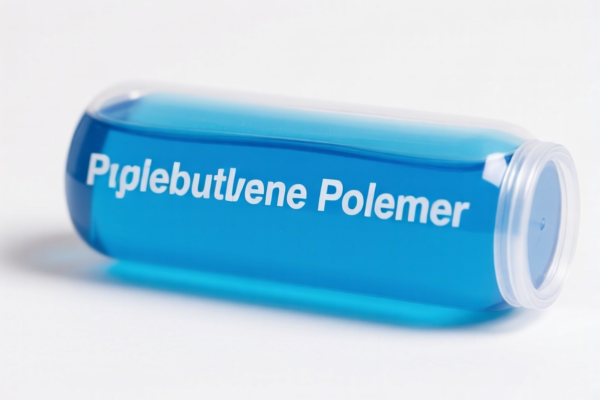

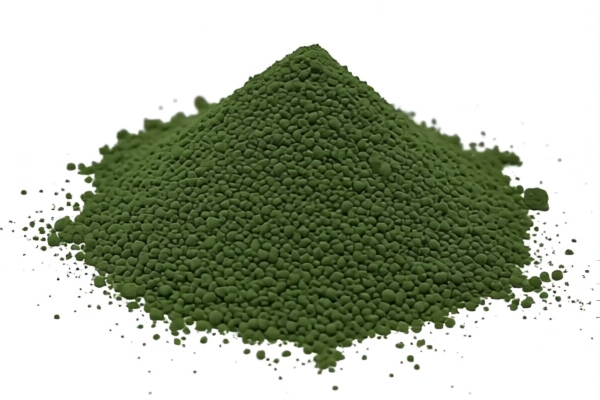

AI分析
🧪 Polyether Polymer & Derivatives: Customs Classification & Tariff Deep Dive (2026)
🌐 HS Code Reference & Clearance Guide | 2026 Latest Tariff Analysis | Strategic Compliance Strategy
📌 I. Product Definition & Classification: What Exactly Are "Polyethers"?
Polyethers are a class of polymers where the main chain consists of ether linkages (–R–O–R–). In international trade, they are primarily used as raw materials for polyurethane production, adhesives, surfactants, and specialty chemicals.
Depending on their chemical structure, state of mixture, and intended application, they fall into different HS Code categories. The distinction is critical because pure chemical forms often attract different tariffs than pre-mixed adhesives or制剂 (preparations).
⚠️ Key Distinction Point:
- If it is a pure chemical raw material (e.g., raw polyether polyol) → Likely Chapter 39 or Chapter 38.
- If it is a pre-mixed adhesive or chemical preparation → Likely Chapter 38.
- Misclassification Risk: Declaring a mixture as a pure chemical to avoid higher "add-on" tariffs can lead to severe penalties.
📦 II. HS Code Classification Details (2026 Latest Tariff Authority Comparison)
Based on the provided data, here are the four specific HS Codes for Polyether-related products:
| HS Code | Product Description (Summary) | Category Type | Tax Rate |
|---|---|---|---|
3907.21.00.00 |
Polyether Raw Chemical Mixture | Pure Polymer/Resin | 41.5% |
3506.91.50.00 |
Polyether Polymer-based Adhesive | Adhesive Product | 37.1% |
3824.99.29.00 |
Polyether Chemical Preparation Mixture | Chemical Preparation | 41.5% |
3824.99.49.00 |
Polyether Hydrocarbon Derivative Adhesive | Adhesive Preparation | 41.5% |
3907.29.00.00 |
Other Polyether Chemical Raw Materials | Other Polymer | 41.5% |
🔍 Important Note:
- Chapter 39 (3907) covers polymers in primary forms (resins, powders, liquids).
- Chapter 35 (3506) covers prepared adhesives that are not elsewhere specified.
- Chapter 38 (3824) covers miscellaneous chemical products and preparations, including those mixed with other substances for specific industrial uses.
💰 III. 2026 Latest Tariff Rate Breakdown (Including Surtaxes & Policy Add-ons)
✅ Applicable Country: USA (US)
✅ Origin: China (CN)
✅ Effective Date: November 10, 2025 (and subsequent imports)
🎯 1. 3907.21.00.00 – Polyether Raw Chemical Mixture
| Item | Details |
|---|---|
| Base Tariff | 6.5% (ad valorem) |
| Section 301 Surtax | +25.0% (USITC Footnote 9903.88.01) |
| 122 Clause Tariff | +10.0% (Specific to China-origin goods) |
| Total Tax Rate | 41.5% |
| Calculation Basis | CIF Value × 41.5% |
| De Minimis Exemption | ❌ Not Eligible (deny_de_minimis) |
| Legal Path | IEEPA:9903.01.25 → USITC:3907.21.00.00 → FOOTNOTE:9903.88.01 |
📌 Explanation:
- This code applies to raw polyether resins or unmodified polymer mixtures.
- The 6.5% base is standard for polyethers.
- The 35% additional tariff (25% + 10%) makes this a high-cost import.
🎯 2. 3506.91.50.00 – Polyether Polymer-Based Adhesive
| Item | Details |
|---|---|
| Base Tariff | 2.1% |
| Section 301 Surtax | +25.0% |
| 122 Clause Tariff | +10.0% |
| Total Tax Rate | 37.1% |
| Calculation Basis | CIF Value × 37.1% |
| De Minimis Exemption | ❌ Not Eligible |
| Legal Path | IEEPA:9903.01.24 → USITC:3506.91.50.00 → FOOTNOTE:9903.88.01 |
📌 Explanation:
- This code is for adhesives where polyether polymers are the main binding agent.
- Lower Base Tariff (2.1%) compared to raw chemicals, but still subject to full surtaxes.
- Key Requirement: Must prove the product is primarily used as an adhesive (e.g., technical data sheet must state "bonding" or "adhesion").
🎯 3. 3824.99.29.00 – Polyether Chemical Preparation Mixture
| Item | Details |
|---|---|
| Base Tariff | 6.5% |
| Section 301 Surtax | +25.0% |
| 122 Clause Tariff | +10.0% |
| Total Tax Rate | 41.5% |
| Calculation Basis | CIF Value × 41.5% |
| De Minimis Exemption | ❌ Not Eligible |
| Legal Path | IEEPA:9903.01.25 → USITC:3824.99.29.00 → FOOTNOTE:9903.88.01 |
📌 Explanation:
- This covers chemical preparations that do not fall under Chapter 39 (pure polymers) or Chapter 35 (adhesives).
- Examples: Polyether-based surfactants, additives, or industrial solutions.
- High Risk of Misclassification: Often confused with raw polymers. Must provide ingredient list and usage description.
🎯 4. 3824.99.49.00 – Polyether Hydrocarbon Derivative Adhesive
| Item | Details |
|---|---|
| Base Tariff | 6.5% |
| Section 301 Surtax | +25.0% |
| 122 Clause Tariff | +10.0% |
| Total Tax Rate | 41.5% |
| Calculation Basis | CIF Value × 41.5% |
| De Minimis Exemption | ❌ Not Eligible |
| Legal Path | IEEPA:9903.01.25 → USITC:3824.99.49.00 → FOOTNOTE:9903.88.01 |
📌 Explanation:
- Specific for adhesives made from polyether hydrocarbon derivatives.
- Different from3506.91.50.00because it is classified under miscellaneous chemical preparations due to its specific derivative nature.
🎯 5. 3907.29.00.00 – Other Polyether Chemical Raw Materials
| Item | Details |
|---|---|
| Base Tariff | 6.5% |
| Section 301 Surtax | +25.0% |
| 122 Clause Tariff | +10.0% |
| Total Tax Rate | 41.5% |
| Calculation Basis | CIF Value × 41.5% |
| De Minimis Exemption | ❌ Not Eligible |
| Legal Path | IEEPA:9903.01.25 → USITC:3907.29.00.00 → FOOTNOTE:9903.88.01 |
📌 Explanation:
- A "catch-all" for other polyether polymers not specified in3907.21.00.00.
- Use this if your product is a unique polyether polymer form not covered elsewhere in Chapter 39.
🛠️ IV. Customs Clearance Operational Advice (Practical Pitfall Avoidance Guide)
✅ 1. Required Documentation Checklist (All Mandatory)
| Document | Must Provide? | Description |
|---|---|---|
| ✅ Technical Data Sheet (TDS) | ✔️ | Must clearly state chemical composition, viscosity, and primary use (e.g., "for polyurethane foam production" vs. "industrial adhesive"). |
| ✅ Certificate of Origin (CO) | ✔️ | Essential for determining origin-based surtaxes. |
| ✅ Commercial Invoice | ✔️ | Must match the HS Code description precisely (e.g., do not just write "Chemical"). |
| ✅ MSDS (Safety Data Sheet) | ✔️ | Required for chemical clearance. |
| ✅ Product Photos | ✔️ | Show packaging, labels, and physical form (liquid, powder, etc.). |
| ✅ Import License (if applicable) | ✔️ | Check if the specific polyether requires EPA or other agency approval. |
✅ 2. Declaration Strategy (Key Mantra)
🔥 "Adhesive vs. Raw Material: Define Use, Define HS!"
| Scenario | Correct Declaration | Wrong Practice |
|---|---|---|
| Raw Polyether Polyol (for PU foam) | 3907.21.00.00 or 3907.29.00.00 |
Declaring as "Adhesive" → 37.1% (if incorrect) or 41.5% |
| Polyether-based Glue (pre-mixed) | 3506.91.50.00 |
Declaring as "Raw Chemical" → 41.5% |
| Polyether Surfactant/Additive | 3824.99.29.00 |
Declaring as "Polymer" → 41.5% |
| Hydrocarbon Derivative Adhesive | 3824.99.49.00 |
Declaring as generic "Glue" → Risk of audit |
📌 Critical Advice:
- If your product is already mixed with solvents, fillers, or curing agents, it is not a raw polymer (Chapter 39). It is likely a preparation (Chapter 38) or adhesive (Chapter 35).
- Do not declare a pre-mixed adhesive as a raw chemical to "save" on base tariff; the surtax (35%) applies to all. The only saving is the base tariff difference (6.5% vs 2.1%).
✅ 3. Special Cases & Mitigation
| Situation | Handling Advice |
|---|---|
| OEM Polyether Blends | Provide supplier formulation to prove if it is a "raw material" or "preparation". |
| Small Sample Shipments | ❌ No De Minimis Exemption ($800) – Even small quantities are taxed at 41.5%! |
| Polyether in Composite Products | If polyether is just a component (e.g., in a finished mattress), the finished good may have a different HS code. Consult a customs broker. |
| Origin Fraud | Ensure CO is valid. Transshipment via Vietnam/Malaysia does not automatically exempt you from US 301/122 tariffs unless substantial transformation occurs. |
🌍 V. Global Market Comparison (2026 Latest)
| Country/Region | Recommended HS Code | Base Tariff | Additional Tariffs | Total Estimated | Notes |
|---|---|---|---|---|---|
| 🇺🇸 USA | 3907.21.00.00 / 3506.91.50.00 |
2.1%–6.5% | +35% (301 + 122) | 37.1%–41.5% | High Barrier |
| 🇨🇳 China | 3907.21.00.00 |
6.5% | None | 6.5% | Low entry cost |
| 🇪🇺 EU | 3907.21.00.00 |
6.5% | None | 6.5% | No surtaxes |
| 🇬🇧 UK | 3907.21.00.00 |
6.5% | None | 6.5% | Post-Brexit independent |
| 🇯🇵 Japan | 3907.21.00.00 |
5.3% | None | 5.3% | Stable tariffs |
📌 Conclusion:
- The USA is the only major market imposing heavy additional tariffs on Chinese polyether products.
- Cost Impact: A $10,000 shipment to the US incurs $3,710–$4,150 in duties, compared to $650 in the EU or China.
- Strategy: Consider pricing adjustments, supply chain diversification, or using duty-privileged origins (if applicable under USMCA or other FTAs).
📌 VI. Common Errors & Pitfalls (Lessons Learned)
❌ Mistake 1: Declaring "Polyether Adhesive" as "Polymer Resin" (3907) to avoid Chapter 35 classification.
👉 Result: Customs audit → Re-classification → Back taxes + Penalties (often 20% of duty value).
❌ Mistake 2: Assuming "Chemical Preparation" can use De Minimis ($800 exemption).
👉 Result: Denied. All polyether HS codes in this list are excluded from de minimis.
❌ Mistake 3: Ignoring the "122 Clause Tariff" (10%).
👉 Result: Underpayment → CBP Penalty for failure to declare accurate tariff liability.
❌ Mistake 4: Using vague descriptions like "Glue" or "Chemical" on the invoice.
👉 Result: Customs Delay → Storage fees + Demurrage charges.
✅ Correct Practice:
"Polyether Polyol, CAS No. XXX-XX-X, Viscosity XXX cP, Used for Rigid Foam Production, Model XYZ, Chinese Origin"
OR
"Polyether-Based Structural Adhesive, Pre-mixed, Solvent-Free, Model ABC, Chinese Origin"
🎯 VII. Conclusion: Precise Classification, Cost Control, Efficiency!
🎯 Remember the Mantra:
🔹 "Raw Polymer = 3907 (41.5%)"
🔹 "Adhesive = 3506 (37.1%)"
🔹 "Preparation = 3824 (41.5%)"
🔹 "No De Minimis! No Exemptions! Full Tax Applies!"
🔹 "HS Code determines your duty fate. One digit off, thousands lost!"
📌 Pro Tip:
If you are importing large volumes, consider applying for a Tariff Classification Ruling (TCR) from U.S. Customs and Border Protection (CBP) before shipment. This provides legal certainty and protects against retroactive audits.
📣 Immediate Action:
📞 Consult a licensed customs broker
📄 Prepare full TDS and CO
🚀 Clear your polyether shipments smoothly, control costs, and expand your market!
✨ Professional clearance starts with precise classification!
💼 Your cost, precisely calculated.
用户评价
关于 HS 编码归类
协调制度(HS)是由世界海关组织(WCO)制定的国际贸易商品分类标准。全球 200 多个国家采用 HS 系统作为海关关税、贸易统计和进出口监管的基础。
每个 HS 编码遵循以下层级结构:
- 章(2 位)——商品大类(例如:第 84 章:机器和机械设备)
- 品目(4 位)——章内的更具体分类
- 子目(6 位)——国际通用细分,所有 WCO 成员国统一使用
- 本国细分(8-10 位)——各国自行扩展的细分编码,如美国 HTSUS 10 位编码
正确的 HS 编码归类对于顺利通关、准确缴纳关税和遵守贸易法规至关重要。错误归类可能导致海关延误、多缴关税或罚款。
从CN进口到US时,适用的关税税率可能包括:
- 最惠国(MFN)税率——适用于 WTO 成员国的标准关税税率
- 普通税率——适用于无贸易协定国家
- 贸易救济关税——附加关税,如 301 条款(反倾销)、232 条款(国家安全)或反补贴税
本页内容仅供参考。如需正式归类,请咨询当地海关或持牌报关代理。