Polyether Resin Mixture Granules
CN → US| HS编码 | 关税税率 | 原产国 | 目的国 | 文档 |
|---|---|---|---|---|
| 3907210000 | 41.5% | CN | US | 官方文档 |
| 3907290000 | 41.5% | CN | US | 官方文档 |
| 3506915000 | 37.1% | CN | US | 官方文档 |
| 3824992900 | 41.5% | CN | US | 官方文档 |
| 3907210000 | 41.5% | CN | US | 官方文档 |
商品图片
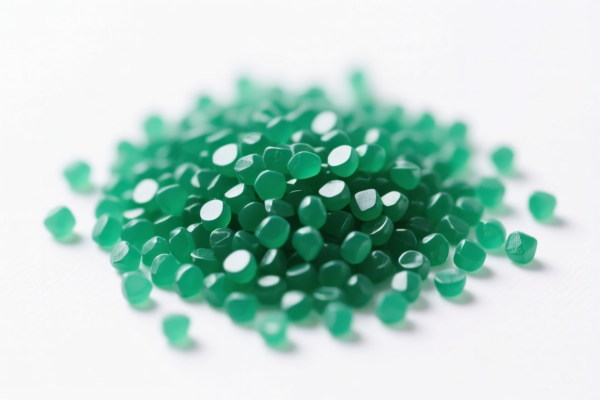
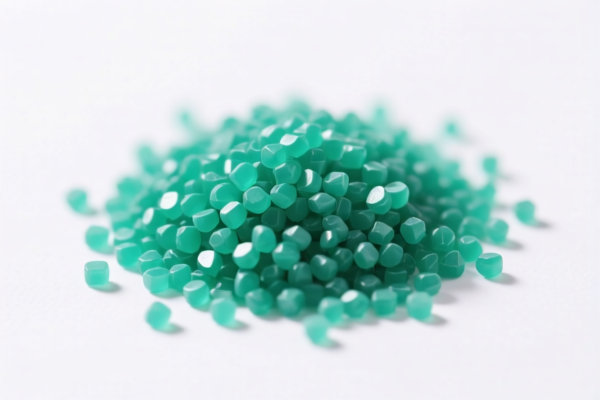
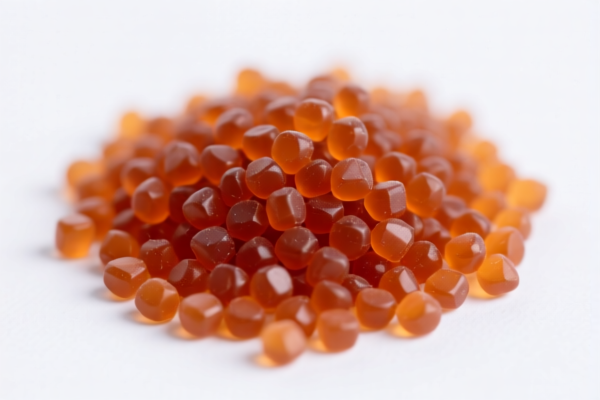
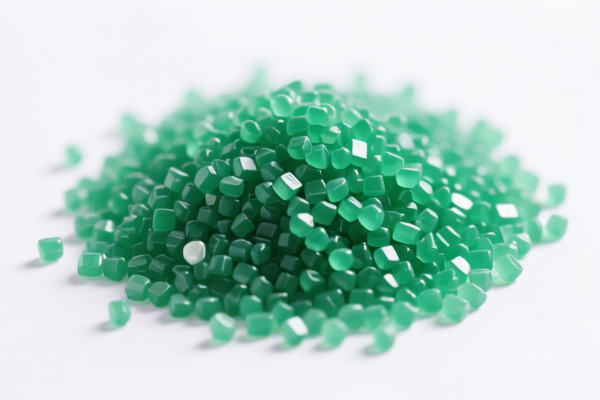
AI分析
🧪 Polyether Resin Mixture Granules (聚醚树脂混合粉末或颗粒)
🌐 HS Code Reference & Clearance Guide | 2026 Latest Tariff Analysis | Professional Customs Strategy
📌 I. Product Definition & Classification: What are "Polyether Resins"?
Polyether Resins are a class of polymers containing ether linkages in the main chain. They are typically produced via the ring-opening polymerization of cyclic ethers (such as ethylene oxide, propylene oxide, or tetrahydrofuran).
In international trade, these materials are primarily classified under Chapter 39 (Plastics and Articles Thereof), specifically heading 3907, which covers "Other polyethers." The classification depends heavily on the physical form (powder, granules, pellets) and the specific chemical composition (homopolymer vs. copolymer, or mixed with other substances).
⚠️ Key Distinction Point:
- If the product is a primary form (granules/powders) of a pure polyether resin → 3907.21/29
- If the product is a prepared adhesive (mixed with solvents, fillers, or curing agents for bonding) → 3506.91
- If the product is a general chemical mixture/preparation not fitting the above specific definitions → 3824.99
📦 II. HS Code Classification Details (2026 Latest Tariff Authority Cross-Reference)
Based on the provided data, here are the four possible classifications for "Polyether Resin Mixture Granules," depending on the precise composition and intended use.
| HS Code | Product Description | Applicable Scenario | Key Characteristic |
|---|---|---|---|
3907.21.00.00 |
Polyethers: Copoly-oxymethylenes, in primary forms | Mixed Powders/Granules of copoly-oxymethylenes | Specific copolymer type; primary form |
3907.29.00.00 |
Polyethers: Other polyethers, in primary forms | General Mixed Powders/Granules of other polyethers | Catch-all for polyether granules not elsewhere specified |
3506.91.50.00 |
Prepared adhesives: Other, based on polymers | Polyether Adhesive Mixtures | Function is adhesion; contains binders/additives |
3824.99.29.00 |
Prepared binders for metal/ceramic foundry molds; other chemical products | General Chemical Mixtures | Broad category; non-specific polyether mixture |
🔍 Important Note:
-3907is the standard classification for raw polyether resins in granular/powder form used as plastic raw materials.
-3506applies if the mixture is specifically formulated as an adhesive (glue).
-3824is often used when the mixture does not fit the strict definition of a "resin" or "adhesive" under Ch 35/39, but is a "preparation" for general chemical use.
💰 III. 2026 Latest Tariff Rate Breakdown (Including Surcharges & Policy Add-ons)
✅ Applicable Country: United States (US)
✅ Country of Origin: China (CN)
✅ Effective Time: Current Trade War Tariffs Active
For ALL listed HS Codes, the tariff structure is identical due to the origin (China) and the nature of the goods (plastics/chemicals).
🎯 1. 3907.21.00.00 & 3907.29.00.00 – Polyether Resins in Primary Forms
| Item | Content |
|---|---|
| Base Tariff | 6.5% (MFN Rate for Chapter 39) |
| Section 301 Surcharge | +25% (USITC Footnote: 9903.01.24 / 9903.01.25) |
| Section 122 Surcharge | +10% (IEEPA Section 122: Additional Duty on China Imports) |
| Total Tariff Rate | 41.5% |
| Tax Calculation | CIF Value × 41.5% |
| De Minimis Exemption | ❌ NOT APPLICABLE (Deny_de_minimis) |
| Legal Basis Path | USITC:3907.21.00.00 → 301_Tariff:25% → IEEPA:122:10% |
📌 Explanation:
- Base 6.5%: Standard most-favored-nation (MFN) rate for polyethers.
- 25% Surcharge: Result of US Trade Action 301 against China.
- 10% Surcharge: Additional duty under Section 122 (often related to specific policy lists or ongoing trade remedies).
- Total: 41.5% is a HIGH tariff barrier. This significantly impacts the cost of importing raw polyether materials for manufacturing in the US.
🎯 2. 3506.91.50.00 – Prepared Adhesives Based on Polymers
| Item | Content |
|---|---|
| Base Tariff | 2.1% (MFN Rate for Chapter 35 Adhesives) |
| Section 301 Surcharge | +25% |
| Section 122 Surcharge | +10% |
| Total Tariff Rate | 37.1% |
| Tax Calculation | CIF Value × 37.1% |
| De Minimis Exemption | ❌ NOT APPLICABLE |
| Legal Basis Path | USITC:3506.91.50.00 → 301_Tariff:25% → IEEPA:122:10% |
📌 Explanation:
- Although the base rate is lower (2.1% vs 6.5%), the 25% + 10% surcharges remain the same.
- Total 37.1% is slightly lower than the resin classification but still VERY HIGH.
- Critical: You must prove the product is a "prepared adhesive" (e.g., provides technical data sheets showing bonding properties, not just raw polymer).
🎯 3. 3824.99.29.00 – Other Chemical Preparations
| Item | Content |
|---|---|
| Base Tariff | 6.5% (MFN Rate for Chapter 38) |
| Section 301 Surcharge | +25% |
| Section 122 Surcharge | +10% |
| Total Tariff Rate | 41.5% |
| Tax Calculation | CIF Value × 41.5% |
| De Minimis Exemption | ❌ NOT APPLICABLE |
| Legal Basis Path | USITC:3824.99.29.00 → 301_Tariff:25% → IEEPA:122:10% |
📌 Explanation:
- Used if the product is a complex mixture that doesn't fit the specific definitions of polyether resin or adhesive.
- Total 41.5% is the highest possible rate in this set. Avoid this classification if a more specific one (3907 or 3506) applies, as it increases audit risk and cost.
🛠️ IV. Customs Clearance Practical Advice (Pitfall Avoidance Guide)
✅ 1. Required Documentation List (Non-negotiable)
| Document | Mandatory? | Purpose |
|---|---|---|
| ✅ Technical Data Sheet (TDS) | ✔️ | To distinguish between Resin (3907), Adhesive (3506), or Chemical Mix (3824). Must show composition. |
| ✅ Bill of Materials (BOM) | ✔️ | Details the percentage of polyether vs. additives, fillers, or solvents. |
| ✅ Product Photos | ✔️ | Show granules/powder form. Must match "primary form" description for 3907. |
| ✅ Commercial Invoice | ✔️ | Must explicitly state "Polyether Resin" or "Prepared Adhesive," NOT generic "Chemical Mixture." |
| ✅ Certificate of Origin | ✔️ | Required for verifying Chinese origin (triggers 35% surcharges). |
| ✅ SDS (Safety Data Sheet) | ✔️ | Required for hazardous goods classification and handling. |
✅ 2. Declaration Tips (Key Mnemonics)
🔥 “Form Determines Code, Use Determines Tax!”
| Scenario | Correct HS Code | Reason |
|---|---|---|
| Raw granules/powders, no solvents, used for plastic molding | 3907.21/29 | "Primary Form" of polymer |
| Granules mixed with solvents/curing agents for gluing | 3506.91 | "Prepared Adhesive" function |
| Complex mixture with unclear primary function | 3824.99 | Last resort; high risk |
| Mistake: Declaring Resin as "Plastic Parts" | 9403/3926 | ❌ Wrong Chapter; leads to penalties |
| Mistake: Declaring Adhesive as "Resin" | 3907 | ❌ Misclassification; may incur fines if audit reveals adhesive properties |
✅ 3. Special Handling Cases
| Case | Handling Advice |
|---|---|
| OEM Polyether Resins | Provide customer design specs + TDS. Avoid vague terms like "plastic material." |
| Blended Polyethers | If mixed with >5% additives, it may still be 3907 if function remains "resin." If additives change function to "adhesive," switch to 3506. |
| Small Samples (De Minimis) | ❌ NO Exemption. All four HS codes have deny_de_minimis. Even small shipments face 37-41.5% tax. |
| Transshipment via Vietnam/Mexico | ❌ High Risk. If origin is still China, customs may apply "substantial transformation" checks. Do not misdeclare origin. |
🌍 V. Global Market Clearance Comparison (2026 Latest)
| Country/Region | Recommended HS Code | Tariff Rate | Certification | Remarks |
|---|---|---|---|---|
| 🇺🇸 USA | 3907.21.00.00 / 3907.29.00.00 |
41.5% | None specific | Highest burden due to 301 + 122 tariffs |
| 🇨🇳 China | 3907.21.00.00 |
6.5% | None | Base rate only |
| 🇪🇺 EU | 3907.21.00.00 |
6.5% | REACH Compliance | No trade war tariffs |
| 🇮🇳 India | 3907.21.00.00 |
7.5% | BIS (if applicable) | Moderate tariffs |
| 🇦🇺 Australia | 3907.21.00.00 |
5% | None | FTA benefits may apply if non-China |
📌 Conclusion:
- The US is the most expensive market due to the 41.5% total tariff.
- EU and India offer significantly lower entry barriers.
- Cost Optimization: Consider sourcing polyether resins from non-China origins (e.g., Germany, South Korea, Thailand) to avoid the 35% surcharge (25% + 10%).
📌 VI. Common Errors & Pitfall Guide (Lessons Learned)
❌ Error 1: Declaring "Polyether Mixture" as "Plastic Parts"
👉 Consequence: Wrong HS code → Penalty + Back Taxes + Delayed Release
❌ Error 2: Using vague description "Chemical Powder"
👉 Consequence: Customs cannot classify → Held at Port + Inspection Fees + 30-day Delay
❌ Error 3: Ignoring Section 122 Tariff
👉 Consequence: Underpayment by 10% → Audit Trigger + Interest on Underpaid Duties
❌ Error 4: Assuming De Minimis (Under $800) applies
👉 Consequence: Shipment Seized or Taxed 41.5% anyway. No exemption for China-origin chemicals.
✅ Correct Practice:
“Polyether Resin, Copoly-oxyethylene, Primary Form (Granules), Model XYZ, for Industrial Plastic Molding, CN Origin”
🎯 VII. Conclusion: Professional Declaration Saves Money!
🎯 Remember the Formula:
🔹 “Resin = 3907 (41.5%), Adhesive = 3506 (37.1%), Mixture = 3824 (41.5%)”
🔹 “China Origin = +35% Surcharges. De Minimis = NO Exemption.”
📌 Pro Tip:
If your polyether resins are originally from Vietnam, Germany, or South Korea, you can avoid the 35% surcharge, reducing the total tariff to 6.5% (Base) + 0% Surcharges = 6.5%.
👉 Recommendation: Consider supply chain diversification to non-China origins to save 35% on every shipment.
📣 Immediate Action Required:
📞 Contact a Licensed Customs Broker + Provide TDS + Request Advance Ruling (if possible)
🚀 Ensure Accurate Declaration to Avoid Seizure and High Penalties!
✨ Professional Customs Clearance Starts with Accurate Classification!
💼 Your Profit Margin Depends on Precise Tariff Calculation!
用户评价
关于 HS 编码归类
协调制度(HS)是由世界海关组织(WCO)制定的国际贸易商品分类标准。全球 200 多个国家采用 HS 系统作为海关关税、贸易统计和进出口监管的基础。
每个 HS 编码遵循以下层级结构:
- 章(2 位)——商品大类(例如:第 84 章:机器和机械设备)
- 品目(4 位)——章内的更具体分类
- 子目(6 位)——国际通用细分,所有 WCO 成员国统一使用
- 本国细分(8-10 位)——各国自行扩展的细分编码,如美国 HTSUS 10 位编码
正确的 HS 编码归类对于顺利通关、准确缴纳关税和遵守贸易法规至关重要。错误归类可能导致海关延误、多缴关税或罚款。
从CN进口到US时,适用的关税税率可能包括:
- 最惠国(MFN)税率——适用于 WTO 成员国的标准关税税率
- 普通税率——适用于无贸易协定国家
- 贸易救济关税——附加关税,如 301 条款(反倾销)、232 条款(国家安全)或反补贴税
本页内容仅供参考。如需正式归类,请咨询当地海关或持牌报关代理。