Polyether Resin Modified Grade Material
CN → US| HS编码 | 关税税率 | 原产国 | 目的国 | 文档 |
|---|---|---|---|---|
| 3907210000 | 41.5% | CN | US | 官方文档 |
| 3907290000 | 41.5% | CN | US | 官方文档 |
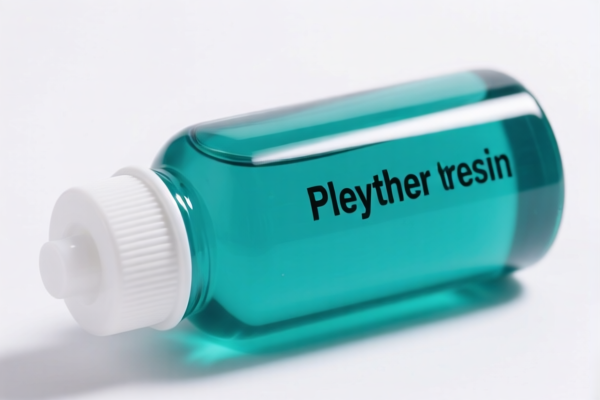
商品图片



AI分析
🧪 Polyether Resin Modified Grade Material (Bis(polyoxyethylene) Methylphosphonate & Other Polyethers)
🌐 HS Code Reference & Customs Clearance Guide | 2026 Tariff Code Analysis | Professional Clearance Strategy
📌 One, Product Definition and Classification: What exactly is this "Modified Grade"?
Polyether resins, particularly those in primary forms, are high-performance polymers widely used in adhesives, coatings, sealants, and industrial lubricants. The term "Modified Grade" in your input generally refers to chemically altered polyethers, specifically Bis(polyoxyethylene) methylphosphonate (a specialized ether-phosphonate hybrid) or Other Polyethers.
In international trade, these are classified under Heading 3907 (Polyacetals, other polyethers and epoxide resins, in primary forms). The critical distinction lies in whether the product is a specific phosphonate-modified polyether or a standard/other polyether.
⚠️ Key Distinction Point:
- If the chemical name explicitly matches Bis(polyoxyethylene) methylphosphonate (or similar phosphonate-modified structures) →归入 3907.21.00.00
- If it is a generic polyether, non-modified, or other unspecified polyether →归入 3907.29.00.00
📦 Two, HS Code Classification Details (2026 Latest Tariff Authority Comparison)
| HS Code | Product Description | Application Scenarios | Chemical Specificity |
|---|---|---|---|
3907.21.00.00 |
Other polyethers: Bis(polyoxyethylene) methylphosphonate | Specialized lubricants, flame retardants, high-end adhesives, corrosion inhibitors | ✅ Specific: Contains phosphonate group modification |
3907.29.00.00 |
Other polyethers: Other | General-purpose polyethers (PEG, PPG), standard resins, non-modified polyether chains | ❌ General: Does not fall under specific modified categories like phosphonates |
🔍 Important Reminder:
- "Primary Forms" is mandatory: This classification applies only to the raw resin/powder/liquid in primary forms (not finished articles like plastic bottles or films).
- If the product is "Bis(polyoxyethylene) methylphosphonate", it must be classified under 3907.21.00.00, even if described as "modified grade."
- Any polyether that does not match specific subheadings (like 3907.21) falls into 3907.29.00.00 as "Other."
💰 Three, 2026 Latest Tariff Rate Details (Including Surcharge Policies)
✅ Applicable Country: United States (US)
✅ Origin: China (CN)
✅ Effective Time: 2025/2026 (Current Trade Regulations)
🎯 1. 3907.21.00.00 —— Bis(polyoxyethylene) methylphosphonate
| Item | Content |
|---|---|
| Base Duty Rate | 6.5% (Ad Valorem) |
| Section 301 Surcharge | +25.0% (USITC Footnote 9903.3907.21.00) |
| Total Effective Rate | 31.5% |
| Tax Calculation | CIF Value × 31.5% |
| De Minimis Exemption | ❌ Not Applicable (Deny de minimis for Section 301 goods) |
| Legal Basis Path | HTSUS:3907.21.00.00 → USITC:3907.21.00.00 → FOOTNOTE:3907.21.00.00 |
📌 Explanation:
- The 6.5% base rate is the standard Most Favored Nation (MFN) rate for this polyether type.
- The +25% surcharge is imposed under Section 301 of the Trade Act of 1974 against Chinese-origin chemical products.
- Total Tax: 31.5%. This is a high-cost import category. Cost calculation must include this full burden.
🎯 2. 3907.29.00.00 —— Other Polyethers
| Item | Content |
|---|---|
| Base Duty Rate | 6.5% (Ad Valorem) |
| Section 301 Surcharge | +25.0% (USITC Footnote 9903.3907.29.00) |
| Total Effective Rate | 31.5% |
| Tax Calculation | CIF Value × 31.5% |
| De Minimis Exemption | ❌ Not Applicable (Deny de minimis) |
| Legal Basis Path | HTSUS:3907.29.00.00 → USITC:3907.29.00.00 → FOOTNOTE:3907.29.00.00 |
📌 Note:
- The tax structure is identical to3907.21.00.00.
- Whether it is a "modified" phosphonate or a "standard" polyether, both face the 31.5% total duty.
- Misclassification does not reduce tax liability; it only risks penalties.
🛠️ Four, Customs Clearance Practical Advice (Real-World Pitfall Guide)
✅ 1. Required Documentation Checklist (Mandatory)
| Document | Required | Description |
|---|---|---|
| ✅ Chemical Analysis Report | ✔️ | Must explicitly state chemical structure (e.g., "Bis(polyoxyethylene) methylphosphonate" vs. "Polypropylene Glycol") |
| ✅ Formula Sheet | ✔️ | Full composition, including percentages of modifiers |
| ✅ Product Label & MSDS | ✔️ | Safety Data Sheet must match HS code classification (Hazard class) |
| ✅ Certificate of Origin | ✔️ | Essential for confirming Chinese origin (triggers 301 tariff) |
| ✅ Commercial Invoice | ✔️ | Must specify "Polyether Resin, Primary Form" and exact HS Code |
| ✅ Packing List | ✔️ | Weight and quantity details |
✅ 2. Declaration Strategy (Key Mantra)
🔥 “Chemical Name Precision, Avoid Ambiguity, 3907 is the Key, 31.5% is the Reality!”
| Scenario | Correct Declaration | Wrong Practice |
|---|---|---|
| Specific Phosphonate Modified | 3907.21.00.00 + Name: "Bis(polyoxyethylene) methylphosphonate" |
Vague name "Modified Resin" → Audit Risk |
| General Polyether | 3907.29.00.00 + Name: "Polyether Resin, Other" |
Claiming "Free Trade" status incorrectly |
| Finished Articles (e.g., Sealant) | NOT 3907 → Likely 3916/3917/3824 | Declaring resin HS for finished goods → Seizure |
✅ 3. Special Handling Tips
| Situation | Recommendation |
|---|---|
| OEM Custom Grade | Provide client’s specification sheet + chemical structure diagram to prove exact classification |
| Blended Products | If mixed with fillers, ensure the polyether remains the "essential character"; otherwise, classification may shift |
| Small Sample Shipments | Still subject to 31.5% duty; de minimis exemption does not apply to Section 301 goods |
| Re-export from Third Country | If transformed in Vietnam/Mexico, obtain new CO; direct China origin still triggers 301 unless substantial transformation is proven |
🌍 Five, Global Market Comparison (2026 Update)
| Country/Region | Recommended HS Code | Duty Rate (China Origin) | Certification | Notes |
|---|---|---|---|---|
| 🇺🇸 USA | 3907.21.00.00 / 3907.29.00.00 |
31.5% (6.5% + 25%) | None specific | Highest cost due to Section 301 |
| 🇨🇳 China | 3907.21 / 3907.29 | 5% - 6.5% (Import) | None | Domestic trade exempt |
| 🇪🇺 EU | 3907.21 / 3907.29 | 6.5% | REACH Registration | No 301 equivalent, but REACH is costly |
| 🇬🇧 UK | 3907.21 / 3907.29 | 6.5% | UK REACH | Post-Brexit alignment with EU |
| 🇦🇺 Australia | 3907.21 / 3907.29 | 5% | AICIS | Moderate duty, no major surcharge |
📌 Conclusion:
- USA is the most expensive market for these polyethers due to the 25% Section 301 surcharge.
- EU and UK apply standard MFN rates (~6.5%) but require REACH compliance, which is a significant administrative burden.
- Alternative Sourcing: Consider sourcing from non-China origins (e.g., Germany, South Korea) to avoid the 25% US surcharge, but check for rules of origin.
📌 Six, Common Errors & Pitfalls (Lessons Learned)
❌ Error 1: Using generic name "Polyether Resin" without specifying structure
👉 Consequence: Customs may audit, delay shipment, or assign highest applicable rate + penalties.
❌ Error 2: Declaring "Finished Product" (e.g., cured resin) under 3907
👉 Consequence: Wrong classification (should be 3916/3917/3824) → Rejection or Re-shipment.
❌ Error 3: Ignoring Section 301 applicability
👉 Consequence: Underpayment of duty (31.5% vs. declared 6.5%) → Back taxes + Interest + Fines.
❌ Error 4: Claiming de minimis for small packages
👉 Consequence: Not allowed for Section 301 goods → Confiscation or forced duty payment.
✅ Correct Practice:
"Bis(polyoxyethylene) methylphosphonate, Polyether Resin, Primary Form, CAS No. [Insert CAS], Model XYZ, HS Code 3907.21.00.00, Origin: China"
🎯 Seven, Conclusion: Professional Classification Saves Money!
🎯 Remember the Mantra:
🔹 "Chemical Name Must Be Exact, 3907 is the Family, 31.5% is the Cost, Documentation is Key!"
🔹 "Don't Guess the HS Code, 6.5% Base + 25% Surcharge = 31.5% Total!"
📌 Pro Tip:
- If your product is Bis(polyoxyethylene) methylphosphonate, ensure the CAS number is on the invoice to justify 3907.21.00.00.
- For Other Polyethers, use 3907.29.00.00.
- Avoid vague terms like "Modified Grade Material" without chemical specifics.
- Pre-Arrangement: Consider applying for an Advance Ruling from US CBP if the chemical structure is novel.
📣 Immediate Action:
📞 Consult a licensed customs broker + Provide CAS Number + Verify Section 301 List
🚀 Ensure 31.5% duty is factored into your Landed Cost Calculation!
✨ Professional Clearance Starts with Accurate Classification!
💼 Every 0.1% of misclassification can cost thousands in penalties!
用户评价
关于 HS 编码归类
协调制度(HS)是由世界海关组织(WCO)制定的国际贸易商品分类标准。全球 200 多个国家采用 HS 系统作为海关关税、贸易统计和进出口监管的基础。
每个 HS 编码遵循以下层级结构:
- 章(2 位)——商品大类(例如:第 84 章:机器和机械设备)
- 品目(4 位)——章内的更具体分类
- 子目(6 位)——国际通用细分,所有 WCO 成员国统一使用
- 本国细分(8-10 位)——各国自行扩展的细分编码,如美国 HTSUS 10 位编码
正确的 HS 编码归类对于顺利通关、准确缴纳关税和遵守贸易法规至关重要。错误归类可能导致海关延误、多缴关税或罚款。
从CN进口到US时,适用的关税税率可能包括:
- 最惠国(MFN)税率——适用于 WTO 成员国的标准关税税率
- 普通税率——适用于无贸易协定国家
- 贸易救济关税——附加关税,如 301 条款(反倾销)、232 条款(国家安全)或反补贴税
本页内容仅供参考。如需正式归类,请咨询当地海关或持牌报关代理。