Polyethylene Fiber
CN → US| HS编码 | 关税税率 | 原产国 | 目的国 | 文档 |
|---|---|---|---|---|
| 5503909000 | 39.3% | CN | US | 官方文档 |
| 5601220010 | 41.3% | CN | US | 官方文档 |
| 5601220091 | 41.3% | CN | US | 官方文档 |
| 5404198080 | 41.9% | CN | US | 官方文档 |
| 5404900000 | 35.0% | CN | US | 官方文档 |
商品图片
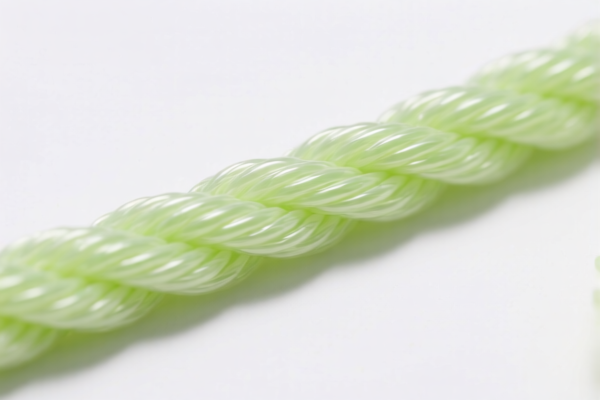
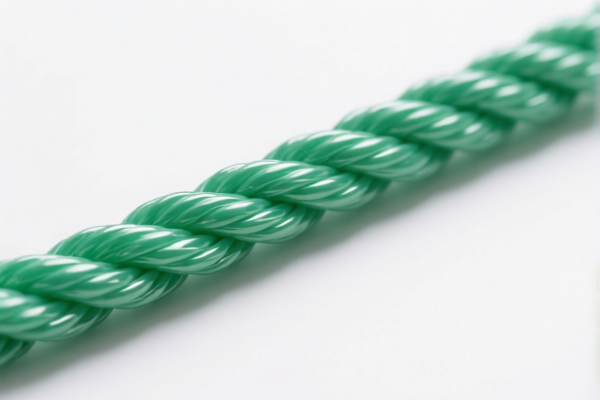
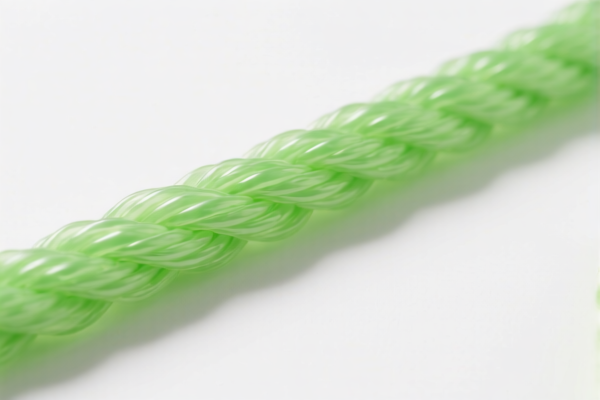
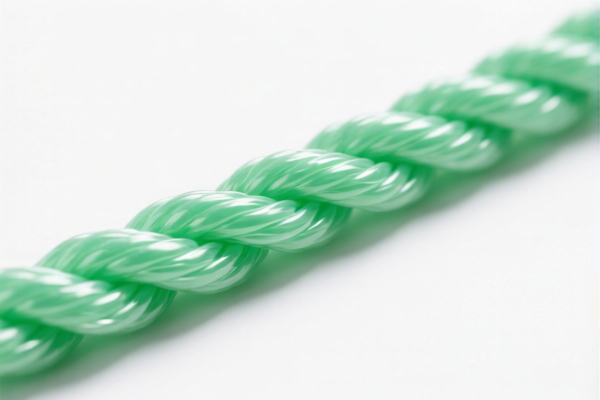
AI分析
🧬 Polyethylene Fiber (PE Fiber)
🌐 HS Code Reference & Customs Clearance Guide | 2026 Latest Tariff Analysis | Strategic Compliance Strategy
📌 I. Product Definition & Classification: Do You Really Understand "Polyethylene Fiber"?
Polyethylene (PE) fiber, often referred to in trade as high-modulus polyethylene or ultra-high-molecular-weight polyethylene (UHMWPE), is a high-performance synthetic fiber. In international trade, it is primarily categorized under Synthetic Fibers or Man-Made Fibers, depending on its physical form (filament, staple, tow) and processing state.
Key Distinction Points:
- Form Matters: Is it in the form of "filaments" (continuous strands), "staples" (short fibers), or "tow" (bundles)?
- Material Logic: PE is a synthetic polymer. It generally falls under Chapter 54 (Synthetic Filaments) or Chapter 56 (Textile Fleece/Felt/Fibers), but most commonly Chapter 54 if processed as continuous filaments or monofilaments.
- Tariff Complexity: Due to its strategic importance (used in bulletproof vests, aerospace, marine ropes), PE fibers are subject to significant additional tariffs under US trade policies (Section 301 and Section 122/IEEPA).
⚠️ Critical Note:
Misclassification can lead to massive duty discrepancies. Always verify the physical state (monofilament vs. multifilament vs. staple) against the HS Code descriptions.
📦 II. HS Code Classification Details (2026 Latest Tariff Authority Comparison)
Based on the provided data, here are the potential HS Codes for Polyethylene Fiber, along with their logic and tax implications.
| HS Code | Product Description & Logic | Application Scenario | Primary Tax Category |
|---|---|---|---|
5601.22.00.10 |
Polyethylene Fiber: Categorized under man-made fibers. Preliminary classification as fiber制品 (fiber products) within this subheading. | General PE fiber products not specified elsewhere; broad "fiber" category. | 41.3% |
5601.22.00.91 |
Polyethylene Fiber: Explicitly includes "fiber" form. Belongs to man-made fibers (synthetic fibers), fits the "Other" category requirement. | PE fibers fitting the "Other" description under man-made fiber categories. | 41.3% |
5404.19.80.80 |
Polyethylene Fiber: Classified as synthetic fiber, form is filament (monofilament). Fits the "Other synthetic monofilaments" classification. | Single-strand PE filaments, industrial threads, specific monofilament forms. | 41.9% |
5404.90.00.00 |
Polyethylene Fiber: Synthetic material, form fits monofilament/ribbon attributes. Fits "Other synthetic continuous filaments" logic. | Other synthetic continuous filaments not specified in more detailed subheadings. | 35.0% |
5503.90.90.00 |
Polyethylene Fiber: Synthetic fiber category, form fits fiber characteristics. Fits the "Other" category inference logic. | Staple fibers or other forms not covered by filaments or specific man-made fiber headings. | 39.3% |
🔍 Key Takeaway:
- The base duty varies from 0% to 6.9% depending on the specific subheading.
- However, the Total Effective Tax Rate ranges from 35.0% to 41.9% due to heavy US附加 tariffs (Section 301 + Section 122/IEEPA).
-5404.90.00.00offers the lowest total tax (35.0%) if the product qualifies as "Other synthetic continuous filaments."
💰 III. 2026 Latest Tariff Rate Breakdown (Including Additional Taxes)
✅ Applicable Country: United States (US)
✅ Origin: China (CN)
✅ Effective Date: From November 10, 2025 (including subsequent imports)
🎯 1. 5601.22.00.10 & 5601.22.00.91 —— Polyethylene Fiber (Man-Made Fiber Category)
| Item | Detail |
|---|---|
| Base Duty Rate | 6.3% (Ad Valorem) |
| Section 301 Duty | +25.0% (Additional Tariff on Chinese Goods) |
| Section 122/IEEPA Duty | +10.0% (Additional Tariff under International Emergency Economic Powers Act) |
| Total Tax Rate | 41.3% |
| Tax Calculation | CIF Value × 41.3% |
| De Minimis Exemption | ❌ NOT Eligible (Denied) |
| Legal Basis Path | IEEPA:9903.01.25 → Section 301 Footnote → USITC:5601.22.00.10/91 |
📌 Explanation:
- These codes fall under the broader "Man-Made Fiber" umbrella.
- The 6.3% base duty is added to 25% (Section 301) and 10% (Section 122).
- Total 41.3% is a high-cost entry. This classification is suitable if the fiber does not fit neatly into monofilament or staple categories but is clearly a "fiber."
🎯 2. 5404.19.80.80 —— Polyethylene Fiber (Synthetic Monofilament)
| Item | Detail |
|---|---|
| Base Duty Rate | 6.9% (Ad Valorem) |
| Section 301 Duty | +25.0% |
| Section 122/IEEPA Duty | +10.0% |
| Total Tax Rate | 41.9% |
| Tax Calculation | CIF Value × 41.9% |
| De Minimis Exemption | ❌ NOT Eligible (Denied) |
| Legal Basis Path | IEEPA:9903.01.25 → Section 301 Footnote → USITC:5404.19.80.80 |
📌 Explanation:
- If your PE fiber is in monofilament form (single strand), this is the likely code.
- The base duty is slightly higher (6.9% vs 6.3%), leading to a higher total rate (41.9%).
- Caution: Ensure the product is truly a "monofilament" and not a multifilament yarn, or you risk misclassification penalties.
🎯 3. 5404.90.00.00 —— Polyethylene Fiber (Other Synthetic Continuous Filaments)
| Item | Detail |
|---|---|
| Base Duty Rate | 0.0% (Ad Valorem) |
| Section 301 Duty | +25.0% |
| Section 122/IEEPA Duty | +10.0% |
| Total Tax Rate | 35.0% |
| Tax Calculation | CIF Value × 35.0% |
| De Minimis Exemption | ❌ NOT Eligible (Denied) |
| Legal Basis Path | IEEPA:9903.01.25 → Section 301 Footnote → USITC:5404.90.00.00 |
📌 Explanation:
- This is the most cost-effective option if the product qualifies.
- The base duty is 0%, so only the additional tariffs apply.
- Eligibility: The fiber must be a synthetic continuous filament (not monofilament, not staple) and fall under "Other."
- Strategy: If your PE fiber is multifilament (e.g., for rope or textile applications), argue for this classification to save 6.3% - 6.9% in base duties.
🎯 4. 5503.90.90.00 —— Polyethylene Fiber (Other Synthetic Staple Fibers)
| Item | Detail |
|---|---|
| Base Duty Rate | 4.3% (Ad Valorem) |
| Section 301 Duty | +25.0% |
| Section 122/IEEPA Duty | +10.0% |
| Total Tax Rate | 39.3% |
| Tax Calculation | CIF Value × 39.3% |
| De Minimis Exemption | ❌ NOT Eligible (Denied) |
| Legal Basis Path | IEEPA:9903.01.25 → Section 301 Footnote → USITC:5503.90.90.00 |
📌 Explanation:
- Use this code if the PE fiber is in staple form (short cuts, similar to cotton or wool staples).
- Total rate is 39.3%, which is lower than the man-made fiber codes but higher than the "Other Synthetic Continuous Filaments" code.
- Critical: Do not use this for continuous filaments; customs will reject it if the form is clearly long strands.
🛠️ IV. Customs Clearance Practical Advice (Pitfall Avoidance Guide)
✅ 1. Required Documentation Checklist (Non-Negotiable)
| Document | Mandatory? | Explanation |
|---|---|---|
| ✅ Product Specification Sheet | ✔️ | Must detail: Fiber type (PE/UHMWPE), Form (Filament/Staple/Monofilament), Denier, Tensile Strength, Application. |
| ✅ Technical Data Sheet (TDS) | ✔️ | Proves chemical composition and physical properties to support HS Code selection. |
| ✅ Product Photos | ✔️ | Clear images of the fiber form (bundles, loose fibers, spools) to prove it is not a finished fabric or rope. |
| ✅ Commercial Invoice | ✔️ | Must clearly state: "Polyethylene Fiber," "Synthetic Fiber," and HS Code. |
| ✅ Packing List | ✔️ | Detail gross/net weight, number of packages. |
| ✅ Certificate of Origin (CO) | ✔️ | If claiming any preferential treatment (though unlikely for CN origin under current tariffs). |
| ✅ Third-Party Test Report | ✔️ | Recommended to confirm polymer type (PE) if customs questions the material. |
✅ 2. Declaration Strategy (Key Mnemonics)
🔥 “Form Determines Code, Duty Savings Are Huge!”
| Scenario | Correct Declaration | Incorrect Action | Consequence |
|---|---|---|---|
| Monofilament (Single Strand) | 5404.19.80.80 |
Declare as "Other Filament" (5404.90.00.00) |
Risk of misclassification, potential audits, penalty. |
| Multifilament Yarn (Multiple strands) | 5404.90.00.00 |
Declare as "Monofilament" | Higher tax (41.9% vs 35.0%) or rejection. |
| Staple Fiber (Short cuts) | 5503.90.90.00 |
Declare as "Continuous Filament" | Rejection; customs will test for length/properties. |
| General Fiber (Unclear form) | 5601.22.00.10/91 |
Vague description "PE Fiber" | Base duty 6.3% + tariffs = 41.3%. Safe but not optimal. |
📌 Pro Tip:
- If you can demonstrate that your product is multifilament and not monofilament, fight for5404.90.00.00to save 6.9% in total duties.
- Ensure the invoice description is precise: "Synthetic Continuous Filament, Polyethylene, Non-Monofilament."
✅ 3. Special Circumstances Handling
| Situation | Handling Advice |
|---|---|
| OEM Custom Fiber | Provide customer orders and technical drawings to prove specific form (filament vs. staple). |
| Blended Fibers | If mixed with other polymers, classification may change. Pure PE is key for these codes. |
| Value-Added Processing | If the fiber is treated with coatings or adhesives, it may move to Chapter 39 (Plastics) or Chapter 59 (Impregnated Textiles). |
| Small Sample Shipments | Even samples are subject to full duties; no de minimis exemption for PE fibers from China. |
🌍 V. Global Market Clearance Comparison (2026 Latest)
| Country/Region | Recommended HS Code | Total Tax Rate (China Origin) | Certification Requirements | Notes |
|---|---|---|---|---|
| 🇺🇸 USA | 5404.90.00.00 (Optimal) |
35.0% | None specific for fiber | High tariffs apply; avoid misclassification. |
| 🇪🇺 EU | 5402 or 5503 |
~4% - 6% | REACH Compliance | No Section 301/122 tariffs. |
| 🇨🇳 China | 5404 or 5503 |
0% - 9% (Import Duty) | N/A | Export from China may have different duties. |
| 🇻🇳 Vietnam | Varies | Varies | Certificate of Origin | Check FTAs if re-exporting. |
📌 Conclusion:
- USA is the highest-tariff market for PE fibers due to Section 301 and Section 122.
- EU and other markets are significantly cheaper, but if the final product goes to the US, the supply chain must be careful.
- Optimization Tip: If possible, structure the product as multifilament (not monofilament) to utilize the 0% base duty code5404.90.00.00.
📌 VI. Common Errors & Pitfall Guide (Lessons Learned)
❌ Error 1: Declaring Monofilament as "Other Filaments"
👉 Consequence: Customs may accept it, but if audited, they will reclassify to 5404.19.80.80 → Higher Base Duty (6.9% vs 0%) → Back Taxes + Interest.
❌ Error 2: Vague Description "Plastic Fiber"
👉 Consequence: Customs may classify under Chapter 39 (Plastics) or reject, leading to delays and storage fees.
❌ Error 3: Ignoring Section 122/IEEPA 10%
👉 Consequence: Underestimating landed cost by 10%. Budget correctly!
❌ Error 4: Using Staple Fiber Code for Filaments
👉 Consequence: Severe misclassification, potential fraud allegations.
✅ Correct Practice:
"Synthetic Continuous Filament, Polyethylene, Multifilament, Untreated, 1000 Denier, for Industrial Use"
HS Code:5404.90.00.00
Total Duty: 35.0%
🎯 VII. Conclusion: Precision Classification Saves Money!
🎯 Remember the Mnemonic:
🔹 “Filament vs. Monofilament: 35% vs 42%, Know the Form!”
🔹 “Staple is 39%, Monofilament is 42%, Multifilament is 35% - Win the Difference!”
🔹 “Section 301 + 122 = 35% Minimum, Don’t Get Caught in 41%!”
📌 Tips:
- If your PE fiber is exclusively for non-military/non-industrial use, argue for 5404.90.00.00 to minimize base duty.
- Always provide technical data to prove the fiber form.
- Consult a customs broker for pre-classification rulings if the volume is high.
📣 Immediate Action:
📞 Contact your customs broker with Technical Data Sheets
📝 Declare "Synthetic Continuous Filament, Polyethylene"
🚀 Optimize for5404.90.00.00(35.0%)
💰 Save up to 6.9% in duties per shipment!
✨ Professional Classification, Start with Precision!
💼 Every Dollar of Duty Saved is Pure Profit!
用户评价
关于 HS 编码归类
协调制度(HS)是由世界海关组织(WCO)制定的国际贸易商品分类标准。全球 200 多个国家采用 HS 系统作为海关关税、贸易统计和进出口监管的基础。
每个 HS 编码遵循以下层级结构:
- 章(2 位)——商品大类(例如:第 84 章:机器和机械设备)
- 品目(4 位)——章内的更具体分类
- 子目(6 位)——国际通用细分,所有 WCO 成员国统一使用
- 本国细分(8-10 位)——各国自行扩展的细分编码,如美国 HTSUS 10 位编码
正确的 HS 编码归类对于顺利通关、准确缴纳关税和遵守贸易法规至关重要。错误归类可能导致海关延误、多缴关税或罚款。
从CN进口到US时,适用的关税税率可能包括:
- 最惠国(MFN)税率——适用于 WTO 成员国的标准关税税率
- 普通税率——适用于无贸易协定国家
- 贸易救济关税——附加关税,如 301 条款(反倾销)、232 条款(国家安全)或反补贴税
本页内容仅供参考。如需正式归类,请咨询当地海关或持牌报关代理。