Polyethylene Food Grade Ziplock Bag
CN → US| HS编码 | 关税税率 | 原产国 | 目的国 | 文档 |
|---|---|---|---|---|
| 3923210011 | 38.0% | CN | US | 官方文档 |
| 3923210030 | 38.0% | CN | US | 官方文档 |
| 3923210030 | 38.0% | CN | US | 官方文档 |
| 3923210011 | 38.0% | CN | US | 官方文档 |
| 3920992000 | 39.2% | CN | US | 官方文档 |
商品图片
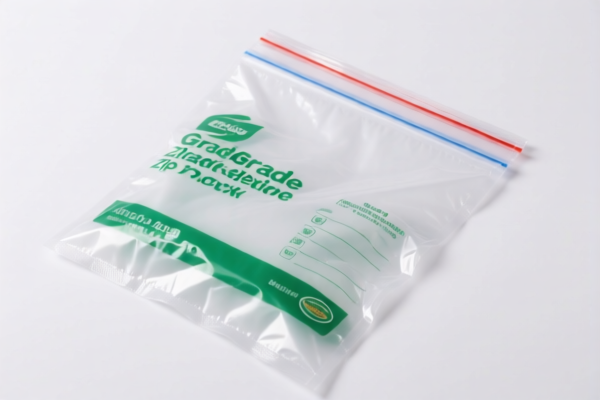
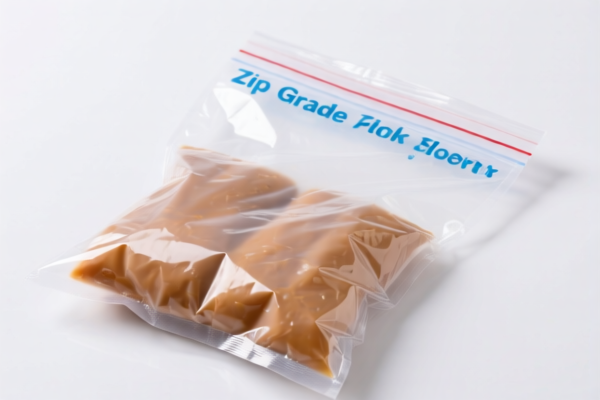
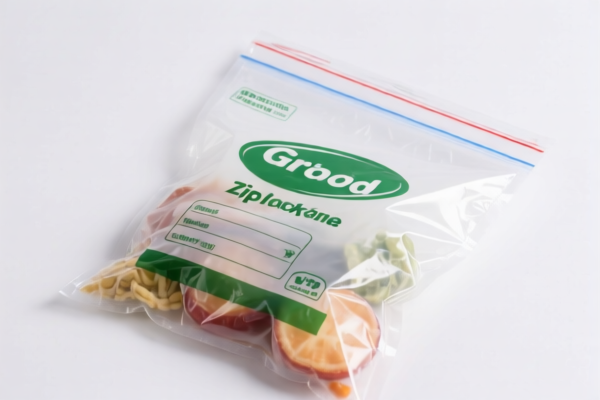
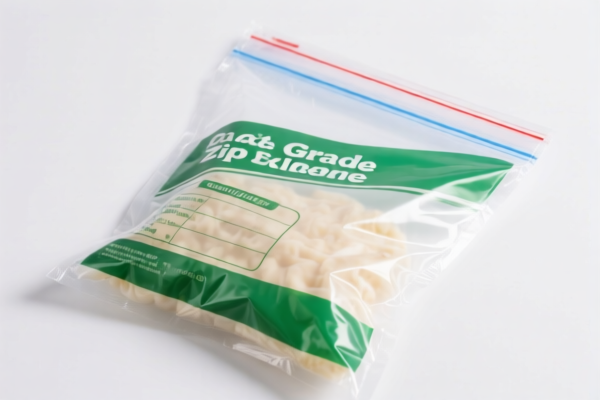
AI分析
📦 Polyethylene Food Grade Ziplock Bag (PE Re-sealable Bags)
🌐 HS Code Reference & Customs Clearance Guide | 2026 Latest Tariff Analysis | Professional-Level Compliance Strategy
📌 I. Product Definition & Classification: Do You Really Understand "Ziplock Bags"?
Polyethylene (PE) Food Grade Ziplock Bags are flexible packaging solutions made from ethylene polymers. In international trade, they are categorized based on material composition, form factor, and specific use case (Food vs. Industrial).
The key distinction lies in the intended end-use and physical structure: * Food-Grade & Re-sealable: Specifically designed for food storage, featuring a sliding or press-to-close mechanism. * Industrial Grade: Used for general packaging, often lacking food-safe certifications or specific re-sealing mechanisms for consumer use. * Decorative/Culinary Tools: Such as piping bags, which are treated as plastic articles for culinary purposes.
⚠️ Key Differentiation Points:
- If the bag is explicitly for food storage with a re-seal feature →归入 3923.21.00.11
- If the bag is for general/industrial packaging or generic re-sealing → 归入 3923.21.00.30
- If the bag is a piping bag for culinary decoration → 归入 3920.99.20.00
📊 II. HS Code Classification Details (2026 Latest Tariff Authoritative Comparison)
| HS Code | Product Description | Application Scenario | Key Feature |
|---|---|---|---|
3923.21.00.11 |
Food-grade polyethylene re-sealable bags | Home food storage, retail food packaging | ✅ Food-grade, Re-sealable mechanism |
3923.21.00.30 |
Industrial-grade polyethylene bags | Industrial packaging, bulk storage | ✅ General purpose, Re-sealable or open-end |
3920.99.20.00 |
Food-grade plastic piping bags | Culinary decoration, pastry, baking | ✅ Specialized shape for piping/extrusion |
🔍 Important Reminder:
- All "Ziplock" bags intended for food must be classified under 3923.21.00.11. Misclassifying them as "industrial" or generic bags can lead to compliance issues with FDA/EU food contact regulations. - Piping bags are distinct from standard Ziplock bags; they are rigid enough to hold pressure and are classified under "other plastic articles" (3920.99.20.00).
💰 III. 2026 Latest Tariff Rate Breakdown (Including Surcharges & Policy Add-ons)
✅ Applicable Country: United States (US)
✅ Country of Origin: China (CN)
✅ Effective Date: From November 10, 2025 onwards (including subsequent imports)
🎯 1. 3923.21.00.11 —— Polyethylene Food Re-sealable Bags
| Item | Content |
|---|---|
| Base Tariff | 3.0% (Ad Valorem) |
| Section 301 Surcharge | +25.0% |
| Section 122 Surcharge | +10.0% |
| Total Effective Rate | 38.0% |
| Tax Calculation | CIF Value × 38.0% |
| De Minimis Eligibility | ❌ No (High risk of inspection) |
| Legal Basis Path | USITC:3923.21.00.11 → Section 301: Footnote 9903.88.01 → Section 122: IEEPA |
📌 Explanation:
- "Base Tariff 3%": Standard Most Favored Nation (MFN) rate for plastics. - "Section 301 (25%)": Applied under U.S. Trade Act Section 301 against Chinese goods. - "Section 122 (10%)": Additional surcharge under International Emergency Economic Powers Act (IEEPA) for specific Chinese imports. - Total 38%: This is a very high tariff for low-value packaging. Profit margins will be significantly impacted.
🎯 2. 3923.21.00.30 —— Industrial/General Polyethylene Bags
| Item | Content |
|---|---|
| Base Tariff | 3.0% |
| Section 301 Surcharge | +25.0% |
| Section 122 Surcharge | +10.0% |
| Total Effective Rate | 38.0% |
| Tax Calculation | CIF Value × 38.0% |
| De Minimis Eligibility | ❌ No |
| Legal Basis Path | USITC:3923.21.00.30 → Section 301 → Section 122 |
📌 Note:
- Tax rate is identical to the food-grade re-sealable bags. - Whether for industrial use or generic re-sealing, the tariff burden remains 38%. - Do not attempt to under-declare by mixing food and industrial goods; customs inspections will verify the "Food Grade" claim via documentation.
🎯 3. 3920.99.20.00 —— Food-Grade Plastic Piping Bags
| Item | Content |
|---|---|
| Base Tariff | 4.2% |
| Section 301 Surcharge | +25.0% |
| Section 122 Surcharge | +10.0% |
| Total Effective Rate | 39.2% |
| Tax Calculation | CIF Value × 39.2% |
| De Minimis Eligibility | ❌ No |
| Legal Basis Path | USITC:3920.99.20.00 → Section 301 → Section 122 |
📌 Note:
- This is the highest tariff bracket among the listed codes due to a slightly higher base rate (4.2%). - Piping bags are considered specialized plastic articles. Ensure your product description explicitly states "Piping Bag" or "Pastry Bag" to avoid misclassification as standard Ziplock bags (which might have different regulatory scrutiny but similar tax rates).
🛠️ IV. Customs Clearance Practical Advice (Real-World Pitfall Avoidance Guide)
✅ 1. Documentation Checklist (Missing Items = Delay/Seizure)
| Document | Mandatory? | Explanation |
|---|---|---|
| ✅ Product Specification Sheet | ✔️ | Must state material (PE), thickness, and Food Grade Certification (FDA/LFGB). |
| ✅ Commercial Invoice | ✔️ | Clearly describe as "Polyethylene Food Grade Ziplock Bags" or "Industrial Polyethylene Bags". Do not use vague terms like "Plastic Bags". |
| ✅ Certificate of Origin (CO) | ✔️ | Essential for verifying Chinese origin and applying correct surcharges. |
| ✅ FDA Compliance Statement | ✔️ | Required for 3923.21.00.11 and 3920.99.20.00 to prove food contact safety. |
| ✅ Packing List | ✔️ | Detail net/gross weight. High volume/low value shipments attract random inspections. |
✅ 2. Declaration Tips (Key Mantras)
🔥 “Material Matters, Use Defines Code, Certs Are King!”
| Scenario | Correct Declaration | Incorrect Practice |
|---|---|---|
| Food Storage Bags | 3923.21.00.11 "Food-grade PE Ziplock" |
Calling it "Plastic Sack" → 3923.21.00.30 (Still 38%, but regulatory risk if food-grade claimed) |
| Industrial Packing Bags | 3923.21.00.30 "Industrial PE Bag" |
Claiming "Food Grade" without certs → Seizure/Fine |
| Piping/Baking Bags | 3920.99.20.00 "Plastic Piping Bag" |
Calling it "Ziplock" → Misclassification |
| Mixed Shipment | Split HS Codes | Mixing food and industrial in one line → Audit Risk |
✅ 3. Special Handling Cases
| Case | Handling Advice |
|---|---|
| OEM Custom Printing | Provide proof of non-infringing trademarks. Custom logos do not change HS code. |
| Biodegradable PE Bags | If marketed as "compostable" but made of standard PE, customs may reject "Eco-friendly" claims unless certified (e.g., BPI). Ensure material matches description. |
| Small Sample Shipments | Even small quantities are subject to the 38-39.2% tariff. De Minimis ($800) exemption may NOT apply if Section 301/122 surcharges are enforced on de minimis entries (Check current CBP enforcement status; recently, many sections are enforced even on de minimis). |
| Food Contact Safety | Ensure the importer has the necessary FDA registration if the product is intended for direct food contact. |
🌍 V. Global Market Customs Comparison (2026 Latest)
| Country/Region | Recommended HS Code | Tariff (China Origin) | Certification Requirements | Notes |
|---|---|---|---|---|
| 🇺🇸 USA | 3923.21.00.11 / .30 |
38.0% | FDA 21 CFR 177.1520 | High Tariff Environment |
| 🇨🇳 China | 3923.21.00.11 |
~5-6% | GB 4806.7 (Food Contact) | Domestic trade standard |
| 🇪🇺 EU | 3923.21.00 |
~4-6% | EU 10/2011 (Plastics Regulation) | CE marking not required for packaging, but food safety proof needed |
| 🇬🇧 UK | 3923.21.00 |
~4-6% | UKCA (if applicable) | Post-Brexit rules |
| 🇯🇵 Japan | 3923.21.00 |
~4-6% | JSL (Japanese Standards for Law) | Strict food contact regulations |
📌 Conclusion:
- The US market is the most expensive due to the additional 35% in surcharges (Section 301 + 122). - European and Asian markets have standard MFN rates (~4-6%), making them more cost-effective for PE packaging exports. - Cost Strategy: For US-bound goods, consider freight cost optimization and duty drawback programs if eligible.
📌 VI. Common Mistakes & Pitfall Guide (Lessons from Blood & Tears)
❌ Mistake 1: Declaring "Food Grade" Ziplock Bags under 3923.21.00.30 (Industrial) to save time.
👉 Consequence: Customs may still assess 38%, but you risk regulatory non-compliance for food safety. If an FDA inspection occurs, lack of proper documentation leads to detention.
❌ Mistake 2: Ignoring the Section 122 (10%) surcharge in cost calculations.
👉 Consequence: Under-quoting to customers. You might calculate only 28% (3% + 25%), but the actual cost is 38%. Profit loss!
❌ Mistake 3: Using vague terms like "Plastic Bag" on the Invoice.
👉 Consequence: Customs officers have discretion. They may choose the higher tax bracket or the one with the most administrative burden. Be specific!
❌ Mistake 4: Assuming small shipments are exempt from Section 301/122.
👉 Consequence: Recent CBP enforcement actions have targeted de minimis shipments for Section 301 goods. Even $100 orders can incur 38% tax. Plan accordingly.
✅ Correct Approach:
"Polyethylene Food Grade Re-sealable Bags, Clear, 1 Gallon, FDA Compliant, Model ZB-100"
🎯 VII. Conclusion: Professional Declaration, Save Time, Reduce Costs!
🎯 Remember the Mantras:
🔹 “Food Grade is 3923.21.00.11, Industrial is .30, Piping is 3920.99.20.”
🔹 “38% Tax in the US, 4% in Europe. Don’t get caught!”
🔹 “Section 301 + 122 = 35% Extra. Budget for it!”
📌 Pro Tip:
If your product is packaged and shipped from a third country (e.g., Vietnam, Malaysia), verify if it undergoes sufficient transformation. However, PE bags are often assembled in China, so Country of Origin is likely still China, meaning 38% tax applies.
Recommendation: Apply for an Advance Ruling from CBP if your shipment volume is high and classification is complex.
📣 Immediate Action:
📞 Consult with a licensed customs broker + Provide FDA compliance docs + Calculate landed cost with 38% tax
🚀 Ensure your PE Ziplock Bags, Smooth Customs, Efficient Global Trade, Maximize Profits!
✨ Professional Customs Clearance Starts with Accurate Classification!
💼 Every Cent of Your Cost Deserves Precise Calculation!
用户评价
关于 HS 编码归类
协调制度(HS)是由世界海关组织(WCO)制定的国际贸易商品分类标准。全球 200 多个国家采用 HS 系统作为海关关税、贸易统计和进出口监管的基础。
每个 HS 编码遵循以下层级结构:
- 章(2 位)——商品大类(例如:第 84 章:机器和机械设备)
- 品目(4 位)——章内的更具体分类
- 子目(6 位)——国际通用细分,所有 WCO 成员国统一使用
- 本国细分(8-10 位)——各国自行扩展的细分编码,如美国 HTSUS 10 位编码
正确的 HS 编码归类对于顺利通关、准确缴纳关税和遵守贸易法规至关重要。错误归类可能导致海关延误、多缴关税或罚款。
从CN进口到US时,适用的关税税率可能包括:
- 最惠国(MFN)税率——适用于 WTO 成员国的标准关税税率
- 普通税率——适用于无贸易协定国家
- 贸易救济关税——附加关税,如 301 条款(反倾销)、232 条款(国家安全)或反补贴税
本页内容仅供参考。如需正式归类,请咨询当地海关或持牌报关代理。