Polyethylene Plastic Pipe
CN → US| HS编码 | 关税税率 | 原产国 | 目的国 | 文档 |
|---|---|---|---|---|
| 3917290090 | 38.1% | CN | US | 官方文档 |
| 3926909987 | 22.8% | CN | US | 官方文档 |
| 3917210000 | 38.1% | CN | US | 官方文档 |
| 3926909989 | 22.8% | CN | US | 官方文档 |
| 3917320020 | 38.1% | CN | US | 官方文档 |
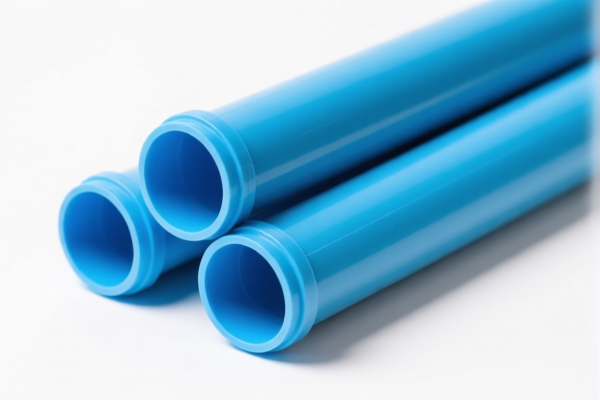
商品图片



AI分析
🚰 Polyethylene Plastic Pipe (PE Pipe)
🌐 HS Code Reference & Customs Clearance Guide | 2026 Latest Tariff Analysis | Professional Clearance Strategy
📌 I. Product Definition & Classification: Do You Really Understand "PE Pipes"?
Polyethylene (PE) pipes are flexible, durable plastic conduits widely used in oil transportation, water supply, gas distribution, and industrial fluid handling. In international trade, classification depends heavily on material composition, physical state (rigid/flexible), and specific use case.
⚠️ Key Distinction Points:
- Material: Must be explicitly identified as Polyethylene (PE) for optimal classification under Chapter 39;
- Form: Tubular products (pipes, tubes, hoses);
- Rigidity: Hard pipes vs. Flexible hoses;
- Use Case: Oil transport triggers specific subheadings; general-purpose pipes fall under broader categories.
📦 II. HS Code Classification Details (2026 Latest Tariff Authority Comparison)
| HS Code | Product Description | Application Scenario | Material/Form Match |
|---|---|---|---|
3917.21.00.00 |
Rigid or Flexible Pipes & Tubes, of Polymers of Ethylene | Oil transport, high-pressure industrial applications | ✅ PE, Pipe Form |
3917.29.00.90 |
Other Pipes, Tubes, and Hoses of Plastics | General-purpose plastic piping (non-PE or unspecified) | ✅ Plastic, Pipe Form |
3917.32.00.20 |
Pipes, Tubes, and Hoses, of Polyethylene | Precise PE pipe classification for standard use | ✅ PE, Pipe Form |
3926.90.99.87 |
Other Articles of Plastics | Fallback category for plastic pipes not meeting Chapter 39 specificity | ✅ Plastic, Pipe Form |
3926.90.99.89 |
Other Articles of Plastics | General plastic article classification | ✅ Plastic, Pipe Form |
🔍 Critical Reminder:
- If the pipe is explicitly made of Polyethylene (PE) and used for oil transport, prioritize 3917.21.00.00 or 3917.32.00.20;
- If the material is generic "plastic" without PE specification, use 3917.29.00.90;
- If the pipe does not fit Chapter 39 technical definitions, it may fall under the 3926.90.99.xx "other plastics" fallback categories.
💰 III. 2026 Latest Tariff Rate Breakdown (Including Additional Taxes & Policy Surcharges)
✅ Applicable Country: United States (US)
✅ Origin: China (CN)
✅ Effective Date: Ongoing (subject to current trade policies)
🎯 1. 3917.21.00.00 —— Rigid/Flexible Pipes of Polyethylene (Oil Transport)
| Item | Detail |
|---|---|
| Base Tariff | 3.1% (ad valorem) |
| Section 301 Additional Tariff | +25.0% |
| Section 122 Tariff | +10.0% |
| Total Tax Rate | 38.1% |
| Tax Calculation | CIF Value × 38.1% |
| De Minimis Eligibility | ❌ Not Eligible |
| Legal Basis Path | Section 301: 9903.88.01 → Section 122: 9903.01.25 → USITC: 3917.21.00.00 |
📌 Explanation:
- 3.1% Base: Standard Most-Favored-Nation (MFN) rate for PE pipes;
- 25% Section 301: Additional tariff on Chinese-origin plastic pipes under Trade Act Section 301;
- 10% Section 122: Additional tariff on specific plastic articles under IEEPA;
- Total 38.1%: High tariff burden requires cost optimization.
🎯 2. 3917.29.00.90 —— Other Plastic Pipes (Non-Specific Material)
| Item | Detail |
|---|---|
| Base Tariff | 3.1% |
| Section 301 Additional Tariff | +25.0% |
| Section 122 Tariff | +10.0% |
| Total Tax Rate | 38.1% |
| Tax Calculation | CIF Value × 38.1% |
| De Minimis Eligibility | ❌ Not Eligible |
| Legal Basis Path | Section 301: 9903.88.01 → Section 122: 9903.01.25 → USITC: 3917.29.00.90 |
📌 Note:
- Same tariff structure as above;
- Applies to plastic pipes where material is not specified as PE.
🎯 3. 3917.32.00.20 —— Pipes, Tubes, Hoses of Polyethylene
| Item | Detail |
|---|---|
| Base Tariff | 3.1% |
| Section 301 Additional Tariff | +25.0% |
| Section 122 Tariff | +10.0% |
| Total Tax Rate | 38.1% |
| Tax Calculation | CIF Value × 38.1% |
| De Minimis Eligibility | ❌ Not Eligible |
| Legal Basis Path | Section 301: 9903.88.01 → Section 122: 9903.01.25 → USITC: 3917.32.00.20 |
📌 Note:
- Directly matches PE pipe definition;
- Ideal for standard PE piping systems (water, gas, industrial).
🎯 4. 3926.90.99.87 & 3926.90.99.89 —— Other Plastic Articles (Fallback)
| Item | Detail |
|---|---|
| Base Tariff | 5.3% |
| Section 301 Additional Tariff | +7.5% |
| Section 122 Tariff | +10.0% |
| Total Tax Rate | 22.8% |
| Tax Calculation | CIF Value × 22.8% |
| De Minimis Eligibility | ❌ Not Eligible |
| Legal Basis Path | Section 301: 9903.88.01 → Section 122: 9903.01.25 → USITC: 3926.90.99.87/89 |
📌 Note:
- Lower total tariff (22.8%) but less precise classification;
- Only use if product does not meet Chapter 39 technical definitions for pipes.
🛠️ IV. Customs Clearance Practical Advice (Battle-Tested Pitfall Avoidance)
✅ 1. Required Documentation Checklist (All Mandatory)
| Document | Required | Description |
|---|---|---|
| ✅ Product Specification Sheet | ✔️ | Material (PE/Other), Diameter, Wall Thickness, Pressure Rating |
| ✅ Material Certificate | ✔️ | Proof of Polyethylene composition (if claiming 3917 codes) |
| ✅ Product Photos (with Labels) | ✔️ | Clear view of markings, pressure class, material grade |
| ✅ Commercial Invoice | ✔️ | Must state "Polyethylene Pipe" or "Plastic Pipe" accurately |
| ✅ Packing List | ✔️ | Quantity, dimensions, gross/net weight per package |
| ✅ Certificate of Origin (CO) | ✔️ | If non-Chinese origin, for potential tariff preferences |
| ✅ Test Reports (if available) | ✔️ | ASTM, ISO, or PE material certification |
✅ 2. Declaration Tips (Key Mnemonics)
🔥 "Specify PE, Avoid Fallback, Name Matters, Tariff Saves Half!"
| Scenario | Correct Declaration | Incorrect Practice |
|---|---|---|
| PE Pipe for Oil Transport | 3917.21.00.00 or 3917.32.00.20 |
Misdeclare as "Plastic Pipe" → 38.1% |
| Generic Plastic Pipe (Non-PE) | 3917.29.00.90 |
Misdeclare as PE → Risk of audit |
| Non-Conforming Plastic Tubing | 3926.90.99.87/89 |
Force into 3917 → Rejection/Fines |
| PE Pipe + Fittings + Accessories | Declare Main Product | Split declaration → Higher total tax |
✅ 3. Special Cases Handling
| Scenario | Recommendation |
|---|---|
| OEM Custom PE Pipes | Provide client order + technical drawings to justify specific HS Code |
| PE Pipe for Medical Use | If classified as medical device, may change HS Code (consult specialist) |
| Cross-Dock/Shipment Split | Declare all PE pipes together under one HS Code; do not split |
| Origin Change (Vietnam/Mexico) | Apply for IEEPA exemption if eligible → Tariff drops to 0–5% |
🌍 V. Global Market Clearance Comparison (2026 Latest)
| Country/Region | Recommended HS Code | Tariff | Certification | Remarks |
|---|---|---|---|---|
| 🇺🇸 USA | 3917.32.00.20 |
38.1% (China) | ASTM/ISO | High tariff; plan ahead |
| 🇨🇳 China | 3917.32.00.20 |
5% | CCC | No additional surcharges |
| 🇪🇺 EU | 3917.32.00.20 |
0–2.5% | CE/REACH | Preferential if origin compliant |
| 🇦🇺 Australia | 3917.32.00.20 |
5% | RCM | No additional surcharges |
| 🇯🇵 Japan | 3917.32.00.20 |
0–3% | JIS | No additional surcharges |
📌 Conclusion:
- USA imposes highest tariffs on Chinese PE pipes;
- Non-Chinese origins (Vietnam, Mexico, EU) offer significant tariff advantages;
- Consider supply chain diversification for US-bound shipments.
📌 VI. Common Errors & Pitfall Avoidance (Lessons Learned)
❌ Error 1: Declaring "Plastic Pipe" without specifying Polyethylene
👉 Result: May be classified under 3926.90.99.87 (22.8%) OR 3917.29.00.90 (38.1%) → Uncertainty & Audit Risk
❌ Error 2: Splitting PE Pipe + Fittings into separate declarations
👉 Result: Accessories taxed at higher rates → Total tax increases significantly
❌ Error 3: Using vague terms like "Tube" or "Hose" without material specification
👉 Result: Customs may assign lower-tier HS Code → Penalties + Delays
❌ Error 4: Ignoring Section 301 & 122 tariffs
👉 Result: Unexpected 38.1% liability → Profit Margin Erosion
✅ Correct Declaration Example:
"Polyethylene (PE) Pipe, HDPE, 4-inch Diameter, 160 PSI, ASTM D3035, for Oil Transport, Model XYZ, Origin China"
🎯 VII. Conclusion: Precision Classification Saves Costs!
🎯 Remember These Mantras:
🔹 "PE Pipes: 3917 for Pipes, 3926 for Fallback"
🔹 "Specify Material, Avoid Guesswork, Tariffs Drop by 15%"
🔹 "38.1% vs 22.8%: Classification Choice Matters!"
📌 Pro Tip:
If your PE pipes originate from Vietnam, Mexico, Thailand, or Malaysia, you may qualify for IEEPA Exemptions, reducing tariffs to 0–5%.
✅ Recommendation: Apply for Advance Ruling (Pre-classification) to confirm HS Code and avoid post-clearance audits.
📣 Take Action Now:
📞 Contact a Licensed Customs Broker + Provide Product Specs + Request Advance Ruling
🚀 Ensure Smooth Clearance, Minimized Costs, and Maximum Profitability!
✨ Professional Clearance Starts with Accurate Classification!
💼 Every Cent of Tariff is Worth Optimizing!
用户评价
关于 HS 编码归类
协调制度(HS)是由世界海关组织(WCO)制定的国际贸易商品分类标准。全球 200 多个国家采用 HS 系统作为海关关税、贸易统计和进出口监管的基础。
每个 HS 编码遵循以下层级结构:
- 章(2 位)——商品大类(例如:第 84 章:机器和机械设备)
- 品目(4 位)——章内的更具体分类
- 子目(6 位)——国际通用细分,所有 WCO 成员国统一使用
- 本国细分(8-10 位)——各国自行扩展的细分编码,如美国 HTSUS 10 位编码
正确的 HS 编码归类对于顺利通关、准确缴纳关税和遵守贸易法规至关重要。错误归类可能导致海关延误、多缴关税或罚款。
从CN进口到US时,适用的关税税率可能包括:
- 最惠国(MFN)税率——适用于 WTO 成员国的标准关税税率
- 普通税率——适用于无贸易协定国家
- 贸易救济关税——附加关税,如 301 条款(反倾销)、232 条款(国家安全)或反补贴税
本页内容仅供参考。如需正式归类,请咨询当地海关或持牌报关代理。