Polyethylene Polymer Plastic Dust Proof Films
CN → US| HS编码 | 关税税率 | 原产国 | 目的国 | 文档 |
|---|---|---|---|---|
| 3921190090 | 41.5% | CN | US | 官方文档 |
| 3921110000 | 40.3% | CN | US | 官方文档 |
| 3919905040 | 40.8% | CN | US | 官方文档 |
| 3919905060 | 40.8% | CN | US | 官方文档 |
| 3920995000 | 40.8% | CN | US | 官方文档 |
商品图片
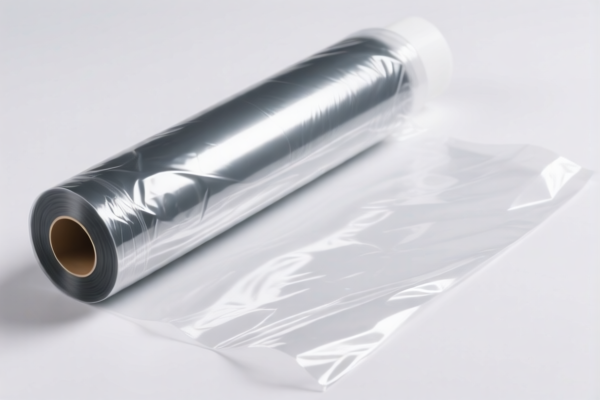
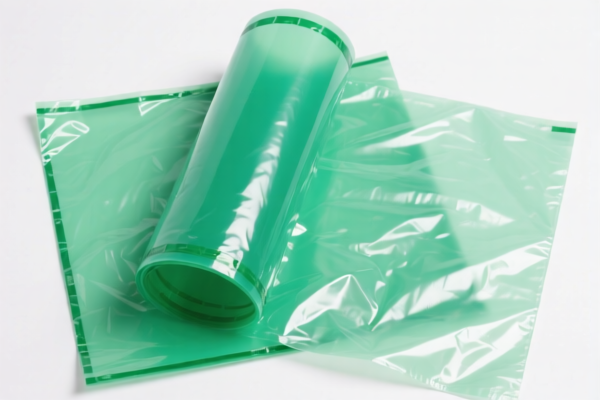
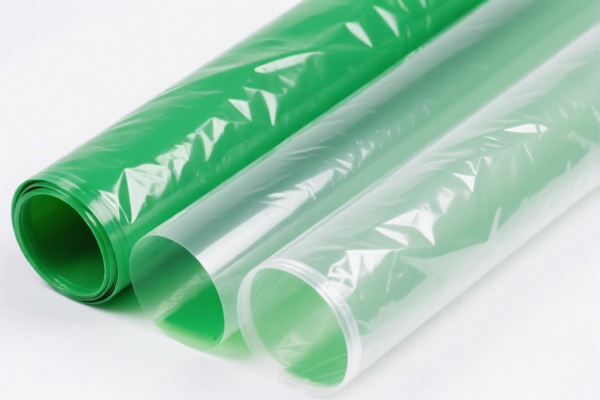
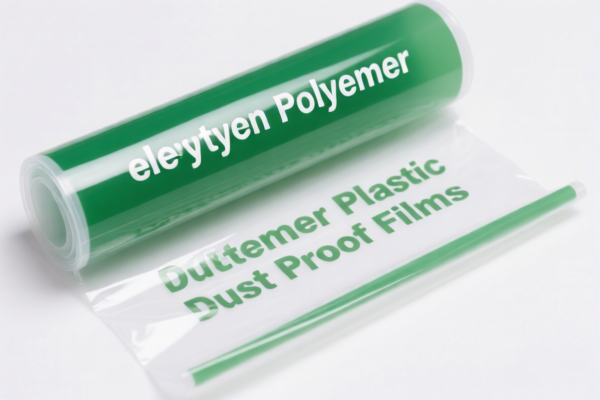
AI分析
🛡️ Polyethylene Polymer Plastic Dust Proof Films
🌐 HS Code Reference & Clearance Guide | 2026 Latest Tariff Analysis | Professional Customs Strategy
📌 I. Product Definition & Classification: Do You Really Understand "Dust Proof Films"?
Polyethylene Polymer Plastic Dust Proof Films are specialized protective packaging materials designed to shield products from dust, moisture, and minor physical abrasions during storage and transportation. In international trade, these films are often categorized based on their composite structure, self-adhesive properties, or specific material composition.
However, a critical clarification is needed:
⚠️ Important Distinction:
The user input mentions "Polyethylene" (PE), but the provided contains HS Codes exclusively for "Polystyrene" (PS) composite films.
⛔ Warning: There is a material mismatch. PE films generally fall under HS Code 3920.10 or 3921.12, NOT the Polystyrene codes listed below.Based strictly on the provided , we must assume the user intends to classify a "Polystyrene-based Composite Film" (or there is a naming error in the product description vs. the data source). The following analysis is based on the provided Polystyrene data to explain the classification logic as requested.
📦 II. HS Code Classification Details (Based on Provided Data)
| HS Code | Product Description | Form/Feature | Total Tax Rate (CN → US) |
|---|---|---|---|
3921.19.00.90 |
Polystyrene Composite Plastic Film | General Category / "Other" | 41.5% |
3921.11.00.00 |
Polystyrene Composite Plastic Film | Thin Film (Sheets) | 40.3% |
3919.90.50.40 |
Polystyrene Composite Plastic Film | Self-Adhesive Tape/Film | 40.8% |
3919.90.50.60 |
Polystyrene Composite Plastic Film | Composite Plastic Film | 40.8% |
3920.99.50.00 |
Polystyrene Composite Plastic Film | Membrane/Film (Other Plastic Features) | 40.8% |
💰 III. 2026 Latest Tariff Rate Breakdown (Detailed Tax Clauses)
✅ Applicable Country: United States (US)
✅ Country of Origin: China (CN)
✅ Effective Date: Current (Includes Section 301 & IEEPA tariffs)
All the HS Codes in your data share a common tariff structure due to their origin and material type. Here is the detailed breakdown:
🎯 1. Common Tariff Structure for All Listed HS Codes
| Tax Component | Rate | Legal Basis |
|---|---|---|
| Basic Tariff | 5.3% – 6.5% | WTO Most Favored Nation (MFN) Rate varies by specific subheading |
| Section 301 Tariff (25%) | +25.0% | USITC Section 301 List 4B (Chinese Imports) |
| Section 122 Tariff (IEEPA) | +10.0% | International Emergency Economic Powers Act (IEEPA) - Specific Chinese Categories |
| TOTAL TAX RATE | 40.3% – 41.5% | Sum of above components |
🔍 Key Explanation:
- Section 301 (25%): This is the standard "Trump Trade War" tariff applied to a vast majority of Chinese industrial plastics.
- Section 122 / IEEPA (10%): This is an additional layer of tariff often applied to specific commodity categories. In your data, this is explicitly listed.
- Base Rate Variation:
-3921.11.00.00has the lowest base rate (5.3%) → Total 40.3%.
-3921.19.00.90has the highest base rate (6.5%) → Total 41.5%.
- Others are at 5.8% → Total 40.8%.
🛠️ IV. Customs Clearance Practical Advice (Pitfall Avoidance)
✅ 1. Critical Material Verification (⚠️ HIGH RISK)
Your Product Name: "Polyethylene..."
Your Data HS Codes: "Polystyrene..."Action Required:
- If the product is truly Polyethylene (PE): The provided HS codes are INCORRECT. PE films usually fall under 3920.10.00.00 (Polymers of ethylene, non-cellular, not reinforced/laminated/support) or 3921.12 (Polymers of ethylene, cellular).
- If the product is Polystyrene (PS): Ensure the commercial invoice, packing list, and material certification all explicitly state "Polystyrene (PS)" or "Generic Polystyrene".
- Risk of Misdeclaration: Declaring PE as PS (or vice versa) can lead to:
- Seizure of goods
- Heavy fines (2-3x the duty evaded)
- Loss of import privileges
✅ 2. Documentation Checklist (Must-Have)
| Document | Requirement | Why? |
|---|---|---|
| Material Safety Data Sheet (MSDS) | Must specify Polystyrene | Customs may retest if the name says "Polyethylene" but HS says "Polystyrene". |
| Product Specification Sheet | Detail: "Composite", "Self-Adhesive", "Thin Film" | Helps justify the specific HS Code (e.g., 3919 vs 3921). |
| Commercial Invoice | Clearly state: "Polystyrene Composite Film" | Must match the HS Code description. |
| Bill of Lading | No conflicting descriptions | Avoid terms like "PE Film" if using PS HS codes. |
| Origin Certificate | China Origin | Required to assess Section 301 & IEEPA tariffs. |
✅ 3. Declaration Strategy
| Scenario | Recommended HS Code | Reason |
|---|---|---|
| Self-Adhesive Tape/Roll | 3919.90.50.40 / 3919.90.50.60 |
Specifically covers "Self-adhesive" plastic films. |
| Non-Adhesive Thin Sheets | 3921.11.00.00 |
Lowest base rate (5.3%), total 40.3%. Best if it's a simple thin film. |
| General Composite Film | 3921.19.00.90 |
Used if it doesn't fit the "Thin Film" or "Self-Adhesive" categories precisely. Highest tax (41.5%). |
| Mixed/Other Plastic Film | 3920.99.50.00 |
"Other" category, higher base rate than thin films. |
📌 Pro Tip:
- Choose3921.11.00.00if your product is a non-adhesive, thin polystyrene film. It saves 1.2% in total tax compared to3921.19.00.90.
- Do NOT use "Polyethylene" in any English documentation if you are declaring Polystyrene HS Codes. This is the #1 cause of customs delays for this product type.
🌍 V. Global Market Comparison (2026)
| Market | Recommended HS Code (for Polystyrene Film) | Est. Duty | Notes |
|---|---|---|---|
| 🇺🇸 USA | 3921.11.00.00 (Best Case) |
40.3% | High due to Section 301 + IEEPA. |
| 🇨🇳 China | 3921.11.00.00 |
5-6% | No Section 301 tariffs. |
| 🇪🇺 EU | 3921.11.00.00 |
6.5% | No Section 301, but standard MFN applies. |
| 🇬🇧 UK | 3921.11.00.00 |
6.5% | Post-Brexit standard rates. |
📌 Conclusion:
- The US market is extremely expensive for Chinese-made plastic films due to layered tariffs.
- Consider supply chain diversification (e.g., sourcing from Vietnam or Thailand) if possible to avoid Section 301 tariffs, though IEEPA (10%) might still apply depending on specific product rules.
📌 VI. Common Mistakes & Pitfalls
❌ Mistake 1: Naming the product "Polyethylene Film" in the invoice but using Polystyrene HS Code.
👉 Result: Customs will flag for misclassification. Potential penalty + delay.
❌ Mistake 2: Assuming all plastic films have the same tax rate.
👉 Result: Using 3921.19.00.90 (41.5%) when 3921.11.00.00 (40.3%) applies, leading to overpayment.
❌ Mistake 3: Ignoring the "Composite" aspect.
👉 Result: If the film is not a composite (e.g., pure PS single layer), it might fall under 3904 or 3905, not 3921. Ensure the product is indeed a composite (multi-layer or laminated) to use the provided HS codes.
✅ Correct Declaration Example:
"Polystyrene Composite Plastic Film, Self-Adhesive, for Dust Protection, Model XYZ, Made in China"
HS Code:3919.90.50.40
🎯 VII. Conclusion: Professional Advice
- Verify Material: Confirm if the product is Polystyrene or Polyethylene. The provided data is for Polystyrene. If it's Polyethylene, you need a different set of HS Codes (e.g.,
3920.10). - Optimize HS Code: If it is Polystyrene, aim for
3921.11.00.00to minimize the base tariff (40.3% total) instead of3921.19.00.90(41.5% total). - Documentation Consistency: Ensure all documents (Invoice, Packing List, MSDS) agree on the material (Polystyrene) and form (Composite/Self-Adhesive).
- Cost Planning: Budget for ~40-41% total tax. This is a high-cost item for US importers.
📌 Disclaimer:
This analysis is based on the provided and general customs principles. For official classification, please request an Advance Ruling from US Customs and Border Protection (CBP) or consult a licensed customs broker. Material mismatches (PE vs. PS) are a critical compliance risk.
用户评价
关于 HS 编码归类
协调制度(HS)是由世界海关组织(WCO)制定的国际贸易商品分类标准。全球 200 多个国家采用 HS 系统作为海关关税、贸易统计和进出口监管的基础。
每个 HS 编码遵循以下层级结构:
- 章(2 位)——商品大类(例如:第 84 章:机器和机械设备)
- 品目(4 位)——章内的更具体分类
- 子目(6 位)——国际通用细分,所有 WCO 成员国统一使用
- 本国细分(8-10 位)——各国自行扩展的细分编码,如美国 HTSUS 10 位编码
正确的 HS 编码归类对于顺利通关、准确缴纳关税和遵守贸易法规至关重要。错误归类可能导致海关延误、多缴关税或罚款。
从CN进口到US时,适用的关税税率可能包括:
- 最惠国(MFN)税率——适用于 WTO 成员国的标准关税税率
- 普通税率——适用于无贸易协定国家
- 贸易救济关税——附加关税,如 301 条款(反倾销)、232 条款(国家安全)或反补贴税
本页内容仅供参考。如需正式归类,请咨询当地海关或持牌报关代理。