Polyethylene Polymer Plastic Insulation Sheets
CN → US| HS编码 | 关税税率 | 原产国 | 目的国 | 文档 |
|---|---|---|---|---|
| 3926100000 | 15.3% | CN | US | 官方文档 |
| 8547200000 | 35.0% | CN | US | 官方文档 |
| 8547900010 | 89.6% | CN | US | 官方文档 |
| 3920992000 | 39.2% | CN | US | 官方文档 |
| 3919905030 | 40.8% | CN | US | 官方文档 |
商品图片

AI分析
🧪 Polyethylene Polymer Plastic Insulation Sheets
🌐 HS Code Reference & Customs Clearance Guide | 2026 Latest Tariff Analysis | Professional Compliance Strategy
📌 Part I: Product Definition & Classification: Do You Really Understand "PE Insulation Sheets"?
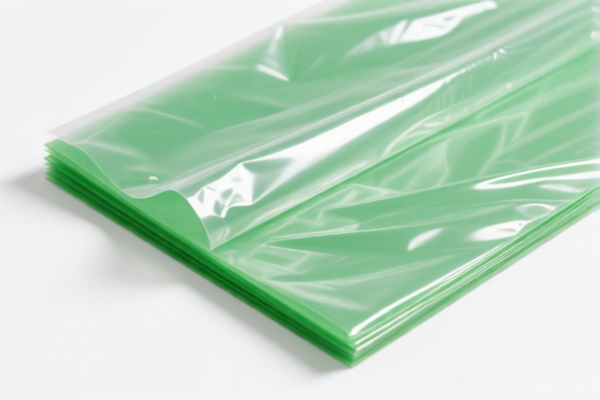
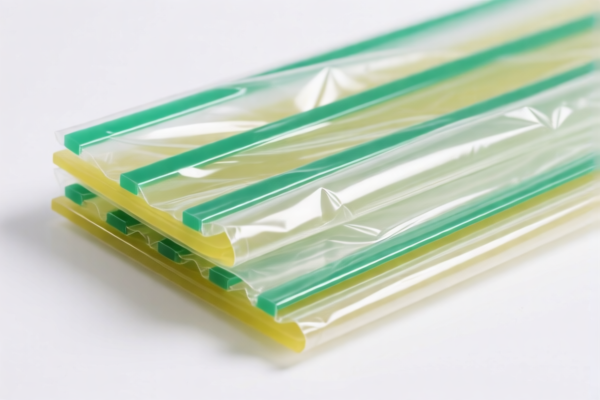
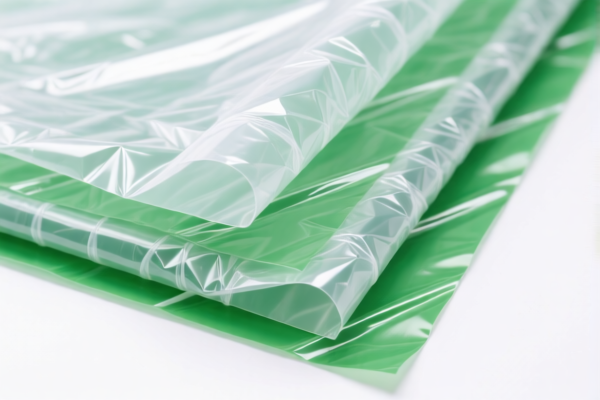
Polyethylene (PE) insulation sheets are versatile plastic materials widely used in electrical, automotive, and industrial applications. In international trade, classification depends heavily on the physical form (sheet/film/plate), thickness, and specific function (general use vs. electrical insulation).
Misclassification here is common and costly. A "sheet" might be classified under general plastics (Chapter 39) or specific electrical accessories (Chapter 85), leading to drastically different duty rates.
⚠️ Key Distinction Points:
- General Purpose Plastic Sheet: Used for packaging, protection, or non-electrical structural purposes → Falls under Chapter 39 (Plastics and Articles Thereof).
- Electrical Insulation Material: Specifically designed for electrical isolation, often found in wiring harnesses, capacitors, or switchgear → May fall under Chapter 85 (Electrical Machinery and Equipment).
📦 Part II: HS Code Classification Details (Based on Provided Data)
| HS Code | Product Description (from Data) | Physical Form | Key Classification Criteria | Total Duty Rate |
|---|---|---|---|---|
3926.10.00.00 |
Polyethylene Plastic Sheets | Sheets/Plates | General plastic articles; fits the definition of plastic sheets/film for general use. | 15.3% |
8547.20.00.00 |
Plastic Insulating Fittings | Insulating Components | Specifically for electrical insulation; classified as "fittings" or accessories for electrical machinery. | 35.0% |
8547.90.00.10 |
Other Plastic Insulating Articles | Thin Films/Sheets | General plastic insulation not elsewhere specified; includes thin films used for insulation. | 89.6% |
3920.99.20.00 |
Plastic Insulating Film | Flexible Film | Non-cellular, non-reinforced plastic flexible film; meets definition for general plastic films. | 39.2% |
3919.90.50.30 |
Plastic Insulating Tape/Film | Flat Shape/Film | Plastic in flat shapes (tapes, films); assumes self-adhesive or roll form typically associated with this heading. | 40.8% |
🔍 Critical Note:
- Chapter 39 Codes (3926,3920,3919) apply when the product is treated primarily as a plastic material. - Chapter 85 Codes (8547) apply when the product is treated primarily as an electrical component/accessory. - The duty rate difference is massive: 15.3% vs. 89.6%. Precision in description and physical attributes is vital.
💰 Part III: 2026 Latest Tariff Rate Breakdown (Including Surcharges & Policy Add-ons)
✅ Applicable Country: USA (US)
✅ Origin: China (CN)
✅ Effective Time: Current rates apply (includes Section 301, 122 Provisions, etc.)
🎯 1. 3926.10.00.00 – Polyethylene Plastic Sheets (General Use)
| Item | Content |
|---|---|
| Base Tariff | 5.3% |
| Section 301 Surtax | 0.0% |
| Section 122 Tariff | 10.0% |
| Total Rate | 15.3% |
| Tax Calculation | CIF Value × 15.3% |
| De Minimis Eligibility | ❌ No (Deny de minimis) |
| Legal Basis Path | USITC:3926.10.00.00 → Section 122: 10% |
📌 Explanation:
- This is the lowest tariff option among the provided codes.
- It applies if the product is clearly a general-purpose plastic sheet without specific electrical insulation certifications or specialized electrical fitting status.
- Section 122 adds 10%. No Section 301 surcharge applies here based on the provided data.
🎯 2. 8547.20.00.00 – Plastic Insulating Fittings
| Item | Content |
|---|---|
| Base Tariff | 0.0% |
| Section 301 Surtax | 25.0% |
| Section 122 Tariff | 10.0% |
| Total Rate | 35.0% |
| Tax Calculation | CIF Value × 35.0% |
| De Minimis Eligibility | ❌ No (Deny de minimis) |
| Legal Basis Path | USITC:8547.20.00.00 → USITC Footnote (301): 25% → Section 122: 10% |
📌 Explanation:
- Classified as electrical fittings.
- Subject to 25% Section 301 surcharge due to being electrical goods from China.
- Plus 10% Section 122.
- Total 35% is significantly higher than general plastic sheets.
🎯 3. 8547.90.00.10 – Other Plastic Insulating Articles (High Risk)
| Item | Content |
|---|---|
| Base Tariff | 4.6% |
| Section 301 Surtax | 25.0% |
| Section 122 Tariff | 10.0% |
| Steel/Aluminum/Copper Surtax | 50.0% (If applicable to components) |
| Total Rate | 89.6% |
| Tax Calculation | CIF Value × 89.6% |
| De Minimis Eligibility | ❌ No (Deny de minimis) |
| Legal Basis Path | USITC:8547.90.00.10 → USITC Footnote (301): 25% → Section 122: 10% + Potential 50% surcharge |
📌 Warning:
- This is the highest risk category.
- The 89.6% rate likely includes a combination of base, 301, 122, and potentially additional 50% surcharge for steel/aluminum/copper content or specific electrical accessory rules.
- Avoid this code unless the product is a specialized, composite electrical accessory with metal components.
🎯 4. 3920.99.20.00 – Plastic Insulating Film (Non-cellular)
| Item | Content |
|---|---|
| Base Tariff | 4.2% |
| Section 301 Surtax | 25.0% |
| Section 122 Tariff | 10.0% |
| Total Rate | 39.2% |
| Tax Calculation | CIF Value × 39.2% |
| De Minimis Eligibility | ❌ No (Deny de minimis) |
| Legal Basis Path | USITC:3920.99.20.00 → USITC Footnote (301): 25% → Section 122: 10% |
📌 Explanation:
- Classified as plastic film (Chapter 39) but still subject to 25% Section 301 surcharge because it is an insulating plastic material often linked to electrical sectors.
- Total 39.2% is moderate. Lower than electrical fittings but higher than general plastic sheets.
🎯 5. 3919.90.50.30 – Plastic Insulating Film (Flat Shape)
| Item | Content |
|---|---|
| Base Tariff | 5.8% |
| Section 301 Surtax | 25.0% |
| Section 122 Tariff | 10.0% |
| Total Rate | 40.8% |
| Tax Calculation | CIF Value × 40.8% |
| De Minimis Eligibility | ❌ No (Deny de minimis) |
| Legal Basis Path | USITC:3919.90.50.30 → USITC Footnote (301): 25% → Section 122: 10% |
📌 Explanation:
- Similar to3920but under Section 3919 (Plastic Tape, Film, Foil, etc.).
- Often used if the product is in roll form or has adhesive properties.
- Total 40.8%.
🛠️ Part IV: Customs Clearance Practical Advice (Real-World Pitfall Avoidance)
✅ 1. Preparation Checklist (Non-negotiable)
| Document | Required? | Purpose |
|---|---|---|
| ✅ Product Specification Sheet | ✔️ | Must clearly state: Material (PE), Thickness, Width, Length, Dielectric Strength, Voltage Rating. |
| ✅ Composition & Structure Diagram | ✔️ | Proves it is pure plastic (no metal cores) to avoid 89.6% rate. |
| ✅ Product Photos (Clear) | ✔️ | Show form factor: Sheet vs. Film vs. Tape vs. Fitting. |
| ✅ Third-Party Test Report | ✔️ | UL/CSA Certification for insulation is critical. If you have UL listing, you may be pushed to Chapter 85. |
| ✅ Commercial Invoice | ✔️ | Describe as "Polyethylene Plastic Sheet, Non-Insulated" (if true) to qualify for 3926.10.00.00 (15.3%). |
| ✅ Certificate of Origin (CO) | ✔️ | Required for Section 301/122 calculations. |
✅ 2. Declaration Strategy (Key Mantra)
🔥 "Clear Function, Right Chapter, Low Duty!"
| Scenario | Correct HS Code | Duty | Wrong Action | Consequence |
|---|---|---|---|---|
| General Purpose PE Sheet (No voltage rating, not for wires) | 3926.10.00.00 |
15.3% | Declare as "Insulation" → 8547 |
Rate jumps to 35%–89.6% |
| PE Film for Electrical Wiring (Has voltage rating) | 3920.99.20.00 or 3919.90.50.30 |
39.2%–40.8% | Declare as "General Sheet" | Risk of reclassification + penalties |
| PE Insulation Fitting (Pre-cut for sockets, connectors) | 8547.20.00.00 |
35.0% | None (This is correct) | N/A |
| Composite Insulator (With metal parts) | 8547.90.00.10 |
89.6% | None (High risk) | N/A |
📌 Critical Tip:
- If your PE sheets are not specifically marketed or tested for electrical insulation, DO NOT use the word "Insulation" in your description. Use "Polyethylene Plastic Sheet, General Purpose". This can save you 20–70% in duties.
- However, if they are used for electrical purposes, you must declare them as such to comply with customs regulations, accepting the higher duty.
✅ 3. Special Cases
| Case | Advice |
|---|---|
| OEM PE Sheets for Electronics | Provide the end-use statement. If the buyer is an electronics manufacturer, customs will likely classify under Chapter 85. |
| Roll vs. Sheet | If in rolls, use 3920 or 3919. If in pre-cut sheets, 3926 is more likely. |
| Adhesive PE Film | Must use 3919.90.50.30. Do not use 3920 or 3926. |
| Thin vs. Thick | "Film" is typically <1mm. "Sheet" is ≥1mm. Ensure your description matches physical dimensions. |
🌍 Part V: Global Market Comparison (2026)
| Country/Region | Recommended HS Code | Duty Rate | Certification | Notes |
|---|---|---|---|---|
| 🇺🇸 USA | 3926.10.00.00 (if general) |
15.3% | UL (if electrical) | Highest risk zone due to 122 + 301. |
| 🇺🇸 USA | 8547.20.00.00 (if electrical) |
35.0% | UL + CE | Much higher duty for electrical goods. |
| 🇨🇳 China | 3920.99.20.00 |
~4–5% | CCC | Low duty, no Section 301. |
| 🇪🇺 EU | 3920.99.90 |
~5–7% | RoHS + REACH | No Section 301/122. |
| 🇦🇺 Australia | 3920.99.00 |
~5% | RCM | Moderate duty. |
📌 Conclusion:
- USA is the most expensive market for plastic insulation materials due to Section 301 and Section 122.
- Strategy: If possible, position the product as "General Purpose Plastic Sheet" (3926) rather than "Electrical Insulation" (8547) only if the product genuinely does not meet electrical insulation standards.
- Warning: Misdeclaration is a serious offense. Ensure the product's actual use and marketing align with the declared HS Code.
📌 Part VI: Common Mistakes & Pitfalls (Lessons Learned)
❌ Mistake 1: Calling a general PE sheet "Insulation" to match buyer's marketing
👉 Result: Customs reclassifies to 8547 → Duty increases from 15.3% to 35–89.6% + Penalties.
❌ Mistake 2: Declaring "Plastic Sheet" but providing UL Test Reports
👉 Result: Contradiction. Customs will assume electrical use → Higher duty.
❌ Mistake 3: Ignoring "Section 122" (10%)
👉 Result: Underestimating total cost. All these codes have a 10% Section 122 surcharge.
❌ Mistake 4: Confusing "Film" (3920) with "Sheet" (3926)
👉 Result: Incorrect classification if thickness/form factor doesn't match.
✅ Correct Approach:
"Polyethylene (PE) Plastic Sheet, General Purpose, Non-Insulated, 2mm Thickness, Used for Packaging and Protection, Model XYZ, No Electrical Certification"
(Only if true!)
🎯 Part VII: Conclusion: Precision Saves Money!
🎯 Key Takeaway:
🔹 "If it's not for electricity, don't call it insulation!"
🔹 "Chapter 39 = ~15–40%. Chapter 85 = ~35–89.6%. The difference is huge."
🔹 "Section 122 adds 10% to ALL these codes. Plan accordingly."
📌 Pro Tip:
If your PE sheets are not specifically designed for electrical insulation, do not use the word "Insulation" in your commercial invoice, packing list, or product description. Use "General Purpose Plastic Sheet". This can reduce your duty from 35–89.6% to 15.3%.
However, if the product is used for electrical purposes, you must declare it accurately under Chapter 85 to avoid fraud allegations. Consider sourcing from non-China origins to avoid Section 301/122 if duties are too high.
📣 Immediate Action:
📞 Review your product's technical specifications and marketing materials.
📄 Ensure your Commercial Invoice matches the actual use and physical attributes.
🚀 Declare correctly, pay less, sleep better!
✨ Professional Customs Clearance Starts with Accurate Classification!
💼 Every 1% of duty difference is 1% of your profit margin!
用户评价
关于 HS 编码归类
协调制度(HS)是由世界海关组织(WCO)制定的国际贸易商品分类标准。全球 200 多个国家采用 HS 系统作为海关关税、贸易统计和进出口监管的基础。
每个 HS 编码遵循以下层级结构:
- 章(2 位)——商品大类(例如:第 84 章:机器和机械设备)
- 品目(4 位)——章内的更具体分类
- 子目(6 位)——国际通用细分,所有 WCO 成员国统一使用
- 本国细分(8-10 位)——各国自行扩展的细分编码,如美国 HTSUS 10 位编码
正确的 HS 编码归类对于顺利通关、准确缴纳关税和遵守贸易法规至关重要。错误归类可能导致海关延误、多缴关税或罚款。
从CN进口到US时,适用的关税税率可能包括:
- 最惠国(MFN)税率——适用于 WTO 成员国的标准关税税率
- 普通税率——适用于无贸易协定国家
- 贸易救济关税——附加关税,如 301 条款(反倾销)、232 条款(国家安全)或反补贴税
本页内容仅供参考。如需正式归类,请咨询当地海关或持牌报关代理。