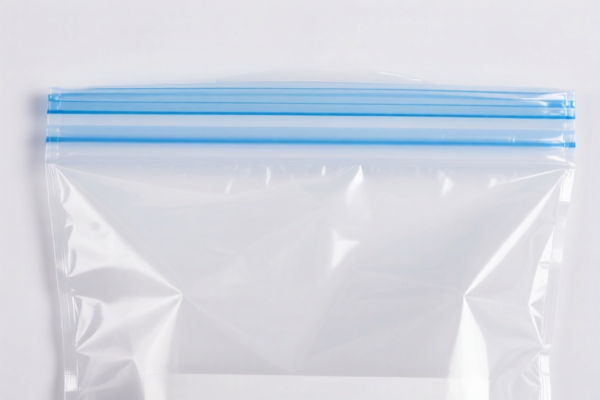
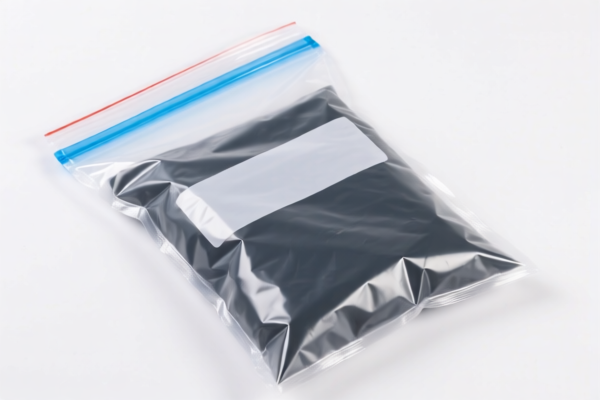
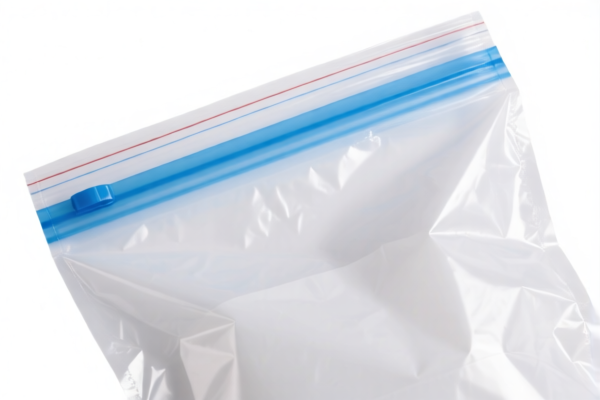
Polyethylene Reclosable Bags with Slider Seal (Transparent)
CN → US| HS编码 | 关税税率 | 原产国 | 目的国 | 文档 |
|---|---|---|---|---|
| 3923210020 | 38.0% | CN | US | 官方文档 |
| 3923210030 | 38.0% | CN | US | 官方文档 |
| 4202929336 | 52.6% | CN | US | 官方文档 |
| 3920992000 | 39.2% | CN | US | 官方文档 |
| 3923210020 | 38.0% | CN | US | 官方文档 |
商品图片

AI分析
📦 Transparent Polyethylene Reclosable Bags with Slider Seal
🌐 HS Code Reference & Clearance Guide | 2026 Latest Tariff Analysis | Professional Customs Strategy
📌 I. Product Definition & Classification: Do You Really Understand “Reclosable Bags”?
Transparent polyethylene reclosable bags with slider seals are versatile packaging solutions widely used in food storage, retail display, and industrial component protection. In international trade, their classification depends heavily on material composition, structural features (e.g., slider seal), and functional intent.
The presence of a slider seal mechanism distinguishes these bags from standard sealed bags, potentially impacting their HS code classification under Chapter 39 (Plastics and Articles Thereof) or Chapter 42 (Articles of Leather; Saddle Trimmings; General Articles of Leather or of Composition Leather).
⚠️ Key Distinction Point:
- If the bag is primarily defined by its plastic film structure with a reusable closure mechanism, it typically falls under Chapter 39.
- If classified as a general container with less emphasis on the plastic material properties, it may fall under Chapter 42.
- Misclassification can lead to significant tariff differences (e.g., 38% vs. 52.6%).
📦 II. HS Code Classification Details (2026 Latest Tariff Authority Comparison)
| HS Code | Product Description | Key Features | Applicable Scenario |
|--------|--------------------------|------------------------|
| 3923.21.00.20 | Plastic sacks and bags, made of polymers of ethylene | ✅ Polymer material, ✅ Reclosable, ✅ Slider seal | Retail packaging, food storage, promotional items |
| 3923.21.00.30 | Plastic sacks and bags, made of polymers of ethylene | ✅ Polyethylene material, ✅ Reusable pouch design | Bulk packaging, industrial component protection |
| 4202.92.93.36 | Articles of plastics, sheeting or film | ✅ Plastic film/foil based, ✅ Bag form, ✅ Container category | General-purpose containers, non-specialized use |
| 3920.99.20.00 | Plates, sheets, film, foil and strip, of plastics | ✅ Flexible film extension, ✅ Bag/bag-like form | Specialty packaging, thin-film applications |
🔍 Important Reminder:
-3923.21.00.20is the most precise match for slider-seal polyethylene bags, as it explicitly covers reclosable plastic bags made of ethylene polymers.
-4202.92.93.36carries a higher total tax (52.6%) because it classifies the item under a broader “plastics sheeting/film” container category, often triggered if the slider mechanism is not emphasized or if the material is deemed generic.
-3920.99.20.00is a fallback for flexible film extensions, but applies a 39.2% total tax, which is lower than Chapter 42 but higher than the primary Chapter 39 options.
💰 III. 2026 Latest Tariff Rate Breakdown (Including Surcharges & Policy Add-Ons)
✅ Applicable Country: United States (US)
✅ Country of Origin: China (CN)
✅ Effective Date: November 10, 2025 (and subsequent imports)
🎯 1. 3923.21.00.20 — Plastic Reclosable Bags (Polymer of Ethylene)
| Item | Detail |
|---|---|
| Base Duty Rate | 3.0% (ad valorem) |
| Section 301 Surcharge | +25.0% |
| IEEPA Surcharge | +10.0% (122 Clause, targeting China/PRC) |
| Total Effective Rate | 38.0% |
| Tax Calculation | CIF Value × 38.0% |
| De Minimis Eligibility | ❌ Denied (subject to high tariffs) |
| Legal Authority Path | USITC:3923.21.00.20 → SECTION301:9903.01.25 → IEEPA:9903.01.24 |
📌 Explanation:
- The 3.0% base rate reflects standard duties for plastic sacks/bags under HTS 3923.21.
- The 25% Section 301 duty is applied due to U.S. trade policy against specific Chinese-origin plastics.
- The 10% IEEPA duty (122 Clause) is a recent addition targeting high-volume Chinese plastic packaging imports.
- Total 38% is significant for low-margin packaging goods; cost optimization is critical.
🎯 2. 3923.21.00.30 — Polyethylene Reusable Pouches
| Item | Detail |
|---|---|
| Base Duty Rate | 3.0% |
| Section 301 Surcharge | +25.0% |
| IEEPA Surcharge | +10.0% |
| Total Effective Rate | 38.0% |
| Tax Calculation | CIF Value × 38.0% |
| De Minimis Eligibility | ❌ Denied |
| Legal Authority Path | USITC:3923.21.00.30 → SECTION301:9903.01.25 → IEEPA:9903.01.24 |
📌 Note:
- Identical tax structure to3923.21.00.20.
- Suitable for bulk or industrial reusable pouches where the slider seal is part of a larger pouch system.
🎯 3. 4202.92.93.36 — Plastic Film Bags (Chapter 42 Container Category)
| Item | Detail |
|---|---|
| Base Duty Rate | 17.6% |
| Section 301 Surcharge | +25.0% |
| IEEPA Surcharge | +10.0% |
| Total Effective Rate | 52.6% |
| Tax Calculation | CIF Value × 52.6% |
| De Minimis Eligibility | ❌ Denied |
| Legal Authority Path | USITC:4202.92.93.36 → SECTION301:9903.01.25 → IEEPA:9903.01.24 |
📌 Warning:
- This classification triggers a base duty of 17.6%, making it the most expensive option.
- Avoid this classification unless the product cannot be reasonably described as a “plastic sack or bag” under Chapter 39.
- Common in cases where the slider mechanism is considered secondary to the “plastic film” attribute.
🎯 4. 3920.99.20.00 — Flexible Plastic Film Extensions
| Item | Detail |
|---|---|
| Base Duty Rate | 4.2% |
| Section 301 Surcharge | +25.0% |
| IEEPA Surcharge | +10.0% |
| Total Effective Rate | 39.2% |
| Tax Calculation | CIF Value × 39.2% |
| De Minimis Eligibility | ❌ Denied |
| Legal Authority Path | USITC:3920.99.20.00 → SECTION301:9903.01.25 → IEEPA:9903.01.24 |
📌 Note:
- Slightly higher than Chapter 39 reclosable bags due to a 4.2% base rate instead of 3.0%.
- Use only if the bag is not primarily designed for reclosing but rather as a thin-film extension of plastic sheeting.
🛠️ IV. Customs Clearance Practical Advice (Pitfall Avoidance Guide)
✅ 1. Required Documentation Checklist
| Document | Mandatory | Purpose |
|---|---|---|
| ✅ Product Specification Sheet | ✔️ | Confirms material (polyethylene), closure type (slider), and dimensions |
| ✅ Product Photos (Front, Side, Closed) | ✔️ | Visually proves the slider seal mechanism |
| ✅ Commercial Invoice | ✔️ | Clearly states “Reclosable Plastic Bags with Slider Seal, Polyethylene” |
| ✅ Packing List | ✔️ | Details quantity, weight, and packaging units |
| ✅ Material Declaration | ✔️ | Certifies 100% polyethylene composition (no mixed materials) |
| ✅ FDA Compliance Statement | ✔️ | If used for food contact, confirms FDA-approved resin |
✅ 2. Classification Strategy (Key Tips)
🔥 “Slider Seal = Chapter 39, Not Chapter 42!”
| Scenario | Correct HS Code | Incorrect HS Code | Risk |
|---|---|---|---|
| Bag with slider seal + polyethylene | 3923.21.00.20 or .30 |
4202.92.93.36 |
Overpay by 14.6% (38% vs 52.6%) |
| Bag with zipper (not slider) | 3923.21.00.20 |
4202.92.93.36 |
Same risk |
| Bag with heat seal only (no closure) | 3923.21.00.20 |
4202.92.93.36 |
Same risk |
| Bag made of PVC or PP | May still fall under 3923.21 |
4202.92.93.36 |
If material is misdeclared |
✅ 3. Special Cases & Handling
| Scenario | Recommendation |
|---|---|
| OEM Custom Bags | Provide client design files + material spec sheet to prove polyethylene + slider |
| Food-Grade Bags | Include FDA compliance letter to avoid additional scrutiny |
| Mixed Material Bags | If bag has non-plastic components (e.g., fabric inserts), re-evaluate classification |
| Bulk Shipments | Declare as “Sacks and Bags of Plastics, Reclosable” to align with 3923.21 |
🌍 V. Global Market Clearance Comparison (2026 Latest)
| Country/Region | Recommended HS Code | Tariff (China Origin) | Certification | Notes |
|---|---|---|---|---|
| 🇺🇸 United States | 3923.21.00.20 |
38.0% | FDA (if food-contact) | High tariffs due to 301 + IEEPA |
| 🇨🇳 China | 3923.21.00.20 |
5.0% | CCC (if applicable) | No additional surcharges |
| 🇪🇺 European Union | 3923.21.00.20 |
4.2% | REACH + RoHS | No Section 301 or IEEPA equivalents |
| 🇨🇦 Canada | 3923.21.00.20 |
5.0% | CFIA (if food) | No major surcharges |
| 🇯🇵 Japan | 3923.21.00.20 |
5.0% | JIS | Low baseline tariffs |
📌 Conclusion:
- The U.S. is the only market with aggressive surcharges (38% total) for this product.
- EU, Canada, and Japan offer significantly lower total duties (~4–5%), making them more cost-effective for exporters.
- U.S. importers must factor in 38% landed cost, not just the base duty.
📌 VI. Common Mistakes & Pitfall Guide (Lessons Learned)
❌ Mistake 1: Classifying slider-seal bags under 4202.92.93.36
👉 Result: Pay 52.6% instead of 38% → 14.6% extra cost on every shipment.
❌ Mistake 2: Failing to highlight the “slider seal” in product description
👉 Result: Customs may reclassify under a higher-base-rate heading.
❌ Mistake 3: Declaring material as “plastic” without specifying “polyethylene”
👉 Result: Potential audit delay or misclassification.
❌ Mistake 4: Ignoring IEEPA 122 Clause impact
👉 Result: Unexpected 10% surcharge not budgeted.
✅ Correct Declaration Example:
“Reclosable Polyethylene Plastic Bags with Slider Seal, Transparent, Food-Grade, 100% PE, for Retail Packaging”
🎯 VII. Conclusion: Precision Classification, Cost Optimization
🎯 Key Takeaways:
🔹 Slider seal + polyethylene =
3923.21.00.20/.30→ 38% total tax
🔹 Avoid4202.92.93.36→ 52.6% total tax (14.6% penalty)
🔹 U.S. market demands careful documentation to justify Chapter 39 classification
🔹 EU/Asia markets offer 80%+ cost savings on duties
📌 Pro Tip:
If your supplier can source non-China origin polyethylene (e.g., from Vietnam or Mexico), you may qualify for IEEPA exemptions, reducing the total rate to 3–5%. Always verify Country of Origin on the bill of lading.
📣 Immediate Action:
📞 Work with a licensed customs broker to file an HTSUS Pre-Ruling for your specific bag design.
📄 Include material specs + closure mechanism photos in all customs filings.
📉 Negotiate landed cost projections with U.S. buyers to reflect 38% tariff inclusion.
✨ Accurate classification saves thousands per container!
💼 Your packaging product deserves precise customs strategy!
用户评价
关于 HS 编码归类
协调制度(HS)是由世界海关组织(WCO)制定的国际贸易商品分类标准。全球 200 多个国家采用 HS 系统作为海关关税、贸易统计和进出口监管的基础。
每个 HS 编码遵循以下层级结构:
- 章(2 位)——商品大类(例如:第 84 章:机器和机械设备)
- 品目(4 位)——章内的更具体分类
- 子目(6 位)——国际通用细分,所有 WCO 成员国统一使用
- 本国细分(8-10 位)——各国自行扩展的细分编码,如美国 HTSUS 10 位编码
正确的 HS 编码归类对于顺利通关、准确缴纳关税和遵守贸易法规至关重要。错误归类可能导致海关延误、多缴关税或罚款。
从CN进口到US时,适用的关税税率可能包括:
- 最惠国(MFN)税率——适用于 WTO 成员国的标准关税税率
- 普通税率——适用于无贸易协定国家
- 贸易救济关税——附加关税,如 301 条款(反倾销)、232 条款(国家安全)或反补贴税
本页内容仅供参考。如需正式归类,请咨询当地海关或持牌报关代理。