Polyethylene Sheet
CN → US| HS编码 | 关税税率 | 原产国 | 目的国 | 文档 |
|---|---|---|---|---|
| 3923109000 | 38.0% | CN | US | 官方文档 |
| 3923290000 | 38.0% | CN | US | 官方文档 |
| 3921190010 | 41.5% | CN | US | 官方文档 |
| 3921190090 | 41.5% | CN | US | 官方文档 |
| 3920995000 | 40.8% | CN | US | 官方文档 |
| 3920100000 | 39.2% | CN | US | 官方文档 |
商品图片
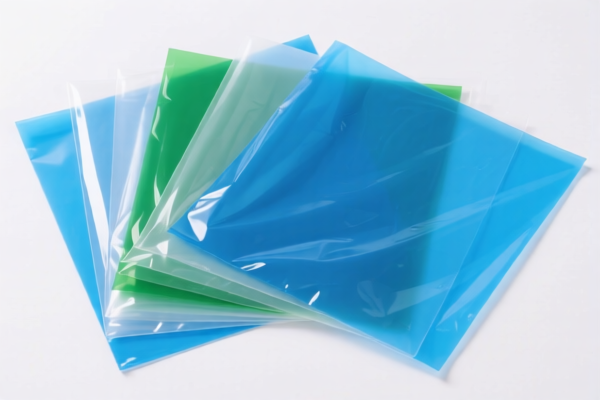
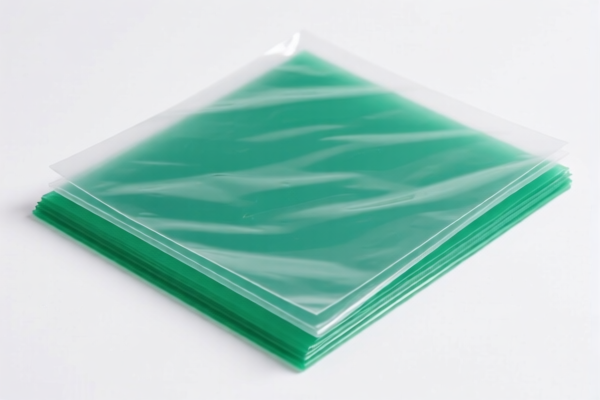

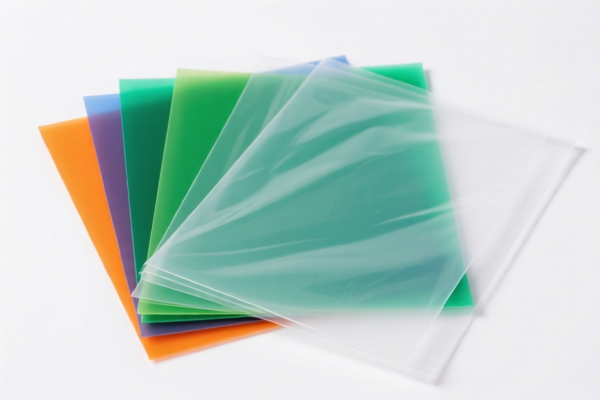
AI分析
📦 Polyethylene Sheets (Plastic Sheets/Plates for Packaging)
🌐 HS Code Reference & Customs Clearance Guide | 2026 Latest Tariff Analysis | Professional Compliance Strategy
📌 I. Product Definition & Classification: What Exactly is a "Polyethylene Sheet"?
Polyethylene (PE) sheets are versatile plastic materials widely used in packaging, industrial lining, and construction. In international trade, their classification depends heavily on form (plate, sheet, film, foil), thickness, and primary use.
For packaging purposes, these sheets are typically classified under Chapter 39 (Plastics and Articles Thereof), specifically within headings 3921 (Other Plates, Sheets, Film, Foil and Strip) or 3923 (Articles for the Conveyance or Packing of Goods).
⚠️ Key Classification Logic:
- If the PE sheet is shaped specifically as a packaging board/box component → Often falls under 3923.
- If it is a general-purpose plate/sheet (even if used for packaging) → Often falls under 3921 or 3920.
- Crucial Distinction: The exact HS code varies by specific physical characteristics and declared use, leading to different tariff treatments.
📦 II. HS Code Classification Details (2026 Authoritative Mapping)
Based on the provided data, here are the four most likely HS codes for Polyethylene Plastic Packaging Sheets, along with their descriptions and tax implications.
| HS Code | Product Description (Summary) | Key Characteristics | Total Tax Rate |
|---|---|---|---|
3923.10.90.00 |
Polyethylene Plastic Packaging Boards | Material: PE; Form: Packaging Board; Category: Packing Articles. | 38.0% |
3923.29.00.00 |
Polyethylene Plastic Packaging Sheets | Material: PE; Form: Sheet/Packaging; Use: Plastic Packaging. | 38.0% |
3921.19.00.10 |
Polyethylene Plastic Sheets (Classified as Plates) | Material: PE; Form: Plate/Sheet/Film/Foil; Specific sub-category. | 41.5% |
3921.19.00.90 |
Polyethylene Plastic Sheets (Other) | Material: PE; Form: Plate; Covered under this specific sub-heading. | 41.5% |
3920.99.50.00 |
Polyethylene Plastic Plates/Sheets | Material: PE; Form: Plate; Fits plastic plate/sheet/film classification. | 40.8% |
3920.10.00.00 |
Polyethylene Plastic Plates (Packaging Use) | Material: PE; Form: Plate; Use: Packaging; Common attribute. | 39.2% |
🔍 Critical Note:
- 3923 codes (3923.10.90.00/3923.29.00.00) are typically lower tax (38.0%) but require the item to be strictly defined as an "Article for Conveyance or Packing." - 3921 codes (3921.19.xxxx) carry the highest tax (41.5%) as they classify PE as a generic plastic plate/sheet, often missing the "finished packaging article" classification. - 3920 codes (3920.10.00.00/3920.99.50.00) fall in between (39.2% - 40.8%), representing plastic plates not otherwise specified.
💰 III. 2026 Tariff Rate Breakdown (Detailed Tax Structure)
✅ Applicable Market: USA (US)
✅ Origin: China (CN)
✅ Effective Date: Ongoing (Subject to 301 & IEEPA provisions)
The total tax rate consists of three components:
1. Base Duty (MFN)
2. Section 301 Add-on Duty (25%)
3. IEEPA Add-on Duty (10%) – China-specific
🎯 1. 3923.10.90.00 & 3923.29.00.00 (Packaging Articles)
Total Tax: 38.0%
| Component | Rate | Source/Description |
|---|---|---|
| Base Duty | 3.0% | Standard MFN rate for plastic packing articles. |
| Section 301 Add-on | +25.0% | Tariff on Chinese goods under US Trade Act Section 301. |
| IEEPA Add-on | +10.0% | Executive Order 14117 (China-specific surcharge). |
| Total | 38.0% | 3.0% + 25.0% + 10.0% |
📌 Why 38%?
This is the most favorable rate among the listed options. It requires proving the item is a finished packaging article (e.g., corrugated PE board, specific packaging tray) rather than a raw material sheet.
🎯 2. 3920.10.00.00 (Polyethylene Plates)
Total Tax: 39.2%
| Component | Rate | Source/Description |
|---|---|---|
| Base Duty | 4.2% | Standard MFN rate for polyethylene plates. |
| Section 301 Add-on | +25.0% | Section 301 tariff. |
| IEEPA Add-on | +10.0% | IEEPA surcharge. |
| Total | 39.2% | 4.2% + 25.0% + 10.0% |
📌 Why 39.2%?
Slightly higher than 3923 because the base duty is higher (4.2% vs 3.0%). This applies if the sheet is considered a general plastic plate rather than a dedicated packaging article.
🎯 3. 3920.99.50.00 (Other Plastic Plates/Sheets)
Total Tax: 40.8%
| Component | Rate | Source/Description |
|---|---|---|
| Base Duty | 5.8% | Standard MFN rate for other plastic plates/sheets. |
| Section 301 Add-on | +25.0% | Section 301 tariff. |
| IEEPA Add-on | +10.0% | IEEPA surcharge. |
| Total | 40.8% | 5.8% + 25.0% + 10.0% |
🎯 4. 3921.19.00.10 & 3921.19.00.90 (Other Plastic Plates/Sheets)
Total Tax: 41.5% (Highest)
| Component | Rate | Source/Description |
|---|---|---|
| Base Duty | 6.5% | Standard MFN rate for plastic plates/sheets/films/foils. |
| Section 301 Add-on | +25.0% | Section 301 tariff. |
| IEEPA Add-on | +10.0% | IEEPA surcharge. |
| Total | 41.5% | 6.5% + 25.0% + 10.0% |
📌 Why 41.5%?
This is the least favorable rate. It classifies the PE sheet purely as a raw plastic material (plate/sheet/film/foil) without recognizing it as a finished packaging good. Avoid this classification unless the product strictly fits the physical description of Chapter 3921.
🛠️ IV. Customs Clearance Practical Advice (Avoiding Pitfalls)
✅ 1. Preparation Checklist (Mandatory)
| Document | Required? | Purpose |
|---|---|---|
| ✅ Product Specification Sheet | ✔️ | Must define material (100% PE), thickness, dimensions, and end-use (packaging). |
| ✅ Photographs | ✔️ | Show the product in context (e.g., folded into a box, used as a liner) to support 3923 classification. |
| ✅ Commercial Invoice | ✔️ | Description must include "Packaging Board/Sheet" and specify "Polyethylene." |
| ✅ Packing List | ✔️ | Detail net/gross weight and unit count. |
| ✅ Certificate of Origin | ✔️ | Required for 301/IEEPA verification. |
✅ 2. Classification Strategy (Key Tips)
🔥 "Packaging Function Trumps Raw Material!"
| Scenario | Recommended HS Code | Tax Rate | Reason |
|---|---|---|---|
| PE sheets cut into specific box shapes | 3923.10.90.00 |
38.0% | Considered a "finished packaging article." |
| PE sheets used as liners or wraps | 3923.29.00.00 |
38.0% | Specific for plastic packing articles. |
| Large rolls of generic PE sheet | 3920.10.00.00 |
39.2% | General plastic plate; no specific packaging form. |
| PE foam sheets for insulation | 3921.19.00.90 |
41.5% | Classified as plastic plate/sheet, not packaging. |
⚠️ Warning:
- Do NOT misdeclare generic PE sheets as "Packaging Articles" if they are standard raw material rolls. Customs may reclassify them to 3921 or 3920, leading to higher duties (40-41.5%) and penalties.
- Conversely, do NOT declare finished packaging boards as raw materials (3921) if they are clearly finished goods, as this may trigger audits for undervaluation or incorrect classification.
✅ 3. Special Cases
| Case | Advice |
|---|---|
| Recycled PE Sheets | Still subject to same tariffs if classified under same HS; ensure compliance with EPA/US customs recycled content rules if claiming benefits elsewhere. |
| Color/Printed PE Sheets | Printing does not change HS code unless it adds significant value/functionality shifting it to another chapter (rare for PE). |
| Thick vs. Thin | Thickness alone doesn't change HS; form and use do. A thin sheet used as a packaging liner still prefers 3923. |
🌍 V. Global Market Comparison (2026)
| Market | Preferred HS | Base Duty | US-Specific Surcharges | Total Impact for CN Origin |
|---|---|---|---|---|
| 🇺🇸 USA | 3923.10.90.00 |
3.0% | +35% (25% 301 + 10% IEEPA) | 38.0% |
| 🇨🇳 China | 3923.10.90.00 |
20% | None | 20% |
| 🇪🇺 EU | 3923.10.90.00 |
6.5% | None (unless sanctions) | 6.5% |
| 🇬🇧 UK | 3923.10.90.00 |
5.0% | None | 5.0% |
| 🇯🇵 Japan | 3923.10.90.00 |
3.9% | None | 3.9% |
📌 Conclusion:
The USA imposes a significant burden on Chinese polyethylene packaging materials due to Section 301 and IEEPA.
- Strategy: Maximize the use of 3923 classification (38%) over 3921 (41.5%) by emphasizing the packaging function and finished form in your documentation.
📌 VI. Common Mistakes & Pitfalls
❌ Mistake 1: Declaring all PE sheets as 3921.19.00.90 (41.5%)
👉 Result: Overpaying 3.5% tax unnecessarily.
✅ Fix: If the sheet is used for packing, try to justify 3923 classification with functional documentation.
❌ Mistake 2: Using "Plastic Sheet" vague description
👉 Result: Customs ambiguity, potential reclassification to higher duty rates.
✅ Fix: Use precise terms: "Polyethylene Packaging Board" or "PE Packing Liner."
❌ Mistake 3: Ignoring IEEPA Surcharge
👉 Result: Failure to declare 10% IEEPA duty → 10% penalty + seizure risk.
✅ Fix: Always include IEEPA calculation in your landed cost model for China-origin goods.
🎯 VII. Conclusion: Precision in Packaging, Savings in Taxation!
🎯 Golden Rule:
🔹 "Form + Function = Lower Tax!"
🔹 Packaging Article (3923) < General Plate (3920/3921)
🔹 Always justify the 'Packaging' use to stay at 38.0%, not 41.5%.
📌 Pro Tip:
If you are importing large volumes, consider applying for a US Customs Bound Rate Review or Class Ruling to formally secure the 3923 classification. This provides legal certainty and protects against future audits.
📣 Action Step:
📞 Engage a Licensed Customs Broker to review your product's physical form and declared use.
📄 Prepare Detailed Product Sheets highlighting "Packaging Function."
🚀 Optimize Classification to save 3.5% on every dollar of CIF value!
✨ Smart Classification Saves Money!
💼 Your Supply Chain, Optimized for 2026 Tariffs!
用户评价
关于 HS 编码归类
协调制度(HS)是由世界海关组织(WCO)制定的国际贸易商品分类标准。全球 200 多个国家采用 HS 系统作为海关关税、贸易统计和进出口监管的基础。
每个 HS 编码遵循以下层级结构:
- 章(2 位)——商品大类(例如:第 84 章:机器和机械设备)
- 品目(4 位)——章内的更具体分类
- 子目(6 位)——国际通用细分,所有 WCO 成员国统一使用
- 本国细分(8-10 位)——各国自行扩展的细分编码,如美国 HTSUS 10 位编码
正确的 HS 编码归类对于顺利通关、准确缴纳关税和遵守贸易法规至关重要。错误归类可能导致海关延误、多缴关税或罚款。
从CN进口到US时,适用的关税税率可能包括:
- 最惠国(MFN)税率——适用于 WTO 成员国的标准关税税率
- 普通税率——适用于无贸易协定国家
- 贸易救济关税——附加关税,如 301 条款(反倾销)、232 条款(国家安全)或反补贴税
本页内容仅供参考。如需正式归类,请咨询当地海关或持牌报关代理。