Polyethylene Stand Up Pouches
CN → US| HS编码 | 关税税率 | 原产国 | 目的国 | 文档 |
|---|---|---|---|---|
| 3923210011 | 38.0% | CN | US | 官方文档 |
| 3923210030 | 38.0% | CN | US | 官方文档 |
商品图片
AI分析
🛍️ Polyethylene Stand Up Pouches (Doypacks)
🌐 HS Code Reference & Customs Clearance Guide | 2026 Latest Tariff Analysis | Professional Clearance Strategy
📌 I. Product Definition & Classification: Do You Really Understand "Stand-Up Pouches"?
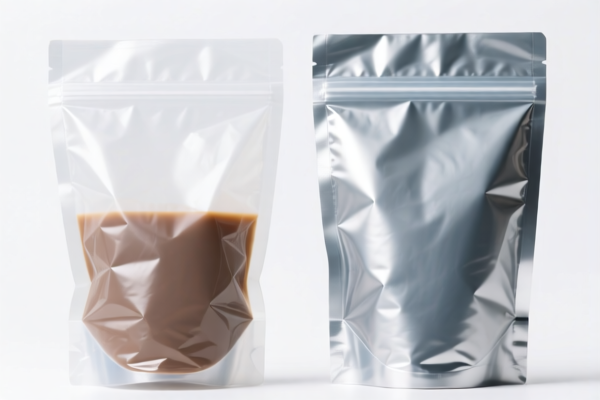
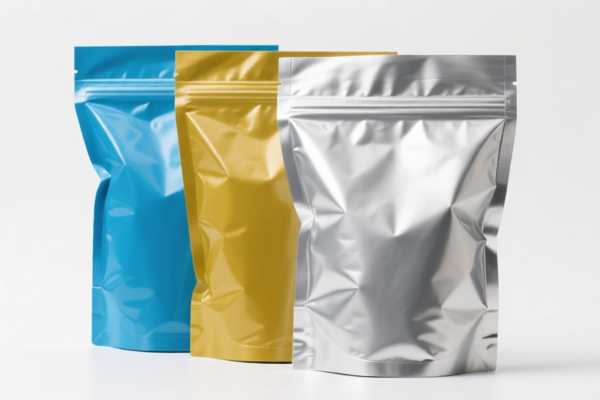
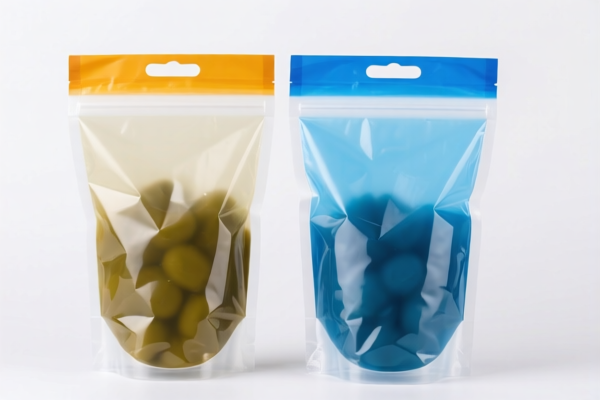
Polyethylene Stand-Up Pouches, commonly known as "Doypacks," are flexible packaging solutions widely used for food, beverages, cosmetics, and household products. In international trade, they are classified under Chapter 39 (Plastics and Articles Thereof), specifically focusing on sacks and bags made of polymer materials.
The critical distinction lies in the closure mechanism and dimensions: * Reclosable Pouches: Feature an integral extruded closure (zipper) allowing multiple openings. * Non-Reclosable: Sealed once opened. * Size Constraints: For specific preferential or lower-tariff subheadings, the length of individual sides (excluding the gusset) may be restricted (e.g., ≤75mm).
⚠️ Key Distinction:
- If the pouch has a zipper/reclosable feature AND no single side exceeds 75 mm in length →归类 to 3923.21.00.11
- If the pouch has a zipper/reclosable feature BUT sides exceed 75 mm OR is non-reclosable →归类 to 3923.21.00.30
📦 II. HS Code Classification Details (2026 Latest Tariff Authority Comparison)
Based on the provided data, here are the two relevant HS codes for Polyethylene Stand-Up Pouches:
| HS Code | Product Description | Applicable Scenario | Key Characteristics |
|---|---|---|---|
3923.21.00.11 |
Sacks and bags of polymers of ethylene; Reclosable, with integral extruded closure: With no single side exceeding 75 mm in length | Small-dimension reclosable pouches (e.g., sample packs, small condiment packets) | ✅ Reclosable ✅ PE Material ✅ Side Length ≤ 75mm |
3923.21.00.30 |
Sacks and bags of polymers of ethylene; Reclosable, with integral extruded closure: Other | Standard large stand-up pouches (Doypacks) >75mm width/height OR non-reclosable PE bags | ✅ Reclosable (Other) ✅ OR Non-Reclosable ✅ PE Material |
🔍 Critical Reminder:
- Material Matters: Both codes specify "Of polymers of ethylene". If your pouch is made of PP (Polypropylene) or mixed layers, the classification may shift to 3923.29 or 3923.30.
- Dimension is King: The 75 mm threshold is the deciding factor for code.11vs.30. Measure the longest side (excluding the bottom gusset depth, but including the front panel width). If any flat side exceeds 75mm, it defaults to.30.
💰 III. 2026 Latest Tariff Rate Details (Including Surtaxes)
✅ Applicable Country: United States (US)
✅ Origin: China (CN) (Assumed based on tariff structure in data)
✅ Effective Date: Current applicable rates as per provided data
🎯 1. 3923.21.00.11 —— Reclosable PE Pouches (Small Size, ≤75mm Side)
| Item | Content |
|---|---|
| Basic Tariff | 3.0% (Ad Valorem) |
| Additional Tariff (Section 301) | +25.0% |
| Total Tariff Rate | 28.0% |
| Tax Calculation | CIF Value × 28% |
| De Minimis Exemption | ❌ Not Applicable (Generally, goods subject to Section 301 tariffs do not qualify for Section 321 de minimis exemption if explicitly listed, though enforcement varies by carrier; check latest CBP guidance). |
| Legal Basis Path | HTSUS:3923.21.00.11 → USITC Footnote 9903.88.01 (Section 301) |
📌 Explanation:
- The 3.0% is the standard Most Favored Nation (MFN) rate for plastic sacks/bags.
- The +25.0% is the Section 301 additional duty imposed on Chinese goods.
- Total Cost Impact: For every $10,000 CIF value, you pay $2,800 in duties alone.
🎯 2. 3923.21.00.30 —— Reclosable PE Pouches (Other Sizes) & Non-Reclosable Bags
| Item | Content |
|---|---|
| Basic Tariff | 3.0% (Ad Valorem) |
| Additional Tariff (Section 301) | +25.0% |
| Total Tariff Rate | 28.0% |
| Tax Calculation | CIF Value × 28% |
| De Minimis Exemption | ❌ Not Applicable |
| Legal Basis Path | HTSUS:3923.21.00.30 → USITC Footnote 9903.88.01 (Section 301) |
📌 Note:
- The tariff rate is identical to.11(28% total).
- The difference lies in product classification accuracy. Misclassifying a large pouch (.30) as a small pouch (.11) to avoid scrutiny is risky if dimensions are verified.
- Non-reclosable PE bags also fall under this broader category if they don't meet the specific "reclosable" definition of other subheadings, or are simply "other" articles of packing.
🛠️ IV. Customs Clearance Practical Advice (Battle-Tested Pitfall Guide)
✅ 1. Required Documentation Checklist (Non-Negotiable)
| Document | Must Provide | Explanation |
|---|---|---|
| ✅ Product Specification Sheet | ✔️ | Must clearly state: Material (PE), Closure Type (Zipper/Heat Seal), Dimensions (Length/Width/Height). |
| ✅ Technical Drawing | ✔️ | Show the 75mm measurement line clearly if claiming code .11. |
| ✅ Product Photos | ✔️ | Front, back, and closure mechanism close-up (to prove "reclosable"). |
| ✅ Commercial Invoice | ✔️ | Describe as "Polyethylene Stand-Up Pouches, Reclosable, Zipper Seal". Avoid vague terms like "Plastic Bag". |
| ✅ Packing List | ✔️ | Indicate if goods are packed in cartons or bulk rolls. |
✅ 2. Declaration Tips (Key Mnemonics)
🔥 “Zipper or Seal? Measure the Side! PE Material? Don’t Hide!”
| Scenario | Correct Declaration | Wrong Practice |
|---|---|---|
| Pouch with Zipper, Width 60mm | 3923.21.00.11 |
Misdeclare as .30 → No penalty, but no benefit. |
| Pouch with Zipper, Width 100mm | 3923.21.00.30 |
Misdeclare as .11 → High Risk of Audit/Seizure. |
| Pouch without Zipper (Heat Seal) | 3923.21.00.30 (as "Other") |
Misdeclare as Reclosable → Fraud Risk. |
| Laminated Pouch (PET/PE) | Check Main Material | If PE is the outer layer or primary component, it may still be 3923. If PET is dominant, check 3923.29 or 3923.30. |
✅ 3. Special Cases Handling
| Situation | Handling Suggestion |
|---|---|
| Biodegradable PE Pouches | Still 3923.21.xx if primarily polyethylene. Must provide biodegradability certification to avoid environmental compliance flags. |
| Printed Pouches | The printing does not change the HS code if the base material is PE. Ensure description includes "Printed Polyethylene Pouches". |
| Samples for Evaluation | If value is < $800, check if Section 321 (De Minimis) applies. Note: Section 301 goods are generally excluded from Section 321 exemption in many cases. Verify with CBP ruling. |
| Custom Shape (Not Standard Rectangle) | Measure the bounding box of the flat panel. If any side >75mm, use .30. |
🌍 V. Global Market Clearance Comparison (2026 Latest)
| Country/Region | Recommended HS Code | Tariff (China Origin) | Certification Requirements | Remarks |
|---|---|---|---|---|
| 🇺🇸 USA | 3923.21.00.30 (Most Common) |
28.0% (3% Base + 25% Surcharge) | FDA (if food contact), Prop 65 (if CA) | High duty burden. Ensure accurate dimension declaration. |
| 🇨🇳 China | 3923.21.00 |
5-7% | None | Import duties are lower than US export duties. |
| 🇪🇺 EU | 3923.21 |
0-2.5% (varies by exact subhead) | REACH, Food Contact Regulations | Lower tariffs, but strict chemical compliance (REACH). |
| 🇬🇧 UK | 3923.21 |
0% (Most Likely) | UKCA, Food Standards | Post-Brexit trade agreements may offer zero tariffs. |
📌 Conclusion:
- The USA imposes the highest barrier with 28%.
- EU/UK focus more on environmental/chemical compliance than tariffs.
- Dimension accuracy is the #1 reason for US customs delays.
📌 VI. Common Errors & Pitfall Guide (Lessons from Tears)
❌ Error 1: Measuring the Gusset Depth as the "Side Length".
👉 Consequence: Misclassifying a large pouch as .11 → Customs rejects, demands reclassification + penalties.
✅ Fix: Measure only the front/back panel width/height, not the folded gusset.
❌ Error 2: Calling it "Plastic Bag" without specifying "Reclosable".
👉 Consequence: Customs may assign a higher duty rate or ask for clarification, causing delays.
✅ Fix: Always specify "Reclosable with Integral Extruded Closure" or "Zipper Seal".
❌ Error 3: Ignoring Material Composition.
👉 Consequence: If the pouch is 50% PET/50% PE, it might not be 3923.21 (PE only). It could be 3923.29 (Other plastics) or 3923.30 (Sacs, bags, cones).
✅ Fix: Check the outermost layer or primary structural material.
🎯 VII. Conclusion: Precision in Packaging, Precision in Profit!
🎯 Remember the Mnemonic:
🔹 "Zipper? Check Size! ≤75mm → .11, >75mm → .30"
🔹 "PE Material, 28% Tax! Declare Accurately, Stay Safe!"
📌 Pro Tip:
If you are importing small samples (<$800 value) to the US, check if your carrier (e.g., USPS, FedEx, UPS) still accepts Section 321 for these items despite Section 301 tensions. Some carriers may self-identify and charge duties anyway.
For large commercial shipments, budget 28% duty into your landed cost calculation.
📣 Immediate Action:
📞 Confirm pouch dimensions (max flat side) with your factory.
📝 Update your Commercial Invoice with "Polyethylene Reclosable Pouches".
🚀 Clearance starts with accurate data!
✨ Professional Clearance Starts with Precise Classification!
💼 Every cent of tax counts. Get it right the first time!
用户评价
关于 HS 编码归类
协调制度(HS)是由世界海关组织(WCO)制定的国际贸易商品分类标准。全球 200 多个国家采用 HS 系统作为海关关税、贸易统计和进出口监管的基础。
每个 HS 编码遵循以下层级结构:
- 章(2 位)——商品大类(例如:第 84 章:机器和机械设备)
- 品目(4 位)——章内的更具体分类
- 子目(6 位)——国际通用细分,所有 WCO 成员国统一使用
- 本国细分(8-10 位)——各国自行扩展的细分编码,如美国 HTSUS 10 位编码
正确的 HS 编码归类对于顺利通关、准确缴纳关税和遵守贸易法规至关重要。错误归类可能导致海关延误、多缴关税或罚款。
从CN进口到US时,适用的关税税率可能包括:
- 最惠国(MFN)税率——适用于 WTO 成员国的标准关税税率
- 普通税率——适用于无贸易协定国家
- 贸易救济关税——附加关税,如 301 条款(反倾销)、232 条款(国家安全)或反补贴税
本页内容仅供参考。如需正式归类,请咨询当地海关或持牌报关代理。