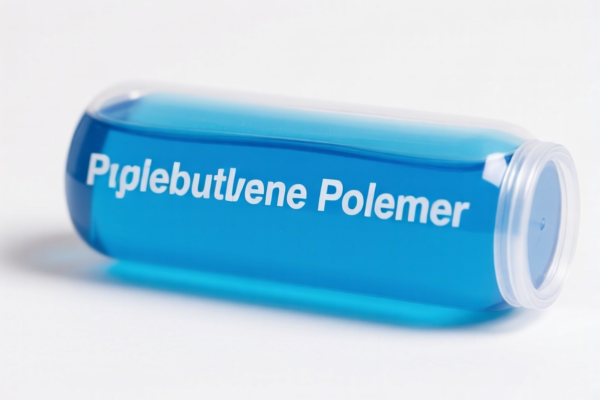
Polyisobutylene Polymer
CN → US| HS编码 | 关税税率 | 原产国 | 目的国 | 文档 |
|---|---|---|---|---|
| 3902205000 | 41.5% | CN | US | 官方文档 |
| 3902201000 | 35.0% | CN | US | 官方文档 |
| 3911901000 | 35.0% | CN | US | 官方文档 |
| 3911901500 | 35.0% | CN | US | 官方文档 |
商品图片

AI分析
🧪 Polyisobutylene (PIB) Polymer: HS Code Classification & US Customs Clearance Guide | 2026 Tariff Analysis
🌐 HS Code Reference & Customs Clearance Guide | 2026 Latest Tariff Regulations | Professional Entry Strategy
📌 One, Product Definition & Classification: What is Polyisobutylene?
Polyisobutylene (PIB) is a synthetic polymer produced by the cationic polymerization of isobutylene. It is a colorless, odorless, and tasteless resin that is insoluble in water but soluble in non-polar solvents. Due to its excellent impermeability to gases, UV resistance, and chemical stability, it is widely used in adhesives, sealants, lubricant additives, and pharmaceuticals.
In international trade, the classification of PIB depends heavily on its physical state (primary shape vs. processed) and chemical structure (homopolymer vs. copolymer). Below is the precise breakdown based on the 2026 US Harmonized Tariff Schedule (HTSUS).
📦 Two, HS Code Classification Details (2026 Authoritative Reference)
| HS Code | Product Description | Application Scenario | Tax Rate (China Origin) |
|---|---|---|---|
3902.20.50.00 |
Polymers of Isobutene, in primary forms | Primary shape PIB (e.g., pellets, granules, powders); Homopolymer | 41.5% |
3902.20.10.00 |
Polymers of Isobutene, in primary forms | Primary shape PIB; Inferred as primary form polymers | 35.0% |
3911.90.10.00 |
Petroleum Resins; Polyalkenes, etc. | PIB treated as a petroleum resin/polyolefin class; Raw material state | 35.0% |
3911.90.15.00 |
Other Modified Polymers | Hydrocarbon polymers fitting the scope of petroleum/resin modifiers | 35.0% |
🔍 Key Distinction: - Section 39 (Plastics): Generally covers primary shapes (raw polymers). - 3902: Specifically covers "Polymers of Isobutene and Other Butylene Polymers." - 3911: Covers "Other Modified Polymers" or "Petroleum Resins" if the PIB is processed into a resin-like form or considered a modified polymer rather than a pure homopolymer in primary form.
💰 Three, 2026 Latest Tariff Rate Breakdown (Detailed Analysis)
✅ Applicable Country: United States (US) ✅ Origin: China (CN) ✅ Effective Date: From November 10, 2025 (including subsequent imports)
🎯 1. HS Code 3902.20.50.00 – Polymers of Isobutene (Primary Forms)
This code represents the most specific match for PIB homopolymers in primary physical forms.
| Item | Details |
|---|---|
| Base Duty Rate | 6.5% (Ad Valorem) |
| Section 301 Additional Duty | +25.0% (USITC Footnote 9903.01.24) |
| Section 122 / IEEPA Duty | +10.0% (Specific to China/HK products under recent executive orders) |
| Total Duty Rate | 41.5% |
| Calculation Basis | CIF Value × 41.5% |
| De Minimis Exemption | ❌ Not Eligible (Denied) |
| Legal Pathway | HTSUS:3902.20.50.00 → USITC:301-List4 → IEEPA:9903.01.25 |
📌 Explanation: - The 6.5% base rate is the standard MFN (Most Favored Nation) duty for polymers of isobutene. - The +25% Section 301 duty applies due to the trade dispute between the US and China. - The +10% additional duty reflects recent "Section 122" or IEEPA-based tariffs targeting specific Chinese chemical imports. - Total Impact: A very high tariff burden of 41.5%, making cost management critical.
🎯 2. HS Code 3902.20.10.00 – Polymers of Isobutene (Other Primary Forms)
This code is used when the PIB is classified under "other" primary forms within the isobutene polymer category.
| Item | Details |
|---|---|
| Base Duty Rate | 0.0% (Ad Valorem) |
| Section 301 Additional Duty | +25.0% |
| Section 122 / IEEPA Duty | +10.0% |
| Total Duty Rate | 35.0% |
| Calculation Basis | CIF Value × 35.0% |
| De Minimis Exemption | ❌ Not Eligible |
| Legal Pathway | HTSUS:3902.20.10.00 → USITC:301-List4 → IEEPA:9903.01.24 |
📌 Note: - While the base duty is 0%, the additional tariffs remain unchanged. - This classification often applies if the PIB is inferred as a "primary form polymer" but doesn't fit the specific sub-heading of
3902.20.50.00(which may be reserved for specific grades or forms). - Total Impact: 35.0% total duty.
🎯 3. HS Codes 3911.90.10.00 & 3911.90.15.00 – Petroleum Resins / Modified Polymers
If the PIB is processed into a resinous form, or if customs authorities classify it under "Petroleum Resins" or "Other Modified Polymers" rather than pure isobutene polymers, these codes may apply.
| Item | Details |
|---|---|
| Base Duty Rate | 0.0% (Ad Valorem) |
| Section 301 Additional Duty | +25.0% |
| Section 122 / IEEPA Duty | +10.0% |
| Total Duty Rate | 35.0% |
| Calculation Basis | CIF Value × 35.0% |
| De Minimis Exemption | ❌ Not Eligible |
| Legal Pathway | HTSUS:3911.90.xxxx → USITC:301-List4 → IEEPA:9903.01.24 |
📌 Explanation: - These codes are alternative classifications used when PIB is viewed as a petroleum resin or a hydrocarbon polymer modified for specific industrial uses. - Important: There is no conflict with elastomer categories here. However, misclassification can lead to delays. - Total Impact: 35.0% total duty, identical to
3902.20.10.00.
🛠️ Four, Customs Clearance Practical Advice (Avoiding Pitfalls)
✅ 1. Essential Documentation Checklist (Mandatory)
| Document | Required? | Purpose |
|---|---|---|
| ✅ Product Specification Sheet | ✔️ | Must state: Chemical name (Polyisobutylene), Molecular Weight (e.g., PIB 500, PIB 1000), Physical State (pellets/powder/liquid), CAS Number (9003-27-4). |
| ✅ MSDS / SDS | ✔️ | Critical for chemical products. Must confirm non-hazardous status (or classify as hazardous if applicable). |
| ✅ Commercial Invoice | ✔️ | Must clearly state: "Polyisobutylene Polymer, CAS 9003-27-4." Avoid vague terms like "Plastic Resin." |
| ✅ Bill of Lading | ✔️ | Ensure harmonized code matches invoice. |
| ✅ Certificate of Origin | ✔️ | To prove China origin and subject to additional duties. |
| ✅ Third-Party Test Report | ✔️ | ASTM D124 (Standard Specification for Polyisobutylene) or similar proof of polymer grade. |
✅ 2. Declaration Strategy (Key Tips)
🔥 Mnemonic: "Be Precise on CAS, State the Form, Declare the Grade, Avoid the Trap!"
| Scenario | Correct Declaration | Incorrect Action |
|---|---|---|
| Raw PIB Pellets | 3902.20.50.00 – "Polyisobutylene Homopolymer, Pellets, CAS 9003-27-4" |
Misdeclaring as "Plastic Scrap" or "General Polymer" → High Penalty |
| PIB in Liquid Solvent | Check for "Solution" classification; may differ from solid primary form | Declare as solid pellets → Misclassification |
| PIB as Adhesive Component | If mixed with solvents/adhesives, may fall under 3506 (Prepared Adhesives), not 3902 | Declare pure polymer → Delay & Rejection |
| Modified PIB | 3911.90.1x – "Modified Hydrocarbon Polymer" |
Claiming 0% duty without justification → Audit Risk |
⚠️ Critical Warning: - Do not use generic terms like "Plastic" or "Resin" alone. - Must specify "Polyisobutylene" and "CAS No. 9003-27-4". - If the product is a copolymer (e.g., butyl rubber), the HS code may shift to 4002 (Rubber), which has different tariffs. Ensure the product is a homopolymer.
✅ 3. Special Situations
| Situation | Handling Advice |
|---|---|
| Small Sample Shipments (< $800) | ❌ Not Eligible for De Minimis (Section 321) due to "Covered Country" (China) restrictions under recent enforcement. |
| Mixed Containers | If PIB is mixed with other plastics, ensure each HS code is clearly declared. Do not average tariffs. |
| Re-export from Third Country | If shipped from Vietnam/Malaysia, China Origin Marking may still trigger tariffs if proven transshipment. Ensure proper transformation rules are met. |
| PIB for Medical Use | If intended for pharmaceuticals, provide FDA documentation, but HTS classification remains based on chemical nature. |
🌍 Five, Global Market Comparison (2026 Snapshot)
| Country/Region | Recommended HS Code | Base Duty | Additional Duty (China) | Total Effective Rate |
|---|---|---|---|---|
| 🇺🇸 USA | 3902.20.50.00 / 3902.20.10.00 |
0–6.5% | +25% (301) +10% (IEEPA) | 35% – 41.5% |
| 🇨🇳 China (Export) | 3902.20 |
0% (Export) | N/A | 0% |
| 🇪🇺 EU | 3902.20 |
0–6.5% | No additional tariffs | 0–6.5% |
| 🇬🇧 UK | 3902.20 |
0–6.5% | No additional tariffs | 0–6.5% |
| 🇯🇵 Japan | 3902.20 |
0% | No additional tariffs | 0% |
📌 Conclusion: - The US market is the most challenging for Chinese Polyisobutylene exports due to the 35–41.5% effective tariff. - EU, UK, and Japan remain competitive with low or zero base duties. - US importers must factor in the high landed cost and consider supply chain diversification.
📌 Six, Common Errors & Pitfalls (Lessons Learned)
❌ Error 1: Declaring PIB as "Plastic Pellets" without specifying CAS Number or Chemical Name. 👉 Consequence: Customs rejection, delay, or forced reclassification to a higher duty code.
❌ Error 2: Misclassifying Butyl Rubber (copolymer of isobutylene and isoprene) as Polyisobutylene (homopolymer). 👉 Consequence: Butyl rubber falls under 4002, which may have different tariffs. Misdeclaration leads to penalties.
❌ Error 3: Assuming De Minimis ($800) applies to small shipments from China. 👉 Consequence: Shipments held, duties collected, and potential Section 321 revocation for frequent violators.
❌ Error 4: Using 3911 for pure PIB without justification. 👉 Consequence: If the product is a pure homopolymer, it must be classified under 3902. Misclassification can lead to audits.
✅ Correct Declaration Example:
"POLYISOBUTYLENE POLYMER, PRIMARY FORM, PELLETS, CAS NO. 9003-27-4, MOLECULAR WEIGHT ~500, FOR USE IN ADHESIVES"
🎯 Seven, Conclusion: Professional Clearance for Maximum Efficiency
🎯 Key Takeaways:
🔹 "CAS Number is King": Always declare CAS 9003-27-4. 🔹 "Homopolymer vs. Copolymer": Distinguish between PIB (3902) and Butyl Rubber (4002). 🔹 "Tariff Burden": Expect 35–41.5% total duty for US imports from China. 🔹 "No De Minimis": Small shipments do not escape tariffs if from China.
📌 Pro Tip: If your Polyisobutylene is sourced from Vietnam, Malaysia, or Thailand, you may qualify for lower or zero tariffs under FTAs (e.g., CPTPP, ASEAN-US). Ensure Origin Certificates are properly issued.
📣 Immediate Action:
📞 Contact a licensed customs broker. 📄 Provide SDS and Technical Data Sheets. 🚀 Request an Advance Ruling from US CBP if unsure about classification.
✨ Precision in Classification Saves Costs!
💼 Your Supply Chain, Optimized!
用户评价
关于 HS 编码归类
协调制度(HS)是由世界海关组织(WCO)制定的国际贸易商品分类标准。全球 200 多个国家采用 HS 系统作为海关关税、贸易统计和进出口监管的基础。
每个 HS 编码遵循以下层级结构:
- 章(2 位)——商品大类(例如:第 84 章:机器和机械设备)
- 品目(4 位)——章内的更具体分类
- 子目(6 位)——国际通用细分,所有 WCO 成员国统一使用
- 本国细分(8-10 位)——各国自行扩展的细分编码,如美国 HTSUS 10 位编码
正确的 HS 编码归类对于顺利通关、准确缴纳关税和遵守贸易法规至关重要。错误归类可能导致海关延误、多缴关税或罚款。
从CN进口到US时,适用的关税税率可能包括:
- 最惠国(MFN)税率——适用于 WTO 成员国的标准关税税率
- 普通税率——适用于无贸易协定国家
- 贸易救济关税——附加关税,如 301 条款(反倾销)、232 条款(国家安全)或反补贴税
本页内容仅供参考。如需正式归类,请咨询当地海关或持牌报关代理。