Polymer Modified Toughening Agent
CN → US| HS编码 | 关税税率 | 原产国 | 目的国 | 文档 |
|---|---|---|---|---|
| 3812399000 | 40.0% | CN | US | 官方文档 |
| 3812396000 | 41.5% | CN | US | 官方文档 |
| 3907995050 | 41.5% | CN | US | 官方文档 |
| 3907992000 | 35.0% | CN | US | 官方文档 |
| 2932999090 | 13.7% | CN | US | 官方文档 |
商品图片
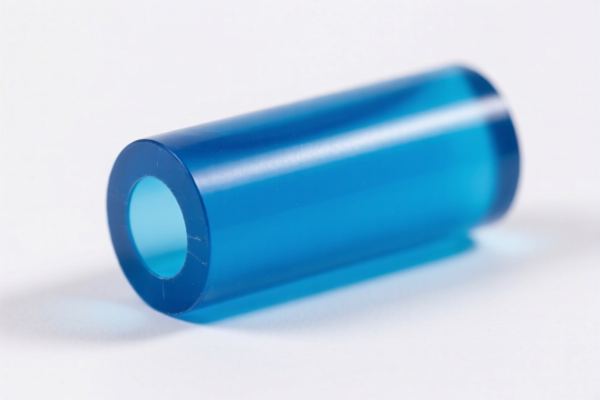

AI分析
🧪 Polymer Modified Toughening Agent (Polymer-Modified Anti-Oxidant & Modifiers)
🌐 HS Code Reference & Customs Clearance Guide | 2026 Latest Tariff Analysis | Professional Strategy for Chemical Imports
📌 I. Product Definition & Classification: Understanding "Polymer Modified Toughening Agent"
Polymer Modified Toughening Agents are complex chemical additives designed to enhance the durability, heat resistance, and impact strength of polymer materials (plastics, rubbers, resins). In international trade, they are not a single homogeneous product but are classified based on their chemical structure, primary function, and target polymer matrix.
Key distinctions in classification: 1. Functional Anti-Oxidants (3812.39): Additives whose primary purpose is to prevent degradation (oxidation) in polymers. 2. Polymer Resins/Modifiers (3907.99): Synthetic polymers (like polyesters) used specifically to modify the properties of other plastics. 3. Basic Organic Chemicals (2932.99): The base chemical compounds (heterocyclic compounds) that may be used as intermediates or standalone chemicals, not yet formulated as finished additives.
⚠️ Critical Distinction:
- If the product is a finished additive meant to be mixed into plastics for anti-oxidation → Chapter 38.
- If the product is a synthetic polymer (like polyester) used to modify plastic properties → Chapter 39.
- If the product is a basic organic compound (heterocyclic) not yet formulated as a specific additive → Chapter 29.
📦 II. HS Code Classification Details (2026 Latest Tariff Authority Comparison)
| HS Code | Product Description | Application Scenario | Primary Function | Tax Rate (China to US) |
|---|---|---|---|---|
3812.39.90.00 |
Polymer-modified anti-oxidant (General) | General purpose anti-oxidant for various polymers | Anti-oxidation / Stabilization | 40.0% |
3812.39.60.00 |
Polymer-modified anti-oxidant (Aromatic) | Specific for modified aromatic polymers | Anti-oxidation / Stabilization | 41.5% |
3907.99.50.50 |
Polymer-modified class (Core: Polyester) | Polyester-based modifiers for other plastics | Physical modification / Toughening | 41.5% |
3907.99.20.00 |
Polymer-modified component (Other Polyesters) | Other polyester范畴 modifiers | Physical modification / Toughening | 35.0% |
2932.99.90.90 |
Organic chemical (Heterocyclic compounds) | Base chemicals / Intermediates | Chemical building block | 13.7% |
🔍 Key Reminder:
- 3812 vs 3907: If the item is sold as an "additive" or "stabilizer," use 3812. If it is sold as a "resin" or "polymer" for blending, use 3907.
- 3812.60 vs 3812.90: Aromatic-specific anti-oxidants often fall under 3812.39.60, while general-purpose ones fall under 3812.39.90. The 1.5% difference in base duty can affect total tax.
💰 III. 2026 Latest Tariff Rate Breakdown (Including Surtaxes & Policy Add-ons)
✅ Applicable Country: United States (US)
✅ Origin: China (CN)
✅ Effective Date: November 10, 2025 (and subsequent imports)
🎯 1. 3812.39.90.00 —— Polymer-Modified Anti-Oxidant (General)
| Item | Content |
|---|---|
| Base Tariff | 5.0% (ad valorem) |
| Section 301 Surtax | +25.0% (USITC Footnote) |
| 122 Clause Surtax | +10.0% (Executive Order on China) |
| Total Rate | 40.0% |
| Tax Calculation | CIF Value × 40% |
| De Minimis Eligibility | ❌ Not Eligible (Section 321 excluded for China) |
| Legal Path | Section 301: 3812.39.90.00 + EO 122: 10% |
📌 Explanation:
- This code covers general polymer anti-oxidants.
- Total 40% is high. Importers must verify if the product is strictly an "anti-oxidant" or a "polymer resin." Misclassification can lead to penalties.
🎯 2. 3812.39.60.00 —— Polymer-Modified Anti-Oxidant (Aromatic)
| Item | Content |
|---|---|
| Base Tariff | 6.5% (ad valorem) |
| Section 301 Surtax | +25.0% (USITC Footnote) |
| 122 Clause Surtax | +10.0% (Executive Order on China) |
| Total Rate | 41.5% |
| Tax Calculation | CIF Value × 41.5% |
| De Minimis Eligibility | ❌ Not Eligible |
| Legal Path | Section 301: 3812.39.60.00 + EO 122: 10% |
📌 Note:
- Slightly higher total rate (41.5%) due to higher base duty (6.5% vs 5.0%).
- Applies specifically to anti-oxidants formulated for aromatic polymers. Ensure technical data sheets specify "aromatic" usage.
🎯 3. 3907.99.50.50 —— Polymer-Modified Class (Polyester Core)
| Item | Content |
|---|---|
| Base Tariff | 6.5% (ad valorem) |
| Section 301 Surtax | +25.0% (USITC Footnote) |
| 122 Clause Surtax | +10.0% (Executive Order on China) |
| Total Rate | 41.5% |
| Tax Calculation | CIF Value × 41.5% |
| De Minimis Eligibility | ❌ Not Eligible |
| Legal Path | Section 301: 3907.99.50.50 + EO 122: 10% |
📌 Note:
- Classified as a polymer (Chapter 39), not a chemical additive.
- Core component is polyester. Use this if the product is sold as a "polymer modifier" or "toughening resin."
🎯 4. 3907.99.20.00 —— Polymer-Modified Component (Other Polyesters)
| Item | Content |
|---|---|
| Base Tariff | 0.0% (ad valorem) |
| Section 301 Surtax | +25.0% (USITC Footnote) |
| 122 Clause Surtax | +10.0% (Executive Order on China) |
| Total Rate | 35.0% |
| Tax Calculation | CIF Value × 35.0% |
| De Minimis Eligibility | ❌ Not Eligible |
| Legal Path | Section 301: 3907.99.20.00 + EO 122: 10% |
📌 Opportunity:
- Lowest total rate (35%) among polymer-based modifiers.
- Applies to "other polyesters" not specifically listed elsewhere.
- Crucial: Must be classified as a polymer, not an anti-oxidant. If it functions as an anti-oxidant, Customs may reclassify it to 3812, increasing taxes.
🎯 5. 2932.99.90.90 —— Organic Chemical (Heterocyclic Compounds)
| Item | Content |
|---|---|
| Base Tariff | 3.7% (ad valorem) |
| Section 301 Surtax | 0.0% (Note: Some heterocyclics may be exempt from 301, but 122 applies) |
| 122 Clause Surtax | +10.0% (Executive Order on China) |
| Total Rate | 13.7% |
| Tax Calculation | CIF Value × 13.7% |
| De Minimis Eligibility | ❌ Not Eligible |
| Legal Path | Chapter 29: 2932.99.90.90 + EO 122: 10% |
📌 Critical Warning:
- Lowest tax rate (13.7%), but highest risk.
- This code is for basic organic chemicals, not finished additives.
- If you import a "finished toughening agent" under this code, Customs will likely reclassify it to Chapter 38 or 39, leading to back taxes, fines, and delays.
- Only use if the product is a raw chemical intermediate, not a formulated additive.
🛠️ IV. Customs Clearance Practical Advice (Battle-Tested Pitfall Avoidance)
✅ 1. Documentation Checklist (Non-Negotiable)
| Document | Must Provide | Explanation |
|---|---|---|
| ✅ Product Technical Data Sheet (TDS) | ✔️ | Must clearly state chemical structure (polymer vs. heterocyclic) and primary function (anti-oxidant vs. modifier). |
| ✅ Formula Composition | ✔️ | Breakdown of active ingredients. Essential for distinguishing Chapter 29 vs. 38/39. |
| ✅ Product Photos | ✔️ | Show packaging, label, and physical state (powder, liquid, pellet). |
| ✅ Statement of Origin | ✔️ | Confirm CN origin to apply surtaxes correctly. |
| ✅ Commercial Invoice | ✔️ | Use precise description: "Polymer Modified Anti-Oxidant for [Specific Polymer]" or "Polyester Polymer Modifier." |
| ✅ Letter of Function | ✔️ | From manufacturer: "This product is an additive, not a base chemical." |
✅ 2. Declaration Strategy (Key Mantras)
🔥 "Function Determines Chapter, Structure Determines Code!"
| Scenario | Correct Declaration | Wrong Action |
|---|---|---|
| Finished Anti-Oxidant Additive | 3812.39.90.00 or 3812.39.60.00 | Declare as "Chemical" (2932) → High Risk |
| Polyester Polymer Modifier | 3907.99.50.50 or 3907.99.20.00 | Declare as "Anti-Oxidant" (3812) → Higher Tax |
| Raw Heterocyclic Chemical | 2932.99.90.90 | Declare as "Finished Additive" → Rejection |
| Mixed Shipment | Split Declaration | One HS Code for all → Audit Trigger |
✅ 3. Special Situations
| Situation | Handling Advice |
|---|---|
| OEM Custom Formulation | Provide exact formula and intended use. If it's an anti-oxidant, it's 3812. |
| "Toughening" vs "Anti-Oxidation" | If it primarily prevents oxidation, use 3812. If it improves physical toughness via polymer blending, use 3907. |
| Polyester Content >50% | Strongly lean towards Chapter 39. |
| Heterocyclic Base Chemical | Only use 2932 if it's a pure chemical compound with no polymer modifiers. |
🌍 V. Global Market Clearance Comparison (2026 Latest)
| Country/Region | Recommended HS Code | Tariff | Certification | Notes |
|---|---|---|---|---|
| 🇺🇸 USA | 3812.39.90.00 |
40% (CN) | No specific cert | High surtax due to 301 + 122 |
| 🇨🇳 China | 3812.39.90.00 |
5% | No specific cert | Base duty only |
| 🇪🇺 EU | 3812.39.90.00 |
6.5% | REACH Registration | REACH is mandatory for chemicals |
| 🇯🇵 Japan | 3812.39.90.00 |
5.5% | JIS/Industrial Standard | Lower surtax than US |
📌 Conclusion:
- USA has the highest effective tariff (40-41.5%) due to multiple surtax layers.
- EU requires REACH registration, which is a long process but no surtax.
- China base duty is low (5-6.5%), but export from China doesn't matter as much as import into destination.
📌 VI. Common Mistakes & Pitfall Guide (Lessons Learned)
❌ Mistake 1: Declaring a finished anti-oxidant additive as 2932 (Organic Chemical) to save tax.
👉 Consequence: Customs reclassifies to 3812, charges back taxes (26.3% difference) + penalties.
❌ Mistake 2: Using 3907 (Polymer) for a product that is primarily an anti-oxidant.
👉 Consequence: Customs may argue it’s not a polymer but a chemical additive, leading to disputes and delays.
❌ Mistake 3: Ignoring the 122 Clause (10%) for all products.
👉 Consequence: Underpayment of taxes, especially noticeable in low-duty codes like 2932.
❌ Mistake 4: Not specifying Aromatic vs. General in 3812.
👉 Consequence: Incorrect base duty (6.5% vs 5.0%) may trigger audits if technical sheets show aromatic use.
✅ Correct Approach:
"Polymer-Modified Anti-Oxidant for Engineering Plastics, Based on Aromatic Structure, Formulated as Granular Additive, TDS Attached."
🎯 VII. Conclusion: Precision in Classification Saves Money!
🎯 Remember the Mantra:
🔹 "Additive is 38, Polymer is 39, Chemical is 29."
🔹 "122 Clause Adds 10%, Don't Skip It!"
🔹 "35% is the Sweet Spot for Polyesters, but Prove It!"
📌 Pro Tip:
If your product is a polyester-based toughening agent, try to qualify for 3907.99.20.00 (35% total) by emphasizing its polymeric structure and toughening function over anti-oxidation. However, ensure it is not primarily an anti-oxidant.
📣 Immediate Action:
📞 Consult with a customs broker to review your TDS and formula.
🚀 Apply for an Advance Ruling from CBP if the classification is ambiguous.
💼 Your bottom line depends on this 1.5% - 26.3% difference!
✨ Professional Clearance, Start with Precise Classification!
💼 Every cent of tax saved is profit earned!
用户评价
关于 HS 编码归类
协调制度(HS)是由世界海关组织(WCO)制定的国际贸易商品分类标准。全球 200 多个国家采用 HS 系统作为海关关税、贸易统计和进出口监管的基础。
每个 HS 编码遵循以下层级结构:
- 章(2 位)——商品大类(例如:第 84 章:机器和机械设备)
- 品目(4 位)——章内的更具体分类
- 子目(6 位)——国际通用细分,所有 WCO 成员国统一使用
- 本国细分(8-10 位)——各国自行扩展的细分编码,如美国 HTSUS 10 位编码
正确的 HS 编码归类对于顺利通关、准确缴纳关税和遵守贸易法规至关重要。错误归类可能导致海关延误、多缴关税或罚款。
从CN进口到US时,适用的关税税率可能包括:
- 最惠国(MFN)税率——适用于 WTO 成员国的标准关税税率
- 普通税率——适用于无贸易协定国家
- 贸易救济关税——附加关税,如 301 条款(反倾销)、232 条款(国家安全)或反补贴税
本页内容仅供参考。如需正式归类,请咨询当地海关或持牌报关代理。