Polymer Modified UV Stabilizer
CN → US| HS编码 | 关税税率 | 原产国 | 目的国 | 文档 |
|---|---|---|---|---|
| 3812399000 | 40.0% | CN | US | 官方文档 |
| 3812396000 | 41.5% | CN | US | 官方文档 |
| 3907995050 | 41.5% | CN | US | 官方文档 |
| 3907992000 | 35.0% | CN | US | 官方文档 |
| 2932999090 | 13.7% | CN | US | 官方文档 |
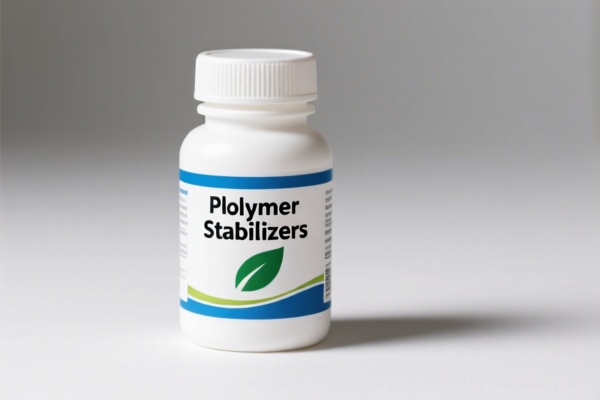
商品图片


AI分析
🧪 Polymer Modified UV Stabilizer (Polymer-Modified Antioxidant/Stabilizer)
🌐 HS Code Reference & Customs Clearance Guide | 2026 Latest Tariff Analysis | Professional Clearance Strategy
📌 I. Product Definition & Classification: Do You Really Understand "Polymer Modified UV Stabilizer"?
Polymer Modified UV Stabilizers are specialized chemical additives used to enhance the durability of plastics and polymers against ultraviolet (UV) radiation and thermal degradation. In international trade, their classification depends heavily on chemical composition, primary function, and polymer type. These products are not simple "chemicals" but complex formulations that may be classified as:
- Polymer-Modified Antioxidants: Additives designed to stabilize specific polymer matrices against oxidation and UV degradation.
- Organic Chemicals (Heterocyclic Compounds): If the core active ingredient is a specific heterocyclic organic compound with oxygen atoms.
- Polymer-Based Modifiers: If the product’s core component is itself a polyester or other polymer modified with stabilizing agents.
⚠️ Key Distinction Points:
- If the product is primarily an additive/antioxidant mixed with polymers → Classify under Chapter 38 (Miscellaneous Chemical Products).
- If the product is primarily a polyester/polymer with stabilizing properties → Classify under Chapter 39 (Plastics and Articles Thereof).
- If the active ingredient is a specific organic heterocyclic compound → Classify under Chapter 29 (Organic Chemicals).
📦 II. HS Code Classification Details (2026 Latest Tariff Authority Cross-Reference)
| HS Code | Product Description | Application Scenario | Key Characteristic |
|---|---|---|---|
3812.39.90.00 |
Polymer-modified antioxidants, matched for polymer material and antioxidant use | General-purpose plastic stabilization, polyolefins, engineering plastics | Additive function, polymer carrier |
3812.39.60.00 |
Polymer-modified antioxidants, matched for modified aromatic and antioxidant use | Aromatic polymers (e.g., PET, PC), high-performance plastics | Specific to aromatic polymer matrix |
3907.99.50.50 |
Polymer-modified products, core component is polyester and other polymers | Polyester-based stabilizer masterbatches, composite polymers | Core is polymer (polyester) |
3907.99.20.00 |
Polymer-modified components, falls under other polyesters | Other polyester-based stabilizers, specialized polymer blends | Pure polyester derivative |
2932.99.90.90 |
Organic chemicals, heterocyclic compounds containing oxygen heteroatoms | Specific chemical compounds (e.g., benzotriazoles, hindered amine light stabilizers as pure chemicals) | Chemical compound, not formulated additive |
🔍 Key Reminder:
- Products labeled as "UV Stabilizers" that are formulated additives (mixed with polymers/carriers) typically fall under 3812 or 3907, not 2932.
- 2932 is reserved for pure chemical compounds (e.g., specific heterocyclic molecules) without significant polymer modification or formulation.
- Misclassification between Chapter 38 (additives) and Chapter 29 (pure chemicals) is a common customs audit risk.
💰 III. 2026 Latest Tariff Rate Details (Including Additional Taxes, Policy Add-ons)
✅ Applicable Country: United States (US)
✅ Origin: China (CN)
✅ Effective Date: From November 10, 2025 (including subsequent imports)
🎯 1. 3812.39.90.00 —— Polymer-Modified Antioxidants (General Polymer Match)
| Item | Content |
|---|---|
| Base Tariff | 5.0% (ad valorem) |
| Section 301 Additional Tariff | +25.0% |
| Section 122 Tariff | +10.0% |
| Total Tariff Rate | 40.0% |
| Tax Calculation | CIF Value × 40% |
| De Minimis Eligibility | ❌ Not Eligible (deny_de_minimis) |
| Legal Basis Path | Base: 3812.39.90 → Section 301: 301.03.99 → Section 122: IEEPA:9903.01.25 |
📌 Explanation:
- The 25% Section 301 tariff applies to most chemical products from China under US Trade Law Section 301.
- The 10% Section 122 tariff is an additional duty under the International Emergency Economic Powers Act (IEEPA) targeting specific Chinese chemical imports.
- Total 40% is a high tariff, requiring proactive cost planning.
🎯 2. 3812.39.60.00 —— Polymer-Modified Antioxidants (Aromatic Polymer Match)
| Item | Content |
|---|---|
| Base Tariff | 6.5% (ad valorem) |
| Section 301 Additional Tariff | +25.0% |
| Section 122 Tariff | +10.0% |
| Total Tariff Rate | 41.5% |
| Tax Calculation | CIF Value × 41.5% |
| De Minimis Eligibility | ❌ Not Eligible |
| Legal Basis Path | Base: 3812.39.60 → Section 301: 301.03.99 → Section 122: IEEPA:9903.01.24 |
📌 Note:
- Slightly higher base rate (6.5% vs. 5.0%) due to specialized application for aromatic polymers.
- Same additional tariffs apply.
- Commonly used for PET, PC, and other high-performance engineering plastics.
🎯 3. 3907.99.50.50 —— Polymer-Modified Products (Core: Polyester)
| Item | Content |
|---|---|
| Base Tariff | 6.5% (ad valorem) |
| Section 301 Additional Tariff | +25.0% |
| Section 122 Tariff | +10.0% |
| Total Tariff Rate | 41.5% |
| Tax Calculation | CIF Value × 41.5% |
| De Minimis Eligibility | ❌ Not Eligible |
| Legal Basis Path | Base: 3907.99.50 → Section 301: 301.03.99 → Section 122: IEEPA:9903.01.24 |
📌 Explanation:
- Classified under Chapter 39 because the core component is polyester.
- Even if labeled as "stabilizer," if the product is primarily a polyester blend, it falls here.
- High tariff risk: Often audited for misclassification from Chapter 38.
🎯 4. 3907.99.20.00 —— Polymer-Modified Components (Other Polyesters)
| Item | Content |
|---|---|
| Base Tariff | 0.0% (ad valorem) |
| Section 301 Additional Tariff | +25.0% |
| Section 122 Tariff | +10.0% |
| Total Tariff Rate | 35.0% |
| Tax Calculation | CIF Value × 35.0% |
| De Minimis Eligibility | ❌ Not Eligible |
| Legal Basis Path | Base: 3907.99.20 → Section 301: 301.03.99 → Section 122: IEEPA:9903.01.24 |
📌 Note:
- Lowest total rate (35%) among all options.
- Requires careful justification that the product is "other polyester" and not a formulated additive.
- Suitable for pure polyester-based stabilizer masterbatches with minimal additional chemical formulation.
🎯 5. 2932.99.90.90 —— Organic Chemicals (Heterocyclic Compounds)
| Item | Content |
|---|---|
| Base Tariff | 3.7% (ad valorem) |
| Section 301 Additional Tariff | 0.0% |
| Section 122 Tariff | +10.0% |
| Total Tariff Rate | 13.7% |
| Tax Calculation | CIF Value × 13.7% |
| De Minimis Eligibility | ❌ Not Eligible |
| Legal Basis Path | Base: 2932.99.90 → Section 122: IEEPA:9903.01.24 |
📌 Critical Warning:
- Lowest total rate (13.7%), but only applicable if the product is a pure heterocyclic organic compound (e.g., specific UV absorbers like benzotriazoles).
- Cannot be used for formulated additives, masterbatches, or polymer-blended stabilizers.
- Misclassification here (when the product is actually a formulated additive) will result in significant back taxes + penalties.
- Requires chemical structure proof and CAS number to justify Chapter 29 classification.
🛠️ IV. Customs Clearance Practical Advice (Combat Pitfalls Guide)
✅ 1. Documentation Checklist (Mandatory)
| Document | Required | Description |
|---|---|---|
| ✅ Product Specification Sheet | ✔️ | Must detail chemical composition, polymer type, CAS numbers, and function (UV stabilization/antioxidant). |
| ✅ Chemical Structure Diagram | ✔️ | For 2932 classification, must provide molecular structure to prove it is a heterocyclic compound. |
| ✅ Product Photos (Including Labels) | ✔️ | Clear display of product name, model, and any "UV Stabilizer" or "Antioxidant" markings. |
| ✅ Third-Party Test Reports | ✔️ | SDS (Safety Data Sheet), TDS (Technical Data Sheet), and performance test reports. |
| ✅ Commercial Invoice | ✔️ | Must specify "Polymer-Modified UV Stabilizer" or "Antioxidant Additive," not just "Chemical." |
| ✅ Certificate of Origin (CO) | ✔️ | If non-China origin, may qualify for reduced tariffs. |
| ✅ Packing List | ✔️ | Must clearly separate any accessories (e.g., drums, liners) from the main product. |
✅ 2. Declaration Tactics (Key Mantras)
🔥 "Additive vs. Polymer: Formulation is Key. Pure Chemical? Prove It!"
| Scenario | Correct Declaration | Wrong Practice |
|---|---|---|
| Formulated UV Stabilizer Additive | 3812.39.90.00 or 3812.39.60.00 |
Misclassified as 2932 → Audit Risk |
| Polyester-Based Stabilizer Masterbatch | 3907.99.50.50 or 3907.99.20.00 |
Misclassified as 3812 → Overpayment |
| Pure Heterocyclic UV Absorber (e.g., Tinuvin type) | 2932.99.90.90 |
Misclassified as 3812 → Higher Tax |
| Mixed Packaging (Stabilizer + Packaging Material) | Declare Stabilizer Only | Packing material added to value → Overdeclaration |
✅ 3. Special Case Handling
| Scenario | Handling Advice |
|---|---|
| OEM Custom Stabilizer | Provide client order + formulation design to justify specific 3812 subheading. |
| Stabilizer for Medical Plastics | If for medical use, may require additional FDA documentation, but HS classification remains same. |
| Stabilizer for Food Contact Plastics | Must provide FDA or EU 10/2011 compliance documents, but does not change HS code. |
| Pure Chemical vs. Formulated | If unsure, consult a customs broker for advance ruling. Misclassification leads to heavy penalties. |
🌍 V. Global Main Market Clearance Comparison (2026 Latest)
| Country/Region | Recommended HS Code | Tariff | Certification Requirements | Notes |
|---|---|---|---|---|
| 🇺🇸 United States | 3812.39.90.00 / 3812.39.60.00 |
40-41.5% (China Origin) | None specific | High tariff due to Section 301 + 122 |
| 🇨🇳 China | 3812.39.90.00 |
5-6.5% | CCC (if applicable) | No additional tariffs |
| 🇪🇺 European Union | 3812.39.90.00 |
0-6.5% | REACH Registration | No Section 301 tariffs |
| 🇬🇧 United Kingdom | 3812.39.90.00 |
0-6.5% | UK REACH | Post-Brexit rules apply |
| 🇯🇵 Japan | 3812.39.90.00 |
0-5% | JIS Certification | No additional tariffs |
📌 Conclusion:
- US is the only market imposing severe additional tariffs (40-41.5%) on these products from China.
- EU, UK, and Japan have no Section 301/122 equivalents, resulting in much lower effective tariffs.
- For US imports, cost optimization through supply chain adjustment or tariff engineering (e.g., pure chemical classification if feasible) is critical.
📌 VI. Common Mistakes & Pitfalls Guide (Lessons Learned)
❌ Mistake 1: Classifying formulated UV stabilizer additives as pure organic chemicals (2932)
👉 Consequence: Customs audit → Back taxes of 25-30% + penalties for misclassification.
❌ Mistake 2: Classifying polyester-based stabilizers as additives (3812) instead of polymers (3907)
👉 Consequence: Overpayment of tariffs (40-41.5% vs. 35%) → Lost profit margin.
❌ Mistake 3: Failing to provide chemical structure proof for 2932 classification
👉 Consequence: Customs rejects Chapter 29 classification → Forced to pay higher Chapter 38/39 tariffs.
❌ Mistake 4: Using vague descriptions like "Plastic Additive" on commercial invoice
👉 Consequence: Customs delays → Additional inspection fees → Shipment hold.
✅ Correct Practice:
"Polymer-Modified UV Stabilizer Additive, Based on Hindered Amine Light Stabilizer (HALS), for Polyolefin Stabilization, CAS No. XXXXX, Formulated as 20% Active Ingredient in Polyester Carrier, Model XYZ"
🎯 VII. Conclusion: Professional Declaration, Time-Saving, Cost-Effective!
🎯 Remember the Mantra:
🔹 "Additive vs. Polymer: Formulation Defines Code."
🔹 "Pure Chemical? Prove Structure. Mixed? Declare Carrier."
🔹 "US Tariffs Hit 40%, EU/Japan Stay Low, Plan Supply Chain Accordingly."
🔹 "HS Code Decides Fate, 5% Difference Can Save Thousands!"
📌 Pro Tip:
If your UV stabilizer originates from Vietnam, Mexico, Thailand, or Malaysia, you may qualify for IEEPA Exemptions or lower Section 301 tariffs, reducing costs to 0-6%.
Recommend applying for Advance Ruling (Pre-classification) before shipping to avoid customs disputes.
📣 Immediate Action:
📞 Contact a professional customs broker + Provide product specs + Apply for HS Code Advance Ruling
🚀 Ensure your polymer modified UV stabilizers clear customs smoothly, efficiently, and profitably!
✨ Professional Clearance Starts with Accurate Classification!
💼 Every Cent of Your Cost Deserves Precise Calculation!
用户评价
关于 HS 编码归类
协调制度(HS)是由世界海关组织(WCO)制定的国际贸易商品分类标准。全球 200 多个国家采用 HS 系统作为海关关税、贸易统计和进出口监管的基础。
每个 HS 编码遵循以下层级结构:
- 章(2 位)——商品大类(例如:第 84 章:机器和机械设备)
- 品目(4 位)——章内的更具体分类
- 子目(6 位)——国际通用细分,所有 WCO 成员国统一使用
- 本国细分(8-10 位)——各国自行扩展的细分编码,如美国 HTSUS 10 位编码
正确的 HS 编码归类对于顺利通关、准确缴纳关税和遵守贸易法规至关重要。错误归类可能导致海关延误、多缴关税或罚款。
从CN进口到US时,适用的关税税率可能包括:
- 最惠国(MFN)税率——适用于 WTO 成员国的标准关税税率
- 普通税率——适用于无贸易协定国家
- 贸易救济关税——附加关税,如 301 条款(反倾销)、232 条款(国家安全)或反补贴税
本页内容仅供参考。如需正式归类,请咨询当地海关或持牌报关代理。