Polymer Polyethylene Rod
CN → US| HS编码 | 关税税率 | 原产国 | 目的国 | 文档 |
|---|---|---|---|---|
| 3916100000 | 40.8% | CN | US | 官方文档 |
| 3916903000 | 41.5% | CN | US | 官方文档 |
商品图片
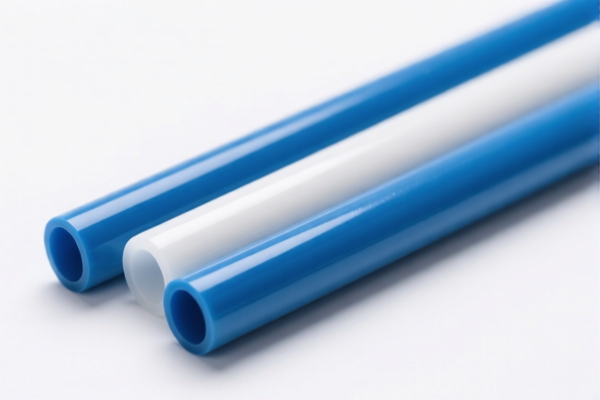
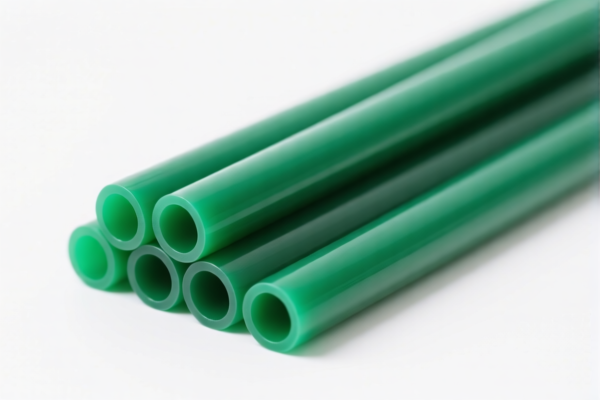
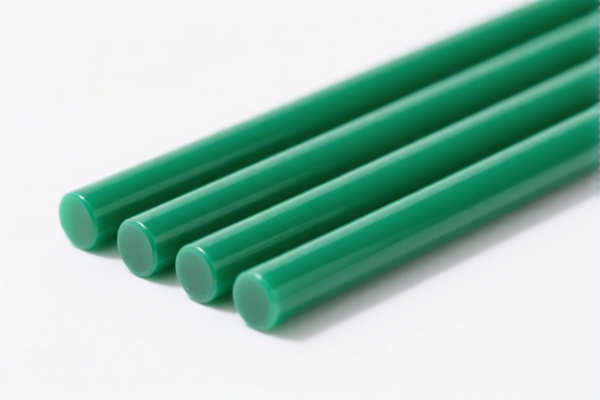
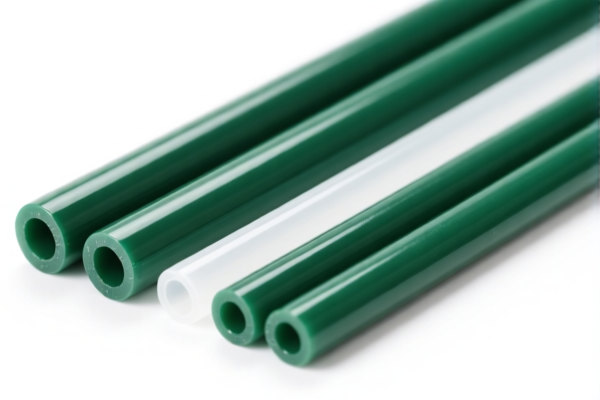
AI分析
🧱 Polyethylene Rods (Monofilament/Profile Shapes of Plastics)
🌐 HS Code Reference & Customs Clearance Guide | 2024/2025 Tariff Analysis | Professional Strategy for Polymers
📌 Part 1: Product Definition & Classification: What Exactly Is a "Polyethylene Rod"?
In international trade, simple terms like "Polymer Polyethylene Rod" can lead to significant customs discrepancies because the HS Code depends entirely on the physical dimension and processing state of the item.
Plastics are broadly categorized by their shape and size. A "Rod" is not a finished product like a pipe or a container; it is a semi-finished raw material or a profile shape used for further manufacturing (e.g., machining into gears, bushings, or chemical processing equipment).
Key Distinction: * Monofilament: If the item is a single, continuous filament (like a thick string or fiber). * Rod/Bar: If the item has a solid cross-section (circular, rectangular, etc.) and is not a filament. * Dimension Threshold: The critical boundary in Chapter 39 is the 1 mm mark. * > 1 mm: Classified as "Rods, Sticks, and Profile Shapes" or "Monofilament with large cross-section." * ≤ 1 mm: Often classified under different subheadings for films, sheets, or small fibers.
⚠️ Critical Classification Point:
- If the polyethylene is Ethylene based (LDPE, HDPE, LLDPE, etc.) AND any cross-sectional dimension exceeds 1 mm → It falls under 3916.10.
- If it is NOT Ethylene (e.g., Polypropylene, PVC, ABS) AND any cross-sectional dimension exceeds 1 mm → It falls under 3916.90.
📦 Part 2: HS Code Classification Details (Based on Provided Data)
Since the user input specifies "Polyethylene", the primary classification is Ethylene-based polymers. However, data often includes "Other Plastics" for comparison or if the polyethylene grade is ambiguous. Below is the breakdown based strictly on the <DATA> provided.
| HS Code | Product Description | Applicable Scenario | Material Basis |
|---|---|---|---|
3916.10.00.00 |
Monofilament/rods/sticks/profile shapes of polymers of ethylene, whether or not surface-worked but not otherwise worked. | Standard Polyethylene Rods (HDPE/LDPE rods, fishing lines, thick monofilaments). Cross-section > 1mm. | ✅ Ethylene (PE) |
3916.90.30.00 |
Monofilament/rods/sticks/profile shapes of other plastics, whether or not surface-worked but not otherwise worked: Monofilament. | Non-Ethylene Polymers (e.g., PP, PVC, ABS rods) OR Misclassified Ethylene items where customs doubts the polymer type. Cross-section > 1mm. | ❌ Other Plastics |
🔍 Key Insight for Polyethylene:
For a pure Polyethylene (PE) rod,3916.10.00.00is the correct and most specific classification.
3916.90.30.00is a "catch-all" for plastics that are NOT ethylene-based. If you are shipping PE, do NOT use this code unless you are intentionally misclassifying to avoid specific trade remedies (which is illegal and high-risk).
💰 Part 3: 2024/2025 Tariff Rate Breakdown (Including Additional Duties)
✅ Applicable Country: United States (US)
✅ Origin: China (CN) (Note: Data implies US-China trade context due to "Additional Tariffs")
✅ Effective Time: Current Trade War Measures (Section 301 & IEEPA)
🎯 1. 3916.10.00.00 —— Polyethylene Rods/Profile Shapes
| Item | Content |
|---|---|
| Base Tariff Rate | 0.0% (Free of duty under standard MFN) |
| Additional Tariff (Section 301 / IEEPA) | 0.0% |
| Total Tax Rate | 0.0% |
| Tax Calculation | CIF Value × 0.0% = $0 |
| De Minimis Eligibility | ✅ Yes (if value < $800, no duty, but subject to entry summary requirements) |
| Legal Basis Path | HTSUS:3916.10.00.00 → USITC:0% |
📌 Explanation:
- Polyethylene rods (PE) are currently enjoying 0% total tariff for imports from China.
- This is a major cost advantage compared to many other plastics.
- However, ensure the product is purely "Ethylene" polymers. If it contains fillers or additives that change its essential character, customs may challenge it.
🎯 2. 3916.90.30.00 —— Rods/Profile Shapes of Other Plastics
| Item | Content |
|---|---|
| Base Tariff Rate | 6.5% (ad valorem) |
| Additional Tariff (Section 301 / IEEPA) | 25.0% |
| Total Tax Rate | 31.5% |
| Tax Calculation | CIF Value × 31.5% |
| De Minimis Eligibility | ❌ No (Usually restricted for Chinese origin under 301) |
| Legal Basis Path | HTSUS:3916.90.30.00 → USITC:6.5% + FOOTNOTE:9903.88.01 (25%) |
📌 Warning:
- If your PE rod is incorrectly classified as "Other Plastic," you will pay 31.5% instead of 0%.
- This is a massive cost difference. Always provide Material Safety Data Sheets (MSDS) or Certificate of Analysis (COA) proving the polymer is Polyethylene (PE).
🛠️ Part 4: Customs Clearance Practical Advice (Avoiding Pitfalls)
✅ 1. Preparation Checklist (Non-Negotiable)
| Document | Required? | Explanation |
|---|---|---|
| ✅ Product Specification Sheet | ✔️ | Must explicitly state: "100% Polyethylene" (HDPE/LDPE/LLDPE). Avoid vague terms like "Plastic Rod." |
| ✅ Material Certificate (COA) | ✔️ | Proves the chemical composition. Crucial if customs questions the "Ethylene" classification. |
| ✅ Product Photos | ✔️ | Show the cross-section. If any dimension is > 1mm, it confirms 3916 classification. If < 1mm, it might be a film/sheet (3920/3921). |
| ✅ Commercial Invoice | ✔️ | Description should read: "Polyethylene (PE) Rods, Cross-section > 1mm, Surface-worked, Raw Material for Machining." |
| ✅ Packing List | ✔️ | Ensure weight/volume matches invoice. |
✅ 2. Declaration Tips (Key Mantras)
🔥 "Material First, Dimension Second, No Finishing!"
| Scenario | Correct Declaration | Incorrect Declaration | Consequence |
|---|---|---|---|
| Pure PE Rod | 3916.10.00.00 + "Polyethylene Rods" |
"Plastic Rods" or "PP Rods" | Risk of 31.5% duty if misclassified as "Other Plastic" |
| Surface-Treated PE Rod | 3916.10.00.00 + "Surface-worked" |
"Finished Pipes" or "Tubing" | Risk of reclassification to 3917 (Tubes/Pipes) → Different rates |
| PE < 1mm Fiber | NOT 3916 |
3916.10.00.00 |
Risk of reclassification to 5402/5404 (Filaments) → Different tax |
✅ 3. Special Case Handling
| Situation | Handling Advice |
|---|---|
| Mixed Loads (PE + PP) | Separate declarations. Do not lump "Plastic Rods" together. Each type requires its own HS Code and tax calculation. |
| Additives (Colorants/Fillers) | If fillers (e.g., glass fiber, carbon) constitute < 10% and don't change the base polymer character, it may still be PE. However, >10% fillers may reclassify to 3916 "Plastics mainly composed of..." or even to composite chapters. Provide formula. |
| "Worked" vs. "Unworked" | The data says "whether or not surface-worked but not otherwise worked." This means cutting to length or smoothing edges is allowed. But machining, threading, or drilling holes turns it into a "Part of a Machine" or "Other Article," moving it out of Chapter 39. |
🌍 Part 5: Global Market Comparison (2024/2025)
| Country/Region | Recommended HS Code | Tariff (China Origin) | Notes |
|---|---|---|---|
| 🇺🇸 USA | 3916.10.00.00 |
0.0% | Highly favorable for PE. Avoid 3916.90 (31.5%). |
| 🇨🇳 China | 3916.10.00.00 |
6.5% | Import tariff for China. No additional 301 tariffs on Chinese imports into China. |
| 🇪🇺 EU | 3916.10.00 |
0.0% | Standard EU tariff for PE rods is 0%. No trade war penalties. |
| 🇬🇧 UK | 3916.10.00 |
0.0% | Post-Brexit tariff remains 0% for PE rods. |
| 🇯🇵 Japan | 3916.10.10 |
3.0% | Standard MFN rate. No additional penalties. |
📌 Conclusion:
- USA is the only major market with a 0% rate for PE rods despite the trade war, IF correctly classified as Ethylene.
- For "Other Plastics," the US 31.5% rate makes them expensive.
- EU/UK/Japan are neutral/low cost, making them easier markets for all plastics.
📌 Part 6: Common Mistakes & Pitfalls (Lessons Learned)
❌ Mistake 1: Declaring "Plastic Rod" without specifying the polymer.
👉 Consequence: Customs assumes "Other Plastic" (3916.90) → 31.5% Duty instead of 0%.
✅ Fix: Always specify "Polyethylene (HDPE/LDPE)" in the declaration.
❌ Mistake 2: Confusing "Rod" with "Pipe/Tubing."
👉 Consequence: Pipes (hollow) fall under 3917. If you declare a hollow tube as a solid rod, customs will inspect and reclassify.
✅ Fix: Ensure description matches geometry: "Solid Rod" vs. "Hollow Tube."
❌ Mistake 3: Ignoring the 1mm Rule.
👉 Consequence: If your "Rod" is actually a thin filament (<1mm), it may be classified as a synthetic filament (5402). While tax might be similar, the regulatory requirements (e.g., anti-dumping for certain synthetics) differ.
✅ Fix: Measure cross-section. If >1mm, stick with 3916.
🎯 Part 7: Conclusion: Professional Declaration, Cost Efficiency!
🎯 Remember the Mantra:
🔹 "PE is King (0% in USA), Other is High (31.5%), Be Specific!"
🔹 "1mm is the Line, Solid is the Key, Don't Guess, Just Say 'Polyethylene'!"
📌 Pro Tip:
If you are unsure whether your product is "Ethylene" or "Other," request a Certificate of Analysis (COA) from your supplier. The presence of ethylene monomer units >50% confirms PE.
For US imports, 0% duty is a huge advantage. Protect it with precise documentation.
📣 Immediate Action:
📞 Contact your broker to confirm
3916.10.00.00classification.
📄 Attach MSDS/COA to your shipment documents.
🚀 Secure your 0% Tariff Advantage!
✨ Precision in Classification, Profit in the Pocket!
💼 Don't let a vague word cost you 31.5%.
用户评价
关于 HS 编码归类
协调制度(HS)是由世界海关组织(WCO)制定的国际贸易商品分类标准。全球 200 多个国家采用 HS 系统作为海关关税、贸易统计和进出口监管的基础。
每个 HS 编码遵循以下层级结构:
- 章(2 位)——商品大类(例如:第 84 章:机器和机械设备)
- 品目(4 位)——章内的更具体分类
- 子目(6 位)——国际通用细分,所有 WCO 成员国统一使用
- 本国细分(8-10 位)——各国自行扩展的细分编码,如美国 HTSUS 10 位编码
正确的 HS 编码归类对于顺利通关、准确缴纳关税和遵守贸易法规至关重要。错误归类可能导致海关延误、多缴关税或罚款。
从CN进口到US时,适用的关税税率可能包括:
- 最惠国(MFN)税率——适用于 WTO 成员国的标准关税税率
- 普通税率——适用于无贸易协定国家
- 贸易救济关税——附加关税,如 301 条款(反倾销)、232 条款(国家安全)或反补贴税
本页内容仅供参考。如需正式归类,请咨询当地海关或持牌报关代理。